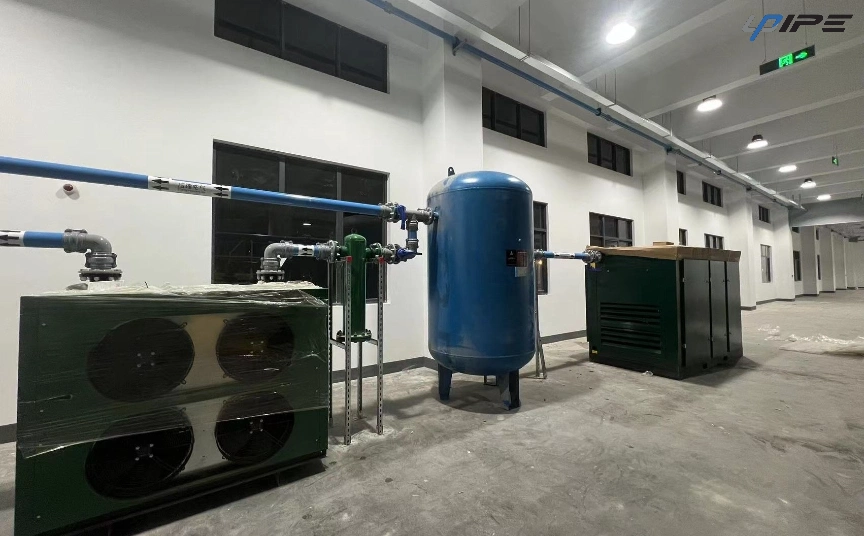
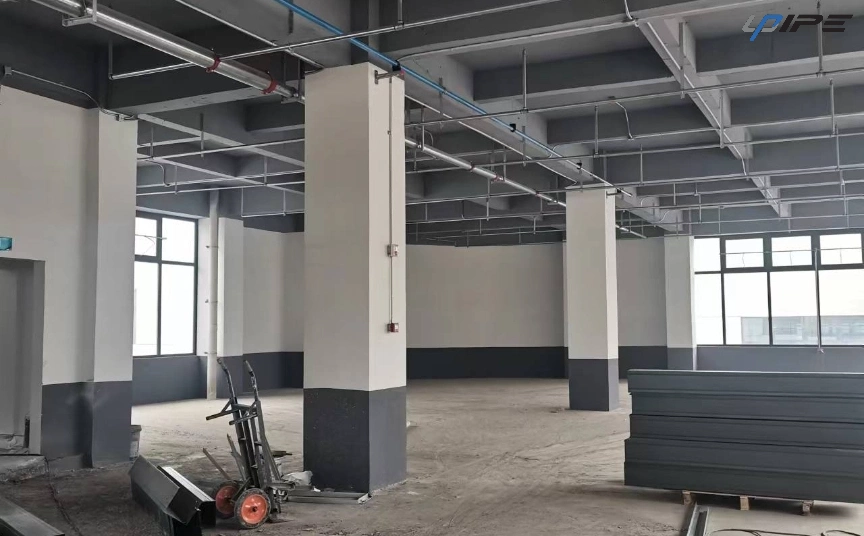
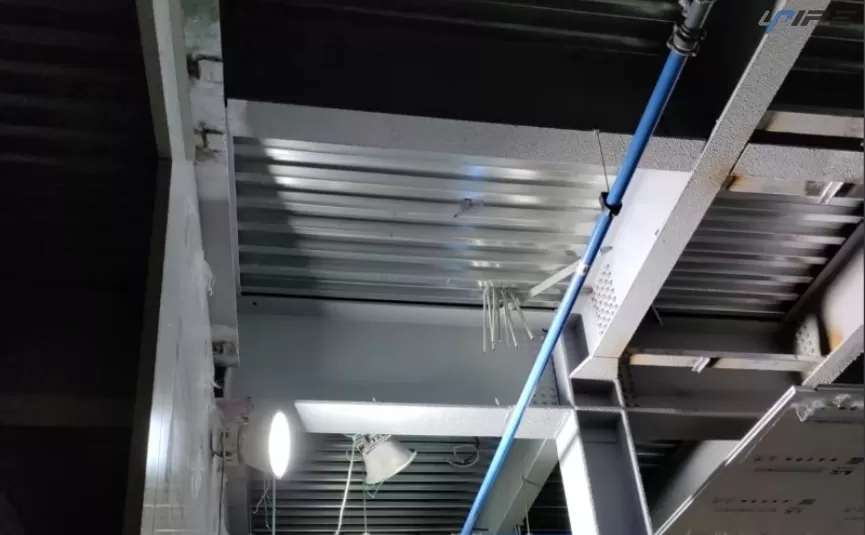
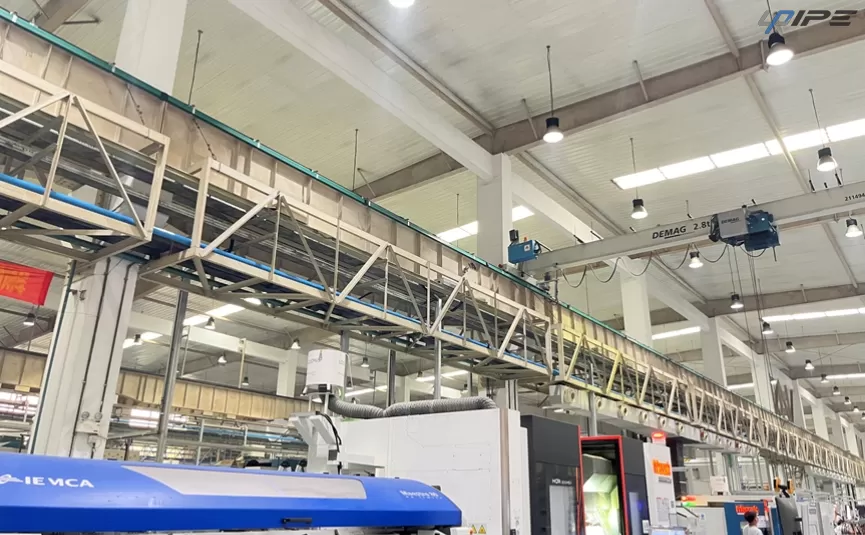
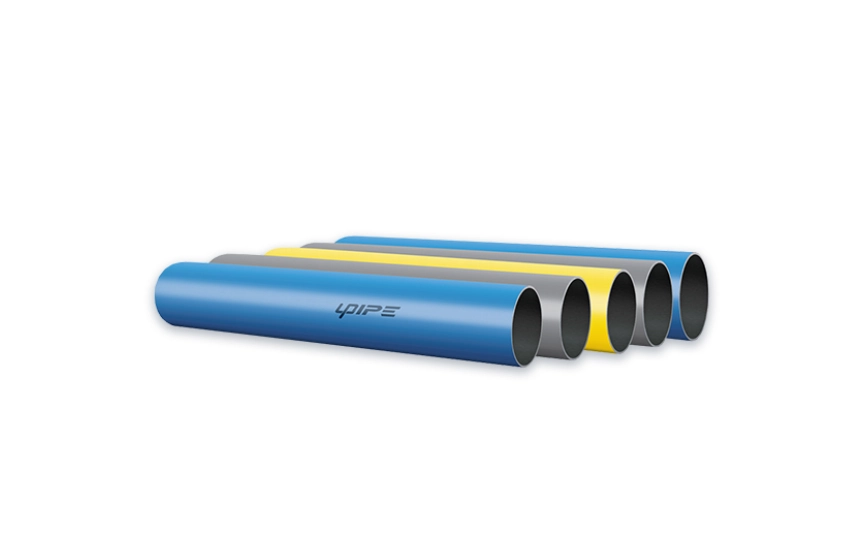
Compressed air is often described as the “fourth utility” in industrial workshops, standing alongside electricity, water, and gas. Yet while compressors and end tools receive careful attention, the piping network that connects them is frequently underestimated. Selecting the right aluminum air line pipe directly influences efficiency, maintenance costs, safety compliance, and long-term operational stability. In this blog post, UPIPE, as blue aluminum compressed air pipe manufacturer, will share the advantages of aluminum air line pipe for compressed air systems in industrial workshops.
Why Aluminum Air Line Pipe Is Reshaping Industrial Compressed Air Networks
Traditional compressed air systems relied on black steel or galvanized piping. While structurally robust, those materials present well-documented limitations: internal corrosion, pressure drop from rough surfaces, difficult installation, and high maintenance requirements.
Aluminum air piping systems provide a different value proposition:
Corrosion resistance under humid or oil-laden conditions
Smooth internal bore reducing turbulence and pressure loss
Lightweight structure enabling faster installation
Modular fittings allowing flexible layout modification
Clean internal surface suitable for sensitive applications
In industrial workshops where air tools, CNC machines, robotic arms, spray booths, and packaging equipment depend on stable pressure, aluminum piping improves distribution reliability without increasing compressor load.
Because the inner wall remains smooth over time, aluminum air line pipe maintains consistent flow characteristics, preventing energy waste caused by internal scaling or rust accumulation.
Engineering Considerations for Aluminum Air Line Pipe for Compressed Air Systems
When designing a compressed air network for an industrial workshop, selecting the correct aluminum pipe is not only about material—it involves performance parameters and system architecture.
1. Pressure Rating and Safety Margin
Industrial workshops typically operate between 6–13 bar (90–190 psi). The aluminum compressed air piping system must meet or exceed working pressure requirements with adequate safety factors. Always verify certification compliance such as ISO standards or regional pressure vessel directives.
2. Pipe Diameter and Flow Efficiency
Undersized pipe leads to pressure drop, while oversizing increases cost unnecessarily. Proper flow calculations should consider:
Total airflow demand (CFM or m³/h)
Peak simultaneous usage
Future expansion capacity
Acceptable pressure drop limits (commonly <5%)
Aluminum air line systems support optimized internal flow due to low friction coefficients, allowing smaller diameters compared to steel for equivalent performance.
3. Thermal Expansion Management
Although aluminum expands more than steel, modern compressed air pipe systems integrate expansion joints or sliding supports. In industrial workshops with temperature fluctuations, expansion planning ensures structural stability and leak prevention.
Installation Advantages in Industrial Workshop Environments
One of the strongest operational arguments for aluminum air piping lies in installation efficiency.
Lightweight and Modular Construction
Aluminum pipes weigh significantly less than steel, reducing labor requirements and installation time. Workshops upgrading old galvanized systems often report shorter downtime during transition.
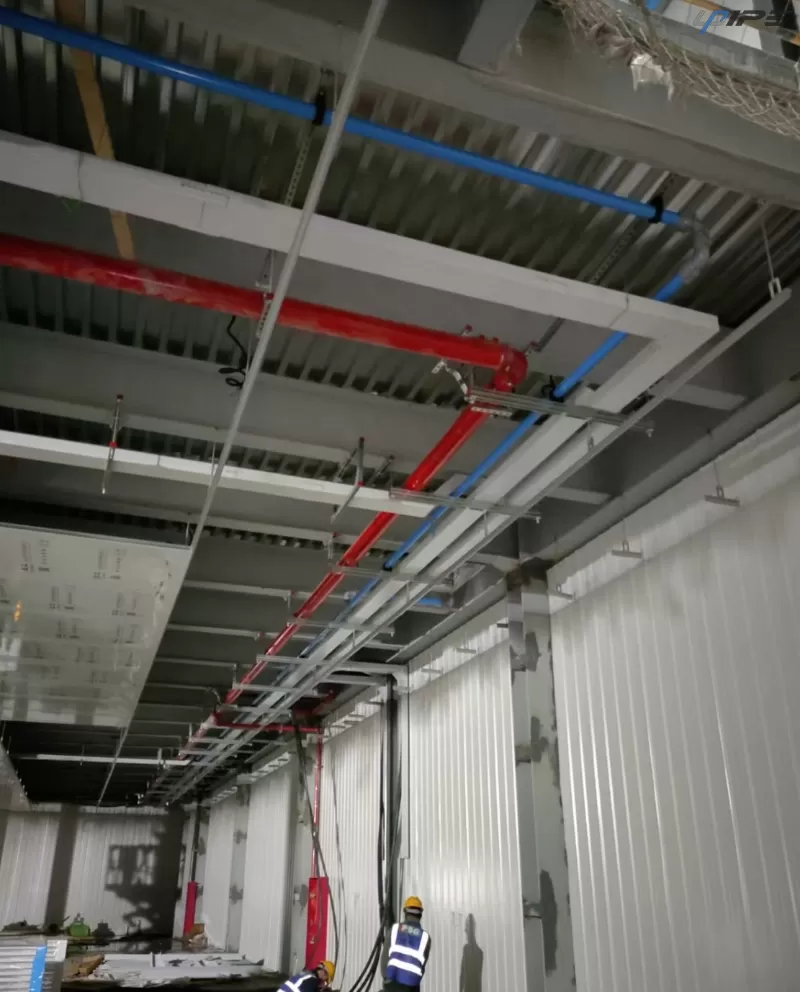
Modular connection systems—such as push-fit, clamp, or compression fittings—enable rapid assembly without welding or threading. This reduces contamination risk inside the air line and minimizes on-site fire hazards.
A reputable blue aluminum compressed air pipe manufacturer typically supplies complete system kits, including:
Straight pipes
Elbows and tees
Drop lines
Wall brackets
Isolation valves
This integrated approach simplifies layout planning and inventory management.
Corrosion Resistance and Air Quality Control
In industrial workshops, compressed air often contains moisture, oil vapor, and particulate contaminants. Steel pipes oxidize internally, leading to:
Rust flakes entering equipment
Filter clogging
Increased maintenance frequency
Product contamination risks
Aluminum compressed air pipes naturally resist corrosion due to their oxide protective layer. The internal surface remains clean, preserving air purity.
For workshops operating pneumatic instruments, paint lines, or food-contact machinery, clean piping reduces downstream filtration load and enhances process reliability.
Energy Efficiency and Pressure Drop Optimization
Energy cost represents a major portion of compressed air system operating expenses. Even minor pressure loss forces compressors to run at higher loads.
Aluminum air line pipe for compressed air systems reduces energy waste through:
Compared to threaded steel systems, modular aluminum networks reduce leak points significantly. Over time, the reduction in compressed air leakage translates into measurable electricity savings.
Proper system design—ring main configuration rather than dead-end layout—further improves pressure stability across the workshop floor.
Maintenance Strategy and Lifecycle Value
Industrial decision-makers increasingly evaluate total lifecycle cost rather than initial purchase price. Aluminum compressed air piping supports predictive maintenance models by reducing corrosion-related degradation.
Key maintenance advantages include:
No internal rust scaling
Easy reconfiguration during equipment relocation
Simple component replacement
Visual identification through color coding
Many facilities prefer blue pipe for compressed air manufacturer standards, as blue is widely recognized internationally for compressed air identification. Clear labeling improves workplace safety and simplifies system audits.
While initial cost may exceed black steel piping, aluminum systems typically demonstrate lower total cost of ownership over 10–20 years.
Compliance, Standards, and International Market Considerations
Global industrial workshops often serve multinational clients requiring strict compliance with safety and quality standards.
When sourcing aluminum air piping systems, verify:
ISO 9001 quality certification
Pressure testing documentation
Material traceability
RoHS compliance (if required)
Compatibility with international fittings
Working with experienced aluminium air pipe suppliers ensures documentation support for export-oriented workshops or multinational manufacturing facilities.
Additionally, aluminum systems align well with sustainability initiatives due to recyclability and reduced energy waste.
Designing a Scalable Compressed Air Distribution Network
Industrial workshops rarely remain static. Production lines evolve, new machines are introduced, and floor layouts change.
Aluminum air line pipe for compressed air systems supports scalability through modular extensions. Expansion can be achieved without major shutdowns by adding branch lines or loops.
Recommended best practices include:
Installing a ring main around the workshop perimeter
Using vertical drops with drain points
Separating high-demand equipment branches
Incorporating isolation valves for zoning
This design approach ensures stable pressure distribution even during peak operation.
Environmental and Operational Durability
Industrial workshops may experience vibration, temperature changes, humidity, and mechanical impacts. Aluminum compressed air pipe systems are engineered for durability in these conditions.
External powder-coated surfaces resist abrasion and chemical exposure. Internal aluminum composition prevents rust formation even in humid climates.
Furthermore, aluminum does not shed scale particles, protecting pneumatic components such as cylinders, solenoid valves, and actuators from premature wear.
Procurement Strategy for Industrial Buyers
When evaluating suppliers, industrial buyers should consider more than price. Key assessment criteria include:
System compatibility with existing infrastructure
Availability of fittings and spare parts
Technical support for flow calculation
Lead time and global shipping capability
Warranty coverage
Choosing established aluminium air pipe suppliers with international distribution networks ensures consistent material quality and after-sales service.
Bulk purchasers should also request detailed pressure testing reports and installation manuals to ensure compliance with workshop safety standards.
Common Design Mistakes to Avoid
Even with high-quality aluminum air line pipe, system performance can suffer due to planning errors.
Avoid the following:
Undersized main trunk lines
Excessive 90-degree elbows increasing pressure loss
Lack of condensate drainage points
No allowance for future expansion
Mixing incompatible fittings
Professional layout planning significantly improves long-term reliability.
The Strategic Role of Aluminum Air Line Pipe in Modern Industrial Workshops
Compressed air systems are evolving from simple utility networks into performance-critical infrastructure. Energy efficiency targets, environmental compliance, and operational reliability demands have increased the importance of piping material selection.
Aluminum air line pipe for compressed air systems in industrial workshops represents a forward-looking solution that balances performance, installation flexibility, corrosion resistance, and lifecycle value.
As workshops modernize with automation and precision equipment, compressed air distribution must match that level of sophistication. Investing in engineered aluminum piping is not merely a material upgrade—it is an infrastructure decision that directly impacts productivity, safety, and long-term operating cost control.
For facilities seeking scalable, energy-efficient, and maintenance-friendly compressed air systems, aluminum air piping has become the industry benchmark rather than an alternative option.