UPIPE aluminum compressed air piping system uses reinforced quick drops, secure sealing, and flow-directed fittings to reduce leaks, pressure loss, and downtime.
Compressed air distribution is only as effective as the connections that deliver air to the equipment. While straight pipe sections receive considerable attention during design, point-of-use connections are often exposed to vibration, mechanical stress, repeated operation, and condensate. A poorly designed drop can become a weak point that affects sealing performance, equipment protection, and installation quality. UPIPE aluminum compressed air piping system solutions address these concerns with reinforced quick drop connections designed for secure, efficient air delivery.
Why Quick Drops Matter in an Aluminum Compressed Air Piping System
Quick drops provide the connection between the main compressed air line and downstream equipment. Their position makes them particularly important because they must maintain structural stability while supporting convenient access to compressed air. If the connection is difficult to install or vulnerable to stress, maintenance requirements can increase and leakage may develop over time.
UPIPE quick drops use a reinforced body structure to help prevent breakage caused by uneven stress. This design supports mechanical stability while maintaining a practical connection method for industrial air distribution. For manufacturers planning an aluminum air piping system for factories, reinforcing the point of use can help create a more dependable network from the main line to individual air-consuming equipment.
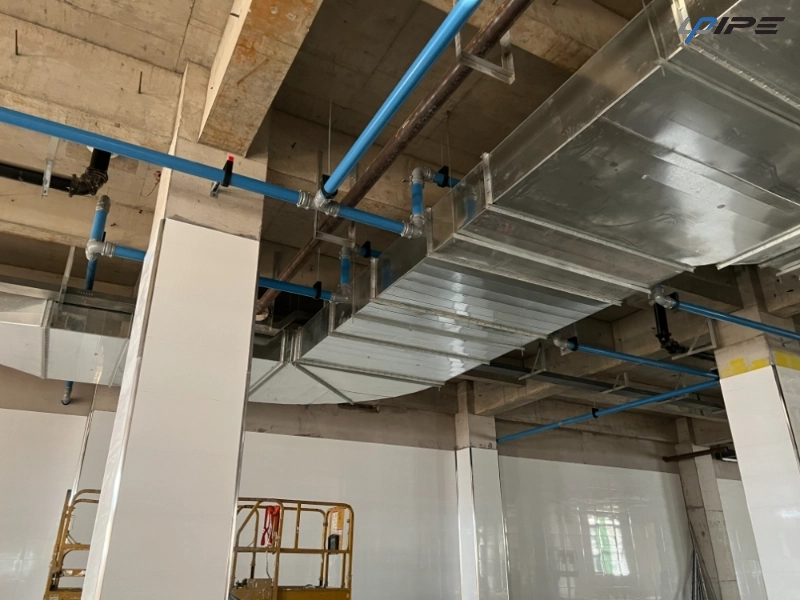
Reinforced Connections for Better Mechanical Stability
Industrial compressed air piping is rarely exposed to completely static conditions. Equipment vibration, frequent operation, maintenance activity, and accidental external forces can place additional stress on connection points. A quick drop therefore needs more than a basic connection structure; it needs reinforcement where mechanical loads may be concentrated.
UPIPE incorporates reinforcement ribs into the quick drop body to reduce the risk of damage caused by stress imbalance. High-strength materials are also used for passive locking accessories to help prevent fracture. These structural details provide an additional level of protection for point-of-use connections without turning the product into a complicated installation component.
Multi-Surface Sealing Helps Control Air Leakage
A secure connection also depends on sealing quality. Even a mechanically strong fitting can become inefficient if the sealing surface is poorly designed or incorrectly installed. Air leakage can reduce available pressure at the point of use and increase compressed air waste, making leakage prevention an important part of compressed air piping design.
UPIPE quick drops use a foolproof multi-surface sealing structure designed to reduce leakage risks while simplifying installation. The sealing rubber is produced from imported Thai rubber raw materials and is designed to maintain strong sealing performance under vibration or installation conditions. This combination of sealing material and connection design supports more consistent air distribution.
Gooseneck Design Helps Protect Downstream Equipment
Moisture management is another consideration when designing compressed air distribution. Condensate can accumulate in compressed air lines and may move toward downstream equipment if piping routes are not properly designed. Uncontrolled moisture can create additional maintenance concerns and affect sensitive pneumatic components.
The UPIPE quick drop uses a gooseneck design that helps prevent condensate from flowing downward into connected equipment. Instead of treating the drop as a simple outlet, this design considers the relationship between piping geometry and equipment protection. For industrial users, that makes the point-of-use connection part of a broader approach to cleaner and more dependable compressed air delivery.
Flow-Directed Fittings Reduce Unnecessary Pressure Loss
Quick drops work together with the rest of the piping network. Pressure performance can be affected by changes in direction, restricted passages, and poorly designed fittings. For this reason, an efficient aluminum compressed air piping system should consider elbows, tees, drops, and connectors as part of the complete airflow path rather than evaluating straight pipes alone.
UPIPE tees, elbows, and quick drops feature special flow-directing shapes intended to improve structural strength while reducing pressure loss. Better airflow management at these transition points can help maintain pressure as compressed air travels through the network. This is particularly relevant for facilities seeking lower resistance and more stable air delivery.
| Quick Drop Design | Practical Value |
|---|
| Reinforced body ribs | Helps resist stress-related breakage |
| High-strength locking accessories | Supports connection durability |
| Multi-surface sealing | Reduces leakage risk |
| Gooseneck structure | Helps prevent condensate reaching equipment |
| Ready-to-use connection | Saves installation and production time |
| Flow-directed shape | Helps reduce pressure loss |
Installation Efficiency Without Sacrificing Connection Quality
Installation time is an important consideration for factories, contractors, and maintenance teams. A compressed air network may contain numerous connection points, so even small improvements in installation efficiency can become significant across a larger project.
UPIPE quick drops are designed to be available on demand and ready to use, helping reduce unnecessary preparation work. The broader piping solution also incorporates pre-treated raised rings on larger pipes, which can reduce onsite installation requirements. These features allow installation teams to focus more on routing and connection accuracy rather than time-consuming preparation.
The connection approach is also intended to make installation less dependent on complicated procedures. A practical industrial air piping installation should provide secure sealing while remaining straightforward enough to reduce avoidable installation errors. This balance is especially valuable when piping must be installed, modified, or extended around active production areas.
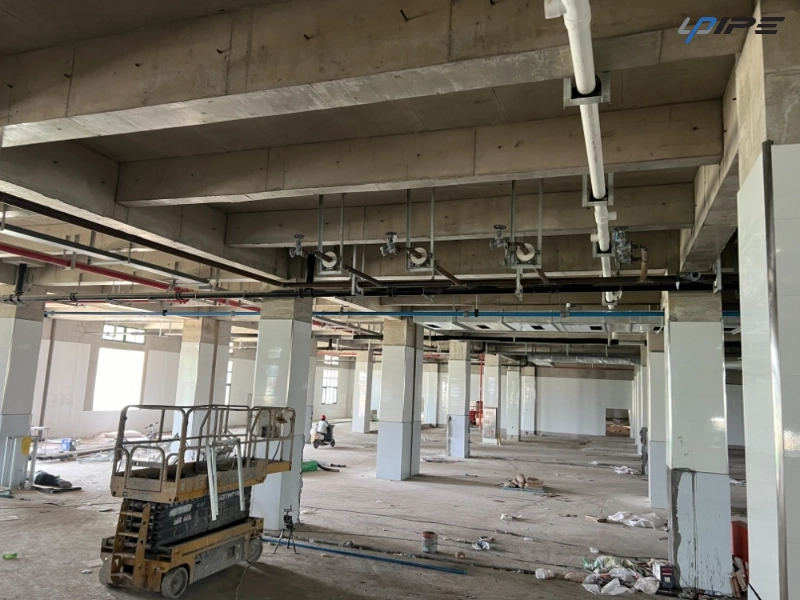
Pipe Construction Supports Long-Term Airflow Quality
The performance of a quick drop cannot be separated from the quality of the pipes it connects. UPIPE pipes are manufactured from pure aluminum without recycled material, with precisely cut ends and clean internal surfaces. These characteristics help maintain a clean and consistent internal airflow path.
A thickened wall design is used across the pipe range to provide additional structural durability. Precise cutting also supports cleaner pipe-to-pipe connections, while protective packaging helps prevent contamination during transportation and storage. The pipes are lined with non-woven fabric, externally sealed with plastic, and closed at both ends to help preserve internal cleanliness before installation.
Strong Connectors and Anti-Vibration Support
Pipe connectors are another important component of a reliable compressed air network. UPIPE pipe-to-pipe connectors use an integrated molding process, designed to provide consistent strength between the bolt and connector body. This construction supports higher pressure resistance and helps maintain connection integrity during operation.
Vibration control is also addressed through the design of the pipe clamps. All UPIPE pipe clamps incorporate anti-vibration features to provide more secure support for installed piping. Proper support can reduce unwanted movement and mechanical stress at joints, which complements the reinforced construction of the quick drops and connectors.
Integrated Components Create a More Balanced Air Network
An efficient piping solution requires compatibility between its major components. Pipes, connectors, fittings, quick drops, valves, seals, and clamps all contribute to the final performance of the network. Improving only one component while overlooking the others can leave potential weaknesses elsewhere in the installation.
UPIPE combines these elements into a coordinated approach to industrial compressed air piping. Flow-directed fittings address pressure loss, reinforced quick drops address mechanical stress, sealing structures address leakage, and anti-vibration clamps provide stable support. Together, these features focus on the practical challenges that arise during installation and continuous operation.
Choosing Point-of-Use Connections for Industrial Air Distribution
When selecting quick drops for a factory compressed air network, buyers should consider more than connection convenience. Structural strength, sealing reliability, condensate management, installation efficiency, and compatibility with the overall piping layout all influence long-term performance.
A suitable aluminum air piping solution should also make maintenance and future adjustments manageable. Ready-to-use connections can reduce installation effort, while durable locking structures and reinforced bodies can support continued operation. These factors become increasingly important as the number of air outlets and connected devices increases.
UPIPE's approach places the quick drop within the broader design of the compressed air network rather than treating it as an isolated accessory. This makes it possible to address airflow, sealing, structural protection, and installation efficiency at the same connection point.
FAQ
What is a quick drop in compressed air piping?
A quick drop is a point-of-use connection that transfers compressed air from the main distribution line to downstream equipment. It needs reliable sealing and structural support because it is directly connected to air-consuming equipment.
How do reinforced quick drops reduce breakage risks?
UPIPE quick drops use reinforcement ribs to help distribute mechanical stress more evenly. High-strength locking accessories also help reduce the risk of fracture during operation.
Can quick drop design affect compressed air pressure loss?
Yes. Fitting geometry influences airflow direction and resistance. UPIPE uses flow-directed shapes in tees, elbows, and quick drops to help reduce unnecessary pressure loss.
How does the gooseneck design help protect equipment?
The gooseneck structure helps prevent condensate from flowing downward into connected equipment. This provides an additional layer of protection for downstream pneumatic components.
How does UPIPE address air leakage?
UPIPE uses multi-surface sealing in quick drops and sealing rubber designed for strong sealing performance. The connection structure is intended to reduce leakage risks associated with vibration or improper installation.
Why are anti-vibration pipe clamps important?
Vibration can place additional mechanical stress on pipe joints and connections. Anti-vibration clamps help provide stable support and complement the reinforced construction of the piping connections.
What should buyers consider when choosing an aluminum compressed air piping system?
Key considerations include airflow resistance, pressure loss, connection strength, sealing performance, condensate management, installation efficiency, pipe durability, and support structures. Evaluating these factors together can lead to a more balanced compressed air distribution network.