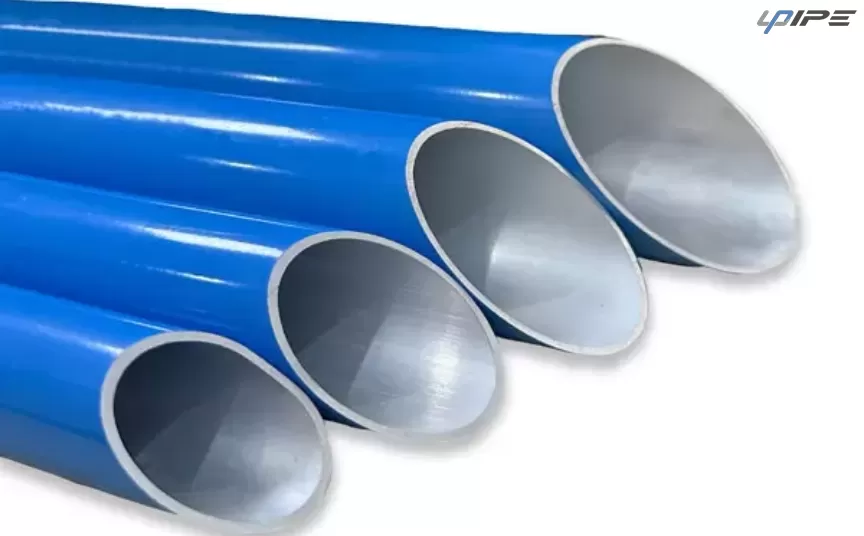
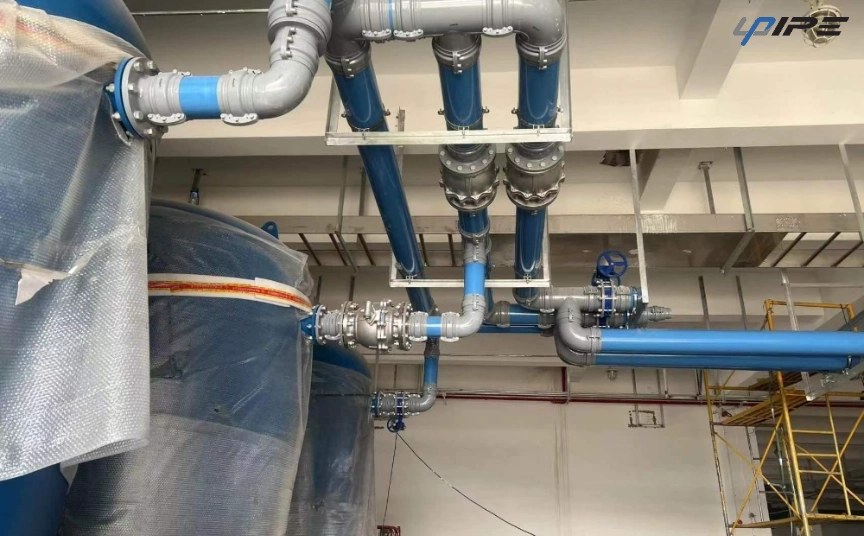
UPIPE blue aluminum air pipe helps improve compressed air efficiency with corrosion-resistant construction, secure sealing, lower pressure loss, and faster installation.
Why Energy Efficiency Starts with the Right Air Distribution Infrastructure
Compressed air remains one of the most important utility resources in manufacturing, processing, packaging, automotive production, electronics assembly, food handling, and many other industrial environments. While companies often focus on compressor performance, filtration equipment, and energy management programs, the distribution network itself is frequently overlooked. In reality, pipe material selection, airflow design, connection quality, and installation practices can have a significant impact on pressure stability, energy consumption, maintenance costs, and long-term operational efficiency.
Among the available piping materials, blue aluminum air pipe has gained increasing attention because it combines corrosion resistance, lightweight construction, smooth internal surfaces, and easy installation. Compared with traditional steel piping, aluminum solutions offer improved airflow characteristics and help reduce energy losses caused by corrosion, leakage, and pressure drop. As industries continue to seek greater efficiency and lower operating costs, aluminum piping has become an increasingly preferred choice for compressed air distribution.
UPIPE has developed a comprehensive range of aluminum piping products designed to support efficient airflow, reliable operation, and simplified installation. Through careful engineering and strict manufacturing standards, these products address many of the challenges associated with conventional piping materials while helping facilities maintain consistent compressed air performance.
The Growing Demand for Efficient Air Distribution
Compressed air is often described as one of the most expensive forms of energy used in industrial facilities. Even small inefficiencies throughout the distribution network can increase operating costs over time. Pressure losses force compressors to work harder, leaks waste valuable energy, and internal corrosion can gradually restrict airflow.
An efficient air distribution network should provide stable pressure from the compressor room to the point of use while minimizing unnecessary energy consumption. This objective requires attention to several critical factors, including pipe diameter, connection integrity, airflow design, surface smoothness, and material durability.
The increasing adoption of blue aluminum compressed air pipe reflects a broader industry movement toward infrastructure that supports long-term efficiency rather than short-term installation savings. Manufacturers are recognizing that investing in high-quality piping can significantly improve overall facility performance throughout the service life of the network.
How Material Quality Influences Airflow Performance
Pipe material directly affects airflow characteristics. Traditional steel piping may initially provide acceptable performance, but over time internal corrosion can develop, creating rough surfaces that increase friction and restrict air movement. These restrictions contribute to pressure drop and reduce the effectiveness of the entire distribution network.
Aluminum offers a different approach. Because aluminum naturally resists corrosion, the inner surface remains clean and smooth for extended periods. This helps maintain consistent airflow and reduces resistance throughout the network.
UPIPE utilizes pure aluminum material without recycled content in pipe production. Consistent material quality contributes to structural integrity, dimensional accuracy, and long-term reliability. The precisely machined pipe ends further support secure connections and smooth airflow pathways, helping reduce turbulence inside the pipeline.
The result is a cleaner and more efficient air pathway that supports stable pressure delivery across various industrial applications.
Why Wall Thickness Matters in Industrial Applications
When evaluating piping solutions, attention is often focused on diameter and connection methods. However, wall thickness also plays a critical role in mechanical strength and operational reliability.
UPIPE incorporates a thickened wall design across all pipe models. This construction helps improve durability under demanding operating conditions while providing additional resistance to external impacts and mechanical stress.
The enhanced wall structure also contributes to installation confidence. Facilities often require piping networks to accommodate future expansions, equipment relocations, and changing production layouts. A stronger pipe structure provides greater flexibility when adapting the network to evolving operational requirements.
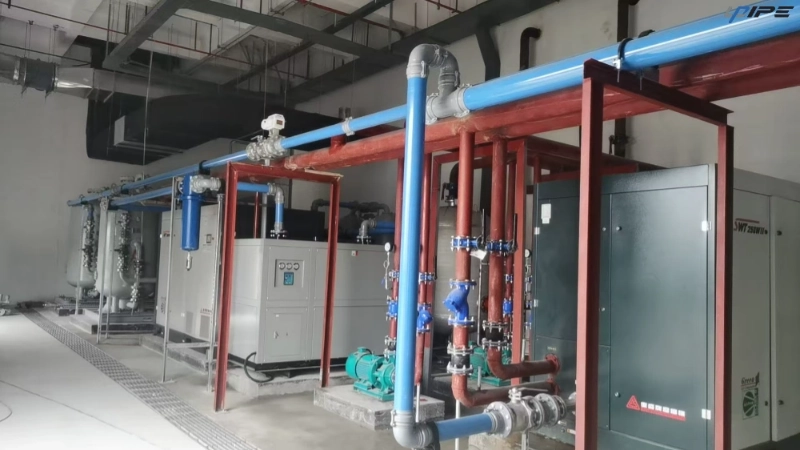
Faster Installation Without Compromising Quality
Installation efficiency has become an important consideration for manufacturers seeking to reduce downtime during facility upgrades or new construction projects. Extended installation periods can delay production schedules and increase labor costs.
One important advantage of UPIPE products is the pre-treatment process applied to all DN40 and larger pipes. Raised rings are incorporated before delivery, reducing the amount of preparation required during installation. This feature helps accelerate project completion while maintaining connection accuracy.
Proper compressed air pipe installation involves more than simply connecting sections together. Alignment, sealing quality, support positioning, and airflow direction all influence long-term performance. By simplifying key installation steps, UPIPE helps contractors and facility engineers achieve reliable results while reducing on-site labor requirements.
Protecting Internal Cleanliness During Transportation
Maintaining pipe cleanliness before installation is essential, especially in industries where air quality directly affects production processes. Dust, debris, and contamination introduced during transportation can compromise system performance and increase maintenance requirements.
UPIPE addresses this concern through a multi-layer packaging approach. Pipes are protected using non-woven fabric lining, external plastic sealing, and sealed pipe ends. This packaging strategy helps prevent external contaminants from entering the pipeline before installation.
Maintaining clean internal surfaces supports efficient airflow and reduces the likelihood of contamination-related issues after commissioning.
Connection Technology and Structural Strength
Connection reliability is one of the most important aspects of compressed air distribution. Weak connections can contribute to leakage, pressure instability, and increased maintenance requirements.
UPIPE pipe-to-pipe connectors are manufactured using an integrated molding process. Unlike conventional assemblies where individual components may have different strength characteristics, integrated construction helps ensure consistent structural performance throughout the connector.
The unified design provides enhanced pressure resistance while maintaining dimensional accuracy. Stronger connections help reduce the risk of failure under demanding operating conditions and contribute to long-term operational stability.
The following table highlights key connection-related advantages.
| Feature | Operational Benefit |
|---|
| Integrated connector structure | Improved strength consistency |
| Precision manufacturing | Better alignment during assembly |
| Enhanced pressure resistance | Greater operational reliability |
| Durable construction | Reduced maintenance requirements |
Sealing Performance and Leak Prevention
Air leakage remains one of the most common causes of energy waste in industrial facilities. Even relatively small leaks can significantly increase operating costs over time.
Effective sealing requires both quality materials and proper design. UPIPE utilizes sealing components manufactured from imported rubber raw materials sourced from Thailand. These materials provide strong elasticity and durability, helping maintain sealing performance under varying operating conditions.
Vibration, temperature changes, and installation errors can all contribute to leakage in poorly designed networks. High-quality sealing materials help compensate for these factors while supporting long-term connection integrity.
Reducing leakage not only improves efficiency but also helps maintain consistent pressure throughout the distribution network, benefiting downstream equipment and production processes.
Flow Optimization Through Intelligent Fitting Design
Airflow efficiency depends on more than pipe material alone. Fittings, bends, tees, and drops can significantly influence pressure loss if they are not properly designed.
UPIPE engineers tees, elbows, and quick drops with specialized flow-directing geometries. These designs help guide airflow more effectively through directional changes while reducing turbulence.
Lower turbulence translates into reduced pressure loss and improved airflow consistency. At the same time, optimized shapes contribute to stronger structural performance, supporting both efficiency and durability objectives.
This balanced approach allows facilities to improve energy utilization without sacrificing mechanical reliability.
Quick Drops Designed for Practical Industrial Requirements
Quick drops are often overlooked despite their importance in daily operations. Poorly designed drops can create maintenance challenges, leakage risks, and condensate-related problems.
UPIPE quick drops incorporate several structural improvements intended to address common operational concerns.
Reinforcement ribs are integrated into the body structure to reduce the possibility of breakage caused by uneven stress distribution. Passive locking components utilize high-strength materials to improve durability and operational security.
The sealing arrangement employs a foolproof multi-surface sealing approach designed to simplify installation while minimizing leakage risks. This configuration supports reliable performance even when installation conditions are less than ideal.
Another important feature is the gooseneck design. By preventing condensate water from flowing downward into the air line, this configuration helps protect downstream equipment and supports cleaner air delivery.
Because these components are available for immediate use, installation schedules can be accelerated without extensive preparation requirements.
The Role of Aluminum Valves in Long-Term Stability
Valves serve as critical control points throughout compressed air distribution networks. Their reliability directly affects operational continuity and maintenance frequency.
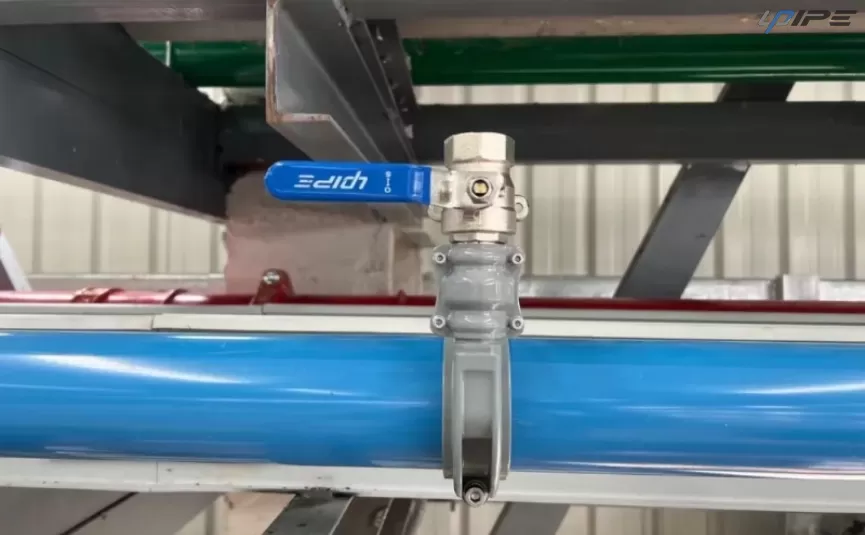
UPIPE ball valves are manufactured from integrated aluminum alloy construction. This design supports long-term structural stability while maintaining dependable shutoff performance.
Aluminum construction also contributes to corrosion resistance, helping preserve valve functionality over extended service periods. Reliable valve operation is particularly important during maintenance procedures, network modifications, and emergency isolation situations.
Vibration Control and Infrastructure Longevity
Industrial environments often expose piping networks to vibration generated by compressors, production equipment, and mechanical processes. Excessive vibration can gradually loosen connections, increase wear, and contribute to leakage.
UPIPE incorporates anti-vibration features into all pipe clamp designs. These features help stabilize the pipeline while reducing stress transmitted through the network.
Proper vibration management supports both operational reliability and component longevity. Over time, reduced mechanical stress can contribute to lower maintenance requirements and improved infrastructure durability.
Comparing Common Pipe Materials
The following comparison illustrates several factors influencing material selection.
| Characteristic | Aluminum Pipe | Carbon Steel Pipe |
|---|
| Corrosion Resistance | Excellent | Limited |
| Weight | Lightweight | Heavy |
| Installation Speed | Fast | Slower |
| Internal Surface Smoothness | Long-lasting | Degrades over time |
| Pressure Drop Potential | Lower | Higher after corrosion develops |
| Maintenance Requirements | Reduced | Higher |
These advantages explain why many facilities are transitioning toward an aluminum compressed air piping system when upgrading existing infrastructure or constructing new production facilities.
Supporting Sustainable Manufacturing Goals
Energy efficiency has become a priority across global manufacturing sectors. Reducing waste, improving resource utilization, and lowering operational costs are closely connected objectives.
An efficient aluminium compressed air pipe system contributes to these goals by helping maintain airflow efficiency, reducing leakage, minimizing pressure losses, and supporting long service life. Because aluminum resists corrosion and requires less maintenance, facilities can often achieve improved operational consistency while reducing lifecycle costs.
Rather than focusing solely on compressor upgrades, organizations are increasingly evaluating the entire air distribution pathway to identify opportunities for efficiency improvements.
Conclusion
Efficient compressed air distribution depends on much more than compressor performance. Material quality, connection reliability, airflow design, sealing effectiveness, and installation efficiency all contribute to overall operational results.
UPIPE addresses these requirements through pure aluminum construction, thickened wall designs, integrated connectors, advanced sealing technology, optimized fittings, reinforced quick drops, durable ball valves, and anti-vibration support components. Together, these features help create a dependable infrastructure capable of supporting stable airflow, reduced energy consumption, and long-term operational reliability.
As manufacturers continue seeking practical ways to improve efficiency and control operating costs, high-quality aluminum piping remains an increasingly valuable investment for compressed air distribution projects.
FAQ
What makes blue aluminum air pipe more efficient than traditional steel piping?
Blue aluminum air pipe maintains a smooth internal surface because it resists corrosion. This helps reduce airflow resistance and pressure loss while supporting consistent compressed air delivery.
Why is leak prevention important in compressed air distribution?
Leaks waste energy, increase operating costs, and reduce available pressure. High-quality sealing materials and reliable connectors help minimize these losses.
How does aluminum contribute to easier installation?
Aluminum is significantly lighter than steel, making handling and assembly easier. Features such as pre-treated pipe ends can further reduce installation time.
Why are optimized fittings important for airflow?
Specially designed tees, elbows, and drops reduce turbulence and pressure loss during airflow direction changes, helping maintain efficient air delivery.
What should be considered when planning compressed air pipe installation?
Important factors include pipe sizing, airflow requirements, support placement, connection quality, future expansion needs, and overall pressure management.
How do anti-vibration pipe clamps improve reliability?
They help reduce mechanical stress caused by equipment vibration, minimizing wear on connections and contributing to longer service life.