Home > News > Blog > Corrosion-Resistant Compressed Air Piping Solution for Humid and Harsh Industrial Environments
# Blog
Corrosion-Resistant Compressed Air Piping Solution for Humid and Harsh Industrial Environments
2026-06-01
Share:
Choose corrosion-resistant piping like stainless steel or aluminum for compressed air systems in humid environments to prevent rust, leaks, and costly repairs.
When working in humid environments, you need corrosion-resistant piping that won't rust. Stainless steel and aluminum are the best choices for this purpose. Stainless steel is utilized in 30% of systems, while aluminum is found in 25% of systems. Selecting the right material ensures that your compressed air system remains safe from rust and leaks. Humid air accelerates the rusting process, which can lead to pipe failures and safety issues. Careful selection of corrosion-resistant piping helps your system last longer and maintain safety.
Key Takeaways
Pick stainless steel or aluminum for pipes in wet places. These materials stop rust and keep the system safe.
Check your pipes often, especially in damp or salty spots. Watch for rust, leaks, or damage to keep things working well.
Think about how much it costs to install and care for each material. Aluminum is cheap and simple to put in. Stainless steel lasts a long time.
Use epoxy coatings to guard pipes from water and chemicals. If you put on the coating right, your pipes will last much longer.
Do not use plastic pipes like PVC or PEX for compressed air. These pipes can break under pressure and cause safety problems.
Corrosion-resistant piping options for humid environments
Picking the right corrosion-resistant piping keeps your compressed air system safe from rust and leaks. There are a few good materials you can use. Each one has its own good points and problems. You should think about chemical concentration, temperature, and stress corrosion cracking before you choose.
Stainless steel and copper-nickel alloys
Stainless steel is a strong choice for corrosion-resistant piping. It does not rust and works well in high humidity. You can use stainless steel where there is always moisture. Copper-nickel alloys also do well in humid places. They fight off corrosion and last a long time. These alloys are best for systems with salty air or chemicals. You need to check the chemical concentration in your air system. Some chemicals, like chlorine, can hurt stainless steel after a while. High heat and quick temperature changes can make metal weak and shorten pipe life.
Tip: Always check what is in your system and the temperature. Even small amounts of bad stuff can make corrosion happen faster.
Brass and copper pipes
Brass and copper pipes are great at stopping corrosion. Copper pipes do not rust or corrode easily. They last a long time and do not need much fixing. They work inside and outside, even when it is very humid. Brass pipes also stop rust and corrosion, but they cost more than copper. Both types work well in humid or coastal places.
Excellent in humid environments, resistant to rust and corrosion
Slightly more expensive than copper
Minimal maintenance required due to durability
Copper
Good, but susceptible to corrosion in acidic or salty conditions
May cost more upfront, especially in coastal areas
Requires more frequent maintenance in harsh conditions
Copper pipes naturally fight off corrosion.
They do not rust or corrode easily, so they last longer.
Copper's corrosion resistance helps a lot in humid places.
You spend less on repairs and replacements.
They work well in humid or coastal areas.
Copper pipes are good for both inside and outside use.
They keep working well even when it is very humid.
Plastic piping (CPVC, HDPE, PEX)
Plastic piping is another way to stop corrosion. CPVC, HDPE, and PEX are common choices. HDPE is good because it blocks UV rays and lasts longer. You can use HDPE for compressed air systems in humid places. CPVC can break if it touches some chemicals. PEX does not do well in sunlight, so do not use it outside. Plastic pipes can get weak from compressor oils, water, and pressure changes. They can also get damaged by UV and the environment over time. You need to make sure the connections are strong for air systems.
UV and the environment can damage pipes over time.
Bad connections can cause problems in air systems.
Coated and lined pipes
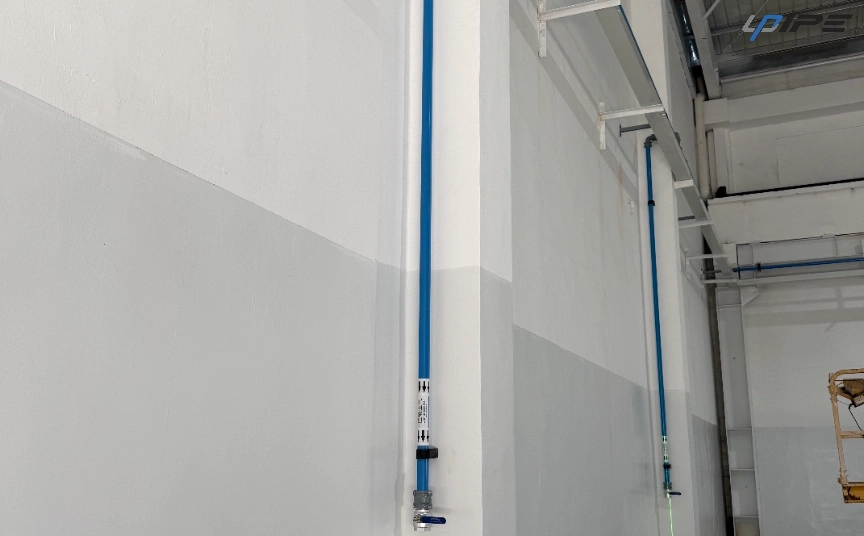
Coated and lined pipes help stop corrosion. Epoxy lining blocks damage from water, mold, and erosion. It also stops heavy metals from getting into your air system. Aluminum piping systems do not rust and do not leak. You can put them in easily. Epoxy coatings fight off chemicals. Polyurethane coatings protect against scratches. How long coatings last depends on how you put them on, the environment, and how you take care of them. If coatings are not done right, you will need more repairs and spend more money. Checking and taking care of coatings helps them last longer.
You should pick corrosion-resistant piping based on your environment and what your system needs. Think about chemical concentration, temperature, and how much care the pipes need. This helps you build a safe and strong compressed air system in humid places.
Why corrosion is a concern in compressed air systems
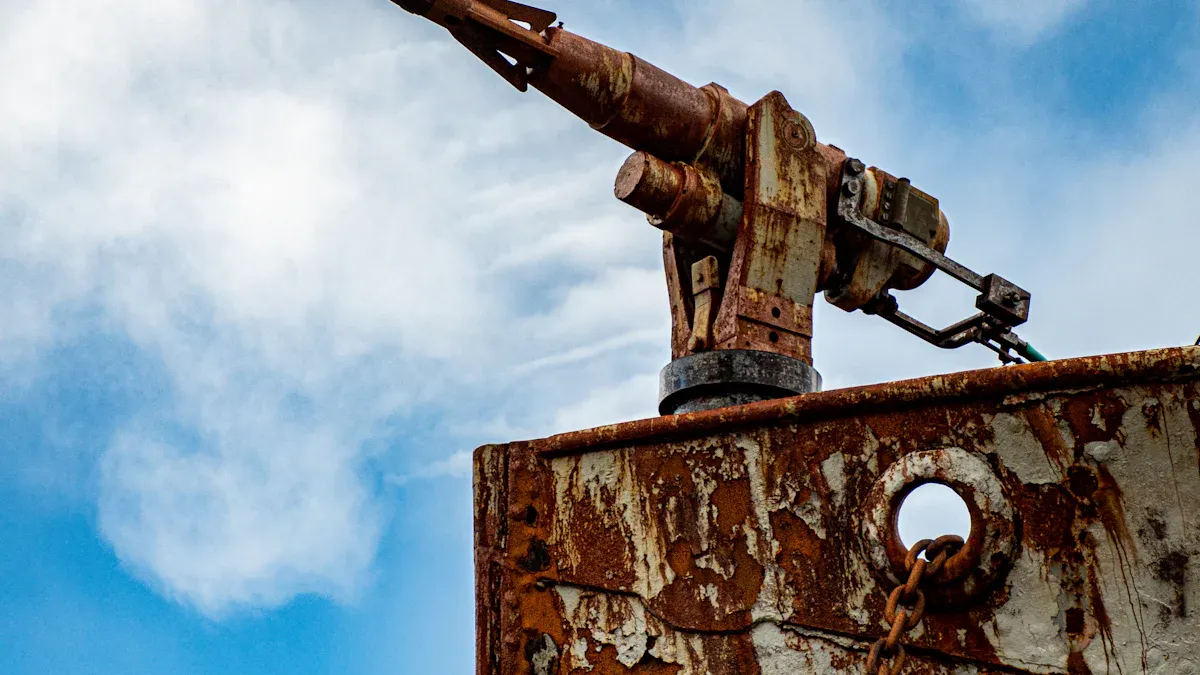
Humidity makes pipes corrode faster. In humid places, water forms a thin layer on metal. This layer helps metal ions dissolve and speeds up corrosion. Hotter temperatures make corrosion happen even quicker. If you are near the ocean, salty air keeps pipes wet. Salt also puts chloride on the metal, which attacks it. Gases like sulfur dioxide and nitrogen oxides mix with water. These gases turn into acids that eat away at pipes.
Factor
How It Affects Corrosion
Relative Humidity
Water film forms, speeds up corrosion
Temperature
Higher heat increases corrosion rate
Atmospheric Pressure
Changes how water vapor sticks to pipes
Pollutant Gases
Form acids that damage metal
Salinity
Salt keeps pipes wet, adds to corrosion
When humidity goes up, you might see more water inside pipes. This extra water causes rust inside and can break pipes. Oil and dust move around more easily with the extra water. This makes it harder to keep your system clean.
Risks and consequences of corrosion
Corrosion can cause lots of problems in your air system. Rust and small holes make pipes and fittings weak. Clogged pipes slow down air and make the system work worse. Leaks waste energy and lower the pressure. If you use the system for food or medicine, corrosion can ruin products by making them dirty.
Corrosion can cause:
Valves to stop working and tools to break
Air leaks that waste energy
Machines to work less well
Airflow to change and jobs to take longer
Germs to grow in wet pipes
Leaks and low pressure make machines work harder and not last as long. Water inside servo valves can make them break or move wrong. To stop these problems, you need corrosion-resistant piping for humid places.
Material comparison and selection tips
Durability and lifespan
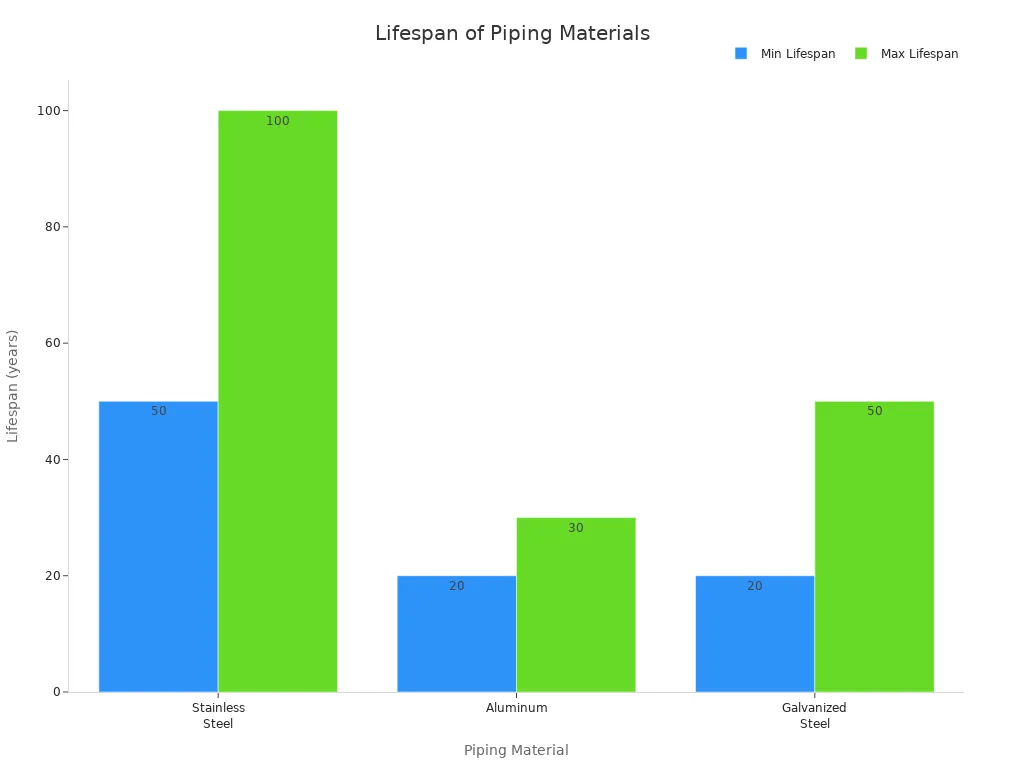
You want your pipes to last a long time in humid places. Some materials do better with moisture than others. Stainless steel lasts the longest. It can last more than 50 years, even in tough spots. Aluminum does not rust and can last up to 30 years. Galvanized steel does not last as long because it can rust inside. Black iron and regular steel rust fast, so do not use them.
Think about how much the pipes cost and how hard they are to put in. Stainless steel is the most expensive and needs skilled workers. Copper also costs a lot and takes longer to install. Aluminum is cheaper and easy to work with. Plastic pipes are cheap, but do not use them for compressed air because they can break.
You need to check your pipes often, especially in wet or salty places. Stainless steel and aluminum do not need much care, but you still need to look at them. Old pipes or pipes in harsh places need more checks. Some jobs have rules about how often you must check pipes.
Check pipes more if you see rust, leaks, or damage.
Wet and salty air means you should check pipes more often.
Always follow the rules for checking pipes.
Note: Never use PEX or PVC for compressed air. These pipes can break and cause accidents.
When you choose pipes, think about how long they last, how much they cost, and how much care they need. Aluminum and stainless steel are the best for safety, long life, and easy care in humid places.
Enhancing corrosion resistance
Epoxy coatings and linings
Epoxy coatings and linings help your compressed air system last longer. These coatings make a tough layer that keeps out water and chemicals. When you use epoxy, water cannot touch the metal. This stops rust and other corrosion from starting. In humid places, epoxy coatings work well because they block water and stop chemical damage. Polyurethane coatings can also help by stopping scratches. If you see corrosion, a good coating can fix it and keep it from getting worse.
Epoxy coatings protect pipes from water and chemicals.
They are needed for systems in humid places.
Coatings keep pipes safe from rust and leaks.
Tip: Always make sure the coating covers the whole pipe. If there are gaps or cracks, water can get in and cause damage.
Design to prevent stress corrosion cracking
A good design helps stop stress corrosion cracking. Stress points in pipes make corrosion happen faster, like at bends or where the pipe changes shape. You can lower the risk by using smooth bends and not having sharp corners. Thicker pipes or extra support in high-stress spots also help. After welding, heat treatments can take away stress in the metal. Polishing or shot peening makes the pipe stronger and less likely to crack. Some smart coatings can fix themselves if they get damaged.
Avoid sharp corners and sudden pipe size changes.
Use thicker pipes or add support where needed.
Heat treat welded spots to remove stress.
Make the pipe surface better to stop cracks.
Pick coatings that can fix themselves if hurt.
Check your pipes often. Look for cracks, rust, or other problems. Clean pipes with safe cleaners and dry them well. If you find corrosion, remove it and put on new coatings. Replace pipes that are too damaged to keep your system safe and working well.
You have a few good choices for pipes in humid places. Aluminum, stainless steel, and copper pipes are strong and last a long time. PPR pipes are tough and do not need much fixing.
Pick the best material for your system. Put the pipes in the right way. Check your pipes often to make sure they work. Ask experts if you need help. Choose pipes that keep your air system safe and strong.
FAQ
What is the best material for compressed air piping in humid environments?
You should choose stainless steel or aluminum. Both resist rust and last a long time. Stainless steel works well in harsh conditions. Aluminum is lightweight and easy to install.
Can I use plastic pipes for compressed air systems?
You can use CPVC or HDPE for some systems. These plastics resist corrosion. Never use PVC or PEX for compressed air. They can burst and cause injuries.
How often should I inspect my compressed air pipes?
You should check your pipes at least once a year. If you work near the ocean or in a wet area, inspect them more often. Look for rust, leaks, or damage.
Do I need special coatings for my pipes?
Epoxy coatings help protect metal pipes from water and chemicals. You should use coatings if your system faces high humidity or chemical exposure. Always check that the coating covers every part of the pipe.
This website uses cookies to provide you with a safer and more personal experience. By accepting, you agree to the Cookie Policy and the use of cookies for advertising and analytics purposes.