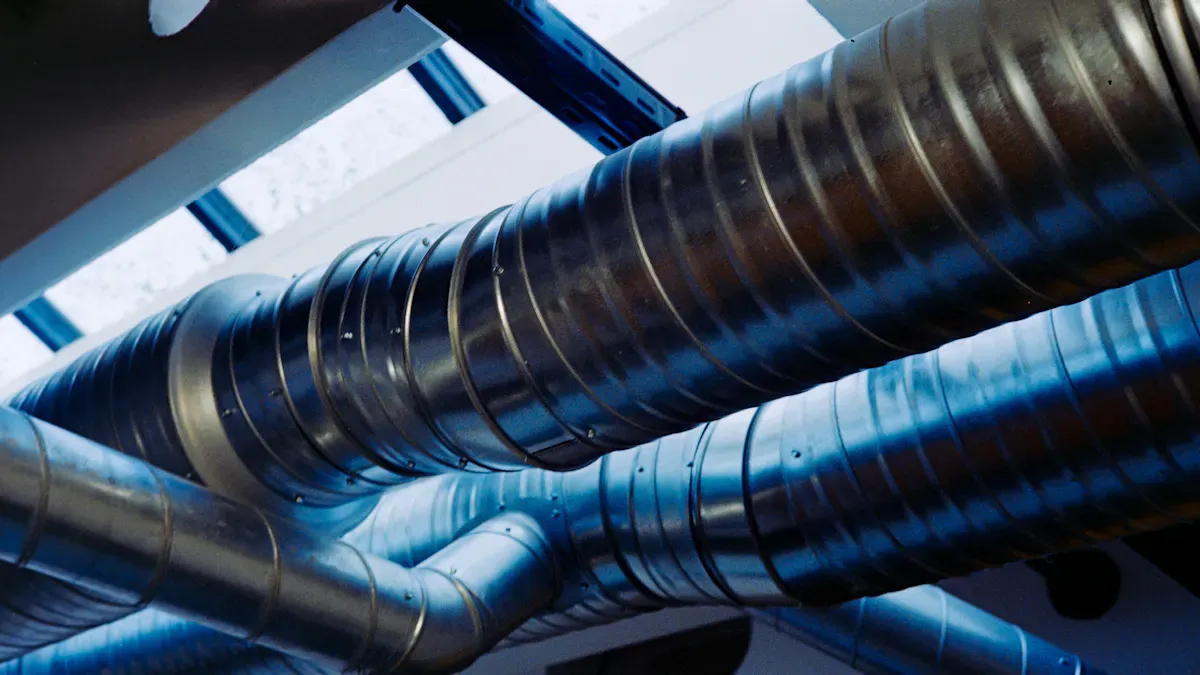
UPIPE provide energy-efficient aluminum compressed air pipe systems for cost savings, leak prevention, and easy installation.
In modern industrial production, compressed air is one of the most important energy carriers. It powers automation lines, pneumatic tools, packaging systems, and precision manufacturing equipment. However, many factories still overlook one critical part of the system—the piping network that delivers the air.
Even the most advanced compressor will lose efficiency if the pipeline leaks, corrodes, or creates pressure drops. That is why energy-efficient aluminum compressed air pipe systems have become the preferred choice for factories aiming to reduce operating costs and improve system stability.
Today, several global companies offer high-performance aluminum compressed air piping solutions, including Transair (Parker Hannifin), AIRpipe Europe, Atlas Copco, Prevost, and emerging modular system providers like UnipipeAIR. At the same time, innovative manufacturers such as UPIPE (Suzhou Upipe Fluid Technology Co., Ltd.) are rapidly becoming key players in the global fluid transportation industry by offering integrated, energy-saving piping systems for industrial applications.
This article explains which companies provide energy-efficient aluminum compressed air pipe systems, what makes them efficient, and how to choose the right solution for your facility.
Why energy-efficient aluminum compressed air piping matters
Compressed air is often called the “fourth utility” in manufacturing, but it is also one of the most expensive utilities to operate. Studies show that compressed air systems can account for 10–30% of total industrial electricity consumption.
The piping system plays a major role in energy efficiency. Poor piping design or aging steel pipes can lead to:
Energy-efficient aluminum piping solves these problems by offering:
Smooth internal surfaces for low friction airflow
Leak-free push-to-connect or clamp fittings
Corrosion resistance for long-term cleanliness
Lightweight structure for fast installation
Modular design for easy expansion
Together, these advantages can reduce energy consumption by 10% to 30%, depending on system condition and upgrade level.
Leading companies providing aluminum compressed air pipe systems
Several established global manufacturers dominate the energy-efficient compressed air piping market.
Transair (Parker Hannifin)
Parker Hannifin Transair is one of the most recognized names in aluminum compressed air piping.
Transair systems are widely used in manufacturing plants due to their:
Full-bore aluminum pipe design
Push-to-connect fittings
Anti-corrosion powder-coated aluminum
High system reliability and leak prevention
Their systems are designed to minimize pressure drop and improve airflow efficiency. The push-to-connect technology allows fast installation without welding or special tools, reducing downtime significantly.
Transair is often chosen for large-scale industrial upgrades where reliability and global support are essential.
AIRpipe Europe
AIRpipe Europe specializes in modular aluminum piping systems designed for energy efficiency and flexibility.
Key advantages include:
Leak-proof system design
Fast installation with clamp-based connectors
Stable air pressure distribution
Modular expansion capability
AIRpipe systems are especially valued in factories where production layouts change frequently. Their modular structure allows users to expand or modify pipelines without shutting down the entire system.
Atlas Copco piping systems
Atlas Copco is globally known for compressors, but also provides integrated compressed air piping solutions.
Their piping systems are typically designed to work seamlessly with their compressor technologies, offering:
Optimized airflow matching compressor output
Reduced energy loss across the system
Integrated system monitoring options
Industrial-grade durability
Atlas Copco solutions are often selected by companies looking for a complete compressed air ecosystem from a single supplier.
Prevost piping systems
Prevost provides aluminum compressed air piping designed for industrial workshops and manufacturing environments.
Their systems emphasize:
Lightweight aluminum construction
Simple installation process
Strong corrosion resistance
Reliable sealing technology
Prevost is commonly used in mid-sized industrial facilities and automotive workshops where installation speed and cost efficiency are important.
UnipipeAIR
UnipipeAIR is a modern manufacturer focusing on high-pressure aluminum piping systems.
Its advantages include:
Wide pipe size range (¾" to 10")
High-pressure capability up to 1,015 PSI
Strong clamp-ring sealing system
Fast installation with minimal tools
UnipipeAIR systems are designed for industrial users who need both flexibility and high-performance airflow stability.
UPIPE energy-efficient aluminum compressed air pipe systems
Among emerging global manufacturers, UPIPE (Suzhou Upipe Fluid Technology Co., Ltd.) has become a strong innovator in the field of fluid transportation systems.
About UPIPE
UPIPE (Suzhou Upipe Fluid Technology Co., Ltd.), established on August 29, 2019, is an innovative enterprise specializing in:
Development
Production
Sales
Installation services
The company focuses on fluid transportation solutions, including:
UPIPE products are widely used in industrial, civilian, and even military applications, supporting safe and efficient fluid delivery systems.
The company has established offices and agents in major cities across China and exports to countries including:
United Kingdom
United States
India
Malaysia
Philippines
Vietnam
Thailand
UPIPE also holds multiple invention and utility patents and has passed certifications including ISO 9001, ISO 14001, CE, and various industry-specific testing certifications.
Why UPIPE aluminum piping systems stand out
UPIPE systems are designed around four core principles: safety, efficiency, durability, and environmental protection.
1. Energy-saving design
UPIPE aluminum pipes feature smooth internal surfaces that significantly reduce airflow resistance. This helps maintain stable pressure and reduces compressor workload.
2. Leak-resistant structure
The sealing technology used in UPIPE fittings ensures tight connections that minimize air leakage, which is one of the biggest sources of energy loss in compressed air systems.
3. Corrosion resistance
Aluminum alloy construction ensures long service life and prevents internal contamination caused by rust, improving air quality and protecting downstream equipment.
4. Modular installation
UPIPE systems are designed for quick assembly and easy modification. Factories can expand or redesign their compressed air networks without stopping production.
5. Wide application range
UPIPE systems are used in:
Key features of energy-efficient aluminum compressed air pipe systems
Regardless of brand, all high-quality systems share several core performance advantages.
Pressure drop reduction
A major cause of energy waste in compressed air systems is pressure drop. Aluminum piping reduces this through:
Lower pressure drop means compressors work less, saving energy and extending equipment life.
Leak prevention technology
Air leaks are responsible for up to 8–10% of total compressed air loss in traditional systems.
Modern aluminum systems use:
These technologies ensure long-term airtight performance and reduce wasted energy.
Corrosion resistance and air purity
Unlike steel pipes, aluminum does not rust. This provides:
Fast installation and system flexibility
Aluminum piping systems are lightweight and modular. This allows:
Comparison of major providers
| Provider | Energy Efficiency | Installation | System Features |
|---|
| Transair | High efficiency, low pressure drop | Push-to-connect, fast setup | Global industrial standard |
| AIRpipe Europe | Leak-proof modular design | Clamp-based fast installation | Flexible factory layouts |
| Atlas Copco | Integrated compressor optimization | System-integrated design | Full compressed air ecosystem |
| Prevost | Reliable mid-range efficiency | Simple installation | Workshop-friendly systems |
| UnipipeAIR | High pressure efficiency | Tool-free installation | Wide pipe size range |
| UPIPE | Energy-saving + corrosion resistance | Modular fast installation | Multi-industry integrated solutions |
How to choose the right aluminum compressed air pipe system
Selecting the right provider depends on your facility’s needs.
1. Evaluate energy efficiency
Look for systems that reduce:
Pressure drops
Air leaks
Compressor load
Energy-efficient systems typically reduce electricity costs by 10–25%.
2. Check system reliability
Reliable systems should offer:
3. Consider installation speed
Fast installation reduces downtime. Lightweight aluminum systems with push-fit or clamp designs are ideal.
4. Assess scalability
Factories often expand. Modular systems allow:
Easy extension
Layout modification
Minimal shutdown time
5. Evaluate long-term ROI
Most modern aluminum piping systems deliver ROI within 12–24 months, depending on energy savings and system size.
Why UPIPE is becoming a strong global option
UPIPE combines industrial manufacturing experience with modern fluid system engineering. Compared with traditional systems, it offers:
Competitive energy efficiency
Strong certification support (ISO, CE, national testing standards)
Multi-industry adaptability
Export-ready production capacity
Integrated stainless steel and aluminum system options
This makes UPIPE not only a piping supplier but also a complete fluid transportation solution provider.
Conclusion
So, which company provides energy-efficient aluminum compressed air pipe systems?
The global market includes well-known leaders such as Parker Hannifin Transair, AIRpipe Europe, Atlas Copco, and Prevost, along with flexible system providers like UnipipeAIR.
At the same time, UPIPE (Suzhou Upipe Fluid Technology Co., Ltd.) is emerging as a strong global competitor, offering energy-efficient, corrosion-resistant, and modular aluminum piping systems designed for modern industrial demands.
Choosing the right system depends on your priorities—whether it is global brand reliability, installation speed, system flexibility, or long-term energy savings. However, all high-quality aluminum piping systems share one goal: reducing energy waste and improving compressed air performance.
For most modern factories, upgrading to an energy-efficient aluminum compressed air pipe system is no longer optional—it is a direct investment in lower costs, higher efficiency, and long-term operational stability.