Home > News > Blog > Reliable Compressed Air Piping Manufacturer for Industrial Factories You Can Trust
# Blog
Reliable Compressed Air Piping Manufacturer for Industrial Factories You Can Trust
2026-05-25
Share:
Choose a reliable compressed air piping manufacturer for your factory. Get leak-free, certified systems and expert support for lasting industrial performance.
In modern industrial production, compressed air is no longer a secondary utility—it is a core energy system that directly affects productivity, operating costs, and equipment reliability. A poorly designed piping network can cause pressure drops, leaks, and energy waste, even when using high-performance compressors. That is why more factories are shifting toward advanced modular aluminum piping systems, with UPIPE emerging as a key solution provider in this space.
Alongside global players such as Parker Hannifin, Atlas Copco, Transair, AIRpipe, and UnipipeAIR, UPIPE is positioned in a growing market focused on efficiency, modularity, and long-term reliability.
Why UPIPE Compressed Air Piping Matters for Modern Factories
Compressed air systems are often responsible for a significant portion of a factory’s electricity consumption. Even small leaks or inefficient piping layouts can lead to major financial losses over time. UPIPE focuses on solving these challenges through modular aluminum piping designed for:
Leak-free performance
Fast installation
Low pressure loss
Long service life
Easy system expansion
Compared to traditional steel or copper systems, modern aluminum piping significantly reduces corrosion risks and maintenance demands.
Reliability Built on Engineering and Standards
A compressed air piping system must meet strict quality and safety expectations to ensure stable factory operation. UPIPE systems are engineered with industrial-grade standards and align with global practices used across leading manufacturers.
Industry benchmarks often include:
ASME piping safety standards
ASTM aluminum material specifications
ISO quality management systems
ISO compressed air purity guidelines
These standards are widely adopted by major companies like Atlas Copco and Parker Hannifin, ensuring consistent performance across industries.
UPIPE builds its product philosophy around the same principles: safety, durability, and predictable performance under continuous industrial load.
Industry Reputation and Market Position
Global compressed air piping markets are dominated by established names such as Transair, AIRpipe, and UnipipeAIR. These brands helped set the foundation for modular aluminum piping adoption across factories worldwide.
However, UPIPE has been gaining attention by focusing on:
Competitive system flexibility
Factory customization capability
Cost-efficient installation solutions
Rapid project delivery support
Instead of offering a one-size-fits-all system, UPIPE emphasizes adaptability for different factory scales—from small workshops to large industrial plants.
UPIPE Modular Aluminum Piping System Advantages
Lightweight and Easy Installation
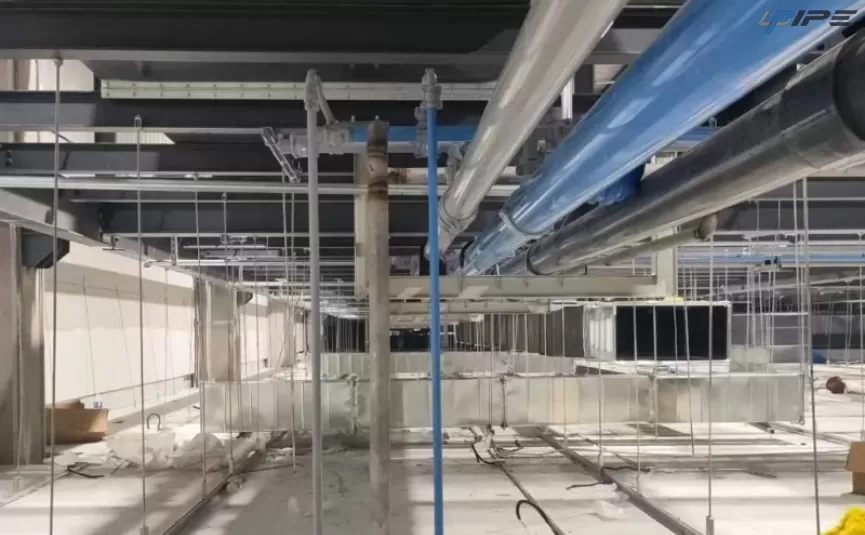
UPIPE aluminum piping is significantly lighter than traditional steel pipelines. This makes installation faster and reduces labor costs. Workers can assemble systems with minimal heavy equipment, which shortens downtime during factory upgrades.
Leak Reduction and Energy Efficiency
Air leakage is one of the biggest hidden costs in compressed air systems. UPIPE systems use precision-engineered fittings that reduce leakage risk and maintain stable pressure throughout the pipeline.
Factories upgrading from older systems often report energy savings between 10% and 25%, depending on layout and usage intensity.
Corrosion-Free Operation
Unlike steel pipes, aluminum does not rust. This ensures:
Cleaner airflow
Longer system lifespan
Reduced maintenance frequency
Lower risk of contamination in sensitive industries
Product Range and System Flexibility
UPIPE offers a modular system designed for flexible industrial use. Typical components include:
Straight aluminum pipes
Elbows and bends
Tees and junctions
Reducers and adapters
Quick-connect fittings
This modular structure allows engineers to design complex layouts without welding or heavy fabrication.
Like systems from Transair and AIRpipe, UPIPE supports rapid installation and system modification without shutting down production lines.
Performance and Efficiency Comparison
Feature
UPIPE Aluminum System
Traditional Steel/Copper
Corrosion resistance
High
Low
Installation speed
Fast
Slow
Maintenance needs
Low
High
Energy efficiency
High
Medium to low
Leakage risk
Low
High
Smooth internal pipe surfaces in UPIPE systems reduce friction loss, helping compressors operate more efficiently and extending equipment lifespan.
Customization for Industrial Applications
Every factory has different air consumption patterns and layout limitations. UPIPE systems are designed for customization, including:
Ring or loop networks for stable pressure distribution
Branch systems for targeted tool supply
Hybrid layouts for complex facilities
The modular design allows factories to expand production lines without rebuilding the entire air system.
This flexibility is especially important in fast-growing industries such as automotive manufacturing, electronics assembly, packaging, and food processing.
Real Factory Use Cases and Benefits
Across global industrial applications, modern aluminum piping systems have demonstrated measurable benefits. Similar to installations supported by Atlas Copco and Parker Hannifin, UPIPE-based systems help factories achieve:
Reduced downtime from air leaks
Lower maintenance costs
More stable production pressure
Improved energy efficiency
Some factories report annual savings in the tens of thousands of dollars simply by replacing outdated piping systems.
How to Choose the Right UPIPE System
Evaluate Air Demand
Always calculate current and future air consumption. A good practice is to design for 20–30% expansion capacity to support future equipment upgrades.
Select Proper Layout Design
Loop systems for balanced pressure
Branch systems for localized usage
Hybrid systems for complex facilities
Focus on Total Cost, Not Just Purchase Price
While aluminum modular systems may cost more initially, they reduce long-term expenses through:
Lower energy consumption
Fewer leaks
Reduced maintenance labor
Most factories recover investment within 1–3 years.
Expert Support and System Design Assistance
One of the advantages of working with professional suppliers like UPIPE is access to technical support. Engineers can help with:
System layout design
Pipe sizing calculations
Pressure optimization
Expansion planning
Installation guidance
This reduces design errors and ensures the system performs efficiently from day one.
Installation and Maintenance Support
UPIPE systems are designed for simplicity, but proper installation still plays a key role in performance. Support services typically include:
On-site installation guidance
Leak testing and inspection
System performance audits
Preventive maintenance recommendations
These services help factories maintain consistent compressed air quality and reduce unexpected downtime.
How to Request a UPIPE System Quote
To receive an accurate quotation, factories should prepare:
Facility layout drawings
Estimated air consumption
Pipe routing distances
Future expansion plans
Providing this information helps engineers design an optimized system tailored to your production needs.
Conclusion
Compressed air piping is a long-term infrastructure investment that directly affects factory efficiency and operational cost. While global leaders such as Transair, AIRpipe, UnipipeAIR, Atlas Copco, and Parker Hannifin continue to shape the industry, UPIPE stands out by delivering modular, efficient, and scalable piping solutions for modern factories.
By combining leak-resistant design, fast installation, and long-term energy savings, UPIPE provides a practical solution for manufacturers aiming to improve productivity and reduce operating costs.
If your factory is planning an upgrade or new installation, choosing a modular aluminum system like UPIPE is a strategic step toward higher efficiency and more reliable production performance.
FAQ
What are the main benefits of modular aluminum compressed air piping?
You can put these systems together quickly. The connections do not leak. The pipes do not rust. You can change or add to your system easily. You spend less money on energy and repairs.
How do I know which pipe size is right for my factory?
First, find out how much air you need. Look at how your system is set up. Most companies have charts to help you pick the right size. You can also ask their experts for advice. The right size stops pressure loss and keeps your system working well.
Can I install the piping system myself?
Many modular systems have quick-connect fittings. Your team can often do simple installs. For big or tricky jobs, use certified installers. This gives you the best results.
How do I maintain my compressed air piping system?
Check your system often. Look for leaks and check the fittings. Clean the filters when needed. Many companies have plans and audits to help you. These services keep your system working well.
This website uses cookies to provide you with a safer and more personal experience. By accepting, you agree to the Cookie Policy and the use of cookies for advertising and analytics purposes.