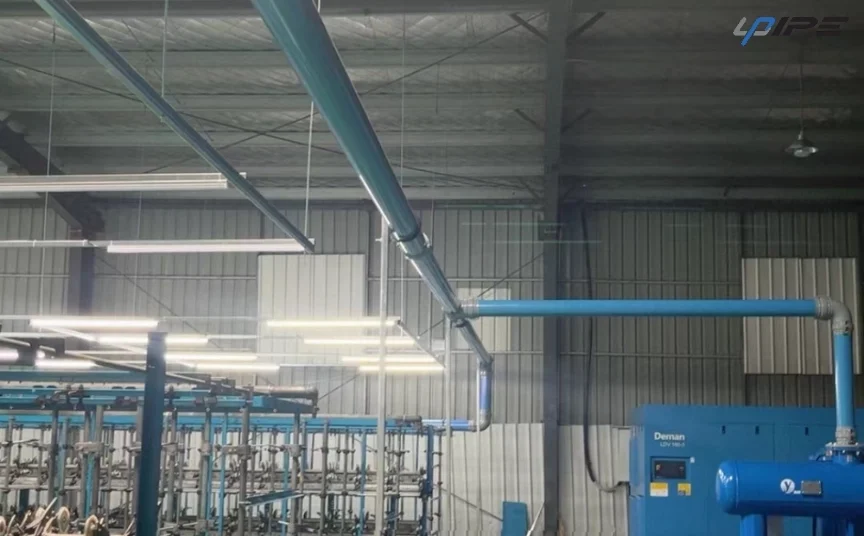
Learn how compressed air condensate management, proper drainage, air drying and piping layout help reduce moisture risks, corrosion and maintenance in industrial systems.
Introduction
Air always holds moisture. When it is compressed and then cooled, part of that moisture becomes liquid water. If the condensate is not separated and drained, it can reach filters, valves, tools and production processes.
The U.S. Department of Energy lists aftercoolers, separators, dryers, receivers and drains as key parts of moisture control. Water control should be planned with the whole system, not fixed later as a maintenance issue.
Typical Moisture-Control Sequence
Compressor → Aftercooler → Moisture Separator → Air Receiver → Dryer → Filters → Distribution Piping → Point of Use
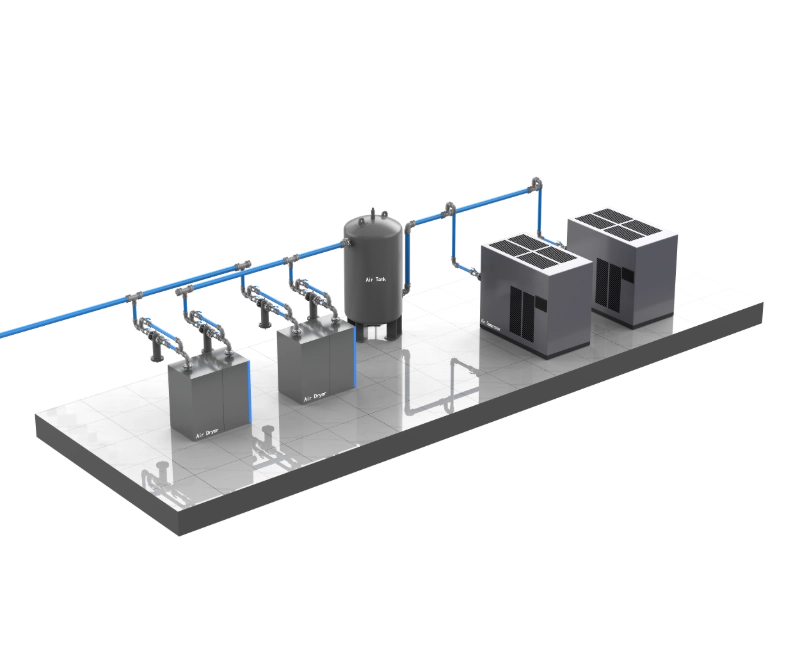
Air entering the compressor contains water vapor. Compression raises its pressure and temperature. As the air cools again it can hold less vapor, so the excess condenses into liquid water.
Condensate is therefore normal. The engineering question is not whether it forms, but where it forms, where it collects and how it is removed.
2. What Factors Determine Condensate Volume?
Condensate volume depends on ambient temperature, humidity, intake airflow, pressure, discharge temperature, cooling, dryer performance and running hours.
No single figure fits every system. Use the actual operating conditions instead of a general “liters per hour” assumption.
3. The Main Problems Caused by Condensate
Corrosion Liquid water plus contaminants speeds up corrosion. In humid sites, choose corrosion-resistant materials.
Point-of-use contamination Air can carry particles, water and oil. ISO 8573-1:2010 defines purity classes, so specify the class your application needs.
Pneumatic equipment problems Water in valves, regulators, cylinders and tools can cause unstable running, more maintenance, lubricant problems and early wear.
Low-temperature risks In cold conditions water can freeze and block airflow. Outdoor systems should account for ambient conditions in the design.
4. Where Should Condensate Be Removed?
After the aftercooler Cooling creates condensate, so a moisture separator is usually fitted downstream of the aftercooler.
At the air receiver The receiver lets some moisture settle. Drain it regularly so water does not stay in the vessel.
Along the distribution header Condensate also collects in the pipe network. Compressed Air Challenge recommends a slight header slope and drop legs for drainage.
At low points Low points collect water. Identify them at design stage and provide drainage.
5. How Should Compressed Air Piping Be Routed?
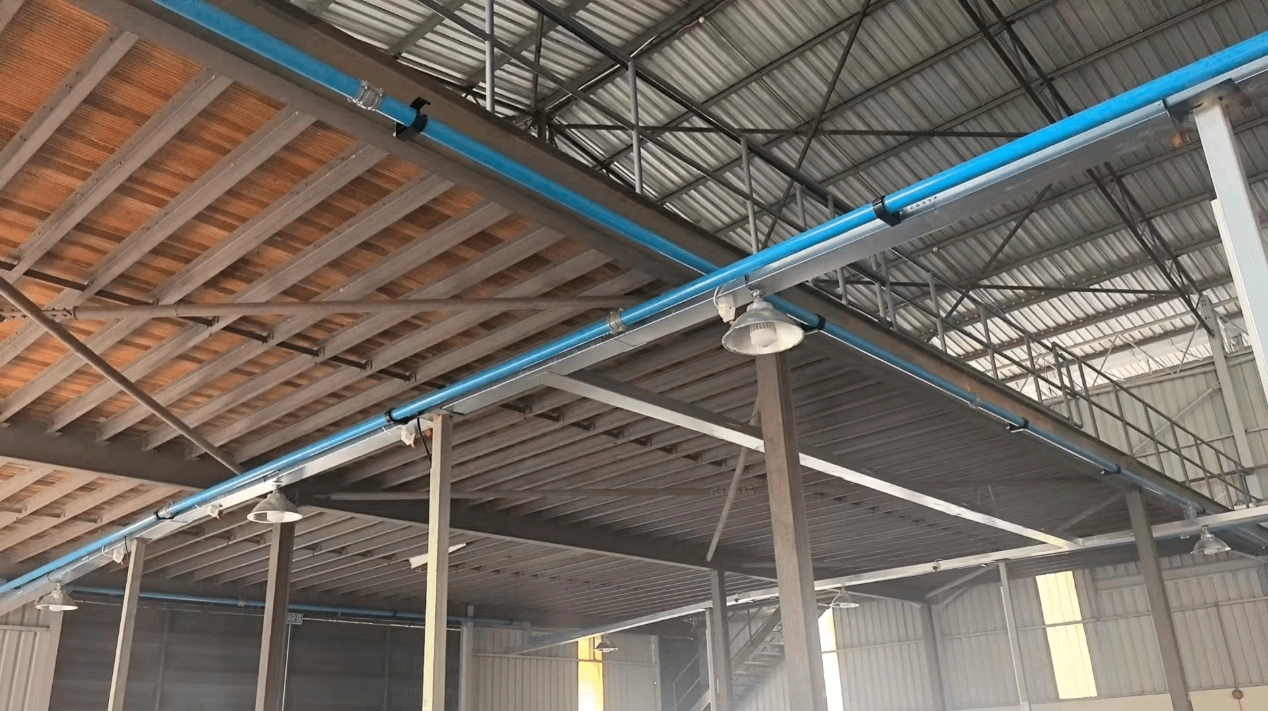
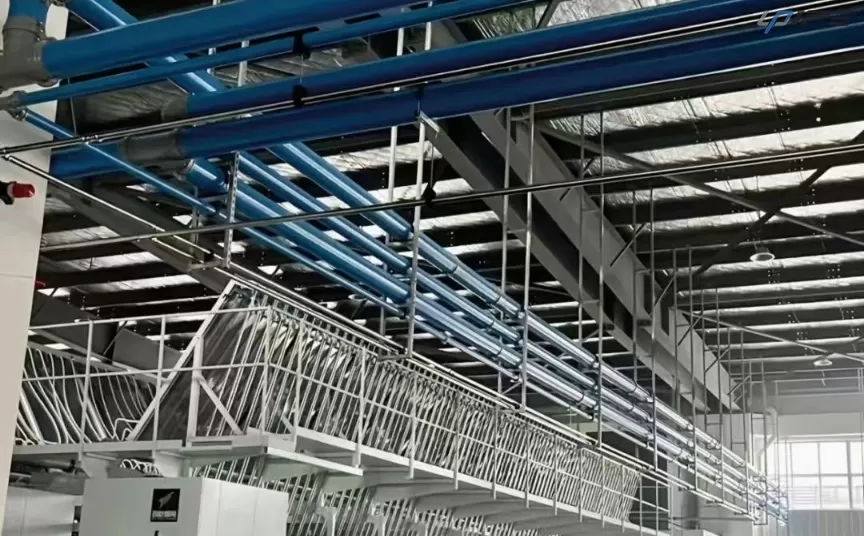
A condensate-aware layout is more than the shortest route. Check airflow direction, pipe elevation, low points, drains, branch take-offs, access and future expansion.
Compressed Air Challenge recommends taking branches from the top or side of the header, not from the bottom, to keep condensate out of the branches.
6. Condensate Drain Selection Matters
A drain should remove water without wasting compressed air. Options include manual, mechanical float, electrically operated and zero-loss drains.
Selection depends on condensate volume, location, pressure, temperature, maintenance needs and the acceptable air loss.
7. Dryer Selection Does Not Replace Good Piping Design
A dryer helps, but it does not replace correct piping and drainage. The full chain is: Condensation → Separation → Drainage → Drying → Filtration → Distribution.
The dryer controls moisture to its rated dew point. The piping decides how well the treated air reaches the points of use.
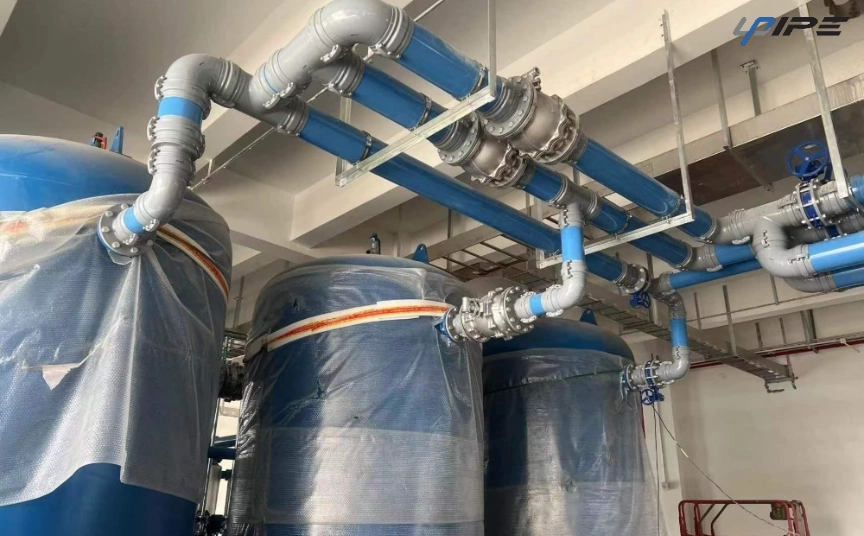
8. Why Aluminum Piping Can Be Considered for Moisture-Sensitive Systems
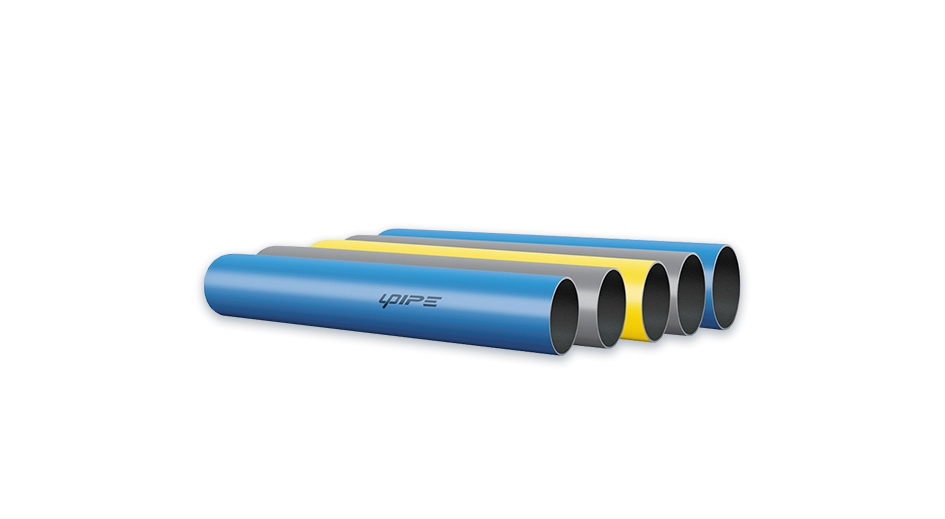
Material choice is part of long-term condensate control. Aluminum is widely used for compressed air: light, corrosion-resistant and smooth inside.
UPIPE aluminum pipe covers DN20 to DN200. The product page states 16 bar working pressure; the temperature range depends on the configuration. Applications include compressed air, vacuum and inert gases.
9. Five Design Checks Before Installing a Compressed Air Network
Check 1: Identify moisture sources Review intake conditions, humidity, aftercooler performance and cooling temperatures.
Check 2: Map potential condensate collection points Receivers, low points, header sections and elevation changes are where water builds up.
Check 3: Plan drainage before pipe installation Put drains in the layout, not in after the pipes are installed.
Check 4: Specify the required air quality For clean-air applications, set the purity class to the applicable standard.
Check 5: Verify the complete distribution system Review pipe size, pressure drop, fittings, elevation, drainage, branches and future expansion.
Frequently Asked Questions
Does a compressed air system always produce condensate?
Yes. Air brings vapor in, and cooling makes part of it condense. Volume depends on operating and site conditions.
Can a compressed air dryer remove all liquid water from the system?
A dryer controls moisture to its rated dew point, but upstream separation and correct drainage still matter.
Where is condensate most likely to accumulate in compressed air piping?
Receivers, low points, header sections and any place where water can settle.
Should branch pipes connect to the bottom of the main header?
Guidance recommends top or side take-offs instead of bottom connections, so condensate stays out of the branch.
Is aluminum piping suitable for compressed air applications?
Yes. Aluminum is widely used for compressed air. UPIPE offers aluminum systems for compressed air, vacuum and inert gases; specifications depend on the configuration.
Conclusion
Condensate is normal, but uncontrolled moisture need not become a recurring maintenance problem. Control needs aftercooling, separation, drainage, drying, good piping layout and air-quality control working together.
For a new network or an upgrade, aluminum piping gives a corrosion-resistant, modular platform when paired with the right air treatment and drainage.
UPIPE makes aluminum alloy piping systems for compressed air, vacuum and inert gas, with a modular range of pipes and fittings.
Looking for a reliable compressed air piping solution?
Contact UPIPE to discuss pipe specifications, system configuration and project requirements.