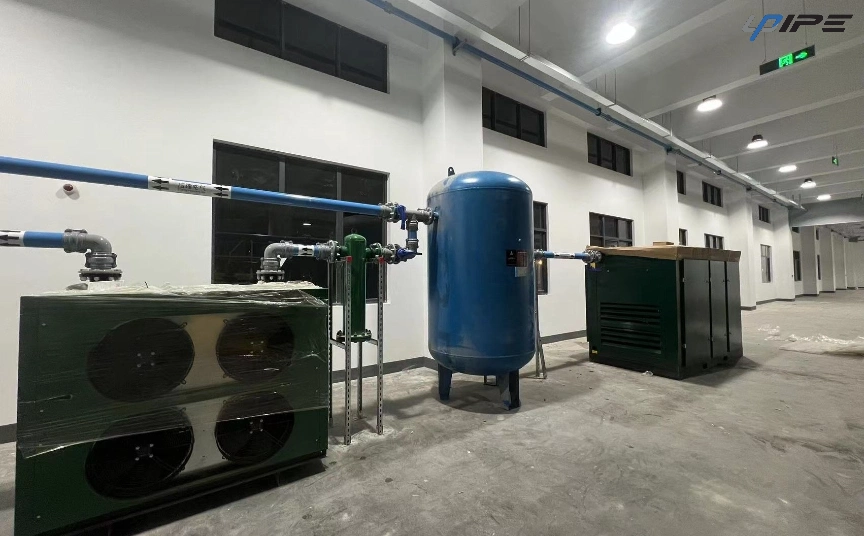
UPIPE workshop compressed air system solutions support consistent pressure delivery with efficient aluminum piping, secure fittings, flexible layouts, and reduced air loss.
Compressed air distribution has a direct influence on how consistently pneumatic equipment performs across a workshop. When the pipeline layout is poorly planned, pressure can fluctuate between different points of use, while unnecessary bends, long runs, restrictive connections, and leakage can reduce the usable air available to tools and production equipment. A well-planned workshop compressed air system should therefore be designed around airflow demand, pressure stability, accessibility, and future changes rather than simply connecting pipes between the compressor and equipment.
For industrial workshops, aluminum piping provides a practical approach to building a clean and adaptable air distribution network. UPIPE develops aluminum alloy piping solutions for compressed air, vacuum, and inert gas applications, combining modular pipe construction with dedicated fittings and sealing components. The focus is on creating efficient flow paths, secure connections, and flexible layouts that support consistent pressure delivery across different working areas.
Why Workshop Air Distribution Layout Affects Pressure Stability
Pressure at the compressor outlet does not automatically translate into the same pressure at every workstation. As compressed air travels through the distribution route, resistance develops across straight pipe sections, elbows, tees, valves, connectors, and changes in pipe diameter. If the route is too long or contains excessive restrictions, downstream pressure can fall when several pneumatic devices operate simultaneously.
A properly planned workshop compressed air system layout aims to reduce these unnecessary losses by controlling the path from the main supply to each point of use. Pipe sizing should reflect expected airflow, while the arrangement of branches should prevent individual work areas from competing excessively for available air. This becomes especially important in workshops where pneumatic tools, assembly equipment, control devices, and automated machinery operate at different times.
Building a Balanced Compressed Air Distribution Route
The main distribution route should be planned before individual drops and branches are installed. A balanced layout allows compressed air to travel efficiently through the workshop while keeping branch connections practical and accessible. Instead of treating every pipe section independently, engineers should consider how the entire network behaves when demand changes throughout the working day.
A looped arrangement can provide greater flexibility for larger workshop areas because air can reach supply points from more than one direction. Branches can then be positioned according to equipment locations and expected consumption. For smaller areas, a carefully sized main line with short branches may be sufficient. In either situation, pipe diameter, route length, fitting quantity, and demand distribution should be considered together.
Layout priorities for stable air delivery
| Layout factor | Why it matters | Design consideration |
|---|
| Main pipe size | Influences available airflow | Match diameter to demand |
| Route length | Adds flow resistance | Keep distribution paths practical |
| Branch position | Affects local pressure | Place outlets near demand areas |
| Fitting quantity | Adds flow restrictions | Avoid unnecessary connections |
| Pipe material | Influences durability and maintenance | Consider corrosion resistance |
| Future expansion | Changes total demand | Leave room for additional branches |
This approach makes the network easier to evaluate and helps prevent pressure problems caused by isolated design decisions.
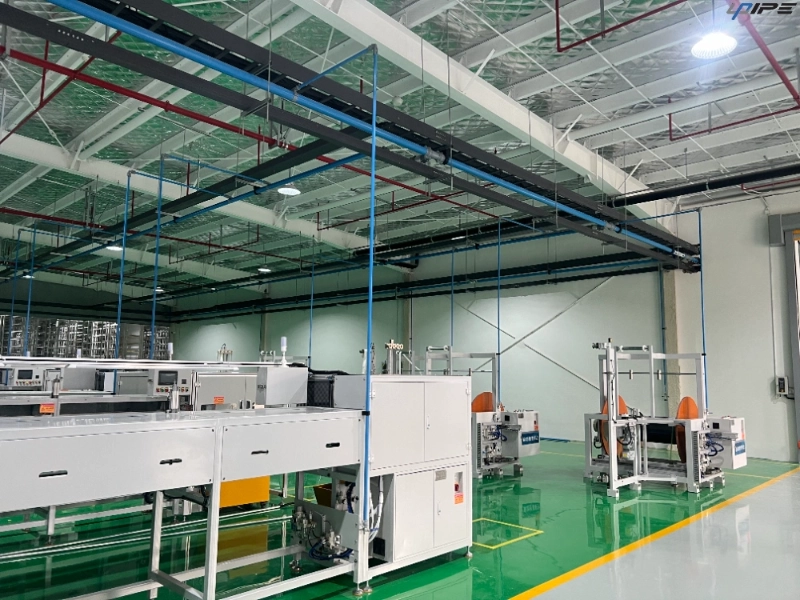
How Aluminum Piping Supports Workshop Airflow
Material selection is an important part of long-term compressed air distribution. Aluminum alloy piping combines low weight with corrosion resistance, making it suitable for workshops where installation flexibility and long-term cleanliness are important. Unlike corrosion-prone piping materials, aluminum does not rely on a surface that can progressively deteriorate through internal rust formation.
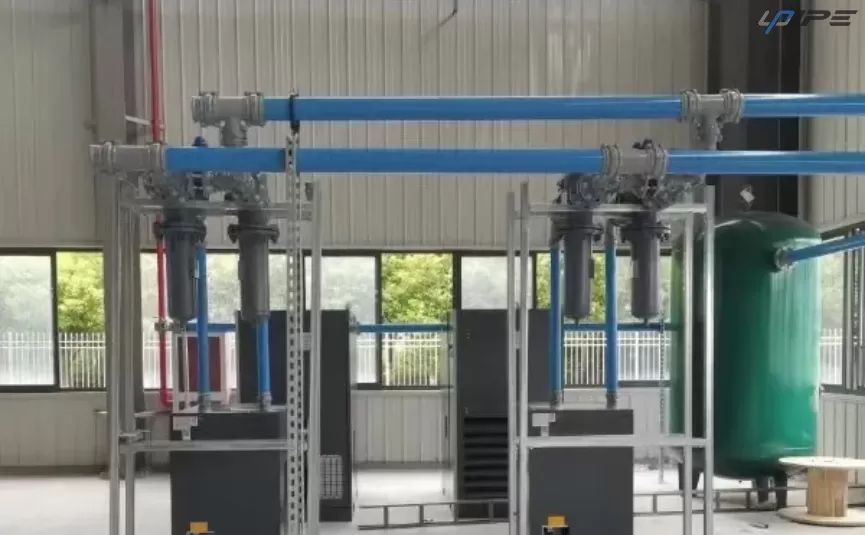
The internal condition of the pipe also affects airflow. A smooth internal passage helps compressed air move with less unnecessary resistance and reduces the likelihood of contamination caused by corrosion products. For this reason, an aluminum compressed air piping layout can provide a clean foundation for distributing air between the compressor room, production areas, and individual workstations.
UPIPE focuses on aluminum alloy piping with modular connections designed for compressed air, vacuum, and inert gas applications. This allows the distribution route to be configured around actual workshop requirements instead of forcing equipment locations to follow a rigid pipeline arrangement.
Fittings Can Influence More Than Connection Direction
A compressed air pipeline is made up of much more than straight pipe. Every elbow, tee, valve, connector, and drop changes the path through which air must travel. Poorly selected or unnecessarily restrictive components can introduce additional resistance, particularly when several fittings are concentrated in a small section of the network.
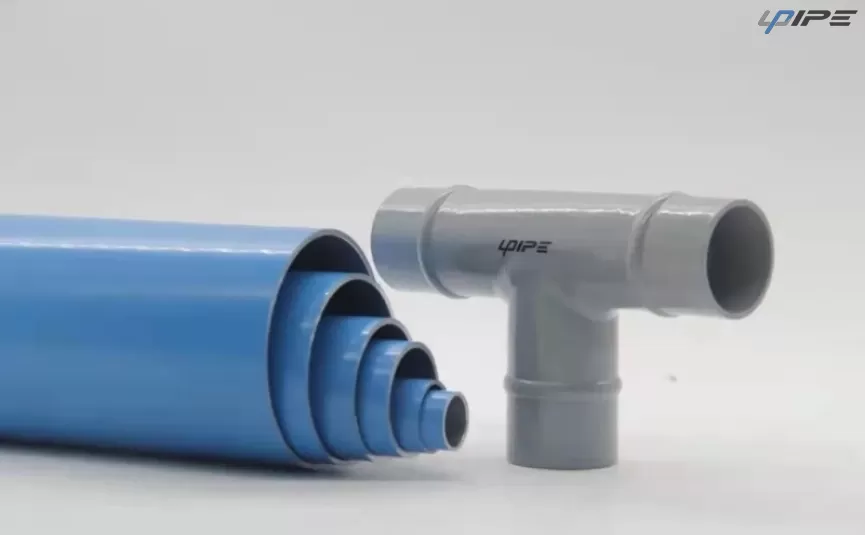
Efficient fitting geometry helps maintain a more open airflow path. UPIPE aluminum compressed air pipe fittings are designed as part of a coordinated piping approach, providing connections that support both installation flexibility and controlled airflow. Full-size flow passages and suitable connection structures can help limit restrictions where different pipeline sections meet.
For workshop applications, this means fitting selection should be included in the pressure-loss calculation rather than treated as an installation detail. A pipeline with an appropriate diameter can still experience unnecessary pressure loss if its fittings create excessive restrictions.
Preventing Leakage at Connection Points
Pressure consistency depends not only on how air flows through the pipe but also on how effectively the network retains it. Leakage commonly develops around joints, valves, fittings, and sealing areas. Even when an individual leak seems minor, multiple leakage points can increase compressor workload and reduce the amount of compressed air available to production equipment.
A dependable workshop air piping solution should therefore place strong emphasis on connection integrity. UPIPE uses dedicated sealing components and modular connection structures to support secure joints and consistent sealing performance. Correct pipe preparation, alignment, support, and installation remain equally important because mechanical stress can affect connections over time.
Reducing leakage is particularly valuable in workshops with extended operating hours. Preventing avoidable air loss helps maintain usable pressure while reducing the need to compensate for distribution inefficiencies through higher compressor output.
Positioning Drops for Better Point-of-Use Performance
The final connection between the distribution route and the pneumatic tool or machine deserves careful attention. A drop positioned too far from the equipment may require longer flexible hoses, additional connectors, or complicated routing. These extra elements can create resistance and make maintenance more difficult.
Point-of-use connections should therefore be located according to actual workstation requirements. Quick drops and suitable connectors can provide a more organized transition from the main pipeline to individual equipment. Where moisture management is important, the drop arrangement should also consider condensate behavior and drainage requirements.
A well-planned industrial workshop compressed air piping layout makes each outlet easy to access without compromising the efficiency of the main distribution route. This balance between accessibility and airflow is essential for workshops where equipment positions may change over time.
Installation Flexibility Matters for Workshop Expansion
Workshop layouts rarely remain unchanged. Production equipment may be relocated, new pneumatic tools may be added, or additional work areas may require compressed air. A pipeline that is difficult to modify can become a constraint when these changes occur.
Aluminum piping is well suited to modular installation because its relatively low weight makes handling and positioning easier. UPIPE's connection-based approach allows pipes, elbows, tees, valves, clamps, and other components to be assembled into different configurations according to the workshop's layout.
This flexibility can also simplify maintenance. Individual sections can be accessed or modified without treating the entire network as a permanent welded structure. For businesses planning gradual production expansion, flexible compressed air piping for workshops can provide greater adaptability than a layout designed only around current equipment positions.
Matching Pipe Capacity with Actual Air Demand
Selecting pipe diameter based only on compressor outlet size can produce an inefficient distribution route. The network should instead be evaluated according to the amount of air required at different points, including simultaneous demand from multiple tools or machines.
Peak demand is especially important. A pipeline may appear adequate during low-load operation but experience noticeable pressure reduction when several pneumatic devices operate together. Correct sizing helps maintain sufficient airflow without unnecessarily increasing material costs.
Engineers should also consider the distance between the compressor and the most remote point of use. As the distribution distance increases, maintaining an efficient route becomes more important. A well-designed compressed air pipeline for industrial workshops combines appropriate pipe capacity with sensible routing to support stable delivery under changing operating conditions.
Designing for Long-Term Efficiency
The purchase price of piping is only one part of the overall cost. Energy consumption, leakage, maintenance, installation labor, and future modifications can all influence the lifecycle value of a compressed air network.
A carefully planned workshop layout can reduce the need to compensate for pressure loss by increasing compressor output. It can also make leakage detection, component replacement, and network expansion easier. These advantages become more meaningful when the pipeline serves a large number of workstations or operates continuously.
UPIPE's aluminum alloy piping approach combines corrosion resistance, modular construction, dedicated fittings, and sealing components to address these practical requirements. Rather than focusing on one isolated feature, the complete layout should be developed around stable airflow, secure connections, efficient installation, and long-term adaptability.
A Practical Checklist for Workshop Piping Design
Before selecting components, engineers and purchasing teams should evaluate the entire distribution route. The following factors provide a useful starting point:
Total and peak compressed air demand
Distance from the compressor to each work area
Main and branch pipe diameter
Number and position of outlets
Quantity and geometry of fittings
Connection and sealing requirements
Accessibility for maintenance
Condensate management
Potential equipment relocation
Future expansion requirements
This checklist helps prevent a common problem in workshop piping projects: selecting individual components without considering how they interact across the complete network. The objective should be a distribution route that maintains useful pressure while remaining practical to install, operate, inspect, and modify.
FAQ
What affects pressure delivery in a workshop compressed air system?
Pressure delivery is influenced by pipe diameter, route length, airflow demand, fitting geometry, connection restrictions, and leakage. A balanced layout helps minimize unnecessary resistance between the compressor and points of use.
Is aluminum suitable for workshop compressed air piping?
Yes. Aluminum offers low weight, corrosion resistance, and a smooth internal passage, making it suitable for compressed air distribution where clean airflow, installation flexibility, and long-term durability are important.
How should compressed air outlets be positioned?
Outlets should be located close to the equipment that requires compressed air while maintaining practical access for operation and maintenance. Their position should also fit the overall branch layout and condensate management approach.
Can fittings cause pressure loss?
Yes. Elbows, tees, valves, and connectors can introduce resistance as compressed air changes direction or passes through connection points. Efficient fitting geometry can help maintain a more open airflow path.
Why is leakage prevention important in workshop piping?
Leaks reduce the amount of usable compressed air and can increase compressor workload. Secure connections and effective sealing help preserve pressure and reduce avoidable energy loss.
What should be considered when expanding a workshop air network?
Future equipment locations, additional air demand, branch capacity, accessible connection points, and the ability to modify the existing layout should all be considered before installation. A modular aluminum piping approach can make future adjustments more practical.