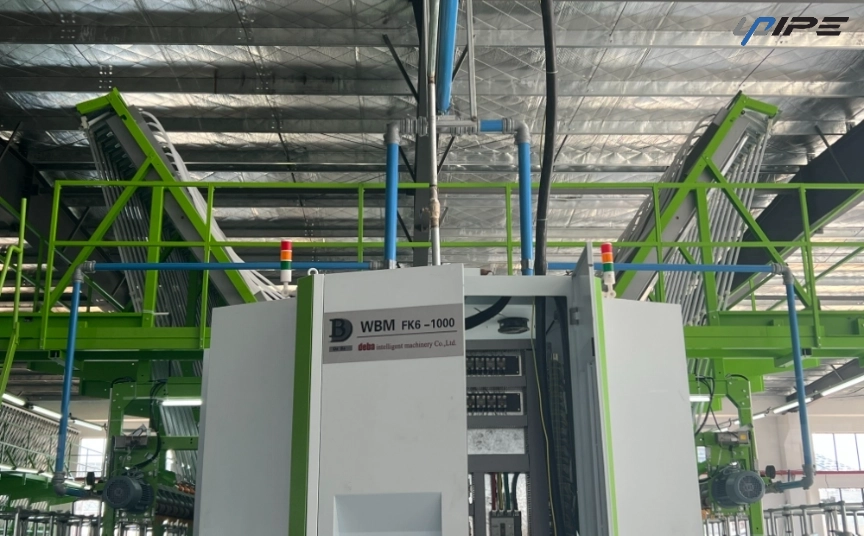
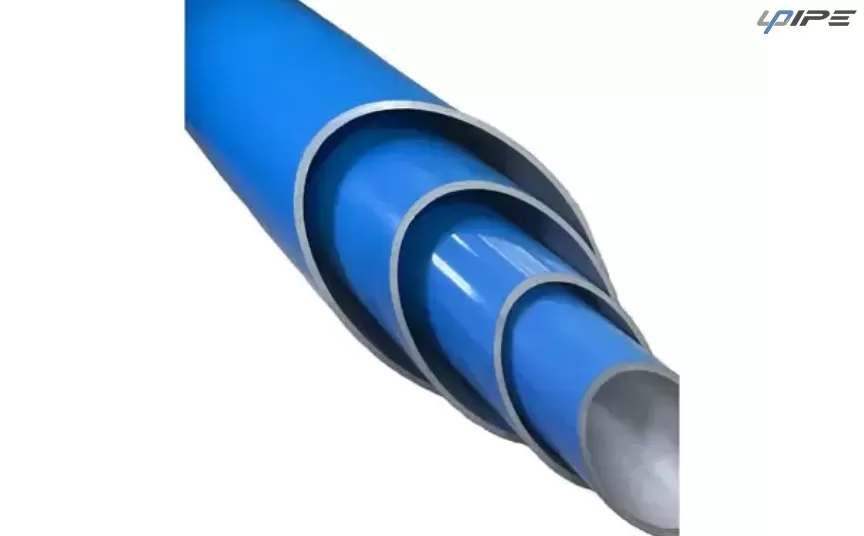
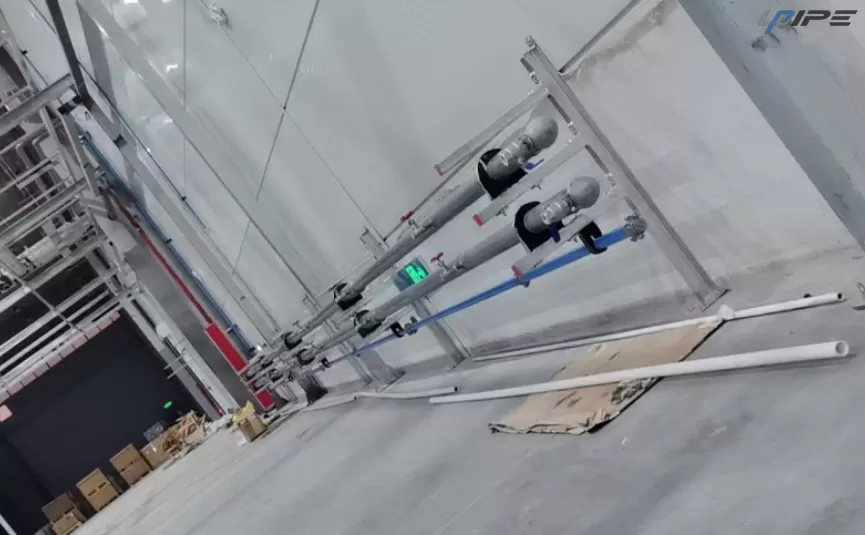
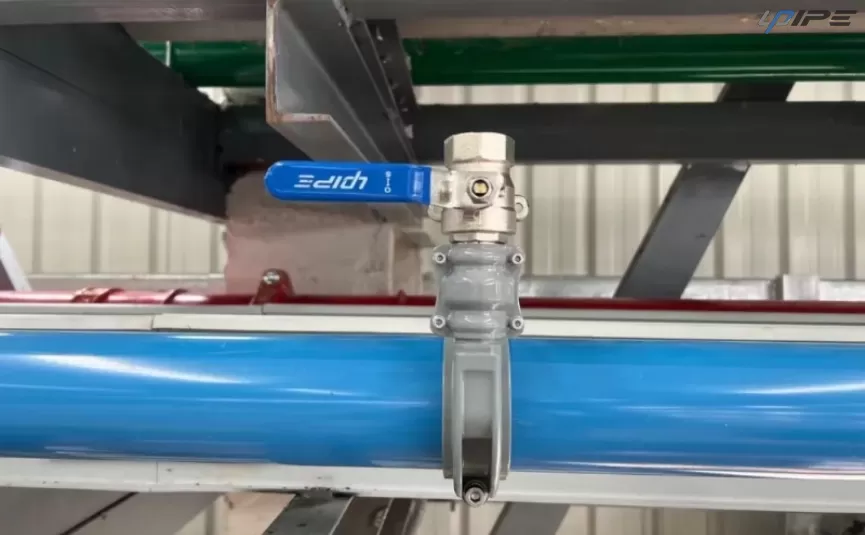
UPIPE provides an industrial compressed air system with lightweight aluminium piping, low pressure loss, reduced leakage, and flexible expansion for growing factories.
Why Flexible Air Distribution Matters During Factory Expansion
Factory expansion rarely follows a completely fixed plan. Production lines may be relocated, new equipment may be introduced, additional workstations may be added, and air consumption can increase as manufacturing capacity grows. These changes place new demands on the compressed air network and can expose limitations in an existing pipeline layout. An industrial compressed air system therefore needs to provide dependable air distribution today while remaining practical to modify tomorrow.
A rigid piping arrangement can make even relatively small changes costly and time-consuming. When new branches require extensive fabrication or existing lines need to be removed and rebuilt, maintenance work can interfere with production schedules. A modular aluminium piping approach provides greater flexibility by allowing engineers to organize main lines, branch lines, drops, valves, and connection points according to the changing requirements of the facility. This makes the piping network easier to adapt as production capacity develops.
UPIPE focuses on an aluminium compressed air piping solution designed around this principle. Instead of supplying only individual pipes, UPIPE provides pipes together with compatible connectors, elbows, tees, flanges, valves, drops, flexible hoses, clamps, flowmeters, and installation tools. The result is a complete approach to industrial air distribution that can be planned for both present requirements and future expansion.

Aluminium Piping Provides Greater Installation Flexibility
The material used for compressed air piping has an important influence on installation, handling, maintenance, and long-term usability. Aluminium offers a combination of low weight, strength, and corrosion resistance that makes it well suited to industrial air distribution. Compared with conventional steel piping, aluminium components are easier to transport and handle during installation, which can simplify work in areas where pipes need to be positioned above machinery or along existing factory structures.
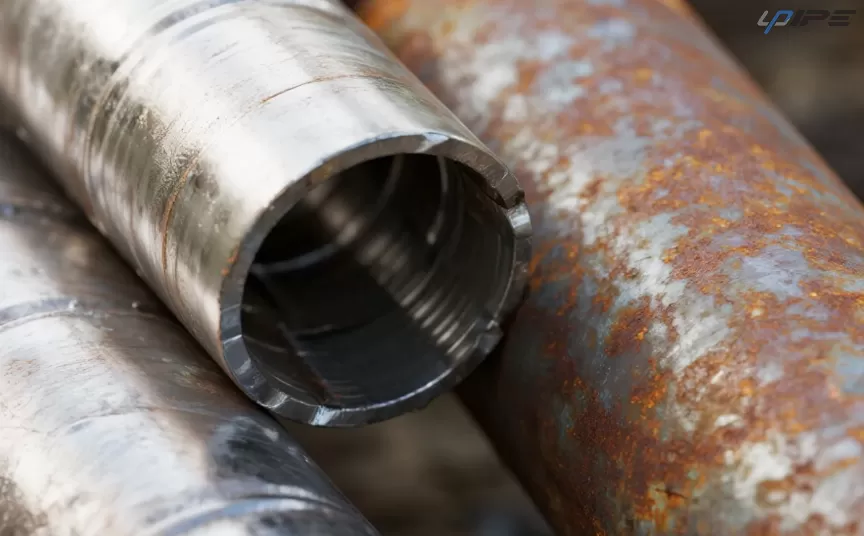
The corrosion-resistant nature of aluminium can also reduce concerns associated with rust inside the pipeline. Maintaining a clean internal flow path is important for compressed air distribution because corrosion and internal deterioration can affect airflow quality and create additional maintenance requirements. For facilities operating in environments where moisture is present, selecting suitable corrosion-resistant piping can contribute to more consistent long-term performance.
UPIPE aluminium pipes can be combined with a wide selection of matching components, allowing engineers to create different routing configurations without relying on complicated fabrication. This flexibility is particularly useful when a factory has multiple production areas, different equipment layouts, or plans for phased expansion.
Managing Pressure Loss Across Larger Air Networks
As a production facility expands, the distance between the compressor and points of use may increase. Additional branches can also change the flow characteristics of the network. If pipe dimensions are too small or the routing contains unnecessary restrictions, pressure loss can become a significant concern. Equipment at the end of a long distribution route may receive less pressure than required, potentially affecting pneumatic performance.
A properly planned compressed air piping network should consider expected air consumption, pipe diameter, distribution distance, the number of branches, and the location of high-demand equipment. Pipe sizing should not be based only on current consumption. Allowing reasonable capacity for future requirements can help prevent expensive modifications when additional production equipment is installed.
UPIPE aluminium piping is designed with a smooth internal surface that supports efficient airflow. When combined with appropriate pipe sizing and a well-planned layout, this can help reduce unnecessary pressure loss throughout the distribution route. Maintaining stable pressure also reduces the temptation to operate compressors at unnecessarily high pressure, which can contribute to higher energy consumption.
Reducing Leakage as the Network Grows
Air leakage is another important consideration when expanding a factory compressed air network. Every additional connection, branch, valve, and equipment drop introduces another point that requires proper sealing and installation. Small leaks may appear insignificant individually, but leakage across a large distribution network can create continuous compressed air waste and increase the workload placed on compressors.
A practical industrial air piping solution should therefore pay attention not only to the pipe itself but also to the quality and compatibility of the complete connection structure. UPIPE provides dedicated fittings designed to work with its aluminium pipes, including pipe-to-pipe connectors, reducing connectors, tees, elbows, flanges, quick drops, and end caps. These components support consistent installation across different sections of the network.
Leak prevention does not end when installation is completed. Regular inspection of joints, valves, flexible connections, and equipment interfaces is important as the facility continues to operate. A well-organized piping layout can make these inspection points easier to access, helping maintenance teams identify and address potential problems before they develop into larger efficiency issues.
Modular Connections Make Future Modifications Easier
Factory layouts can change for many reasons. A production line may be moved to make room for new equipment, a workstation may require an additional air outlet, or a new manufacturing area may need to be connected to the existing compressed air network. The ability to modify the piping without rebuilding large sections can significantly improve the practicality of future upgrades.
The modular design of aluminium compressed air pipe system allows additional branches and connection points to be planned according to changing production requirements. Elbows can accommodate directional changes, tees can create additional branches, and quick drops can provide convenient connection points for equipment. Valves can also be incorporated to isolate specific sections when maintenance or modification is required.
This approach helps transform compressed air piping from a fixed installation into a more adaptable infrastructure. When future expansion has already been considered during the original layout design, additional capacity can be incorporated with less disruption to existing operations.

Planning Main Lines and Branches for Expansion
The main distribution line forms the foundation of an industrial compressed air network. It needs to deliver sufficient airflow to different production areas while maintaining suitable pressure throughout the facility. Branch lines then distribute air to individual work zones, while drops connect the network to pneumatic equipment and tools.
For a growing factory, engineers should consider where future production areas are likely to be located before finalizing the main line route. Reserving suitable connection points can make later extensions easier. At the same time, unnecessary bends and excessively long routes should be avoided because they can increase resistance and make maintenance more complicated.
The following factors are particularly important when planning a flexible air distribution layout:
| Planning Factor | Importance for Factory Expansion |
|---|
| Pipe diameter | Supports suitable airflow as demand increases |
| Main line routing | Helps control distribution distance and pressure loss |
| Branch locations | Makes future equipment connections easier |
| Connection points | Provides flexibility for additional production areas |
| Valves | Allows sections to be isolated during maintenance |
| Flow monitoring | Helps identify consumption and distribution requirements |
| Pipe support | Maintains a stable and organized installation |
Choosing Pipe Capacity for Future Production
One common challenge in factory expansion is designing a network that meets current demand but becomes restrictive after production increases. Undersized piping can limit airflow and create pressure loss, while an appropriately planned network can provide additional capacity for future equipment.
UPIPE aluminium pipes are available across a range of sizes from DN20 to DN200, allowing different sections of industrial compressed air piping solution to be configured according to their intended airflow requirements. The appropriate size should always be selected based on actual application conditions, required flow, pressure, route length, and expected future demand rather than choosing a pipe size solely according to the compressor outlet.
The same principle applies to branch lines. Not every production area consumes the same amount of compressed air, so a flexible layout should balance capacity with actual requirements. Proper engineering at the planning stage can help avoid unnecessary pressure restrictions while maintaining an efficient distribution network.
Installation Efficiency for Industrial Projects
Installation time is an important consideration for factories because piping work can take place around operating equipment, existing infrastructure, electrical installations, and production schedules. A lighter piping material can make handling easier, while a modular connection structure can reduce the amount of complicated fabrication required on site.
UPIPE provides a complete range of installation-related components, including fixed clamps and dedicated tools. The availability of compatible accessories helps simplify procurement and reduces the need to source unrelated components from multiple suppliers. For contractors and plant engineers, having a coordinated range of pipes and fittings can also make layout planning and installation management more straightforward.
The modular approach can be particularly valuable during phased construction. Different areas of a facility can be developed progressively, with additional piping incorporated as production requirements become clearer.
Corrosion Resistance Supports Long-Term Maintenance
Compressed air piping operates in environments where humidity, temperature changes, and industrial contaminants can influence the condition of metal components. Corrosion can gradually affect conventional piping and may create additional maintenance work. Aluminium offers natural resistance to corrosion, making it an attractive material for industrial air distribution where long-term durability is a priority.
A corrosion-resistant aluminium air piping solution can help maintain a cleaner internal passage and reduce the maintenance concerns associated with rust. This is especially relevant for manufacturing environments where consistent air delivery is important to pneumatic equipment and production processes.
However, material selection should always be considered together with correct installation, suitable operating conditions, appropriate pipe sizing, and routine inspection. Good engineering practice remains essential regardless of the piping material selected.
Applications Across Manufacturing Industries
An industrial compressed air system can support a wide range of manufacturing operations, from pneumatic tools and actuators to automated production equipment. UPIPE aluminium piping is suitable for industrial environments including automotive manufacturing, electronics and electrical appliance production, machinery manufacturing, new energy facilities, precision manufacturing, and other production applications.
Different industries may have different airflow requirements, but the underlying challenge is similar: compressed air must be distributed from the supply source to multiple points of use with suitable pressure, controlled leakage, and practical maintenance access. A modular piping design provides greater freedom to accommodate these differences.
The piping can also be used for vacuum and suitable inert gases such as nitrogen, argon, and helium when the relevant operating conditions and component specifications are satisfied. This expands its potential application beyond conventional compressed air distribution.
Supporting Efficient Factory Air Management
Energy efficiency in compressed air distribution is influenced by several factors rather than one component alone. Compressor performance, operating pressure, pipe sizing, leakage, pressure loss, equipment demand, and maintenance practices all contribute to overall efficiency.
For this reason, an effective compressed air distribution system for factories should be considered as an integrated network. Reducing unnecessary pressure loss can help maintain pressure at points of use, while controlling leakage can reduce wasted air. A well-planned layout can also shorten distribution routes and make maintenance activities more manageable.
UPIPE combines aluminium piping with a complete range of fittings and accessories to support this integrated approach. The objective is not simply to move compressed air from one location to another, but to provide a practical distribution infrastructure that can continue to support production as requirements change.
Building a Flexible Network for Long-Term Growth
Factory expansion is an ongoing process rather than a single installation event. Production requirements can change over several years, and the compressed air network needs to remain adaptable enough to accommodate those changes. A modular aluminium piping design can provide greater flexibility for adding branches, relocating drops, isolating sections, and extending distribution routes.
For new construction projects, considering future expansion during the initial design stage can help reduce later modification work. For existing facilities, replacing ageing or inefficient piping with a more flexible aluminium arrangement can provide an opportunity to reorganize the distribution layout around current production requirements.
UPIPE provides aluminium pipes, connectors, elbows, tees, flanges, valves, quick drops, flexible hoses, flowmeters, clamps, and installation accessories for this purpose. With lightweight construction, corrosion resistance, efficient airflow characteristics, and modular connections, the solution is designed to support industrial compressed air distribution where flexibility and long-term usability are important.
FAQ
What should be considered when expanding an industrial compressed air network?
Engineers should evaluate current and future air demand, pipe diameter, distribution distance, pressure requirements, branch locations, leakage control, and accessibility for maintenance. Planning these factors together can make future extensions more practical.
Why is aluminium suitable for factory compressed air piping?
Aluminium is lightweight, corrosion resistant, and convenient to handle during installation. Its smooth internal surface can also support efficient airflow when the pipe is correctly sized and the network is properly designed.
Can an aluminium compressed air pipe network be expanded later?
Yes. A modular arrangement can accommodate additional branches, drops, connectors, valves, and other compatible components as factory requirements change. The original layout should ideally reserve suitable routes and connection points for future expansion.
How can pressure loss be controlled in a large compressed air network?
Appropriate pipe sizing, efficient routing, suitable connection design, and avoiding unnecessary restrictions are important. The network should also be designed around both current consumption and reasonable future demand.
What industries can use UPIPE aluminium piping?
UPIPE aluminium piping can be used in automotive, electronics, electrical appliance, machinery manufacturing, new energy, precision manufacturing, and other industrial facilities requiring compressed air distribution. It can also support suitable vacuum and inert gas applications according to operating conditions.
What components are available for an aluminium piping installation?
UPIPE offers aluminium pipes together with elbows, pipe-to-pipe connectors, reducing connectors, tees, flanges, male and female connectors, quick drops, end caps, ball valves, butterfly valves, flowmeters, flexible hoses, fixed clamps, installation accessories, and tools.