In contemporary industrial and commercial environments, airflow infrastructure is no longer treated as a purely functional component hidden behind walls or ceilings.
In contemporary industrial and commercial environments, airflow infrastructure is no longer treated as a purely functional component hidden behind walls or ceilings. Instead, visible ducting systems have become an integral part of mechanical design, spatial planning, and even brand identity. Among these systems, the aluminum blue air pipe stands out not because of superficial aesthetics alone, but due to the engineering logic, material science considerations, and system-level thinking it represents. In this blog post, as a high performance aluminum air pipe line exporter, UPIPE will share the role of precision aluminum blue air pipes in contemporary airflow systems.
Emergence of Aluminum Blue Air Pipe in Exposed Infrastructure Design
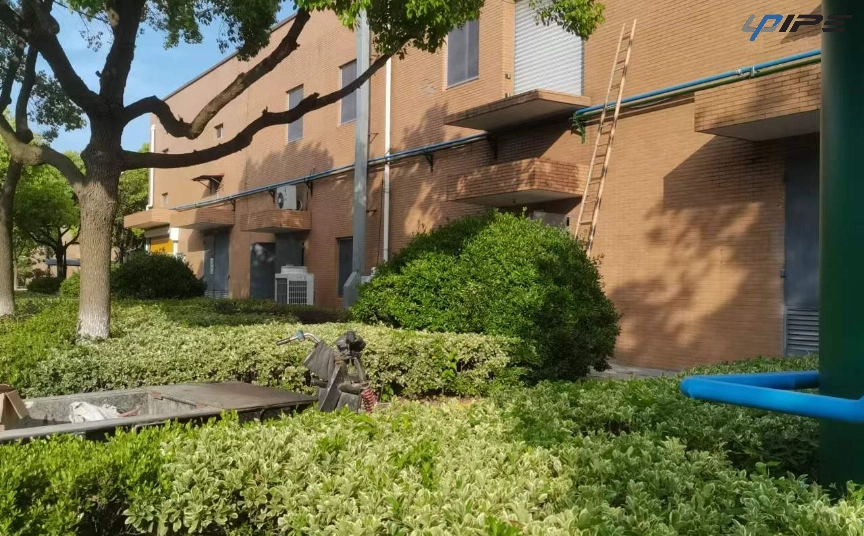
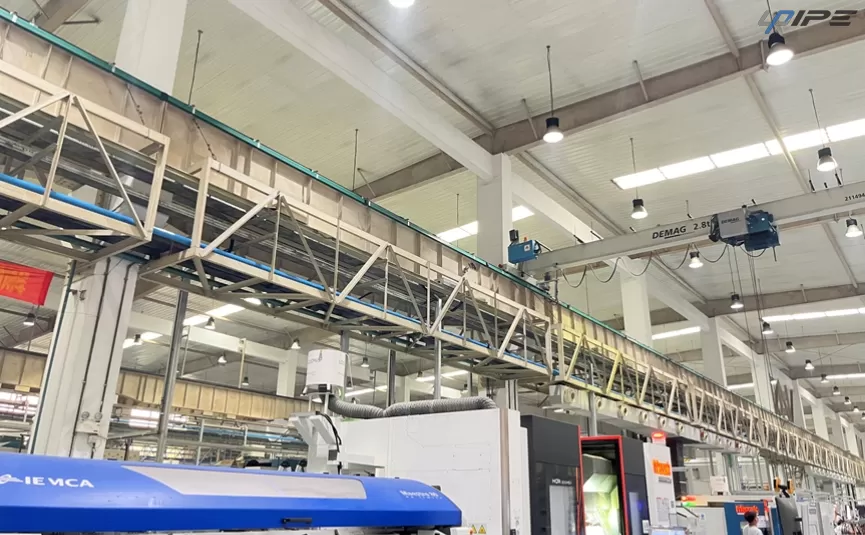
Exposed mechanical systems were once considered unfinished or purely utilitarian. Today, they are deliberately showcased in factories, logistics centers, laboratories, and high-tech commercial spaces. The aluminum blue air pipe fits naturally into this design philosophy.
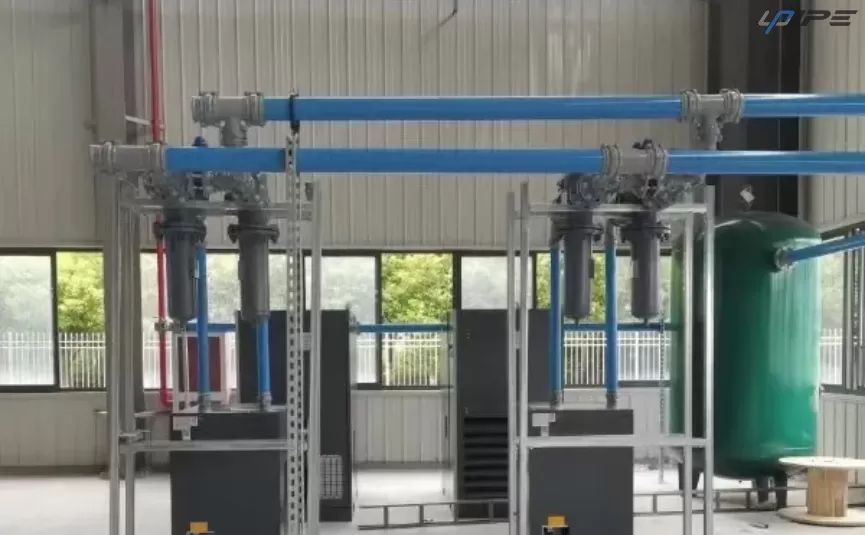
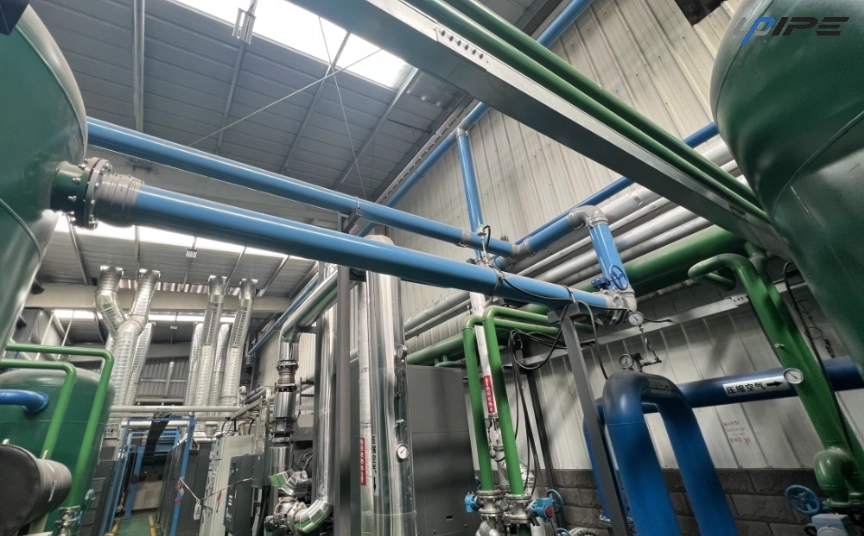
The blue anodized or coated surface creates immediate visual segmentation of airflow routes, making compressed air or ventilation lines distinguishable at a glance. This visual clarity reduces cognitive load for technicians and engineers navigating complex ceiling layouts, especially in facilities where multiple utilities coexist.
Rather than being an afterthought, the aluminum blue air pipe becomes part of the architectural language—signaling cleanliness, order, and technical precision.
Why Aluminum Changes the Engineering Equation
Material choice directly affects how an airflow system behaves over time. Aluminum introduces a different engineering equation compared to traditional steel or flexible polymer ducts.
Its low density reduces structural load on ceilings and support frames, allowing longer spans and fewer hangers. This has cascading effects on installation planning, seismic calculations, and retrofit feasibility in older buildings.
In aluminum blue air pipe systems, weight reduction is not merely about convenience. It enables system designers to rethink routing strategies, avoid unnecessary structural reinforcements, and maintain airflow efficiency without overengineering support structures.
Color Coding as an Engineering Tool, Not Decoration
The blue finish associated with aluminum blue air pipe is often misunderstood as purely aesthetic. In reality, color coding is a practical engineering tool embedded in modern facility standards.
Blue is commonly associated with clean air or compressed air lines, helping differentiate them from exhaust, gas, or liquid systems. This distinction becomes critical during system expansion, troubleshooting, or emergency response.
By integrating color logic into the pipe itself, aluminum blue air pipe systems reduce dependence on labels, tags, or documentation that may degrade or become outdated over time.
Aluminum Blue Air Pipe and the Shift Toward Modular Air Networks
Traditional airflow systems were designed as fixed installations—once installed, any change required cutting, welding, or extensive downtime. This rigidity no longer aligns with modern production environments.
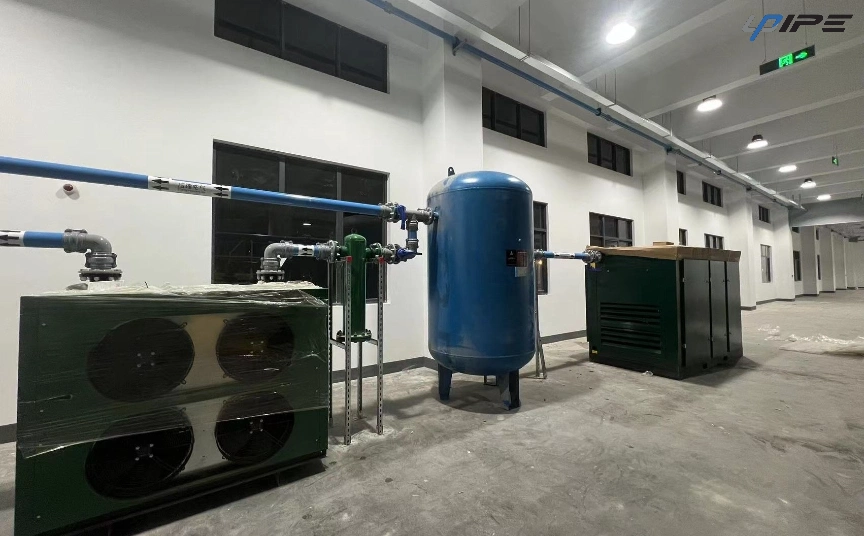
Aluminum blue air pipe systems are often designed with modularity in mind. Standardized pipe sections, connectors, and fittings allow airflow networks to evolve alongside changing equipment layouts or production lines.
This modular logic supports agile manufacturing concepts, where airflow supply must adapt quickly without compromising system integrity or cleanliness.
Maintenance Transparency in Aluminum Blue Air Pipe Systems
Maintenance is often where theoretical system performance meets real-world constraints. Aluminum blue air pipe installations improve maintenance transparency in several ways.
The visible surface condition of aluminum provides early indicators of environmental issues, such as condensation patterns, surface contamination, or mechanical stress. Blue coatings further enhance visibility, making irregularities easier to detect during routine inspections.
Instead of relying solely on internal diagnostics, technicians gain an immediate visual assessment tool—an understated but valuable operational advantage.
Airflow Stability and Internal Surface Considerations
Airflow efficiency is not only determined by diameter and pressure but also by internal surface consistency. Aluminum blue air pipe systems typically feature smooth internal walls that remain stable over long service periods.
Unlike materials prone to corrosion flaking or internal scaling, aluminum maintains predictable airflow behavior. This stability simplifies system modeling and reduces the performance gap between design calculations and actual operation.
Over time, consistent airflow behavior translates into more reliable downstream equipment performance, particularly in pneumatic systems sensitive to pressure fluctuations.
Aluminum Blue Air Pipe in Clean and Controlled Environments
In environments where airborne contaminants directly affect product quality or process stability, airflow infrastructure must support cleanliness as a system-level requirement.
Aluminum blue air pipe installations align with clean design principles by minimizing particle generation, resisting internal degradation, and supporting sealed connections. The color differentiation also helps enforce procedural discipline, ensuring that air lines are not mistakenly modified or cross-connected during facility changes.
This systemic approach positions aluminum blue air pipe as part of contamination control strategy rather than just a transport medium.
Lifecycle Thinking and Long-Term System Economics
Short-term cost comparisons often dominate procurement decisions, but airflow infrastructure is a long-term asset. Aluminum blue air pipe systems invite lifecycle-based evaluation.
Reduced maintenance interventions, predictable aging behavior, and easier system reconfiguration contribute to lower total ownership costs. More importantly, the ability to adapt the system without full replacement preserves capital investment as facilities evolve.
From a financial perspective, aluminum blue air pipe represents a shift away from disposable infrastructure toward long-term engineering assets.
Standardization and Cross-Facility Consistency
As organizations scale across multiple sites, standardization becomes a strategic goal. Aluminum blue air pipe systems support this objective by offering consistent material properties, visual identification, and installation logic across facilities.
This consistency simplifies training, documentation, and spare parts management. Engineers moving between sites encounter familiar systems, reducing onboarding time and minimizing operational errors.
Standardized airflow infrastructure also strengthens internal engineering governance, ensuring that best practices are replicated rather than reinvented.
Symbolic Role of Aluminum Blue Air Pipe in Industrial Identity
Beyond technical performance, infrastructure communicates values. Visible aluminum blue air pipe systems project an image of control, cleanliness, and engineering maturity.
In client-facing facilities or advanced manufacturing plants, this visual clarity reinforces trust. It signals that the organization invests in system integrity, not just surface-level presentation.
In this sense, aluminum blue air pipe becomes a subtle but powerful element of industrial identity—functional, visible, and intentional.
Future-Oriented Airflow Planning with Aluminum Systems
As facilities integrate digital monitoring, predictive maintenance, and energy optimization, airflow infrastructure must remain compatible with future technologies.
Aluminum blue air pipe systems provide a stable physical backbone for sensor integration, flow measurement devices, and system upgrades. Their modular nature supports incremental innovation rather than disruptive overhauls.
This future-readiness ensures that airflow networks remain aligned with broader Industry 4.0 strategies rather than becoming bottlenecks to progress.
Rethinking Air Infrastructure as a Strategic System
The aluminum blue air pipe challenges outdated assumptions about airflow systems being static, hidden, and secondary. Instead, it represents a shift toward visibility, adaptability, and system intelligence.
By combining material science, visual logic, modular engineering, and lifecycle thinking, aluminum blue air pipe systems redefine how air is distributed, managed, and perceived in modern facilities.
Rather than asking what an air pipe does, forward-thinking engineers increasingly ask how it fits into the larger operational ecosystem. In that context, aluminum blue air pipe is not a component—it is a strategic design choice.