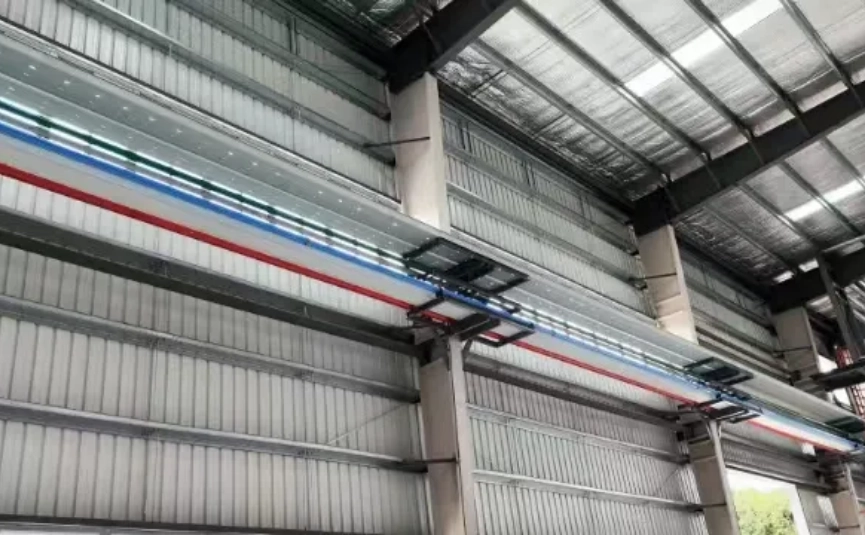
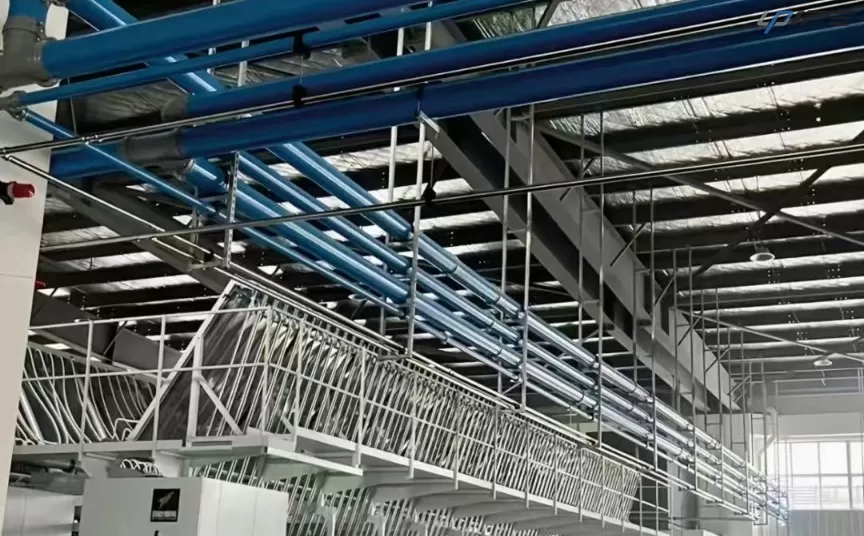
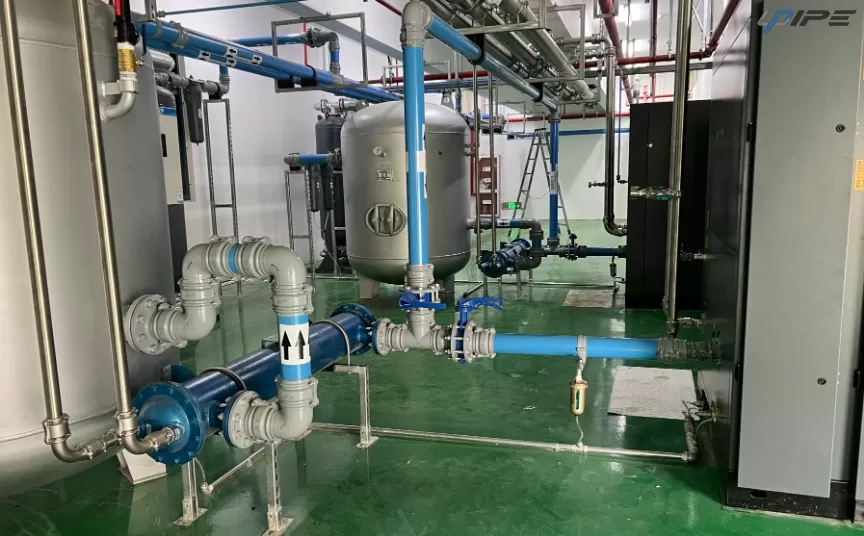
In industrial compressed air systems, performance losses rarely come from compressors alone. In many factories, workshops, and processing plants, inefficiencies are embedded deeper in the infrastructure—specifically in outdated piping networks. Aluminium compressed air pipes have emerged as a system-level upgrade that directly addresses pressure drop, leakage, installation flexibility, and long-term operating cost. In this blog post, UPIPE, as high quality blue aluminum air lines supplier, will share the benefits of aluminium compressed air pipes and fittings that cut energy loss.
Why Compressed Air Distribution Materials Limit System Efficiency
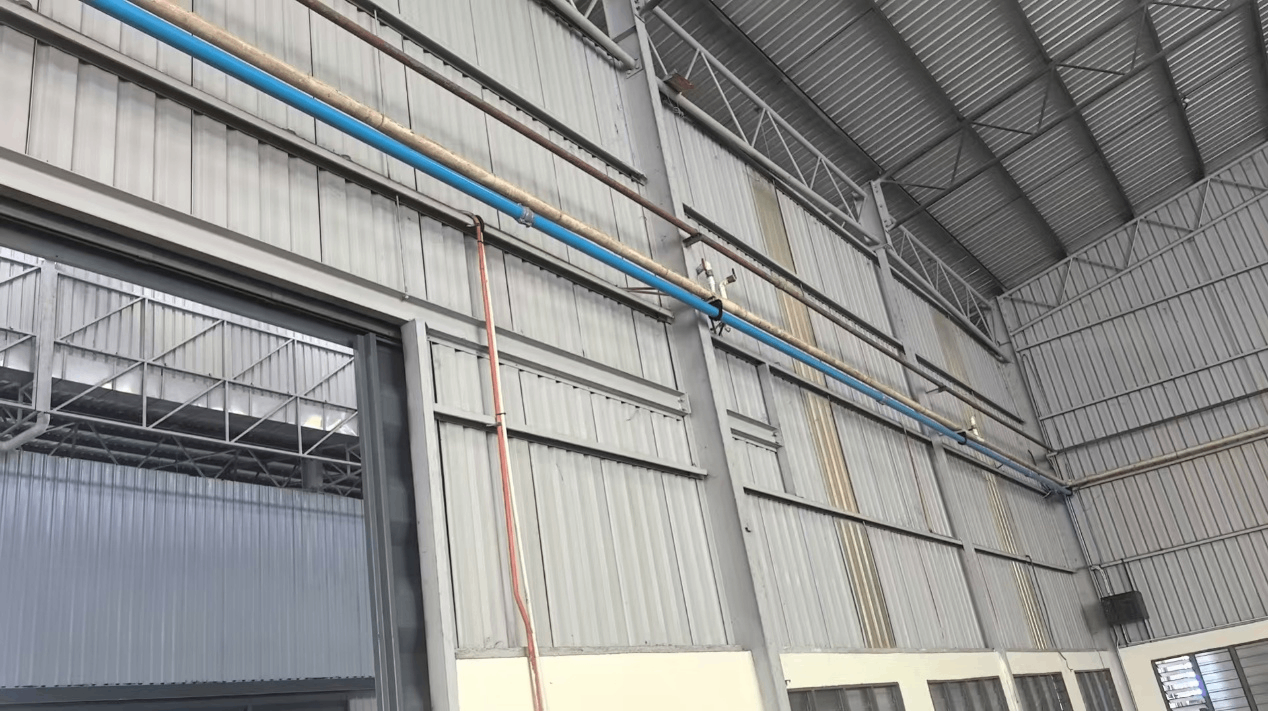
Compressed air is one of the most expensive utilities in industrial environments. Even minor inefficiencies in air delivery translate into measurable energy waste over time. Traditional materials such as galvanized steel, black iron, or copper often introduce hidden performance penalties.
Internal corrosion, scale buildup, and joint degradation increase friction losses inside the pipe. As airflow demand fluctuates, these restrictions force compressors to work harder to maintain pressure at point-of-use equipment. In multi-shift operations, this inefficiency compounds into higher electricity bills and premature compressor wear.
Aluminium compressed air piping systems reduce these losses at the distribution level, not by increasing compressor capacity, but by preserving airflow quality throughout the network.
How Aluminium Compressed Air Pipes Reduce Pressure Drop
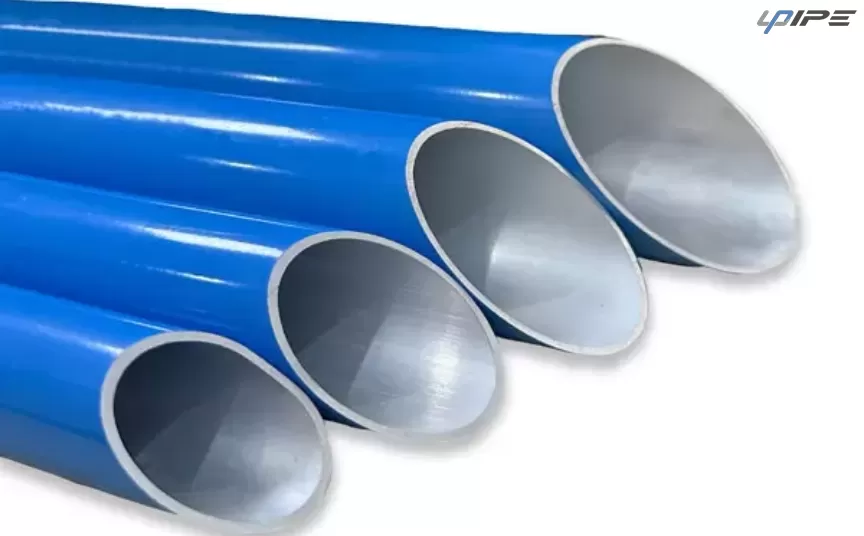
One of the defining advantages of aluminium pipes for compressed air is their smooth internal surface. Unlike steel pipes that oxidize internally over time, aluminium maintains a low-friction interior that stabilizes flow velocity.
Lower pressure drop means:
Compressors operate at lower setpoints
End-use tools receive consistent pressure
System expansion does not require oversizing compressors
In real installations, replacing steel air lines with aluminium compressed air pipes often allows pressure reductions of 0.3–0.6 bar without affecting performance. This directly converts into energy savings across the lifecycle of the system.
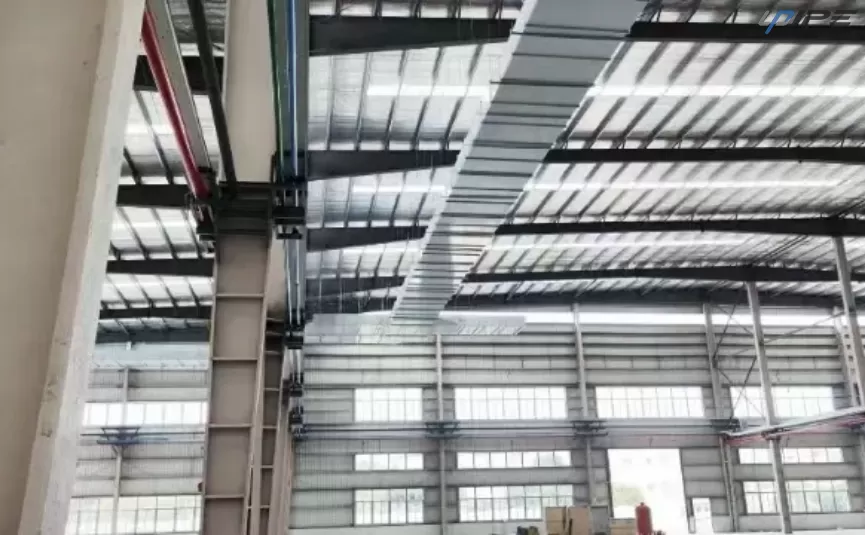
Aluminium Pipe Systems and Leak Prevention at Connection Points
Air leakage is a persistent issue in compressed air networks, particularly at threaded joints and welded seams. Traditional piping relies heavily on sealants, tapes, and labor-dependent workmanship, which introduces variability in joint quality.
Modern aluminium compressed air fittings are typically designed with precision-machined profiles and O-ring sealing mechanisms. These fittings:
Eliminate threading-related stress points
Maintain consistent sealing under vibration
Allow repeated disassembly without seal degradation
From a maintenance standpoint, this significantly lowers unplanned downtime caused by air leaks. For procurement teams, it reduces the long-term cost associated with leak audits and corrective labor.
Installation Speed as a Cost Driver in Aluminium Air Pipe Systems
Installation efficiency is often underestimated when evaluating compressed air piping solutions. Aluminium compressed air pipe systems are lightweight and modular, enabling rapid assembly without welding or heavy lifting equipment.
Compared to steel systems:
Installation time can be reduced by 30–50%
No hot work permits are required
System modifications can be performed during operation
This makes aluminium piping particularly attractive for factories planning phased expansions, production line reconfigurations, or retrofits in active facilities.
Corrosion Resistance and Air Quality Stability
Compressed air quality is directly influenced by the condition of internal pipe surfaces. Rust particles and scale contamination from steel pipes compromise air purity, affecting pneumatic valves, sensors, and finishing processes.
Aluminium compressed air pipes offer inherent corrosion resistance. They do not flake internally, ensuring:
Stable air quality for sensitive equipment
Reduced filter replacement frequency
Longer service life of downstream components
For industries such as food processing, electronics manufacturing, automotive painting, and pharmaceuticals, this stability directly supports quality compliance and process reliability.
System Scalability Using Aluminium Compressed Air Fittings
Scalability is a practical concern for growing industrial operations. Fixed piping layouts limit future upgrades and often require partial demolition to expand capacity.
Aluminium compressed air fittings enable:
Because fittings are reusable and standardized, system redesigns can be executed with minimal material waste. This flexibility is particularly valuable for contract manufacturers and facilities with changing production footprints.
Lifecycle Cost Comparison with Traditional Air Piping
Initial material cost alone does not represent the true expense of a compressed air distribution system. When evaluating aluminium compressed air pipes and fittings, lifecycle cost analysis provides a clearer picture.
Key cost factors include:
Energy savings from reduced pressure loss
Lower maintenance and leak repair frequency
Faster installation and reduced labor dependency
Extended system lifespan without internal degradation
In many industrial case assessments, aluminium piping systems achieve return on investment within two to three years, especially in high-duty or multi-shift operations.
Aluminium Pipe Systems in High-Flow and Ring Main Designs
High-flow compressed air applications require stable pressure across long distances. Aluminium compressed air pipes are well suited for ring main and loop configurations due to their dimensional consistency and low friction coefficient.
In ring systems:
Pressure equalization improves tool performance
Redundancy minimizes production interruptions
Flow capacity can be increased without re-piping the entire system
This design advantage makes aluminium piping ideal for automotive plants, CNC workshops, and heavy assembly lines where airflow demand varies across zones.
Selection Criteria for Aluminium Compressed Air Pipes and Fittings
Choosing the right aluminium air piping system involves more than diameter selection. Key technical considerations include:
Operating pressure and temperature range
Pipe wall thickness and alloy specification
Fitting sealing technology
Compatibility with existing air treatment equipment
For procurement teams sourcing internationally, verifying dimensional tolerances and certification standards is essential to ensure interchangeability and long-term reliability.
Why Aluminium Compressed Air Systems Drive B2B Purchasing Decisions
From a B2B perspective, aluminium compressed air pipes and fittings are not a cosmetic upgrade—they represent an operational optimization strategy. Buyers increasingly prioritize:
Energy efficiency metrics
Installation downtime reduction
Maintenance predictability
Long-term system adaptability
These factors align directly with lean manufacturing goals and sustainability benchmarks, making aluminium air piping a practical infrastructure investment rather than a discretionary expense.
Final Thoughts on Aluminium Compressed Air Infrastructure
Compressed air systems are only as efficient as their weakest component. Aluminium compressed air pipes and fittings address multiple system constraints simultaneously—flow efficiency, leakage control, air quality, and scalability—without increasing operational complexity.
For facilities seeking measurable performance gains and procurement teams aiming to reduce total ownership cost, aluminium compressed air piping systems offer a grounded, technically sound path forward—one that delivers tangible results rather than abstract promises.