Picking compressed air pipe fittings for automated systems comes down to seven main things: what the system needs, the fitting type and material, size and connection standards, pressure and flow ratings, smart features, rules you must follow, and cost. Each one affects the others, so buyers need to look at them all together, not one at a time.
Fitting together well matters because automated equipment needs steady air pressure and clean signals. Compressed air pipe fittings that don't match well cause more leaks and make pressure less steady. They can also weaken signals across the network. Even a small mismatch at one connection point can cause problems through a whole production line.
This article gives clear rules you can act on and direct comparisons. Readers can use them to make a practical checklist for choosing compressed air pipe fittings for their own automation projects.
Selection starts with a full list of the equipment the air network will serve. The engineer lists every actuator, gripper, blow-off nozzle, and valve station, then records how often each one cycles. A pick-and-place head that strokes several times per minute places very different demands on fittings than a clamp that actuates once per shift.
Duty cycle data drives the rest of the checklist. High-cycle equipment needs fittings that hold a seal through constant flexing and pressure swings. Intermittent equipment tolerates a simpler connection. The engineer also notes peak simultaneous demand, because many actuators firing together set the real flow requirement for the network. This map becomes the reference for sizing, pressure ratings, and material choices later in the process.
Identify Environmental and Motion Demands
The installation environment shapes material and seal selection as much as the equipment does. The engineer documents ambient temperature, exposure to coolant or washdown, vibration sources, and any outdoor or corrosive atmosphere. A fitting that performs well in a clean, climate-controlled cell may not suit a foundry floor.
Motion is the second demand to capture. Robotic arms, moving gantries, and indexing tables flex the tubing and stress every joint. The engineer marks which connections stay fixed and which move, then notes the travel range and bend frequency. These notes point toward flexible routing, strain relief, and seal materials rated for the expected temperature band. Together with the duty-cycle map, this environmental profile gives the buyer a complete requirements document before any fitting is compared.
Evaluate Compressed Air Pipe Fittings and Materials
Match Compressed Air Pipe Fittings to the Application
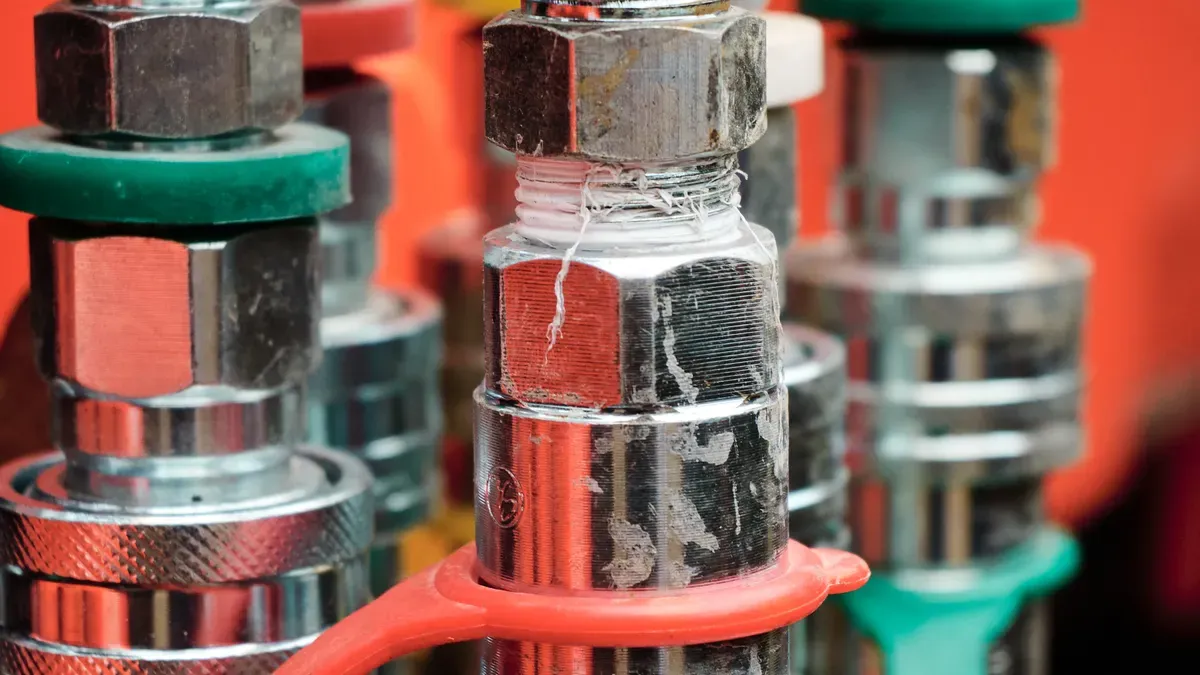
The fitting type decides how you install it, how easy it is to service, and where it works best. The table below shows the best use for each common type.
Fitting type
Best fit
Push-to-connect
Fast assembly and frequent reconfiguration; ideal for modular cells and test benches
Threaded
Fixed, high-vibration joints on valves, manifolds, and machine ports
Barbed
Flexible tubing runs on low-pressure lines and temporary setups
Flanged
Large-bore headers and main lines that need rigid, high-flow connections
Quick-drop
Drop points where tools or stations connect and disconnect often
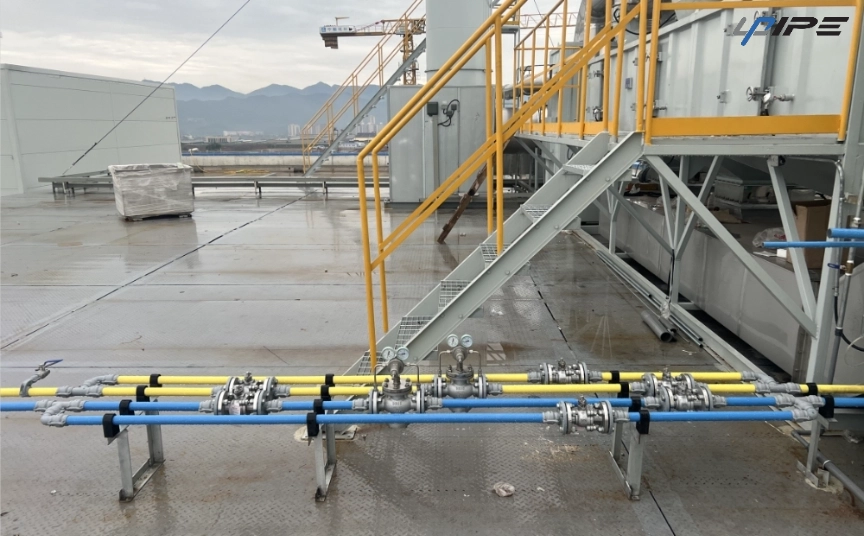
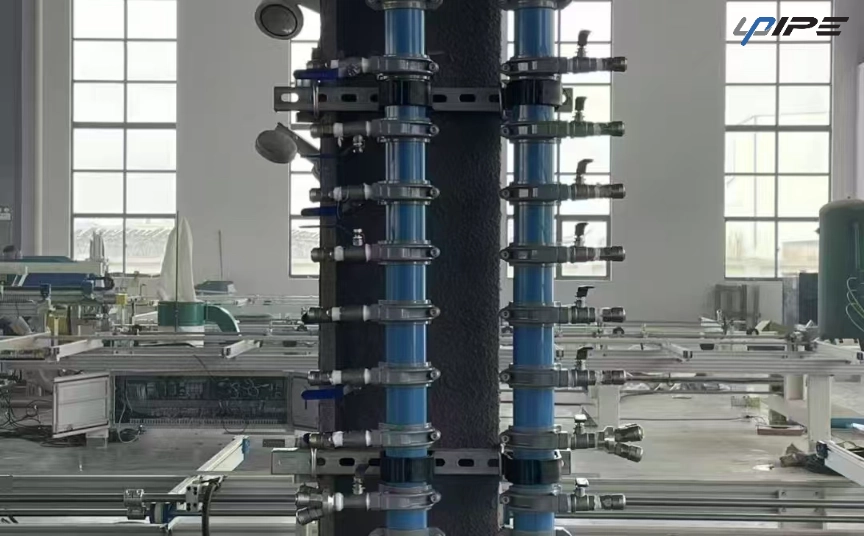
Good compressed air pipe fittings have two things in common: precise threading and strong sealing rings. Precise threads screw in fully and stay tight when machines shake. Strong sealing rings keep pressure steady as temperatures rise and fall. Brass fittings are a tough, rust-resistant choice for joints that take a beating. Modular aluminum systems work well for buyers who want light weight and rust resistance across compressed air, vacuum, and inert gas lines. The Upipe Aluminum Pipe System is one example of this approach. Its lineup includes 90° elbows, equal and reducing tees, pipe-to-pipe connectors, male and female connectors, flanges, 90° and 180° quick drops, end caps, ball and butterfly valves, and a flowmeter for tracking air use. The modular design makes installation fast and lets you add on later.
Select Materials and Seals for Media and Environment
Material choice depends on the media and the environment. Brass resists rust and handles vibration well. Aluminum stays light and resists rust, which lowers the load on long runs. Stainless steel works in harsh atmospheres. The engineer matches the body material to the conditions recorded earlier.
Seals need just as much attention. NBR (nitrile rubber) is the general-purpose pick for compressed air. It handles normal shop temperatures and resists oil carryover. FKM (fluorocarbon) costs more but handles much higher temperatures and a wider range of chemicals. A seal rated below the line's operating temperature gets hard, cracks, and leaks. The buyer compares the seal's temperature rating against the hottest and coldest conditions the line will face, not just the room temperature. A safety margin guards against spikes during startup or seasonal swings.
Confirm Size, Connection, and Pressure Compatibility
Verify Sizing and Connection Standards
Size and connection checks begin at the equipment port. The engineer measures the port thread and compares it to the fitting's stated standard. Common thread standards include NPT, BSPP, and BSPT, and each one seals in a different way. A mismatched thread may start onto the port but will not seal reliably under pressure. The buyer confirms the standard by name, not by eye, and checks that the seal type matches the port design. Flat-faced ports take a gasket or O-ring, while tapered threads rely on thread deformation. The engineer also checks the seal material against the temperature and media notes gathered earlier. This three-part check—thread standard, pressure rating, and seal type—catches most compatibility failures before installation begins.
Proper sizing keeps pressure steady across the network. Lines that are too small create pressure drop, and automated equipment then sees weak or changing air at the point of use. A closed-loop ring-main layout helps here. Air feeds the ring from two directions, so each drop point sees steadier pressure than a single dead-end run provides. The buyer works through a short checklist before ordering compressed air pipe fittings:
List the peak simultaneous flow demand from the duty-cycle map.
Confirm the main line bore supports that demand over the full run length.
Check that each drop line matches the tool's inlet size.
Verify every thread standard against the equipment ports.
Confirm seal ratings cover the hottest and coldest operating conditions.
Check Pressure Ratings and Flow Performance
Pressure ratings need a margin, not just a match. The engineer compares the fitting's rated pressure against the system's maximum working pressure, including spikes during startup or valve actuation. A fitting rated at or near the line pressure leaves no room for surges. The buyer also checks the rating at the actual operating temperature, because most ratings fall as temperature rises. Flow performance deserves the same close look. Every elbow, tee, and reducer adds resistance, and a long run with many fittings loses more pressure than a short, straight one. The engineer counts the fittings on each branch and favors gradual bends over sharp turns where space allows.
Seal verification closes the loop. The buyer confirms that each seal's temperature rating covers the full operating range with a safety margin. NBR suits normal shop conditions, while FKM handles hotter lines. The engineer also checks that the seal material resists any oil or chemical carryover in the air supply. A final pressure test at the installed joints confirms the whole assembly before the line goes into service. This step catches thread mismatches and seal problems while they are still easy to fix.
Weigh Smart Features, Compliance, and Cost
Assess Monitoring and Smart Capabilities
Monitoring turns a plain air network into one you can manage. Flow sensors and flowmeters show how much air each branch uses. Pressure transmitters warn you about drops before they shut down a line. The engineer decides which data points matter for the automation system and where to put the sensors. A flowmeter on a main branch shows leaks and changing demand. A pressure sensor near a key robot cell catches supply problems early.
Smart fittings only add value when the data reaches the control system. The buyer checks the output signal type, the communication protocol, and whether it works with the plant's PLC or SCADA platform. A sensor with the wrong signal cannot feed the automation system, no matter how accurate it is. The Upipe Aluminum Pipe System includes a flowmeter for tracking air use, which gives buyers a monitoring option within the same modular range as the pipes and fittings. The engineer also thinks about maintenance access. A sensor that needs frequent calibration should sit where technicians can reach it without taking apart the line.
Balance Regulatory Compliance and Total Cost
Compliance sets the lowest bar for every selection decision. The buyer confirms that fittings meet the right regional codes for pressure vessels and electrical equipment, and that the air quality matches the ISO 8573 class the process needs. Automated equipment with sensitive sensors or food-contact jobs often needs cleaner air, and that requirement shapes seal and material choices. Writing down compliance at the selection stage saves rework during audits and commissioning.
Total cost goes far beyond the purchase price. The buyer adds installation time, leak losses over the service life, maintenance hours, and downtime risk. A fitting that installs fast and holds its seal lowers all four. Modular aluminum systems cut installation time with lightweight parts and simple connections, which lowers labor cost on long runs. The buyer builds a comparison matrix that lists purchase price, install hours, expected seal life, and monitoring options side by side. A pilot test on one cell confirms the estimates before full rollout. This last step closes the checklist and turns the seven factors into a decision you can defend.
The selection process happens in four steps. First, the engineer defines what the system needs. Next comes choosing the fitting type, body material, and seal. Then the buyer checks size, connection standard, pressure rating, and flow performance. Smart features, compliance, and total cost finish the review. Each step leads into the next one.
Compatibility is a checklist of connected factors, not just one specification. A perfect thread means little if the seal is wrong. A high pressure rating means little if the bore is too small. Buyers should build a comparison matrix of compressed air pipe fittings and pilot-test one cell before full rollout. That final check turns the checklist into a decision the team can defend.
FAQ
How does a buyer confirm the thread standard matches the equipment port?
The buyer measures the port and compares it to the fitting's stated standard by name. Common standards include NPT, BSPP, and BSPT. Each one seals in its own way. A mismatched thread may start onto the port but will not seal well under pressure. The engineer checks the standard before ordering.
Which seal material suits a hot production line?
FKM handles much higher temperatures and a wider range of chemicals than NBR. NBR is still the general-purpose pick for normal shop conditions and resists oil carryover. The buyer compares each seal's temperature rating against the hottest and coldest conditions the line will face, with a safety margin.
What causes pressure drop in an automated air network, and how does the buyer prevent it?
Lines that are too small and long runs with many elbows, tees, and reducers create pressure drop. Automated equipment then sees weak or changing air at the point of use. The engineer sizes the main bore to the peak simultaneous flow demand and favors gradual bends over sharp turns.
How does a flowmeter or pressure sensor connect to the plant control system?
The buyer checks the output signal type and communication protocol against the plant's PLC or SCADA platform. A sensor with the wrong signal cannot feed the automation system, no matter how accurate it is. The Upipe Aluminum Pipe System includes a flowmeter for tracking air use within the same modular range.
Why pilot-test one cell before a full rollout?
A pilot test confirms the estimates in the comparison matrix—purchase price, install hours, seal life, and monitoring options—on a live cell. It catches thread mismatches and seal problems while they are still easy to fix. The team then rolls out with data it can defend.
This website uses cookies to provide you with a safer and more personal experience. By accepting, you agree to the Cookie Policy and the use of cookies for advertising and analytics purposes.