Home > News > Blog > What Compressed Air Pipe System Is Reliable for Production Lines
# Blog
What Compressed Air Pipe System Is Reliable for Production Lines
2026-09-23
Share:
Aluminum modular piping is the most reliable compressed air pipe system for production lines. It prevents leaks, resists corrosion, and cuts energy costs.
Aluminum modular piping is the most reliable compressed air pipe system for production lines. You work under huge pressure to avoid downtime. Just one hour of lost production at a mid-sized facility can cost $22,000 to $50,000. Leaks quietly drain your budget and waste a shocking 20–30% of your compressed air energy. Corrosion in standard pipes also puts equipment safety and product quality at risk. Unlike traditional materials that bend or rust, pure aluminum stays leak-free and safe. As a decision-maker, you need a long-term, cost-effective solution that stops these hidden energy drains and protects your bottom line. The sections ahead compare the risks of standard materials against the proven benefits of an advanced aluminum design.
Check for leaks monthly. This keeps your system efficient and reliable.
Why Reliability Matters in Compressed Air
The material you pick for your pipes shapes how well your production lines work. A good industrial compressed air pipe system helps air flow better and lowers pressure drop. It also cuts down on leaks and saves energy. A bad material does the opposite. It slowly raises your costs every day.
The High Cost of Leaks and Corrosion
Leaks waste much more money than most facility managers think. A 1/8-inch hole in a 100 psi system can waste about $1,200 a year in electricity. A 1/4-inch leak raises that to around $4,800 each year. In one facility, 20–30% of all compressed air is often lost to leaks.
Leak Diameter
Annual Cost (100 PSI, $0.10/kWh, 24/7)
1/32"
~$75/year
1/16"
~$300/year
1/8"
~$1,200/year
1/4"
~$4,800/year
1/2"
~$19,200/year
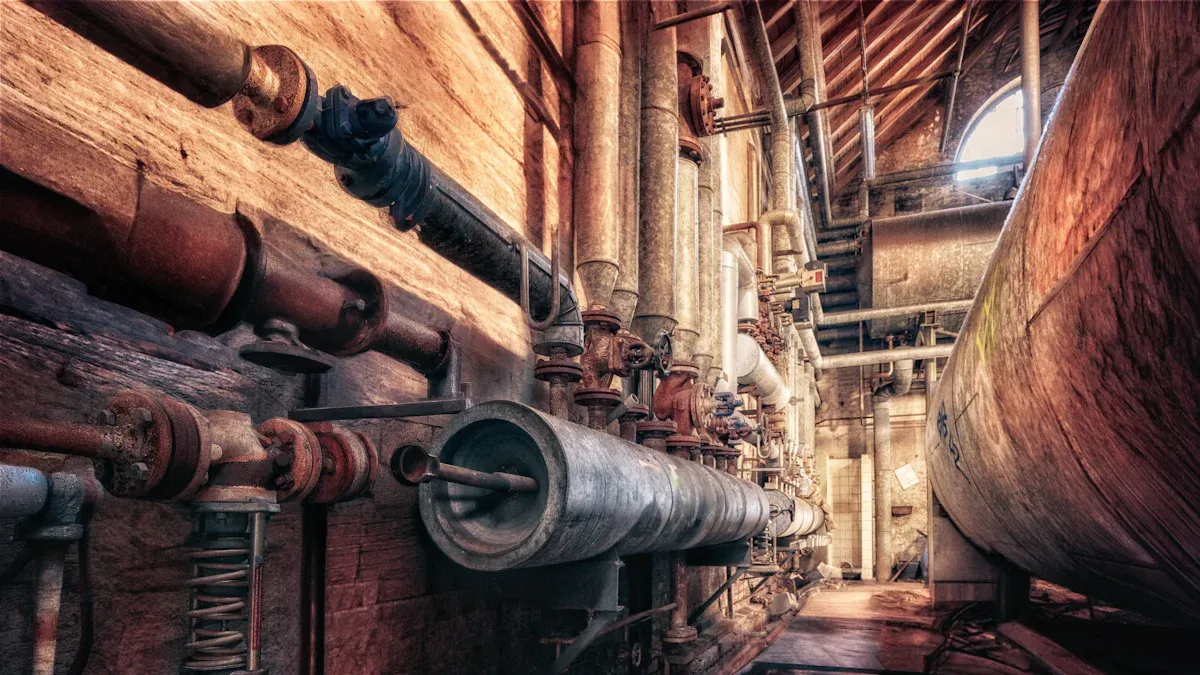
Corrosion makes things worse. Black iron and galvanized steel pipes rust when they touch condensate. Rough insides create more friction and make your compressors work harder. For a medium-sized facility, corrosion repairs on old piping can cost $1,500 to $3,000 each year. These systems usually need leak fixes every 3 to 6 months. Rusted parts often need replacing within 5 to 10 years.
How Downtime Impacts Production Efficiency
Every repair stops your production. Special contractors do most fixes on old systems, which adds labor cost and delays. The lost output often costs much more than the repair itself.
Even outside automotive, the numbers still hurt. General discrete manufacturing loses $10,000 to $50,000 for every hour of unplanned downtime. Energy is about 70–80% of the total cost of ownership over the life of a compressed air system. For every 2 PSI increase in system pressure to make up for piping problems, energy costs go up by about 1%. A reliable pipe system protects your uptime and your energy budget at the same time.
Comparing Alternative Pipe Materials
You have a few material choices for your compressed air network. Each one comes with different pros and cons. Plastic and PVC piping looks good at first. Black iron and galvanized steel have been used in factories for a long time. Copper and stainless steel last long but cost a lot. Knowing the real risks of each option helps you pick smarter for your production space.
Plastic and PVC Piping Risks
Plastic compressed air pipe is light and does not corrode. It will not rust like metal does. Installation seems easy. You can cut it with basic tools and join pieces with solvent cement. These perks make it tempting for quick builds or tight budgets.
But plastic has serious limits with pressure and temperature. Compressed air makes heat during compression. Air temperatures can go above 140°F in many systems. Plastic piping gets soft and weak under steady heat. Over time, joints form tiny cracks that turn into dangerous bursts. PVC, in particular, shatters with force under impact or stress. Many safety codes ban PVC for compressed air because of this danger. You face both safety risks and hidden leaks that waste energy month after month.
Black Iron and Galvanized Steel Risks
Black iron and galvanized steel pipes seem strong and cheap. The material cost per foot is low. But you pay a hidden price. Skilled labor for installation makes up 70 to 80 percent of the total project cost. You need threading, welding, and heavy equipment. Installation takes much longer than with modern options.
The bigger problem comes after installation. Black iron and steel rust when they touch condensate. Condensate forms naturally in every compressed air system as hot air cools. Rust builds up inside the pipe walls. A 30-foot rusted steel drop of 1-inch diameter creates a pressure drop of 2.4 to 5 psi. An aluminum drop of the same size creates only 1.02 psi. That gap forces your compressor to work harder. Every 2 psi of extra operating pressure raises compressor power use by about 1 percent. Rust bits also contaminate equipment downstream. You damage tools, valves, and final products.
Threaded steel joints shake loose over time. Leaks form quickly. Traditional systems need leak repair every 3 to 6 months. Corroded sections need replacement within 5 to 10 years. These repeated maintenance costs add $1,500 to $3,000 each year for a medium facility. A single 1/4-inch leak at 100 psi costs over $17,000 per year in wasted energy. You pay for the cheap material again and again.
Copper and stainless steel avoid corrosion. But you pay more than aluminum for copper and stainless steel per installed system. One real-world comparison shows stainless steel 304 totaling $23,170, black iron Schedule 40 totaling $16,050, and aluminum piping totaling just $12,470. The aluminum modular pipe system gives lower installed cost, zero corrosion, and much lower lifetime maintenance. That is the standard you should measure every alternative against.
Aluminum Modular Pipe System: A Dependable Option
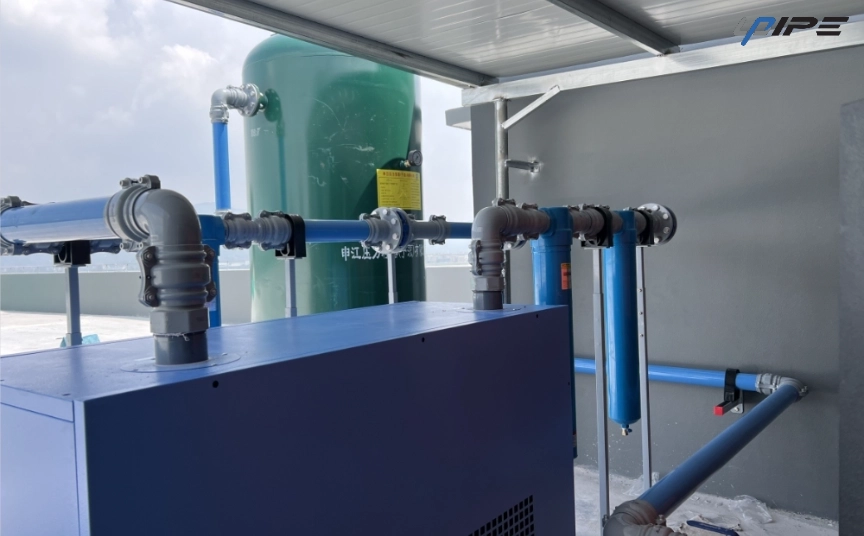
The Upipe Aluminum Pipe System is a top-quality choice for compressed air. Every part is made from 100% pure aluminum with no recycled content. This ensures the material quality is the same throughout your whole system. You get a pipe system made for tough factory jobs.
No Rust and No Leaks
Aluminum does not rust like steel does. Rust from moisture does not happen. This keeps your airflow free from blockages and pressure loss. Your air stays clean because no rust particles get in.
Material
Corrosion Behavior
Impact on Compressed Air System
Aluminum
Forms a natural protective oxide layer that prevents ongoing corrosion
Helps prevent airflow restriction, pressure drops, clogging, and air-quality problems
Copper
Resists corrosion well, but can be affected by certain contaminants
Can still corrode and may experience flow restriction over time
All Upipe models have thicker walls, making them last longer. Your pipes handle stress better than thin-walled pipes. For pipes size DN40 and bigger, factory rings make installation easier. You skip extra prep steps. Work time goes down. Mistakes are avoided.
Connectors between pipes are made with one molding process. This gives equal strength to the bolt and body. So each joint resists pressure well. Sealing rubber comes from imported Thai raw materials. It seals very well. Vibration and wrong installation will not cause air leaks.
Parts like tees, elbows, and quick drops have special shapes that guide airflow. These shapes improve strength and cut pressure loss. Your system runs more efficiently as a result.
Quick Drop sets have several smart features. Ribs on the body stop breaks from uneven stress. Strong locking parts resist cracking. A simple, multi-surface seal stops leaks and makes installation easy and error‑free. The gooseneck shape stops water from flowing down into pipes. This protects equipment downstream from water damage. Quick Drops are ready to use when you need them, saving production time.
Ball valves are made from one piece of aluminum alloy. They work stably and safely for a long time. All pipe clamps have anti‑vibration features. These cut down noise and wear, so your system lasts longer.
Lightweight and Easy to Add On
Aluminum weighs much less than steel or copper. You can move and place pipes without heavy machines. Installation moves faster with fewer workers. The modular design lets you add to the system when you need more capacity. You add sections without replacing the whole system.
Upipe packaging protects every part during shipping. A soft fabric lining cushions each part. External plastic sealing keeps moisture out. Sealed ends keep dirt out. Your parts arrive clean and ready to use.
With no rust, no leaks, and simple setup, aluminum modular piping is a smart pick for your production lines.
Selecting a Reliable Pipe System for Production Lines
You need to match pipe diameter to your airflow and pressure needs. A pipe that is too small makes air move too fast and causes a big pressure drop. Then your compressor has to work harder to push air through the line. Most systems try to keep pressure drop between 0.3 and 0.5 PSI per 100 feet of piping. This goal keeps energy waste low and protects your equipment.
Think about a production line that needs 500 SCFM at 100 psig. The equivalent length is 100 feet. The allowable pipe loss is 1.00 psi. A recommended pipe size of NPS 2½ (DN 65) with a nominal inner diameter of 2.469 inches gives a calculated pipe loss of 0.62 psi. The outlet pressure stays at 99.38 psig. Air velocity reaches 32.1 ft/s. This size works for the job.
Parameter
Value
Standard airflow
500 SCFM
Inlet pressure
100 psig
Equivalent length
100 ft
Allowable pipe loss
1.00 psi
Recommended pipe size
NPS 2½ (DN 65)
Calculated pipe loss
0.62 psi
Air velocity
32.1 ft/s
Installation and Maintenance Tips
Talk with suppliers like Upipe for system design and component selection. They help you size pipes the right way and choose the right fittings. You should also compare total cost of ownership, not just the first purchase price. A 10-year total cost of ownership comparison shows galvanized steel at $6,160 and aluminum at $3,700. The aluminum option saves you money over time.
Pick systems with proven reliability, easy modular expansion, and full support. Quick Drops are ready when you need them, which saves production time. For maintenance, check air leaks every month. Do ultrasonic leak testing every three months. Check piping and alignment twice a year. Run a full pressure audit and flow measurement once a year. This schedule keeps your Pipe System efficient and makes it last longer.
Aluminum modular piping gives you superior corrosion resistance, leak prevention, durability, and easy installation. Plastic piping cannot handle high temperatures or pressure safely. Black iron and steel rust over time, forcing costly repairs and contaminating your air. Copper and stainless steel avoid rust but cost much more to install overall. A reliable Pipe System protects your uptime and energy budget. Talk with suppliers about your needs. Compare total cost of ownership, not just the first purchase price. Choose a system with proven reliability and simple expansion options. Upgrade to aluminum modular piping today for uninterrupted production.
FAQ
How does aluminum piping compare to steel for compressed air?
Aluminum does not rust like steel does. Steel rusts when it touches water. A rusted steel pipe loses 2.4 to 5 psi of pressure. An aluminum pipe of the same size loses only 1.02 psi. Aluminum also costs less to install. One example shows aluminum at $12,470 and black iron at $16,050.
How often should you check for air leaks?
Check for air leaks every month with simple checks. Use a special test every three months to find small leaks. This catches leaks before they get big. A tiny 1/4-inch leak at 100 psi wastes more than $17,000 each year in energy costs.
Can you expand an aluminum modular system later?
Yes. You can add new sections without taking out the whole system. When you need more air, you just add more pipes. This saves money and stops major downtime when you grow.
What maintenance does an aluminum pipe system need?
Check that your pipes are straight twice each year. Test the pressure and airflow once a year. Aluminum never rusts, so you skip fixing rust damage. This lowers your yearly upkeep costs compared to steel systems.
Why do Quick Drops save production time?
Quick Drops arrive ready to use. You install them when needed with no extra work. Their curved shape stops water from going into pipes. This protects your tools from damage and keeps your line running.
This website uses cookies to provide you with a safer and more personal experience. By accepting, you agree to the Cookie Policy and the use of cookies for advertising and analytics purposes.