Home > News > Blog > How to Choose a Compressed Air Pipeline Manufacturer with Installation Teams
# Blog
How to Choose a Compressed Air Pipeline Manufacturer with Installation Teams
2026-10-09
Share:
Choose a compressed air pipeline manufacturer with in-house installation teams. Look for site surveys, engineering support, and ISO 9001 certification.
When your building needs a compressed air pipeline, you face a difficult decision. Should you buy pipes from one company and hire a different crew to install them? That approach often leads to finger-pointing when leaks appear or pressure drops occur. The solution is to choose a compressed air pipeline manufacturer who handles everything. A good manufacturer brings together engineering expertise, skilled installation teams, and modern aluminum piping materials. Together, these elements deliver energy-efficient, leak-free performance.
This guide helps you evaluate suppliers with confidence. You will learn to uncover hidden costs, understand why aluminum piping outperforms traditional GI piping, and identify a full-service partner. These insights protect your investment and keep your operations running smoothly.
Choosing a compressed air pipeline manufacturer is a long-term investment, not a simple pipe purchase. The supplier you pick will affect your energy bills, maintenance costs, and production uptime for years. When you choose a compressed air pipeline manufacturer, you invest in engineering skill and installation quality that protect your operations long after the initial invoice clears.
Start with a Site Survey and Air Demand Analysis
A good manufacturer starts with a full site survey. The team should walk through your facility, study your plant layout, and estimate your air needs. Then they recommend a loop or branch configuration that matches your actual demand patterns.
Demand analysis uses real data, not guesswork. Pressure and flow loggers record temperature, dew point, amperage, and voltage across your system. A data logger usually stays for one to two weeks and takes readings every few seconds to show patterns across shifts. Full engineering audits place multiple loggers at different points in the facility. This data shows peak usage, idle periods, leaks during no-production times, pressure drops, and ways to save energy.
Ask about the cost of this survey upfront. Engineering firms conducting compressed air system audits may charge anywhere from a few hundred dollars to as much as $10,000, depending on the checks done and system complexity. In some cases, your local energy company may cover the expense.
Many clients ask what an air compressor energy audit might cost. But the savings we find usually outweigh the fee. We identify possible energy savings and calculate the payback period for suggestions like leak repairs. These can often pay for themselves in months. VSD compressor installations also help you cut compressor energy costs and improve your bottom line.
Evaluate Installation Teams and Engineering Support
The manufacturer's installation crew matters just as much as the pipe. Look for teams that follow the approved layout, test for leaks, and finish professional startup and system testing. They should also plan installation during shutdowns to limit downtime.
Engineering skill separates serious suppliers from order-takers. Check candidates on airflow calculations, pipe sizing advice, pressure drop analysis, and network optimization support. Product quality deserves review too: material strength, corrosion resistance, pressure ratings, and connection technology all affect long-term performance.
Certifications give clear proof of skill. A qualified manufacturer should hold ISO 9001:2015 for quality management and meet ASME B31.1 or B31.3 for piping design and fabrication. These standards show the supplier follows accepted engineering practices.
Future expansion support also counts. Your production needs will change. A good partner can add machine connections, production lines, or capacity without big disruption.
Before you commit, review case studies, ask industrial clients for references, and visit installed sites. Compare detailed proposals side by side. Watch for warning signs: not giving references, vague proposals, poor documentation, poor communication, or inconsistent technical answers. These red flags often predict problems after installation.
Hidden Costs of Poor Design and Installation
When you pick a compressed air pipeline manufacturer just by the upfront pipe price, you overlook the costs that build up over years of use. Bad design and careless installation cause a chain of expenses that empty your budget long after the job is done.
Pressure Drops and Air Leaks Increase Operating Expenses
Pipes that are too small, needless bends, and badly placed drops create pressure drops all through your system. Your compressors have to work harder to make up for this, using more electricity and wearing out sooner.
The numbers show a clear problem. A 2 PSI pressure drop raises energy use by about 1%. At 10 PSI, energy use goes up more than 5%, costing thousands of dollars each year. A 1 bar pressure drop increases compressor energy use by about 6% to 7%, according to Ziqi Group. Atlas Copco reports about 8% more power for each bar added. These losses add up across every shift.
Pressure Drop (PSI)
Energy Consumption Increase
Annual Cost Impact
2 PSI
~1%
Noticeable across 24/7 operations
10 PSI
>5%
Thousands of dollars per year
15 PSI (1" vs 1.5" pipe)
Significant
Immediate efficiency loss at farthest outlet
Air leaks in traditional GI piping waste energy nonstop and cause uneven pressure across your system. Some workstations get enough pressure while others struggle with low flow. This imbalance lowers productivity and can hurt precision applications.
"The cost of compressed air goes far beyond the compressor itself. Electricity accounts for up to 80% of lifetime expenses, and even small leaks or pressure losses can waste thousands annually. Incremental inefficiencies across piping and compressor stages compound quickly, making energy tracking vital to uncover and correct waste."
Downtime and Premature Corrosion Raise Maintenance Costs
Unplanned downtime hurts your production schedule badly. Equipment at the end of long, undersized piping runs may not get enough air, causing production stops and quality defects. Dead-end systems create uneven production quality when upstream demand blocks downstream airflow.
Corroded piping cuts system lifespan by a lot. Black iron piping may need replacement within 5 to 10 years when moisture causes corrosion, much sooner than the normal 15 to 20 year lifespan in dry conditions. Galvanized steel lasts a bit longer, but the zinc layer can wear off. Aluminum piping, on the other hand, gives 30 to 50 years or more of service because it resists corrosion.
Moisture damage and oil contamination shorten maintenance intervals for tools and production equipment. Poorly kept dryers or filtration systems force compressors to run at higher pressures to make up for restrictions, which drains efficiency even more.
Improper support creates safety hazards. Pipes that are not secured well can whip or fall if a coupling fails. Using non-rated plastic piping can lead to shattering and dangerous shrapnel. These risks add insurance costs, repair bills, and possible liability.
Every one of these hidden expenses comes back to design and installation choices. When you pick a compressed air pipeline manufacturer who puts engineering quality and proper installation first, you avoid these costs completely.
Compared with older materials, aluminum piping is better at fighting rust, staying light, and keeping pressure steady. Black iron rusts fast, galvanized steel wears down over time, and copper can suffer pitting corrosion. Aluminum forms a natural oxide coating that shields it from corrosion for its whole life. Extruded aluminum also gets inner and outer coatings for extra oxidation protection. Because aluminum is the lightest common pipe option, it installs faster and lowers labor costs.
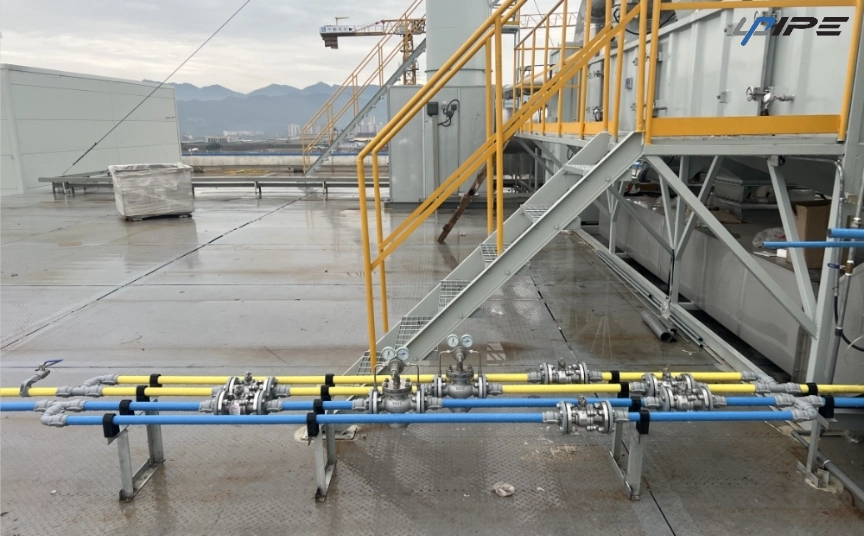
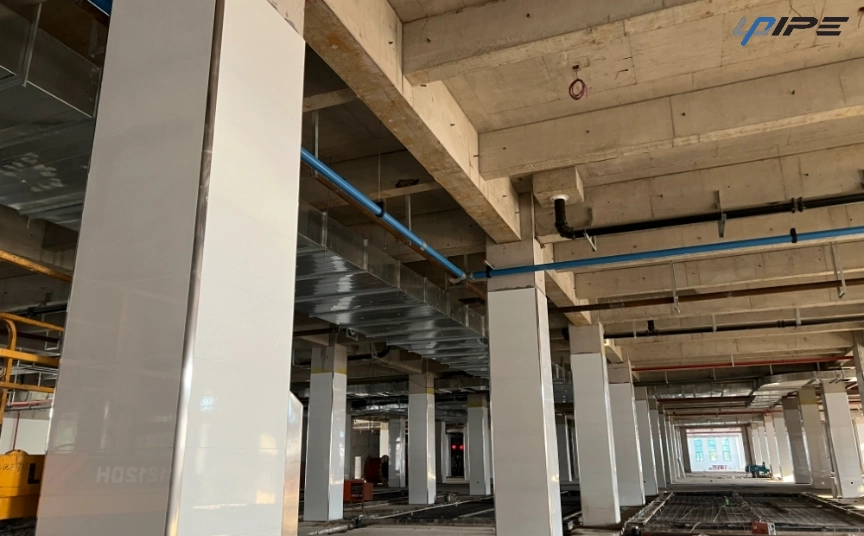
The Upipe Aluminum Pipe System is a complete modular solution. It includes aluminum pipes, elbows, tees, connectors, flanges, quick drops, end caps, ball valves, butterfly valves, and flowmeters. The system works for compressed air, vacuum, and inert gas. The modular design lets you build a custom pipe network and adjust it easily when needs change.
Corrosion Resistance Improves Air Quality and Reliability
Corrosion on the inside directly hurts compressed air quality. Rust and scale from corroded pipes get into the air stream as solid particles. ISO 8573-1 calls these corrosion products particulate contaminants. Moisture in compressed air causes rust, so it adds water and particles at the same time. With these contaminants, meeting stricter air quality classes becomes harder.
Aluminum piping fixes this issue. It resists corrosion and does not drop flakes or particles that could damage equipment or hurt workers. With aluminum, your air is cleaner and your air tools last longer.
The DOE/Compressed Air Challenge Sourcebook says main air lines should be sized for a 1% to 2% maximum pressure drop. Leaks usually waste 20% to 30% of the air a compressor makes. CAGI says every extra 2 PSI of pressure raises compressor power use by about 1%.
Modular Design Speeds Installation and Supports Growth
Modular aluminum piping makes installation much faster. Push-fit aluminum air pipe fittings take 10-15 minutes, while threaded fittings take 30-40 minutes. Reports say aluminum alloy piping installs 50-70% faster than steel or copper. One Los Angeles plumbing professional finished a busy-season job 20% faster with push-fit fittings than with threaded fittings.
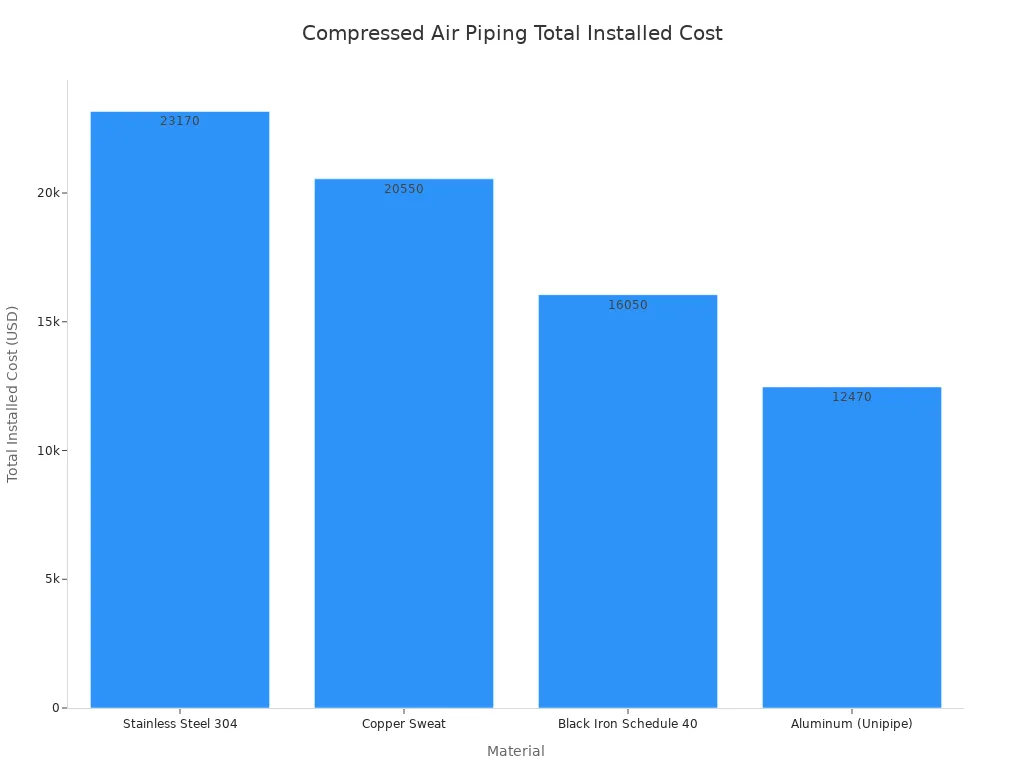
Labor savings add up fast. Modular aluminum piping cuts total labor hours by over 50% compared with black iron. Regular maintenance workers can often install it with simple push-to-connect fittings. You skip hot-work permits, heavy threaders, and hours of flushing the system. The table below compares total installed costs.
Material
Material Cost
Labor Cost
Total Installed Cost
Stainless Steel 304
$11,170
$12,000
$23,170
Copper Sweat
$8,550
$12,000
$20,550
Black Iron Schedule 40
$4,050
$12,000
$16,050
Aluminum (Unipipe)
$6,470
$6,000
$12,470
Installing aluminum costs about 22% less than black iron, 39% less than copper, and 46% less than stainless steel. The modular design also makes future growth easy. You can add machine hookups or production lines without big disruption.
Where Reliable Compressed Air Piping Matters Most
Compressed air piping quality affects every place that uses pneumatic systems. The risks go up a lot in industries where production never stops or where air purity directly changes product quality.
Manufacturing Plants That Depend on Continuous Production
Automotive plants face huge downtime costs. One hour of unplanned stoppage costs between $22,000 and $50,000 or more. This is because of high unit values and tight just-in-time schedules. One stamping plant running 300 units per hour lost 450 units during a 90-minute hydraulic press failure. Overtime labor, expedited shipping, and warranty reviews pushed that single event past $180,000. Reliable piping stops pressure drops that starve end-of-line equipment and cause these costly interruptions.
General manufacturing facilities share similar risks. Undersized mains and poorly placed drops force compressors to work harder. This raises energy bills and speeds up wear. A trusted supplier like Upipe offers design support, professional installation, and ongoing maintenance guidance for aluminum compressed air piping systems. This support keeps your production lines running without unexpected pressure failures.
Facilities Requiring Clean, Dry Compressed Air
Many industries need air that meets strict purity standards. ISO 8573-1:2010 defines classes for particles, water, and oil. Electronics manufacturing requires the highest purity classes, such as Class 1 or Class 0, to prevent contamination and product defects. Food and beverage facilities typically need Class 1:2:1. Pharmaceutical operations also follow Class 1:2:1 or Class 1 because contaminants can compromise product quality. Semiconductor manufacturing demands Class 1, where even microscopic particles or trace moisture cause defects.
Moisture control matters just as much. Electronics facilities often specify pressure dew points from -40°F to -100°F for super-dry applications. Corroded steel piping releases rust and scale into the air stream. This makes these purity targets impossible to maintain. Aluminum piping resists corrosion and delivers clean air consistently.
Selecting a manufacturer with installation teams gives your facility single-point accountability from design through commissioning. You avoid the finger-pointing that comes from split responsibility. One partner owns the outcome.
When you pick a compressed air pipeline manufacturer, don't just look at the material. Engineering know-how and installation skills must work together. Compare suppliers by the total cost over time. Energy efficiency, steady pressure, good installation, and room to grow all count.
Before you sign, ask for a facility site survey, a detailed piping design, and a clear installation plan. These steps show if a supplier can really deliver.
Contact a full-service aluminum piping provider like Upipe for a professional compressed air system evaluation and installation quote. Your operations need a partner who owns the result from design through commissioning.
FAQ
What should I look for in a compressed air pipeline manufacturer?
Look for engineering help, trained installation crews, and materials that are proven to work. A good supplier will do a site survey, check your air demand, and suggest the right setup. Make sure they have ISO 9001:2015 certification and follow ASME B31.1 or B31.3 rules. Ask for references and visit places where they have already installed systems before you sign.
How much does a poor piping design really cost me?
Bad design makes your energy bills go up every month. A 2 PSI pressure drop raises energy use by about 1%. At 10 PSI, that number goes above 5%. Leaks waste 20% to 30% of the air your compressor makes. These hidden costs pile up across every shift your facility runs.
Why does aluminum piping last longer than GI piping?
Aluminum builds a natural oxide layer that fights rust for its whole life. Black iron piping may need to be replaced within 5 to 10 years when moisture causes rust. Aluminum piping gives you 30 to 50 years or more of service. Cleaner air also keeps your tools and end products safe.
Can I expand my compressed air system later?
Yes. Modular aluminum piping lets you add machine hookups or production lines without much trouble. Push-fit fittings take 10-15 minutes to install, so your maintenance team can handle most changes. You skip hot-work permits and heavy threading tools. This flexibility helps your facility as production needs grow.
How do I verify air quality after installation?
Ask your installer to check for leaks and make sure pressure is steady at every drop. ISO 8573-1:2010 sets purity classes for particles, water, and oil. Places that need clean air, like electronics or pharmaceutical plants, should state the class they need. Aluminum piping helps you meet those targets because it does not give off rust or scale.
This website uses cookies to provide you with a safer and more personal experience. By accepting, you agree to the Cookie Policy and the use of cookies for advertising and analytics purposes.