Home > News > Blog > How to Choose a Factory Compressed Air Piping Solution for Long-Term Reliability
# Blog
How to Choose a Factory Compressed Air Piping Solution for Long-Term Reliability
2026-10-26
Share:
Choose factory compressed air piping solution by comparing corrosion resistance, pressure drop, installation quality, compliance, and lifecycle cost for long-term reliability.
The best compressed air piping solution depends on your application. For most factories, aluminum piping gives the best mix of reliability, cost, and easy installation. Five things drive long-term reliability: corrosion resistance, low pressure drop, installation quality, regulatory compliance, and lifecycle cost. Judge every option against these five.
Piping is a long-term decision. It shapes your energy bills, uptime, and maintenance workload for decades. This post compares materials and fittings fairly, then ends with a practical checklist to help you choose factory compressed air piping solution with confidence.
Key Takeaways
Check five key things for long-term reliability: resistance to rust, low pressure drop, good installation, following the rules, and lifetime cost.
Compare the total cost to install, not just the price of materials. Aluminum often costs less overall because it installs faster and lowers energy bills.
Plan your pipe layout with care. Use a closed loop, and size the pipes by air speed to lower pressure drop.
Think about the total cost of ownership over 15–25 years. Energy is the biggest cost, so efficient piping pays you back.
Why Piping Material Matters
The Cost of the Wrong Pipe
A piping mistake costs you twice: once when you buy it, and again every month on your power bill. Black iron and galvanized steel are strong, but they rust from the inside. That rust and debris flows downstream, lowers your air quality, and causes repairs you did not plan for. A cheaper pipe often brings high upkeep and energy costs for years.
Corrosion resistance decides how long your system lasts and how much care it needs. A material that resists build-up inside protects your air quality and keeps your maintenance team focused on production. Energy makes up about 70–80% of a compressed air system's total cost of ownership, so the pipe you choose shapes the biggest part of your budget. Compressed air can also make up 10–30% of a facility's total power bill. Check piping efficiency before you pick anything.
Over time, leaks, corrosion, and blockages can creep in and greatly lower system efficiency. Run ultrasonic leak detection audits every 6–12 months, watch pressure at key points, and check for corrosion, cracks, or loose fittings.
Raising pressure rarely fixes the real cause. It creates fake demand, wastes kWh, and speeds up wear on your compressors. Smooth, corrosion-resistant piping avoids this cycle. Aluminum alloy pipes with smooth inner surfaces cut friction and pressure drop, and switching to aluminum piping can lower energy use by 10–15%. One German car maker replaced old steel piping with aluminum alloy systems and saw a 12% drop in energy costs in the first year, plus zero corrosion-related downtime over three years.
Every material works well somewhere. Match the pipe to your pressure, setting, and budget, and it will serve you for many years. Match it poorly, and you will pay for that mistake every month.
Metals: Iron, Steel, Copper, Stainless
Black iron is strong and cheap to buy. But it rusts from the inside once moisture from your compressor gets in. Rust bits dirty the air lines, wear out air tools, and clog filters. Cutting threads and welding take skilled workers, and joints and welds often leak. Galvanized steel fights surface rust better, but its zinc coating can peel off inside the pipe and pollute your air. Both metals work for high-pressure jobs and are still common in older plants.
Copper resists corrosion well and handles heat. It costs more, and its price goes up and down with the market. Soldered joints need hot work, which raises fire risk during setup. Pitting can still happen in some cases. Stainless steel gives excellent corrosion resistance and clean air, but it costs the most of any option here. It fits food, drug, and other clean-air jobs where air touches the product.
Aluminum and PVC: Best-Fit Uses
Aluminum builds a natural oxide layer that resists corrosion. It weighs far less than steel, and push-to-connect fittings cut setup time compared to threaded steel. It works for general industrial air, high-pressure systems, outdoor settings, and plants that need to grow later. One warning: never hook aluminum straight to copper or brass. Join aluminum to steel pipe instead to stop galvanic corrosion.
PVC has no place in a compressed air system. OSHA bans PVC and CPVC for compressed air because these plastics can't handle high pressure. They also break down when they touch compressor oils, which causes cracks and sudden bursts. Use PVC for water and drainage only.
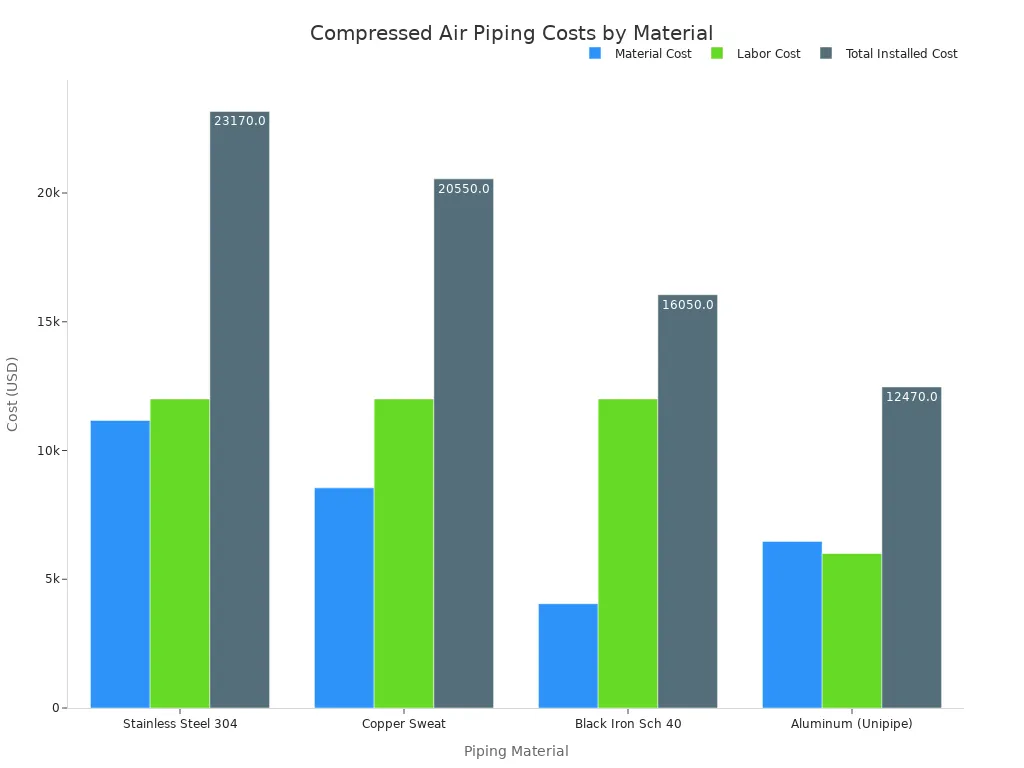
Installed cost tells a clear story. Aluminum costs more for materials than black iron, but lower labor brings the total below every metal option:
Material
Material Cost
Labor Cost
Total Installed Cost
Stainless Steel 304
$11,170
$12,000
$23,170
Copper Sweat
$8,550
$12,000
$20,550
Black Iron Schedule 40
$4,050
$12,000
$16,050
Aluminum (Unipipe)
$6,470
$6,000
$12,470
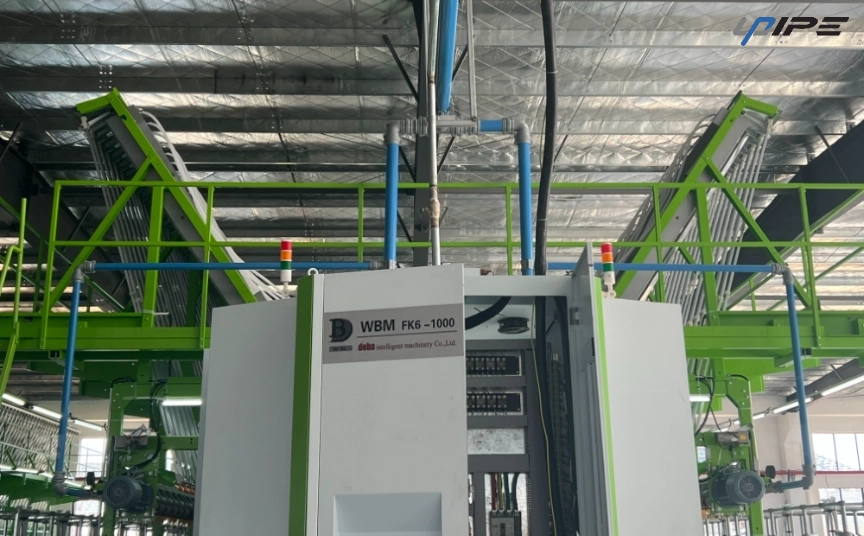
This is exactly why aluminum more and more replaces older black iron systems in industrial designs. The Upipe Aluminum Pipe System shows what a well-built aluminum option looks like: pure aluminum construction with thicker walls, molded-in connectors, imported sealing rubber, flow-directing tees and elbows, foolproof multi-surface sealing, a gooseneck condensate design, and anti-vibration clamps. Treat it as one example, not the only path. When you choose factory compressed air piping solution, weigh every material against your own duty cycle.
Fittings decide whether your joints stay tight for many years. Compression fittings tighten with simple tools, and your crew picks them up fast. They cost less at the start, and you can re-tighten a joint if it leaks a little. Press fittings join in seconds with a pressing tool, handle higher PSI, and hold up well outdoors when made of stainless steel. They cost more and give you no way to re-tighten.
Attribute
Compression Fittings
Press Fittings
Cost
Lower upfront cost
Higher cost
Installation speed
Slower
Very fast; no separate fasteners
Repairability
Re-tightenable if leaks occur
Not described as re-tightenable
Pressure rating
Relatively low
Handles higher PSI
Outdoor resistance
Susceptible to elements over time
Stainless steel resists corrosion; superior outdoors
Best fit
Large factory to small shop installs
Exposed or high-pressure installations
Match the fitting to the job. Choose press fittings for outdoor runs and high-pressure headers. Choose compression fittings for indoor networks where your team wants simple repairs.
Layout, Sizing, and Air Treatment
Layout drives pressure drop more than most buyers think. A closed-loop main lets air reach any point from two directions. Two-way flow cuts speed by about half, and pressure loss drops with the square of speed, so splitting flow can cut loss to about one quarter. A straight main with dead ends starves the branch that needs the most flow. Operators then raise discharge pressure, which costs about 1% more compressor power per 2 psi and raises unregulated flow about 1% per 1 psi.
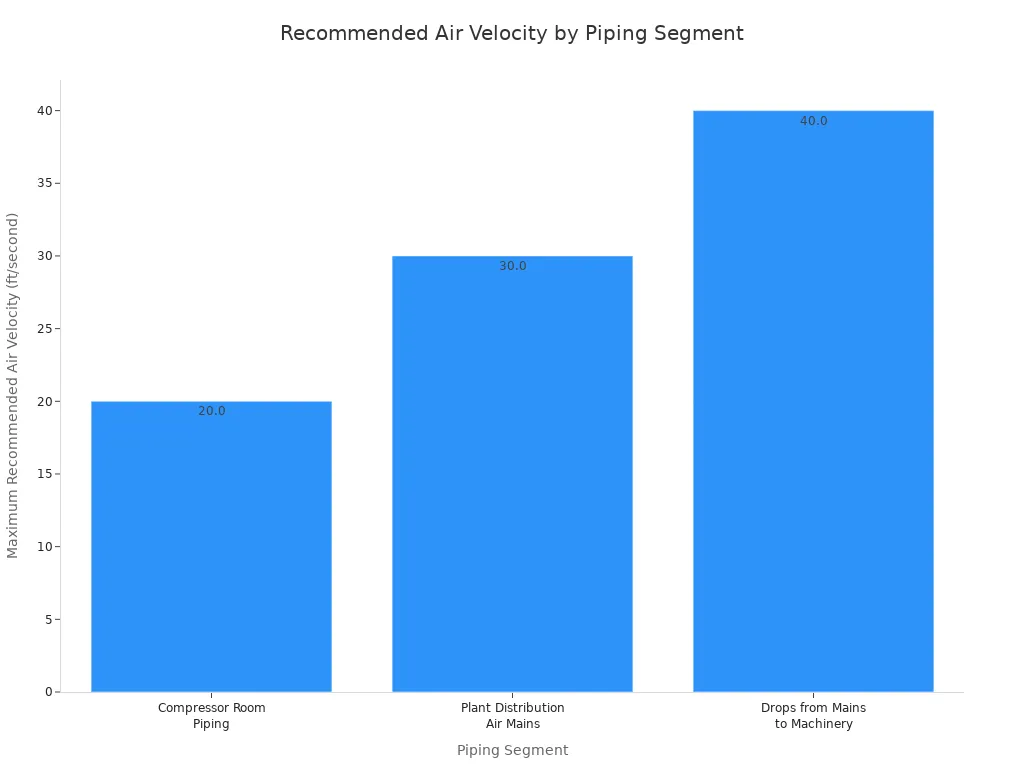
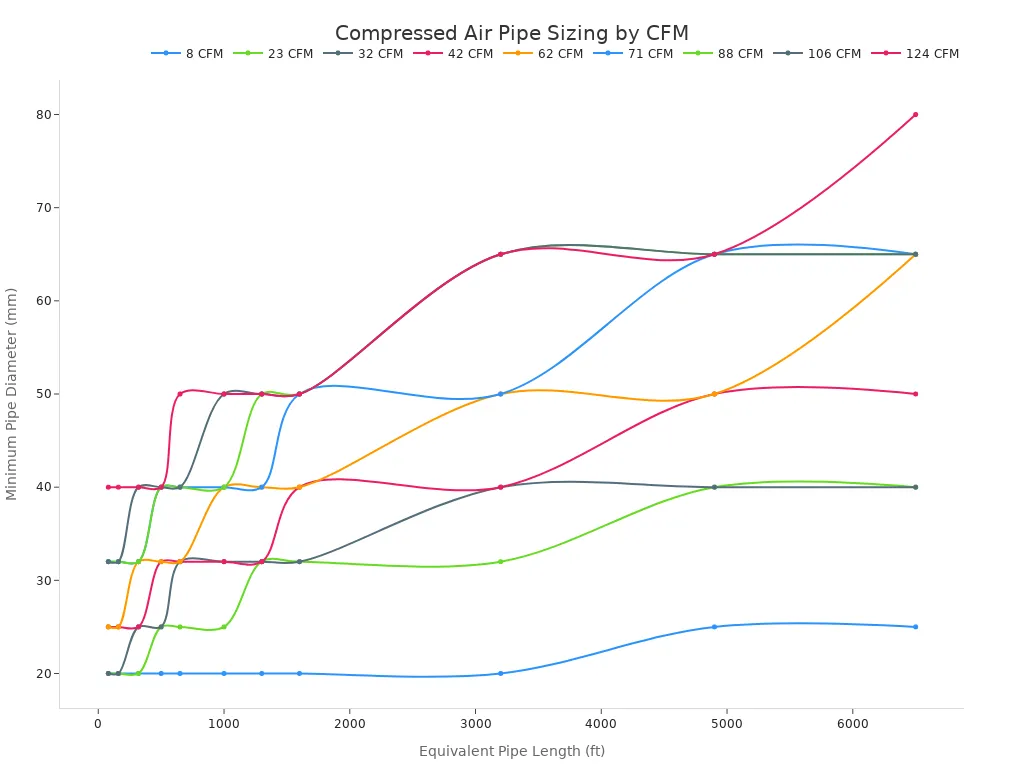
Size pipes by speed limits. Keep compressor room piping at 20 ft/second, plant mains at 30 ft/second, and drops to machinery at 40 ft/second.
Figure out air demand first: multiply each tool's flow by its usage percentage, add fitting equivalent lengths, then pick diameter from sizing tables and round up. Compressor output sets main size at about 4 SCFM per HP at 100 PSIG. Take drops from the top of the main, add drip legs at low points, and plan 25–50% extra capacity for growth. These steps matter when you choose factory compressed air piping solution for a plant that will grow.
How to Choose Your Factory Compressed Air Piping Solution
A Step-by-Step Selection Checklist
Go through these steps in order. Each step leads to the next one. If you skip a step, you will likely see pressure loss or extra spending later.
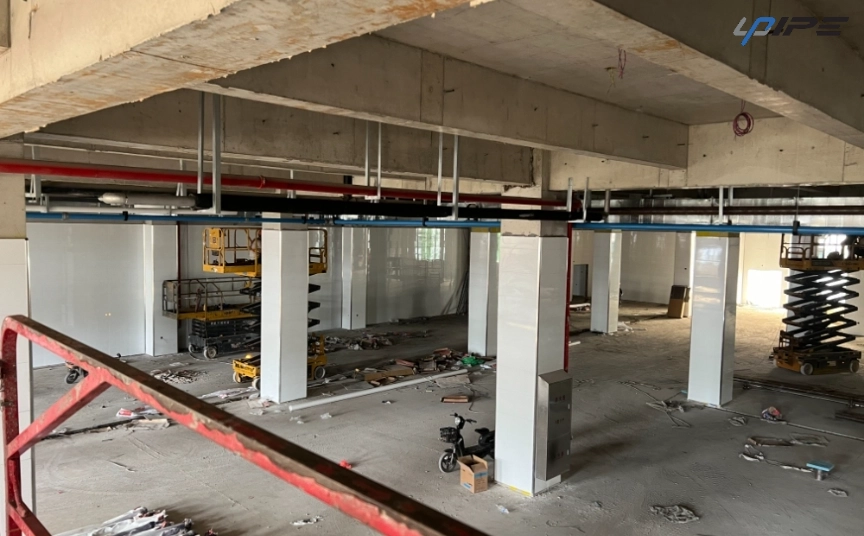
Draw a map of the facility. Sketch the pipe route to get the total length. Then note ceiling height, mounting points, where the compressor room is, and how you will reach it for maintenance. Add 25–50% extra capacity for growth.
Choose a network layout. A closed loop gives even pressure and makes it easy to shut off sections. A grid works well for large networks. A straight run is simple but loses more pressure and needs bigger pipes.
Pick the material. Compare corrosion resistance, air quality, installation effort, and long-term cost against your setting and rules.
Set your pressure target with care. Find the highest minimum pressure any tool needs, then add the drop from dryers, filters, and piping. Most systems aim for 0.3–0.5 PSI drop per 100 ft. A loop layout can cut pressure drop by about 50% compared to a straight run of the same length.
Test the system before production starts. Check that connections are tight, no leaks show, drain valves work, the dryer starts normally, filters sit in the right place, pressure rises smoothly, and compressor temperature is normal. Keep records of the compressor model, working pressure, pipe size, and filter setup. These records make troubleshooting and upgrade planning faster.
Judge supplier quality by how the product is built, not by what they claim. Ask about wall thickness, connector strength, and sealing design. These details decide whether your joints stay tight for years.
Use this view when you choose factory compressed air piping solution for any plant. Compare options over the full service life, not the invoice. That is how you choose factory compressed air piping solution with confidence.
Check every option against the same five tests: corrosion resistance, pressure drop, installation quality, regulatory compliance, and lifecycle cost. Aluminum passes these tests for most factory uses, and its modular designs install fast and grow with you. Copper, stainless steel, and older steel systems still make sense where their strengths fit the job.
Use the step-by-step checklist when you choose factory compressed air piping solution for your plant. Look at total cost of ownership over the full service life, not just the invoice. Good piping is basic infrastructure. It pays you back through lower energy use and fewer downtime events for decades.
FAQ
Which piping material lasts longest in a factory?
No single material wins everywhere. Aluminum resists corrosion through its natural oxide layer and suits most plant air networks. Stainless steel lasts longest in clean-air and washdown settings. Copper holds up well in many buildings. Match the material to your environment, and any of these can serve reliably over the long term.
Can I use PVC pipe for compressed air?
Never run PVC or CPVC on a compressed air line. OSHA bans both for this use.
These plastics cannot handle high pressure, and compressor oils break them down over time. Cracks and sudden bursts follow. Keep PVC for water and drainage, and choose a metal or aluminum system for air.
How much does a leak really cost my plant?
Leaks waste 20–30% of your compressed air energy. At 100 PSI, a 1/8-inch hole costs about $6,500 a year, and a ¼-inch hole costs about $26,000. Run ultrasonic leak detection every 6–12 months, and fix what you find. Small repairs pay back fast.
What pressure drop should I target?
Aim for 0.3–0.5 PSI drop per 100 ft of pipe. Keep compressor room piping at 20 ft/second, plant mains at 30 ft/second, and drops to machinery at 40 ft/second. A closed-loop layout can cut pressure drop by about half compared to a straight run of the same length.
Is aluminum piping worth the higher material price?
Yes, for most factories. Aluminum costs more per foot than black iron, but faster push-to-connect installation brings total installed cost below every metal option. It also resists corrosion and keeps pressure drop low. Energy makes up 70–80% of lifetime cost, so those savings compound for decades.
This website uses cookies to provide you with a safer and more personal experience. By accepting, you agree to the Cookie Policy and the use of cookies for advertising and analytics purposes.