Home > News > Blog > Why Choose Aluminum Compressed Air Pipes for Industrial Renovations
# Blog
Why Choose Aluminum Compressed Air Pipes for Industrial Renovations
2026-10-09
Share:
Choose aluminum Compressed Air Pipes for industrial renovations: corrosion-resistant, lightweight, fast to install, leak-free, and energy-efficient.
Aluminum compressed air pipes are great for industrial renovations. They offer rust resistance, light weight, quick installation, and lasting dependability. These features directly solve renovation problems.
You deal with tight deadlines. Modular aluminum systems cut installation time by 40-60% compared to old steel methods, lowering setup costs. Lighter parts reduce physical strain and make layout changes easier.
Leaks waste energy and money. Data from the U.S. Department of Energy shows poorly kept systems can lose 20-30% of compressor output to leaks. Well-kept systems stay under 10%. Fewer leaks mean cleaner air, steady pressure, and lower total ownership costs.
Choosing aluminum supports long-term savings and fewer repeated maintenance problems.
Key Takeaways
Aluminum compressed air pipes do not rust or take in moisture. This keeps the air clean and stops tools from getting damaged.
Modular aluminum piping goes in up to 60% faster than steel. The parts are lighter, so one worker can handle long sections.
Fittings that do not leak stop energy from being wasted. Steady pressure lowers power bills and keeps tools working at their best. This brings down the total cost of owning them.
Aluminum pipes require very little care and pass safety rules. With fewer fixes needed, you spend less over many years.
Aluminum can be recycled completely and lasts for many years. This choice helps the environment and saves you money.
Corrosion Resistance In Compressed Air Pipes
Preventing Rust And Moisture Contamination
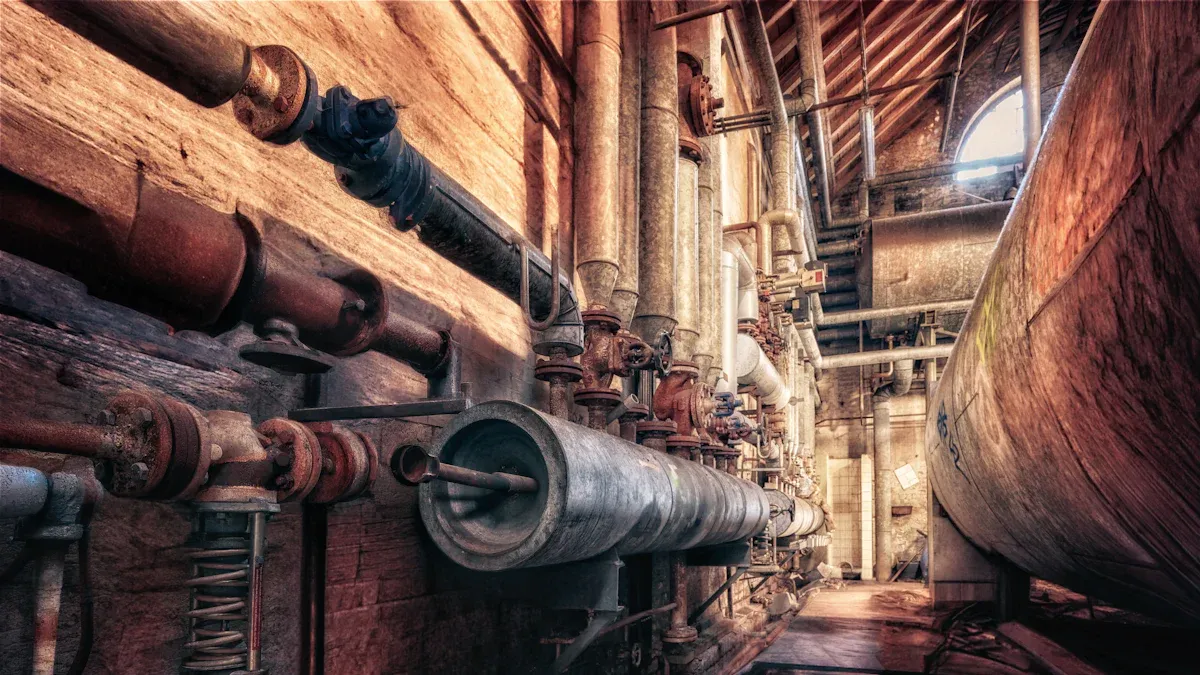
Rust and moisture in your pipes make the air dirty and harm tools downstream. When pipes corrode, tiny bits get into the air stream and make the metal weak. This leads to leaks and system breakdowns. Liquid water causes pressure to drop, which slows airflow and hurts pneumatic tool performance. Moisture ruins pneumatic tools and important equipment, causing downtime and pricey repairs. Rust bits from corroded pipes move downstream, lowering compressed air quality and causing system failures.
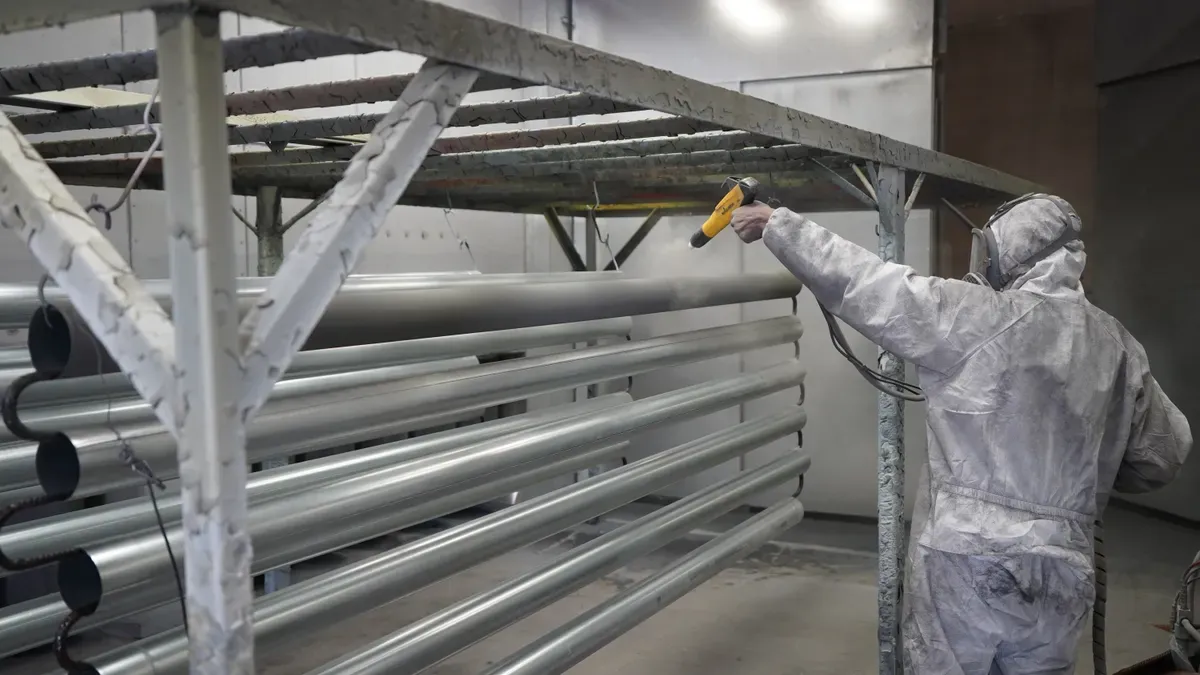
The Upipe Aluminum Pipe System fixes these problems head-on. It uses 6063-T5 extruded aluminum alloy, a material that resists corrosion and holds its shape. It does not rust inside even when the compressed air has moisture in it. A smooth seamless inner bore cuts down on friction and turbulence. This stops debris, scale, and contaminants from building up. The system makes zero internal rust particles, which meets ISO 8573-1:2010 air quality standards. Distribution piping must be made from non-corrosive materials to keep ISO 8573-1 air purity downstream. Good materials include 304L stainless steel and anodized aluminum piping. These materials stop internal rust particulates from forming. This makes sure the air reaching your process machine matches the air quality leaving the compressor room.
Forms a passivating coating; resists corrosion in moist environments
Suitable for compressed air, vacuum, and inert gas
Copper
Resists corrosion for decades; regarded as highly corrosion-resistant among metals
Cost and skilled installation are the main barriers
PVC/Plastic
100% non-corrosive as a plastic material
Temperature limitations; compressed air is not a listed application
Aluminum stands out for industrial renovations. It fights corrosion even in moist or chemically harsh places. This stops rust, leaks, blockages, and loss of pipe integrity. No corrosion buildup means rust particles and debris stay out of your compressed air stream. This protects air quality and downstream equipment. A smooth inside surface lowers friction and stops scale and contaminants from building up inside the piping. Copper also resists corrosion well, but aluminum costs less and is easier to install. Plastic piping does not corrode, but it cannot handle the temperature demands of most compressed air systems. For renovation projects, aluminum Compressed Air Pipes give you reliable corrosion protectionwithout the weight, cost, or installation hassle of other options.
Industrial renovations need to be fast. Lightweight Compressed Air Pipes reduce downtime because crews can move and place them with less effort. Aluminum piping weighs about one-third as much as steel piping.
Aluminum compressed air piping is about one-third the weight of steel piping. This lowers the need for structural support and makes handling and installation easier.
That lighter weight means less structural support is needed and fewer back injuries happen. One person can lift a 20-foot section. This helps when space is tight and crane time is hard to get.
Cutting Labor Time With Modular Components
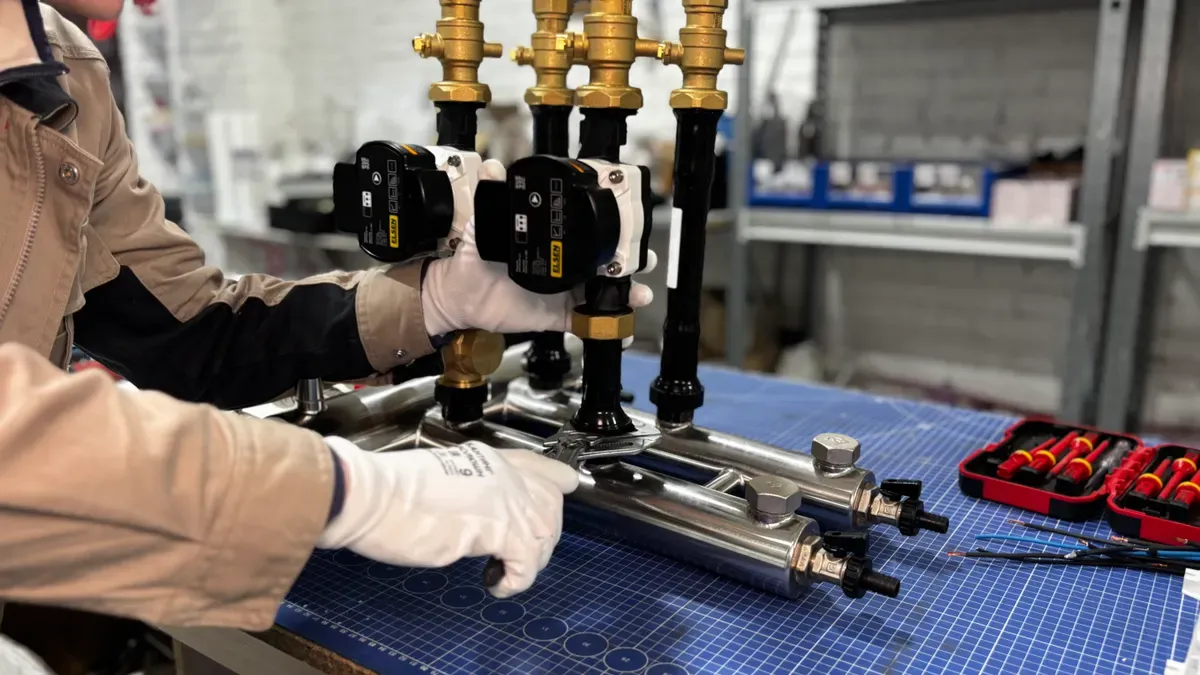
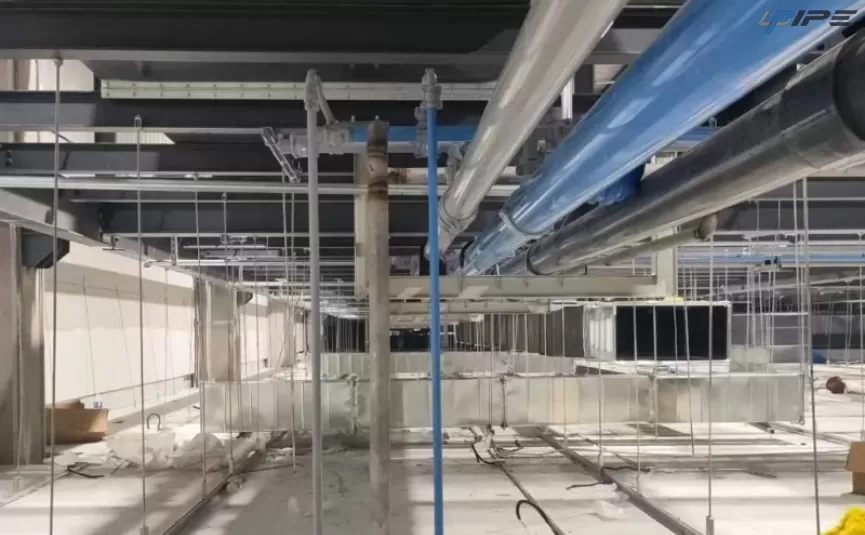
The Upipe Aluminum Pipe System uses push-to-connect assembly instead of welding, threading, and soldering. You put in the pipe, tighten the fitting, and add pressure right away. No hot work permits, no threading tools, no welds to cool. The modular range has aluminum pipes, 90° elbows, connectors, tees, flanges, quick drops, valves, and a flowmeter. This lets you build ring mains, branch lines, and machine drops without custom fabrication.
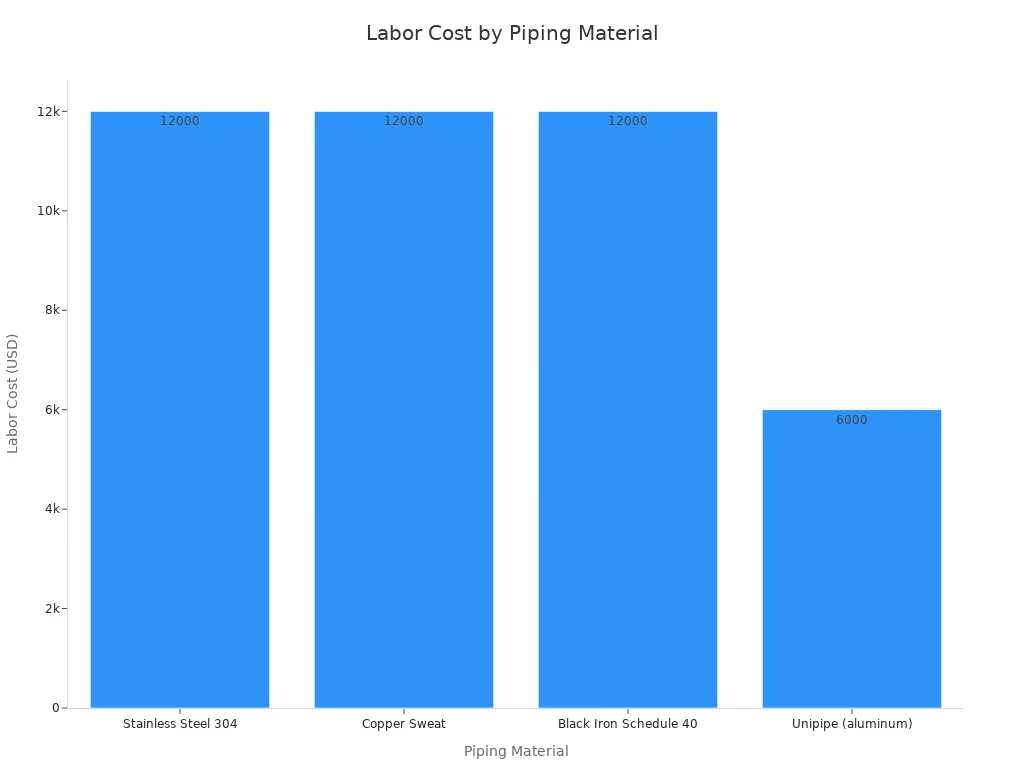
Contractors often report a 50% drop in installation time. A header loop that takes a team of pipefitters 3 to 5 days with Schedule 40 steel can often be done in a single day with aluminum piping. The labor cost difference is large. In steel installations, labor makes up about 70% of total cost. Aluminum systems flip that ratio. Upipe aluminum totals $12,470 versus black iron's $16,050.
Flexible Configurations For Changing Layouts
Aluminum modular fittings make layout changes simple. Elbows, tees, and reducers create directional, branching, and size-transition connections. Quick drops send air to machines and workstations. You can reconnect sections without cutting or welding.
Because every joint is mechanical, reconfiguration, expansion, and repairs are easy. If you add a production cell or move equipment, just disassemble and reattach. The system also connects to existing copper or steel pipe, so you can extend a network without replacing the whole line. Plan expansion points to take full advantage.
Leaks quietly make energy costs go up. IVC Technologies says up to 30% of made compressed air is lost through leaks. The U.S. Department of Energy puts leaks at 20–30% of all air a compressor makes. Each escaping jet adds a hidden cost that repeats every shift. Ignoring leaks wastes money on the factory floor. Aluminum Compressed Air Pipes fix this with fittings built to seal tight and stay tight.
Secure Fittings That Minimize Air Leaks
Threaded steel connections come loose as they get older. Heat changes and vibration pull threads apart. Experts estimate losses from threaded steel fittings at 8–10% of system air. That wasted air makes your electric bill go up.
Upipe's aluminum fittings work in a different way. Compression fittings with O-rings and locking parts stand up to vibration and stress. Double O-ring seals make two barriers against air escape. The pipe sits twice as deep into the fitting. Tool-free assembly gives you the same joint every time. Marine-grade aluminum fights corrosion, so seals do not break down. You can loosen, move, and re-tighten fittings as your layout changes. The system needs no welding, so there are no weak spots from heat. Leak rates drop far below steel, and fewer downstream equipment failures follow.
Stable Pressure Lowers Power Consumption
Leaks make compressors run longer to hold target pressure. Lower pressure leads to more cycling and higher energy use. The link is direct.
Reducing system pressure by 2 PSI lowers compressor energy consumption by about 1%, provided the final pressure remains sufficient for downstream application requirements.
Use this rule to estimate savings. If you get rid of leaks, you can often lower the pressure setpoint. Then you cut energy use without starving your tools. Stable pressure also makes production better. Pneumatic tools get steady airflow and run at rated speed. Downstream processes see steady air quality. Aluminum piping needs less inspection and less repair. No rust, no scale, no blocked flow. Over the system's lifetime, lower energy use and fewer repairs cut total ownership costs.
Low Maintenance, Safety, And Cost Savings
Safer Operation With Fewer Repairs
Aluminum Compressed Air Pipes need less upkeep than steel or copper systems. Corrosion failures mostly disappear with aluminum. Steel pipes rust inside and create weak spots. These weak spots can burst under pressure. Aluminum resists corrosion, so you avoid that risk entirely. Your maintenance team spends less time on repairs and more time on production.
Aluminum piping meets strict industrial safety standards. It follows ASME B31, ASME B31.1, and ASME B31.3 requirements. It also meets the European Pressure Equipment Directive (PED) 2014/68/EU and fire protection standard 13501-1:2018. These certifications give you confidence in workplace safety. Secure, leak-free connections also cut corrosion-related leaks and bursts. This protects your workers and your equipment.
Recycling And Lower Total Ownership Costs
Aluminum is 100% recyclable and keeps its quality. This makes it a sustainable choice for industrial renovations. The material keeps its properties after repeated reuse. Aluminum piping often lasts more than 20 years. Its light weight also cuts transportation and installation emissions compared to steel.
These factors lower your total cost of ownership. You spend less on maintenance because corrosion failures are gone. You avoid frequent filter changes and damage to downstream equipment. Energy costs drop when leaks are few and pressure stays steady. The system lasts a long time, so you replace it less often. Aluminum piping supports your sustainability goals while protecting your budget.
Aluminum Compressed Air Pipes give your industrial renovations a strong, efficient, and low-cost upgrade. You get corrosion resistance, faster installation, leak-free performance, low maintenance, safety, and recyclability. These benefits mean fewer disruptions and lower total ownership costs over the whole system's lifetime.
Before planning your next renovation, talk with a compressed air piping specialist. Request a site assessment to review your layout, expansion plans, and pressure needs. A specialist can check materials, confirm approvals, and design a loop system that balances pressure at every point of use. This step protects your investment and ensures the aluminum system works as planned for decades.
FAQ
How fast can you install aluminum Compressed Air Pipes during a renovation?
Push-to-connect assembly removes welding and threading. Each joint takes 3–5 minutes. A full header loop can be replaced in one day. A weekend shutdown often completes the whole line.
Can you connect aluminum pipe to an existing steel or copper system?
Yes. Use male and female connectors plus flanges to switch between materials. You can extend your existing system without removing the full line. This lowers disruption during staged renovations.
What care does aluminum piping need?
No special care. With aluminum, corrosion-related failures mostly vanish. You still inspect joints, check leak detectors, and maintain air dryers and filters. That routine care keeps the system reliable for more than 20 years.
Which safety standards does aluminum piping meet?
Upipe aluminum piping meets ASME B31, ASME B31.1, and ASME B31.3. It also follows the European Pressure Equipment Directive 2014/68/EU and fire protection standard 13501-1:2018.
Can you recycle aluminum piping at the end of its life?
Yes. Aluminum is fully recyclable and keeps its quality after reuse. You can reuse the material for new products. This supports environmental goals and lowers the environmental impact of your renovation.
This website uses cookies to provide you with a safer and more personal experience. By accepting, you agree to the Cookie Policy and the use of cookies for advertising and analytics purposes.