Home > News > Blog > The best aluminum compressed air piping system for industrial workshops
# Blog
The best aluminum compressed air piping system for industrial workshops
2026-08-03
Share:
Upgrade your shop with an aluminum compressed air piping system. Stop air leaks, prevent inner rust, and cut installation labor costs by up to 60% today.
Modular aluminum piping is the best choice for modern industrial workshops. It stops air leaks, increases airflow, prevents inside rust, and sets up quickly. Switching to an advanced setup fixes major daily problems. It prevents huge energy waste, keeps air pressure steady, and protects sensitive tools from dirty flakes.
Based on U.S. Department of Energy data, fixing system air leaks reduces overall energy use by 10% to 15%. For example, a German car maker saved 12% on yearly energy bills by swapping steel for an aluminum compressed air piping system. Modern aluminum setups lower running costs and send the cleanest air straight to your machines.
Key Takeaways
Easy-to-connect aluminum pipes reduce factory setup time by up to 75% when compared to heavy iron piping.
Smooth inside pipe surfaces reduce friction on the moving air, which helps lower your monthly power costs by 10% to 15%.
Strong, rust-free aluminum keeps the compressed air clean and prevents harm to high-cost equipment.
Tight, snap-together seals prevent steady air loss and reduce the stress on your main air compressor.
Loop layout setups keep air pressure even at all work spots during busy work times.
Why Aluminum Piping Outperforms Traditional Systems
To keep your factory working at its best, you need a strong, dependable pipe network. Old materials like black iron, copper, and PVC cause endless problems for factory engineers. By switching to modern materials, you stop inside rust, protect delicate air tools, and keep your air clean. The Upipe Aluminum Pipe System delivers clean air without any leaks. It boosts overall airflow through your plant while lowering everyday running costs.
Aluminum vs Black Iron and Copper
Black iron pipes rust on the inside over time. Wet compressed air makes rust flakes that travel through the lines. These sharp pieces clog air filters, scratch control valves, and ruin expensive air tools. This heavy damage breaks equipment early and voids company warranties.
System Component
Mechanism of Damage
Lifespan and Warranty Impact
Coalescing Filters
Fast rust flakes clog units
Higher maintenance costs and more filter replacements
Directional Valves and Cylinders
Sharp rust pieces scratch inside parts
Early equipment breakdowns
Sensitive Pneumatic Tools
Rough dirt carried by fast air
Heavy tool damage and broken warranty rules
Copper pipes do not rust, but they cost a lot of money for parts and work. Soldering copper pipes takes skilled workers, open flames, and special gear. On the other hand, snap-together aluminum air systems cut setup labor by 40% to 60% compared to copper. Light aluminum parts need smaller work teams, fewer wall mounts, and no cutting oils. You save thousands of dollars on total building costs.
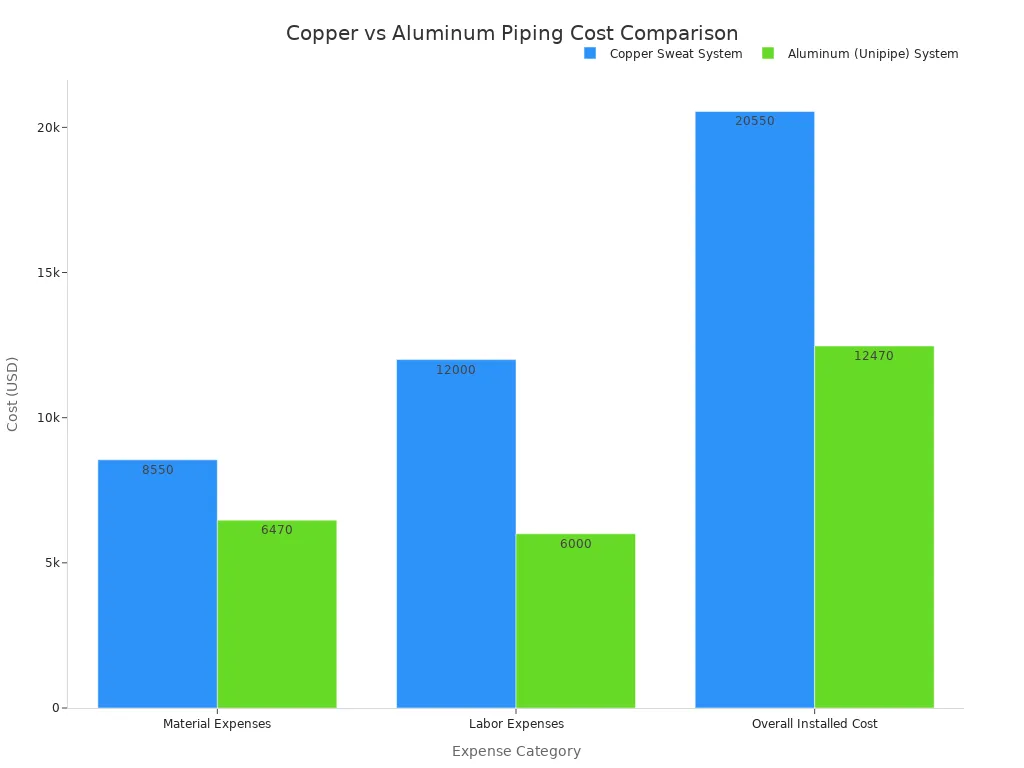
For a medium setup with a 200-foot main pipe and 10 side lines, copper parts cost $8,550 and labor costs $12,000. That brings the total setup price to $20,550. A matching aluminum network drops part costs to $6,470 and labor costs to $6,000. You spend just $12,470 total. Modular aluminum piping cuts setup time by up to 75% compared to heavy, hard-to-install black iron pipes.
The Hazards and Compliance Issues of PVC
Some factory managers think about plastic PVC pipes to save cash early on. This bad choice creates dangerous hazards for your workers on the job. Trapped air holds a huge amount of stored energy compared to water. Since PVC pipe is not flexible, high air pressure or accidental hits cause it to explode into tiny pieces. It launches fast plastic sharp sharp edges across your active work areas.
Normal factory air setups run at pressures between 90 and 190 PSI (6 to 13 bar). The Upipe aluminum air setup easily handles these strong forces without bursting or leaking at the joints. Tough aluminum pipes stand up against hits, high heat, and oil spills. You follow all safety laws while getting clean, steady air to all your factory machines.
Energy Efficiency of Aluminum Compressed Air Systems
Smooth Inner Walls and Pressure Drop Reduction
You save a lot of money by making airflow better inside your factory network. Rough inside pipe walls in older systems create strong friction against moving air. This high friction causes big pressure drops between your compressor room and active workstations. The Upipe system uses super-smooth inner pipe walls that lower air drag. Compressed air flows through these smooth lines easily, keeping steady pressure at all your tools.
Lower pipe drag lets your factory run at a lower starting air pressure. You still easily meet all pressure needs across your whole shop floor. Dropping the system pressure by 2 PSI cuts energy use by about 1%. On the other hand, running a compressed air system at higher pressure raises power use, where every 2 PSIG increase uses 1% more electricity. Smooth pipe insides cut airflow drag and lower your compressor electric power bills forever.
Leak-Free Seals and Reduced Compressor Workload
Unseen air leaks force your main compressor unit to work much harder every day. Modern modular piping uses exact seals to make tight, leak-free connections across your whole pipe network. You stop constant air loss at pipe joints, corner fittings, line splits, and tool drops. These special seals keep system pressure steady without making your air machines run constantly.
Stopping hidden air leaks protects your equipment investment while cutting overall factory power needs. An aluminum compressed air setup stops air loss and prevents extra heat from building up inside motor parts. Your air compressor runs fewer extra cycles during busy work times. You make key machines last longer, cut regular fix-up costs, and lower monthly power bills across your plant budget.
Designing Optimal Industrial Air Piping Layouts
Closed-Loop Systems vs Branching Networks
Smart pipe layouts help move air across your shop floor smoothly. Old-style branch lines push air through one single path. Remote work areas lose lots of air pressure during busy times.
A loop main setup fixes these common air flow problems easily. Compressed air flows to your tools from two sides at once. Splitting this air stream halves the speed in every pipe line. Cutting speed like this drops air pressure loss to just one-fourth.
Managing water keeps your air tools safe from early damage. Slant your main lines down 1 inch for every 10 feet. Slope helps liquid travel toward lower drain points quickly.
Place drop lines properly so water cannot reach sensitive air tools. Hook secondary pipes into the top of main lines instead of the bottom. Top connections stop lying water from washing down into your gear.
Component / Feature
Recommended Positioning & Practice
Purpose / Benefit
Drop Line Take-off
Connect directly to the top of the main air pipe
Prevents moisture from migrating into end-use equipment
Drop Leg Outlets
Mount outlets on the side of the drop leg
Keeps accumulated water settled safely below the outlet point
Drain Maintenance
Install an upstream shut-off valve and Y-strainer
Enables easy testing and protects the valve seat from scale
Putting side outlets on drop legs lets water pass tool points safely. Add automatic water drains at low spots and building entrances. Putting a Y-strainer filter before auto-drains traps dirt so valve seats do not break.
Sizing Aluminum Compressed Air Lines for CFM Demands
Picking the correct size for your pipes stops big power loss throughout your factory. Wrong sizes hurt tool performance and waste cash every single day. You need to match your line sizes with your actual air flow needs.
Calculating Pipe Diameter for Distance and CFM
To find your pipe size, check your total air flow needs and the full pipe length to control friction loss. Peak cubic feet per minute (CFM) shows your needed air volume capacity. Longer pipe lines cause higher air pressure loss over distance. High friction means you need bigger pipe sizes to balance out the loss. Running pressure levels and your chosen pressure drop limit help you make the final size choice. Thick air under higher running pressure moves easily through smaller lines. Trying to keep pressure loss tiny requires bigger pipes. A continuous loop setup cuts total pressure loss in half compared to a single straight line.
Measure straight distances from the air compressor out to your farthest working tool.
Add extra length allowance for every valve, bend, and joint to account for air drag.
Add straight pipe measurements to your extra joint lengths to find total pipe distance.
Check peak CFM and total pipe distance on standard size charts to pick your line size.
Airflow Capacity (CFM)
Distance Limit (ft)
Recommended Pipe Diameter (Inches)
50–100
Up to 200
1-1/4" to 1-1/2"
100–200
Up to 300
1-1/2" to 2"
Planning Network Capacity for Future Expansion
Snap-together aluminum pipe layouts let you expand your air network smoothly. Plant workers can connect new pipe parts straight into the working line. This helpful design prevents costly teardowns across your main system.
Smart planning upfront saves you lots of time when expanding your plant later. You can get your aluminum compressed air setup ready for growth using easy steps:
Moderate Oversizing: Pick a main line size a bit bigger than your current needs to carry more air later without replacing main pipes.
Reserved Access Ports: Put capped outlets or extra link points along the main line during first setup to connect new machines fast.
Modular Aluminum Components: Use matching aluminum parts without welds that workers can unbolt, lengthen, or rebuild quickly as production needs grow.
Selecting Modular Fittings and Connectors
Push-to-Connect and Compression Fittings
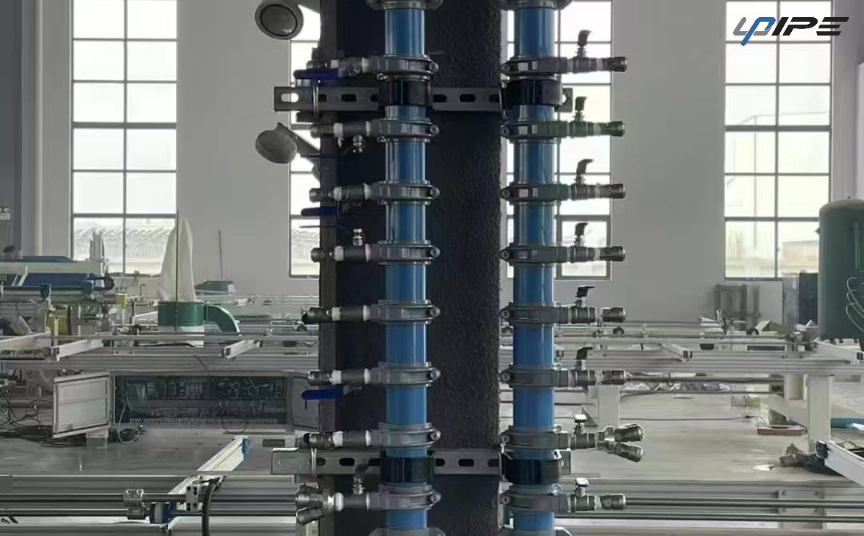
You need simple hardware to adapt your compressed air setup to changing plant needs. Upipe offers a full line of modular fittings, including 90° elbows, tees, connectors, and adapters. Workers connect these parts quickly without thread tools or welding torches.
Fast push-to-connect and compression fittings shorten factory downtime during piping changes. Service teams unbolt, move, or reconnect lines in minutes instead of hours. These strong mechanical seals stop air loss, keeping machines running well across your plant floor.
Flange and Press Connections for High Flow
Big air distribution lines need tough connectors at main pipes and compressor outlets. Upipe provides strong modular flanges built to hold large pipes under high air flow. These high-flow connectors keep air pressure steady across busy branch lines while opening fast during regular maintenance.
Some factory areas need liquid lines instead of compressed air. The Liq-pipe Stainless Steel Pipe System works with aluminum piping by carrying harsh fluids and meeting high safety standards. The table below shows key differences to help you pick the right system for specific work zones:
Comparison Category
Stainless Steel Piping
Modular Aluminum Piping
Core Application Fit
Best for strong chemicals, clean liquid movement, hot fluids, and steam.
Best for compressed air, nitrogen, safe gases, and vacuum lines.
Hygienic & Sanitary Compliance
High; smooth walls allow clean washing and meet strict food and health rules.
Unfit; not recommended for clean liquid work or drinking water lines.
Chemical & Corrosion Resistance
Great defense from a chrome layer; stops damage from harsh chemicals and saltwater.
Low; breaks down fast in strong acids and handles only normal air water.
Liquid & Thermal Resilience
High strength under heavy liquid pressure and extreme heat conditions.
Poor; warps or breaks easily under direct harsh liquids and severe heat.
Industrial Applications and Facility Solutions
Automotive and CNC Precision Machining
Constant clean airflow is essential to safeguard your factory output in busy shop environments. Advanced modular aluminum lines push dirt-free air right to your key machinery. Rust flaking inside traditional iron lines ruins fresh surface paint and clogs tight machine controls. The Upipe Aluminum Pipe System stops inner rusting completely, providing steady, high-capacity air to your valuable assembly equipment.
Paint contamination, finish defects, and accelerated tool wear
Ensures superior paint finish consistency, prevents coating defects, and maintains high operational throughput
CNC Precision Machining
Contamination and air pressure instability
Shields CNC tooling from damage, enhances machining accuracy, lowers material scrap rates, and prolongs machine service life
Installing rust-proof aluminum pipe setups protects your delicate air-driven gear. Clean air prevents blocked spray tips throughout active painting rounds. Steady line pressure stops tool shaking during detailed CNC cutting jobs. Your plant cuts down on wasted scrap materials and makes equipment last longer.
Heavy Machinery and Electronics Manufacturing
Heavy machine factories count on tough compressed air lines to run powerful air tools. Smooth inside pipe surfaces preserve solid airflow during busy plant shifts without dropping line pressure. Tech factories need super-clean air to guard delicate circuit parts during automatic assembly steps.
Moisture and Oil Removal: Removes water drops and oil vapors that create rust, short circuits, or sticky residue on tiny electronics.
Particulate Filtration: Traps tiny dust bits to keep cleanrooms safe and stop damage to delicate micro-parts.
Process Stability: Delivers steady robotic assembly and neat soldering by blocking dirt that ruins air valves and spray tips.
You keep daily shop work moving by setting up modular pipe lines that adjust fast to new shop floor setups. Light aluminum lines allow quick pipe changes without long, costly factory stops. Upipe setups give you the flexibility and pure air your shop needs for top-quality production.
Modular systems like Upipe improve your plant operations. Smooth inner surfaces stop pressure drops, seal leaks, and prevent rust. You gain lasting energy savings and better work reliability across every tool station. Replacing old steel pipes with a modern aluminum setup pays for itself in five to seven years. Lower running costs fast make up for your setup expenses.
As a plant manager, you must check total pressure drops and review layout design when choosing pipe materials. Good planning boosts daily air compressor efficiency. Upgrade your old network with a power-saving aluminum air system today to improve overall plant production.
FAQ
How much installation time do you save with aluminum piping?
Modular aluminum piping cuts installation time by up to 75% compared to heavy black iron. Your team links lightweight pipes fast without threading gear or welding tools. These quick connections lower setup labor costs while reducing facility downtime.
Can aluminum compressed air pipes handle high workshop pressures?
Yes. The Upipe Aluminum Pipe System handles normal workshop pressures from 90 to 190 PSI. Tough aluminum pipes safely endure direct hits, heat changes, and oil exposure without bursting. They maintain strong safety standards across your plant.
How does modular aluminum piping lower your energy bills?
Smooth pipe walls reduce airflow drag, lowering pressure drops across your plant. Tight modular seals stop air loss completely. Fixing air leaks and pressure loss lightens your main compressor workload, cutting energy use by 10% to 15%.
What system should you choose for heavy liquids or sanitary needs?
You should select the Liq-pipe Stainless Steel Pipe System. While Upipe aluminum systems improve air distribution, Liq-pipe stainless steel offers top rust defense and safety for harsh fluids, hot liquids, steam, and clean factory uses.
This website uses cookies to provide you with a safer and more personal experience. By accepting, you agree to the Cookie Policy and the use of cookies for advertising and analytics purposes.