Home > News > Blog > Compressed air pipeline system with easy expansion capability
# Blog
Compressed air pipeline system with easy expansion capability
2026-09-07
Share:
Expand your compressed air pipeline easily with modular aluminum piping. Add branches without welding or threading, reducing downtime and costs.
A compressed air pipeline system with easy expansion capability uses a modular aluminum piping design with interchangeable components. This design lets you add new branch lines, move service drops, or extend the system into new facility areas without welding or threading. The process lowers installation costs and reduces downtime a lot. This capability matters because modern manufacturing environments often undergo retooling and layout changes. Your compressed air system must adapt quickly to production line modifications and new automation equipment. An expandable system supports both current and future needs while ensuring safe high-pressure operation, minimizing leaks, and providing capacity for additional tools.
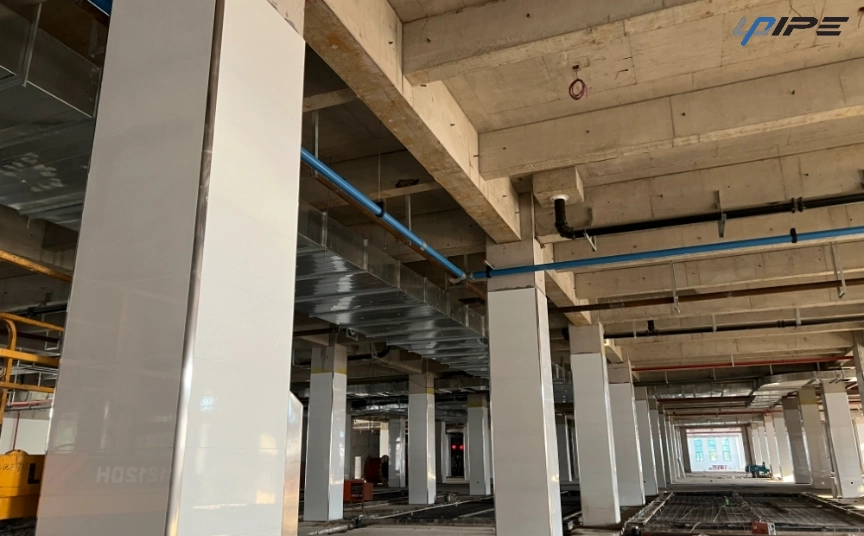
The Upipe Aluminum Pipe System shows how a modular design makes expansion simple. Each pipe section, fitting, and connector acts like a reusable building block. You can take the system apart and rebuild it in a new layout. This no-weld design saves materials and labor since you never cut or thread pipe on site. The 100% aluminum pipes and fittings install fast for immediate pressurization. Assembly is easy: put the pipe into the fitting and tighten the nut.
A wide range of modular fittings supports this flexibility. You can use 90° elbows for tight corners and direction changes. Equal tees and reducing tees route air across complex facility layouts. Male and female connectors join original equipment right to the main network. Flanges and end caps finish the piping loop. For air distribution, 90° and 180° quick drops let you add new workstations by clamping onto existing main lines without cutting whole pipes. Valves include double side plug ball valves, female ball valves, male-female ball valves, and handle or turbine butterfly valves for exact flow control.
The lightweight aluminum construction makes handling easier and faster than steel. Push-fit or screw-type fittings make assembly simpler and allow quick reconfiguration. Pre-fabricated and standardized components support flexible layouts. Modular assembly lets you add branches or extensions smoothly with very little disruption. You can take the system apart and put it back when you relocate or change seasonal production lines.
Isolation Valves and Flexible Drop Points
Isolation valves are the key to expanding without shutting down your whole operation. Install them at logical sections of the network, not just at the compressor outlet. This approach lets you shut off one zone for maintenance or expansion while the rest of the facility keeps running. Ball valves are recommended for isolating sections of the compressed air network. Lockable valves support safe maintenance with safety exhaust and lockout capability. Piloted valves isolate sections and allow quick, safe opening or closing from the ground, which removes work-at-height risks.
Bypass saddle tees let you add drops to new or existing systems without cutting the main pipe or shutting down pressure. Bypass assemblies isolate components that need maintenance so work can go on without stopping the whole system. Adapters and flanged fittings connect new piping to equipment using different standards, which makes upgrades and phased installations easier.
A well-planned network should include strategic isolation valves, planned future connection points, flexible routing around future equipment, and a ring-main arrangement where suitable. In many projects, you can install the new aluminum network before disconnecting the old GI network. This approach helps reduce production interruption. Labeling drop lines, documenting pipe routes, and keeping updated system drawings greatly reduce downtime during future changes. Aluminum does not rust internally, which reduces particulate contamination and helps maintain air quality.
Benefits of Expandable Compressed Air Pipelines
Cost Savings and Reduced Downtime
You get real money benefits when your piping system can grow easily. Push-to-connect fittings make setup simpler and cut labor time. They remove the need for soldering, threading, special tools, and glue. Your crew works faster, and you handle downtime more easily. Future changes cause less trouble for your whole facility.
Modular and reusable parts let your maintenance team change layouts, add drops, and grow the network without rebuilding the whole piping system. This helps a lot when your production lines change or you add new equipment over time. You skip the cost of tearing out and replacing whole sections.
Upgrading your compressed air piping system saves a lot of time and resources. It cuts energy use during operation and boosts efficiency across your work. Fewer surprise delays and breakdowns let your teams work without stopping. Press-fit piping needs no welding, is simpler to replace, and installs up to 10 times faster. That speed directly helps cut labor time and shorten downtime for your facility.
Aluminum that resists corrosion keeps your air quality good and stops leaks and energy loss. You avoid hidden costs from rust bits dirtying your air supply or tiny leaks wasting energy month after month. Your system stays clean and efficient for years.
Flexibility and Operational Efficiency
An expandable pipeline gives you freedom to operate that fixed systems cannot match. You can add a new workstation, move a service drop, or extend the main line into a new building area without big changes. Your production team adapts fast to shifting demands.
The modular design supports this flexibility at every level. Quick drops clamp onto existing main lines. Isolation valves let you shut off one zone while the rest of your facility keeps running. You keep full production while your maintenance crew does expansion work nearby.
A future-ready compressed air system also boosts your day-to-day efficiency. You route air exactly where you need it with little pressure drop. You change your layout when your processes change.
This adaptability pays off across your whole operation. Your maintenance team spends less time on emergency repairs. Your energy costs stay lower because your system runs efficiently. Your facility handles growth without costly system overhauls. You invest once in a flexible platform and gain from it for years.
The mix of cost savings, less downtime, and operational flexibility makes expandable compressed air pipelines a smart long-term investment. You get a system that grows with your business instead of holding it back.
Your piping designer wants a safe, efficient system that is easy to use and ready for future growth. Getting the size right matters most in the main loop and in the lines linking the compressor, loop, and endpoints. Pipes that are too small raise friction losses and make compressors work harder. Pipes that are too big lower resistance and can save money over time. The piping between the air dryer or dry storage tank and the distribution loop should be at least one size larger than the loop piping itself.
Think about future needs while you design. Planning for future demand and growth now is much easier than changing pipes later. Leave a safety margin for future growth, but do not oversize too much. Add extra air receiver tank volume to handle short peaks instead of oversizing the compressor. Energy efficiency is a major design consideration — it takes roughly 7–8 HP of electricity to produce 1 HP of compressed air. Reducing plant pressure to the minimum required PSI, fixing leaks, minimizing pressure drop, and considering a variable speed drive (VSD) air compressor can significantly lower operating costs.
Material and Layout Strategy
The material you pick affects durability, installation speed, pressure performance, maintenance, corrosion resistance, and air quality. Aluminum alloy piping is light, resists corrosion, is smooth inside, and is easy to install. Its low internal roughness helps keep airflow efficient and pressure drop low. Aluminum systems are also modular, so they are easy to expand or change when production shifts. Galvanized and black steel have downsides like corrosion, heavier weight, harder installation, and possible contamination from rust or scale over time.
Begin with a site survey. You check the compressor room, production areas, current piping, and air consumption points. Write down the pressure you need, airflow, how many users, and equipment type. Then measure real consumption patterns over full production cycles. This step reveals your true peak demand and average use.
Think about growth during this assessment. Record load profiles with hourly and seasonal changes. This information guides your pipe sizing and layout choices.
Installation and Integration Best Practices
The Upipe Aluminum Pipe System uses a modular design for fast assembly. This method cuts installation time and lowers labor costs. Lightweight aluminum reduces installation time by up to 50 percent compared to steel. Push-fit connections with O-ring seals make sure assembly has no leaks. You skip welding, threading, and special tools on site.
Plan your layout before installation. Use a looped ring main around your workshop edge. Install vertical drops from the top of the main line to stop moisture from entering. Add drain valves at low points. Separate high-demand equipment branches for steady pressure distribution. Include isolation valves for zoning so you can expand one area without shutting down others.
Prepare pipes with care. Use tube cutters for clean, square cuts. Deburr fully and clean with suitable solvents before assembly. Figure out support spacing based on pipe diameter and wall thickness. Install expansion joints at key locations.
The Upipe Aluminum Pipe System works for small workshops and large manufacturing facilities. It handles compressed air, vacuum, and inert gas applications. After assembly, test for leaks and check pressure stability under a typical load. Record your as-built layout and valve identification for future maintenance.
A compressed air pipeline system that can grow easily uses modular aluminum parts. You get sections you can use again, isolation valves, and flexible drop points. These features lower costs, cut downtime, and improve how well your operation runs. Smart sizing and layout planning keep your system ready for growth. The Upipe Aluminum Pipe System shows how fast assembly and modular design make installation simple.
Easy expansion capability gives you long-term value. Your facility adapts to new equipment and layout changes without big problems. You protect air quality and avoid energy loss from leaks.
Check your current compressed air system today. See if it is ready to expand. A flexible piping platform supports your operations for years to come.
FAQ
Can you expand a compressed air system without welding?
Yes. The Upipe Aluminum Pipe System uses push-fit connections with O-ring seals. You put pipes and fittings together by hand. This design takes away welding, threading, and special tools. You add new drops or extend lines without hot work permits or fire watches.
How do isolation valves help during expansion?
Isolation valves let you shut off one zone while the rest of your facility keeps running. You put them at logical network sections. Your maintenance crew expands or repairs that zone without stopping production elsewhere. Lockable valves add safety during this work.
What size pipe should you choose for future growth?
Size the main loop and compressor lines with care. The piping between your air dryer and distribution loop should be at least one size larger than the loop itself.
Does aluminum piping resist corrosion better than steel?
Yes. Aluminum does not rust inside. This quality keeps your air quality good and stops particulate contamination. Steel systems corrode over time and release rust or scale into your air supply. Aluminum keeps your system clean and efficient for years.
How fast can you install a modular aluminum system?
Lightweight aluminum cuts installation time by up to 50 percent compared to steel. Push-fit connections with O-ring seals make sure assembly has no leaks. Press-fit piping installs up to 10 times faster than traditional methods. You skip welding and threading on site.
This website uses cookies to provide you with a safer and more personal experience. By accepting, you agree to the Cookie Policy and the use of cookies for advertising and analytics purposes.