Home > News > Blog > How to Choose Compressed Air Pipe Supplier for Pharmaceutical Factories
# Blog
How to Choose Compressed Air Pipe Supplier for Pharmaceutical Factories
2026-08-19
Share:
Select the best compressed air pipe supplier for pharmaceutical factories by verifying ISO 8573-1 Class 0 purity, FDA compliance, and leak-free modular piping.
Whether air touches products directly or indirectly during medicine making, you need clean, safe pipes. You must protect medicine safety by picking the right compressed air pipe supplier for Pharmaceutical Factories. Look closely at their rules, including cGMP and FDA standards. Your seller must promise ISO 8573-1 Class 0 material purity to stop any dirty materials.
Also, check their pipe connections to ensure strong, leak-free performance across your whole system. You also need a partner who helps fully test and approve your facility. Important factory settings do not allow any mistakes. You must choose a reliable seller based on careful, high-quality building methods.
Key Takeaways
Pick suppliers that follow ISO 8573-1 Class 0 standards to maintain clean and oil-free air.
Choose smooth aluminum pipes that fit together easily to stop rust and avoid expensive air leaks.
Use easy-to-connect click-together pieces instead of welded steel to make factory setup much faster.
Ask for complete test files and approval documents to pass government health checks without trouble.
Pick suppliers that provide long guarantees and extra replacement parts to keep your air pressure steady.
Compliance and Material Standards for Pharmaceutical Factories
To protect drug manufacturing from dirt, you must pick the right air distribution lines. Government agencies enforce tough quality rules for all utility lines in Pharmaceutical Factories. Every single part must stay clean at all times to keep products safe.
Regulatory Purity and Certification Standards
Your compressed air system needs to follow official global cleanliness levels. For example, ISO 8573-1:2010 sets air purity classes for clean factory spaces.
Class
Particles per m³
Water (Pressure Dew Point)
Oil Concentration
Class 0
Extremely low particle count
-70°C or lower
0 mg/m³
Class 1.2.1
Max 20,000 (0.1–0.5 μm), 400 (0.5–1.0 μm), 10 (1.0–5.0 μm)
-40°C or lower
0.01 mg/m³
A Class 0 rating means inspectors cannot find any oil in spray, liquid, or gas forms. Outside testing groups like TÜV or SGS must check and prove this zero-oil level. You must also follow all FDA rules and cGMP standards for safe utility lines. Additionally, your system needs 30 to 90 days of IQ/OQ/PQ testing to control germs, water, and dust particles.
The ASME BPE rule guides equipment design for medicine plants to keep things sterile and cleanable. This standard limits how rough a metal surface can be where medicines touch.
Finish Code
Product Contact Surface (Max Ra)
Surface Treatment
SF1 (PL)
20 µ-inch (0.51 µm)
Mechanical Polish
SF4 (PM)
15 µ-inch (0.38 µm)
Electropolished
Stainless Steel vs Modular Aluminum Piping Systems
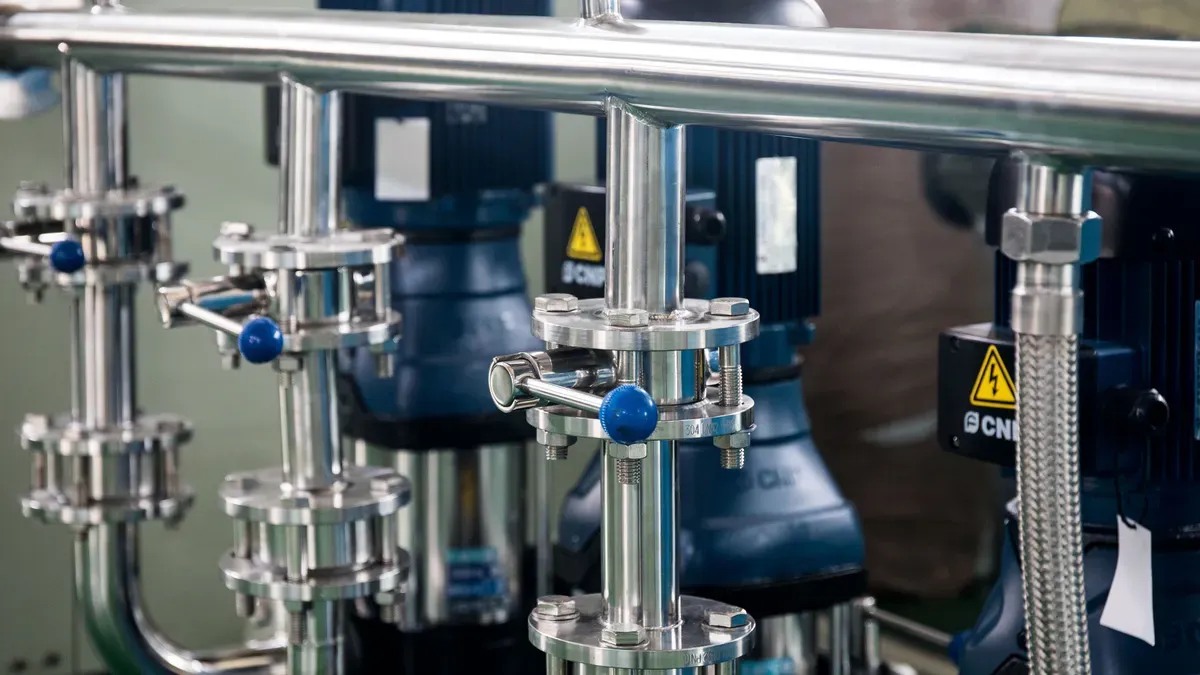
Older plants usually use welded 316L stainless steel pipes for high health safety. Stainless steel stops rust well and handles heavy surface cleaning. But setting up welded steel takes many work hours, special welding tools, and extra chemical cleaning steps afterward.
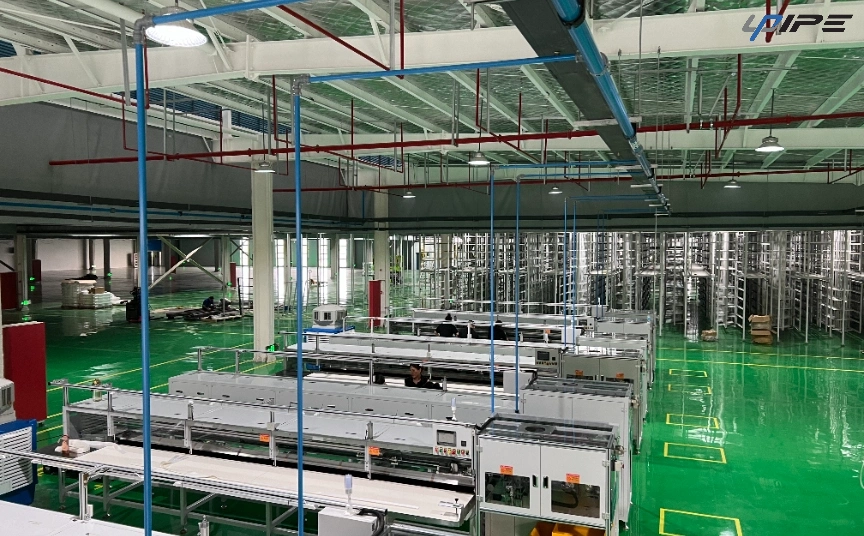
You can upgrade your facility air network by picking strong modular setups like the Upipe Aluminum Pipe System. This smart choice works better than heavy steel networks.
The Upipe Aluminum Pipe System uses carefully built rust-free aluminum pipes that meet cleanroom rules without adding heavy weight to walls.
Special aluminum parts help you remove common dirt risks from your system. The Upipe system has a smooth inside wall that stops dirt build-up and rust over time. This super-smooth tunnel keeps air flowing well and keeps tiny dust out of your sterile rooms.
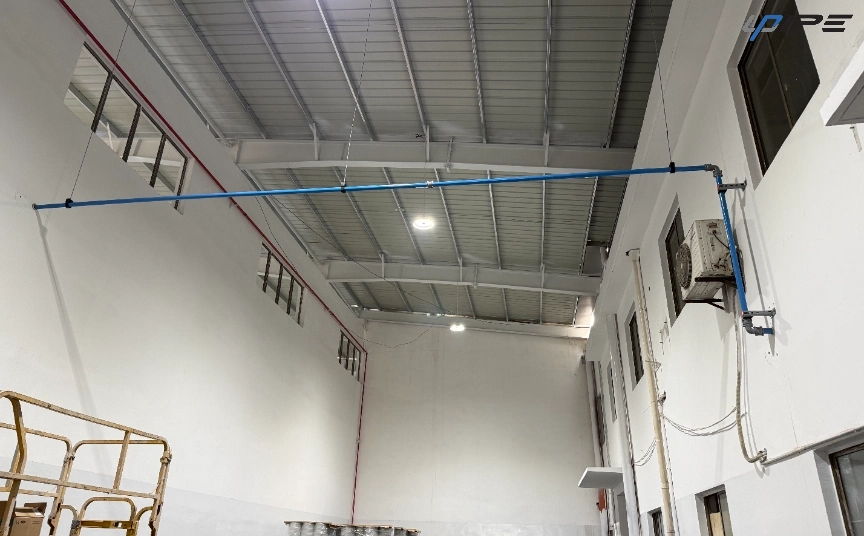
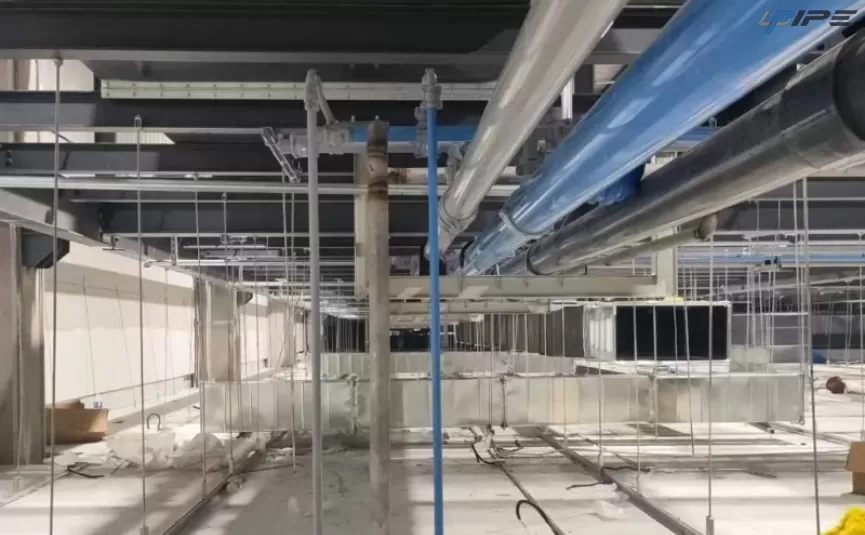
Also, Upipe builds leak-proof seals into every pipe joint. These tight connectors stop air leaks completely and keep air pressure steady everywhere. By stopping leaks, you protect clean air and save a lot of energy costs. The light snap-together design lets you change pipe layouts quickly whenever your plant needs to grow. You get total safety, clean room protection, and smooth operation for your Pharmaceutical Factories.
Technical Expertise and System Engineering
Engineering Design and Layout Optimization
You need complete technical support from your compressed air pipe seller. Good vendors offer site visits, early pipe designs, and air flow plans before sending hardware. Factory engineers review suppliers using detailed requirement lists, pipe diagrams, energy use charts, and job responsibility guides. These key planning tools prevent installation errors, protect air flow design, and stop germ growth in clean medicine rooms.
Smart layout design improves air delivery and keeps your products safe. System builders use strict layout guidelines to maintain steady air flow:
Tilt horizontal pipes downward 1 to 2 percent so water drains out constantly.
Keep main pipe air speeds under 6 m/s to avoid big drops in pressure.
Pick smooth 30-to-45-degree bends instead of sharp turns to stop rough air movement.
Advanced Joining Technologies and Modular Components
Classic stainless steel pipes need expert workers to complete slow pipe welding. This costly joining method raises setup fees and causes long factory shutdowns during building changes. Modern plants choose modular quick-connect pipe systems instead. The Upipe system replaces permanent welds with carefully made push-fit parts. Your team can easily attach 90° drop lines, branch tees, and special air control valves without using heat tools.
Modular pipe design offers high flexibility while keeping every joint completely airtight. Workers connect snap-fit parts fast without fire safety permits or chemical pipe cleaning. This easy assembly speeds up full system installation and prevents expensive plant shutdowns during cleanroom updates. Specially designed inner seals stop air leaks across all factory distribution lines, providing steady power for your medicine machinery.
You must verify every component in your compressed air system before running active medicine production lines. Rigorous quality control protocols protect your manufacturing facility from severe contamination risks, batch failures, and costly operational delays. Qualified suppliers actively help you set up robust, verifiable testing protocols across your entire utility distribution network.
Material Traceability and Leak Testing
You must enforce complete material tracking for every pipe section, elbow, drop line, and fitting. Request official Material Test Reports to confirm metal chemistry and physical strength before installation work begins. Inspectors match every installed component against physical heat numbers stamped directly on the hardware surfaces.
Heat number tracking is a key element of material traceability documentation that ensures regulatory compliance with FDA, 21 CFR Part 11, and other standards. It provides reliable documentation for audits, reviews, and validation, demonstrating due diligence during FDA inspections.
Proper material documentation proves safety standards during strict regulatory evaluations. You simplify quality checks and prevent validation delays across your facility by maintaining structured tracking records:
Confirming material grade
Reviewing Mill Test Reports for chemical composition and mechanical properties
Tracking heat numbers from receipt through fabrication
Performing positive material identification when required
After physical assembly, you must verify complete system joint integrity through rigorous pressure leak testing. Technicians pressurize the clean piping network with dry nitrogen or helium gas to detect tiny microscopic leak paths. You monitor calibrated pressure gauges over extended hold times to ensure zero pressure drop across every distribution loop. Additionally, precision optical particle counters measure air samples at outlet drop points to validate strict particulate cleanliness standards before final line startup.
Cleanroom Qualification and Audit Readiness
You need strong vendor support to complete your cleanroom facility validation process smoothly. Qualified piping suppliers supply detailed documentation packages that satisfy internal quality teams and official government auditors. You must execute structured qualification stages to prove your compressed air network delivers consistent purity under all operating conditions.
Field engineers conduct Installation Qualification tests to confirm actual piping construction matches your approved engineering drawings. Your team completes essential verification steps during initial setup checks:
Utilities & connections verification includes pneumatics (compressed air) and gases, checked against P&IDs and wiring diagrams.
HVAC IQ checklist includes verification of compressed-air connections as part of utility checks.
Facility qualification requires verification that compressed air is operational and properly connected.
Next, Operational Qualification tests demonstrate that your air distribution network operates correctly under normal working pressure. Engineers test pressure regulators, automatic shutoff valves, safety sensors, and alarm triggers. Performance Qualification then measures continuous air purity during active drug production runs over extended operating cycles.
You must collect fully organized documentation binders from your piping supplier before scheduling official health authority audits. Procurement teams evaluate prospective suppliers based on the thoroughness of their compliance records. Your final audit package must contain instrument calibration certificates, pipe cleaning logs, pressure test certificates, and signed qualification documents. These complete records give regulatory inspectors immediate proof of compliance during routine plant visits. Maintaining complete audit readiness protects your manufacturing license and keeps production schedules running smoothly. Thorough system records give procurement teams absolute confidence in their utility choices for Pharmaceutical Factories.
Post-Installation Services and Vendor Reliability
Maintenance, Flow Monitoring, and Spare Parts
You must evaluate long-term vendor reliability through complete component availability. A qualified piping supplier stocks essential fluid control hardware and spare fittings to maintain steady air pressure across utility networks. You can select double-side plug ball valves, single-side female ball valves, male-female ball valves, or double-side female ball valves to isolate specific line segments during maintenance. For high-demand distribution lines, suppliers deliver manual handle butterfly valves, turbine butterfly valves, and specialized high-temperature turbine butterfly valves alongside integrated flowmeters for continuous, accurate system monitoring.
Accurate flow sensors protect your clean air supply from undetected volume drops and hidden system leaks. You need structured instrument maintenance routines and regular sensor checks to preserve measurement precision over extended production cycles:
Annual recalibration is recommended by most manufacturers, with harsh environments requiring recalibration every 6 months.
Quarterly in-situ calibration verification (zero-flow check) is recommended to detect drift between calibrations.
Service Level Agreements and Warranties
Strong vendor warranty coverage demonstrates complete manufacturer confidence in piping durability and joint sealing performance. For example, TruLink provides a lifetime warranty on all aluminum piping products. Similarly, Unipipe Solutions offers a 20-year manufacturer warranty for their modular aluminum compressed air piping systems. You should secure similar extended warranty coverage to protect your utility infrastructure budget against unexpected component wear, joint fatigue, or system pressure drops over time.
Your service level agreement must also guarantee localized technical assistance and rapid emergency response times. Professional suppliers deliver routine system inspection services to inspect structural mounts, test flow control devices, and verify total sealing integrity. Local technical teams quickly supply stock spare parts including quick drops, pipe connectors, and specialized valves to handle facility modifications. Partnering with a dependable vendor ensures safe, continuous operation across all your Pharmaceutical Factories while minimizing operational risks.
Picking the best compressed air pipe maker keeps your medicine lines safe from expensive dirt. You should check each vendor using a simple review list.
Evaluation Category
Key Requirements
Regulatory Purity
ISO 8573-1 Class 0, cGMP, and FDA compliance
Material Performance
Smooth inner bore, non-corrosive Upipe modular aluminum versus heavy welded 316L stainless steel
System Validation
Complete IQ, OQ, and PQ documentation packages
Service Reliability
Integrated flowmeters, spare valves, and extended warranties
Wise buying teams aim to stop safety risks and keep air clean for years. Getting quality pipes cuts down on pressure losses and air leaks. You ought to look past startup prices to get big energy savings over time in your Pharmaceutical Factories.
FAQ
Why is ISO 8573-1 Class 0 air purity necessary for drug manufacturing?
ISO 8573-1 Class 0 promises zero oil in spray, liquid, or gas forms. You shield delicate drug items from dirt by keeping your air totally pure. Independent testing groups like TÜV check this top level to keep your plant safe and legal under FDA rules.
How does the Upipe modular aluminum system prevent system pressure drops?
The Upipe Aluminum Pipe System includes well-made fittings and built-in seals on every joint. These leak-free connectors keep line pressure steady everywhere. You fix air leaks, cut energy bills, and save cleanroom cleanliness without waiting on slow welding work.
What documentation must suppliers provide for cleanroom validation audits?
Sellers must offer clear Material Test Reports, heat-number tracking logs, and pressure test papers. They also send Installation Qualification, Operational Qualification, and Performance Qualification files. You show these detailed records to prove full rule safety during real FDA and internal quality checks.
Can modular aluminum piping replace stainless steel in Pharmaceutical Factories?
Yes. Top systems like Upipe use smooth inner walls that stop rust and dust build-up. You meet hard cleanroom hygiene rules with faster setups, lower labor costs, and simple layout fixes compared to heavy welded steel lines in new Pharmaceutical Factories.
This website uses cookies to provide you with a safer and more personal experience. By accepting, you agree to the Cookie Policy and the use of cookies for advertising and analytics purposes.