Home > News > Blog > Which Compressed Air Pipe Fittings Help Minimize Air Leakage and Pressure Loss
# Blog
Which Compressed Air Pipe Fittings Help Minimize Air Leakage and Pressure Loss
2026-10-27
Share:
Push-to-connect with double O-rings and compression with metal-to-metal seals are top Compressed Air Pipe Fittings for minimizing leaks and pressure loss.
Push-to-connect fittings with double O-ring seals and compression fittings with metal-to-metal seals are among the best at reducing air leaks and pressure loss. Each design makes a tight joint that holds pressure over time and can be repeated.
The type of fitting alone does not promise good results. Correct sizing, material choice, and proper installation matter just as much. Even a top-quality fitting will leak if it is installed poorly.
The stakes are real. Systems that are not well maintained lose 20–30% of compressor output to leaks. Systems with active leak detection stay under 10%.
This post compares the main fitting types and gives practical tips for choosing and installing compressed air pipe fittings.
Key Takeaways
Pick push-to-connect fittings that have double O-ring seals for modular lines that change often.
Use compression fittings with metal-to-metal seals for semi-permanent joints that need to be very strong.
Install the fittings the right way. Use the correct size, remove sharp edges, and tighten them properly to stop leaks.
Choose full-port fittings that match the pipe diameter to reduce pressure loss.
Plan regular leak checks using ultrasonic detectors to keep systems running efficiently.
Leakage and Pressure Loss Causes
Poor Seal Design
A fitting leaks wherever its seal gives out, and each seal point is one more way for air to get out. Single-ferrule compression fittings take away the extra seal point between the front and rear ferrules, which removes one leak path per coupling. Double-ferrule designs add a metal-to-metal seal between the ferrules, so they have more seal interfaces. More interfaces mean more spots where air can escape. Loose fittings, old threaded connections, and badly installed compression fittings all begin to leak at these joints. Threaded pipe also leaks more easily than welded pipe when the sealant is poor.
Seals wear down over time too. Chemical exposure, extreme temperatures, and dirty air make seal life shorter. Airborne particles in dusty, high-cycle pneumatic applications work like sandpaper on sealing surfaces. Vibration near equipment speeds up fitting loosening and seal breakdown. The grip must stay apart from tube vibration, because the worst destructive stress happens at the outboard support point. A grip or stress riser there focuses vibration stress and raises the chance of failure.
Flow Restriction
Pressure drop is the loss of air pressure between the compressor discharge and the point of use. Any blockage, restriction, or rough inside surface adds resistance to airflow, and that resistance causes a loss of pressure. Undersized or leaking hoses, piping tees and elbows, tubing, quick disconnect couplings, filters, regulators, and lubricators all play a part. The biggest pressure drop shows up when temperature and airflow are at their highest between the supply side and the points of use.
A steady pressure level needs a clear path for pressurized air. Loose parts, blockages, or rough inside surfaces break up flow, and then the compressor sends too little air. These disruptions waste energy, and the waste grows as pressure conditions go past recommended levels. Corrosion makes this worse, because condensation roughens pipe walls and narrows the open area for flow.
Push-to-connect fittings with double O-ring seals are some of the best choices for stopping leaks. Two seals make two barriers against air escaping, and the design allows fast connections you can repeat. Compression fittings with metal-to-metal seals also work well. The ferrule bites into the tube and forms a strong joint that resists vibration and pressure changes. Both types work for modular lines that change often, and both keep pressure drop low when sized right. Push-to-connect designs are great for lines that need frequent changes, while compression fittings fit semi-permanent joints that need high integrity. Both meet common industrial codes when manufacturers certify them for the rated pressure. Seal quality drives long-term performance more than any other single factor.
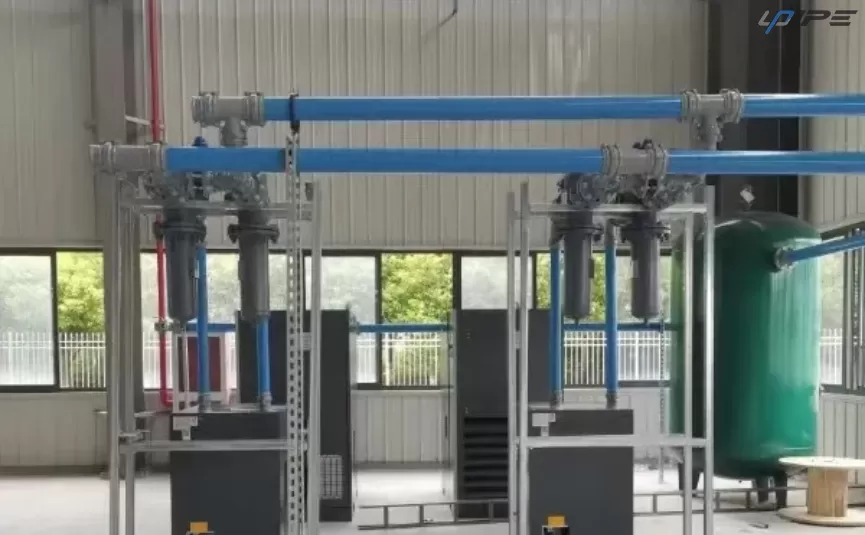
Modular aluminum piping with double-O-ring push-to-connect fittings offers low leak risk and very little pressure drop. Aluminum systems are a strong choice for new installations. The Upipe Aluminum Pipe System shows how this design works in real use. Its pipe-to-pipe connectors use an integrated molding process, so the bolt and body share equal strength for higher pressure resistance. Sealing rubber imported from Thailand resists vibration and improper installation. A foolproof, multi-surface sealing design further lowers leak risk. These features are one example of how modern Compressed Air Pipe Fittings can raise system integrity.
Threaded, Flanged, and Welded
Threaded, flanged, and welded joints each fit different service conditions. Threaded flanges use tapered NPT threads that create an interference fit, making a metal-to-metal seal as the pipe tightens into the flange. Tiny spiral leak paths remain unless the installer applies a thread sealant such as PTFE tape, pipe dope, or anaerobic compound. Thread distortion at high temperatures can break the seal, and vibration may loosen the threads. Specifiers therefore avoid threaded connections for thermal cycling, temperatures above 500°F (260°C) or below -50°F (-45°C), or high-vibration service. They cost less upfront and allow easy disassembly, which suits low-pressure utility lines.
Welded joints suit permanent mains where high pressure, temperature, and vibration resistance matter most. They carry the highest upfront cost and demand skilled labor, yet they deliver the longest service life with minimal maintenance. Threaded joints fit low-pressure lines that need occasional disassembly. Flanged joints balance serviceability with strength. Selecting Compressed Air Pipe Fittings demands a close look at seal design, pressure drop, and service conditions. Each option carries different cost and compliance profiles, so engineers should match the joint to the duty cycle and local code. All five types can meet pressure vessel and piping standards when specifiers verify the manufacturer's certification.
Design Features That Reduce Losses
Seals and Surface Finish
The seal decides how long a joint stays tight. O-ring material must match the air conditions. Nitrile rubber works well for most general compressed air use. EPDM resists moisture and heat better. Viton is good for high temperatures and exposure to lubricant carryover. A seal that hardens or swells will leak, so the material matters as much as the number of seals. Double O-ring designs add a second barrier, and that backup helps when one ring gets damaged.
The surface finish on sealing faces and pipe bores affects both leakage and friction. A smooth bore disturbs airflow less. Rough interiors from corrosion create more friction and can block flow when material flakes off. A rough bore also increases turbulence, and turbulence turns pressure into wasted energy. Smooth sealing surfaces let the O-ring press evenly and keep contact under vibration. Machining quality therefore helps both goals at once: a tight seal and an undisturbed flow path.
Full-Port Compressed Air Pipe Fittings
Bore size affects pressure loss more than almost any other feature. A full-port fitting matches its bore to the pipe internal diameter, so the air sees no narrowing. A reduced-port design narrows the flow area and multiplies pressure loss. Full-port valves keep a wider internal passage, letting air pass with less disruption to system flow. Systems that need better flow efficiency or less turbulence benefit most from this design. The table below shows the difference.
Design
Bore vs. Pipe ID
Flow Coefficient (Cv)
Pressure Loss Impact
Full port
Bore matches pipe internal diameter — no restriction seen by fluid
Always use full-port valves that do not reduce pipe diameter to minimize pressure loss; ball valves are preferred, with butterfly valves acceptable if seal materials are compatible with compressed air, moisture, and compressor lubricant.
Diameter sizing works the same way. The smaller the pipe, the greater the friction, because air squeezes through a restricted path. Doubling the pipe diameter greatly reduces friction losses. Longer runs, joins, tees, elbows, and dead ends increase friction compared with a straight, smooth pipe of equal length. Each 2 PSI of pressure drop raises energy consumption by roughly 1 percent, so a 10 PSI drop can increase energy use by more than 5 percent. Designers aim to keep total drop below about 3 PSI from compressor to the furthest outlet, with 0.3–0.5 PSI per 100 ft as a common allowance. Undersized piping forces operators to raise compressor output, which wastes energy and strains equipment.
Internal geometry adds another lever. The Upipe Aluminum Pipe System gives its tees, elbows, and quick drops special flow-directing shapes. These shapes cut pressure loss and strengthen the part. A gooseneck design keeps condensate from flowing down into the pipes and protects equipment. Anti-vibration pipe clamps hold the line steady, and reinforced quick drops resist stress imbalance. Together, these features show how well-designed Compressed Air Pipe Fittings support low-loss operation.
Good installation is the cheapest way to fix leaks. An industry installation guide says that fixing incomplete fittings and poor sealing methods directly stops air loss. That loss can push energy use up by as much as 30 percent. Advanced sealing methods, like multi-layer seals, can improve air tightness by up to 45 percent. The process starts with accurate measuring and cutting, deburring of edges, correct fitting selection, proper thread sealant, tightening to the specified torque, and a leak check at every joint.
Layout choices matter just as much as joint quality. Teams should keep piping straight and use fewer elbows, tees, and other fittings. Each elbow adds the same pressure drop as 2 to 10 extra feet of pipe, depending on size and type. Long-radius bends beat sharp 90-degree elbows. Manifold systems and straighter routes cut fitting count further. Sizing pipe to the required flow rate prevents the energy waste that comes from undersized lines. Installers should also fit isolation valves on the main piping from the start, so future expansions cause minimal disruption.
Inspection and Leak Monitoring
Leak surveys need a schedule, not a one-time effort. The DOE notes that systems left uninspected for over a year can lose up to roughly 35 percent of air to leaks. Maintenance teams should divide the plant into manageable sections and survey each one. Ultrasonic detectors ignore background noise and pinpoint the high-frequency hiss of escaping air. This makes them far easier to use than a soap bubble test. A spike in decibel readings marks the leak point, and the technician tags it for repair.
Inspectors should check valves and connectors, hoses and tubing, O-rings, tanks and gauges, filters and lubricators, and condensate drains and traps. A structured Leak Detection and Repair program records each leak's location, estimated energy loss, and repair cost. Teams complete same-day repairs for accessible leaks, typically under 10 feet, and schedule larger jobs. Treating leak monitoring as part of overall system management helps engineers judge which repairs pay off. It also keeps Compressed Air Pipe Fittings performing at their rated efficiency.
Picking the right fitting should match how you plan to use it. Push-to-connect designs work well for modular lines that change often. Compression fittings are good for joints that need high strength. Welded connections fit permanent main lines. The right fitting type, matched to the job and installed correctly, is what keeps air leaks and pressure loss low. When choosing, also think about system pressure, temperature, moisture, and total cost of ownership. Durable Compressed Air Pipe Fittings cut downtime and keep pressure steady. Readers can begin with a fitting audit. Tag every joint, check seal condition, and make sure valves and connectors have a full-port design. Seal quality and an open bore give the biggest gains.
FAQ
Which fitting type suits a line that changes often?
Push-to-connect fittings with double O-ring seals fit this job best. Two seals create two barriers against escaping air. The connection is fast and can be repeated, so teams can change modular lines without cutting pipe or waiting on a welder.
Why do two O-rings beat a single seal?
A second ring works as a backup. If one ring hardens, swells, or gets damaged, the other still holds pressure. Match the ring material to the air conditions—nitrile for general use, EPDM for moisture and heat, Viton for high temperatures and lubricant carryover.
Does port size really change pressure loss?
Yes. A full-port fitting matches its bore to the pipe internal diameter, so the air sees no narrowing. A reduced-port design narrows the flow area and multiplies pressure loss at the same flow. Designers should specify full-port valves and connectors wherever flow efficiency matters.
How do teams find leaks without tearing the system apart?
Ultrasonic detectors pick up the high-frequency hiss of escaping air and ignore background plant noise. A spike in the decibel reading marks the leak point. Technicians tag each spot for repair. This method beats a soap bubble test on crowded, hard-to-reach piping.
When should a facility choose welded joints instead?
Welded joints fit permanent mains where high pressure, temperature, and vibration resistance matter most. They carry the highest upfront cost and need skilled labor. In return, they deliver the longest service life with minimal maintenance. Threaded joints suit low-pressure lines that need occasional disassembly.
This website uses cookies to provide you with a safer and more personal experience. By accepting, you agree to the Cookie Policy and the use of cookies for advertising and analytics purposes.