Home > News > Blog > Which Compressed Air Piping System Helps Minimize Pressure Drop
# Blog
Which Compressed Air Piping System Helps Minimize Pressure Drop
2026-09-17
Share:
Aluminum modular compressed air piping systems minimize pressure drop with smooth interiors and corrosion resistance, cutting energy costs by 10-25% annually.
Aluminum modular piping systems, like the Upipe Aluminum Pipe System, work best to reduce pressure drop in most industrial uses. Pressure drop wastes energy and money every day. It makes compressors work harder and lowers tool performance where you use it. A well-designed compressed air piping system can greatly reduce these losses. Facility managers and business owners need to know how material choice, pipe diameter, and layout affect airflow resistance. This article compares common piping materials and gives practical tips for choosing the best system. Readers will learn how to check their current setup and find ways to cut energy costs with smarter piping choices.
Key Takeaways
Pressure drop wastes both energy and money. It forces compressors to work harder and tools to run slower.
Aluminum piping systems lower pressure drop the most. They have smooth insides and resist rust.
Choosing the right pipe size and how you set up the pipes helps lower pressure drop. Use larger pipes and fewer fittings.
Routine upkeep spots leaks and keeps systems running well. Look for leaks often and repair them quickly.
Switching to aluminum can cut energy costs by 10-25% every year. It pays for itself fast.
What Is Pressure Drop
Pressure drop is the loss of air pressure as compressed air moves through a piping system. Every fitting, every foot of pipe, and every bend adds resistance. This resistance turns some of the air's energy into heat. The result shows up as lower pressure at the point of use than at the compressor outlet. Facility managers often see tools running slower or production lines losing efficiency without knowing pressure drop is the cause. Knowing this idea helps operators find where energy losses happen and how to fix them.
How Pressure Drop Affects Energy Costs
Higher pressure drop makes compressors work harder. A compressor must raise its discharge pressure to push past the resistance in the pipes. This action directly raises energy use. Picture a compressor delivering 500 CFM at 100 PSI with a specific power of 22 kW per 100 CFM, using 110 kW. Raising the discharge pressure by 10 PSI to overcome downstream pressure drop raises specific power to about 23.1 kW per 100 CFM. The compressor then uses 115.5 kW for the same 500 CFM. That is an increase of 5.5 kW, or 0.55 kW per PSI of extra pressure drop. Industry data confirms that a single PSI of unneeded pressure costs about 0.5% of a compressor's total energy use. For facilities running multiple shifts, these losses add up fast into thousands of dollars per year. Lower pressure at tools also cuts their efficiency, causing longer cycle times and higher waste rates. The compounding effect of pressure drop makes it one of the biggest hidden costs in industrial operations.
Common Causes of Pressure Drop
Friction inside pipes creates the main source of resistance. Rough pipe interiors make more friction than smooth materials. Turbulence at fittings, elbows, and tees adds more losses. Each 90-degree elbow causes a pressure drop equal to several feet of straight pipe. Undersized pipes force air to travel faster, raising friction exponentially. Too many fittings multiply resistance points throughout a system. Leaks waste compressed air directly, making the compressor produce more air to keep system pressure. Poor layout creates unneeded resistance through dead-end branches or long runs with many bends. Inadequate pipe diameter stands out as one of the most common design mistakes. Systems with multiple sharp turns suffer more turbulence than those with gradual curves. A loop system reduces pressure drop by letting air flow from two directions, keeping more consistent pressure across all drop points. Knowing these causes helps facility managers target the most effective improvements for their specific systems.
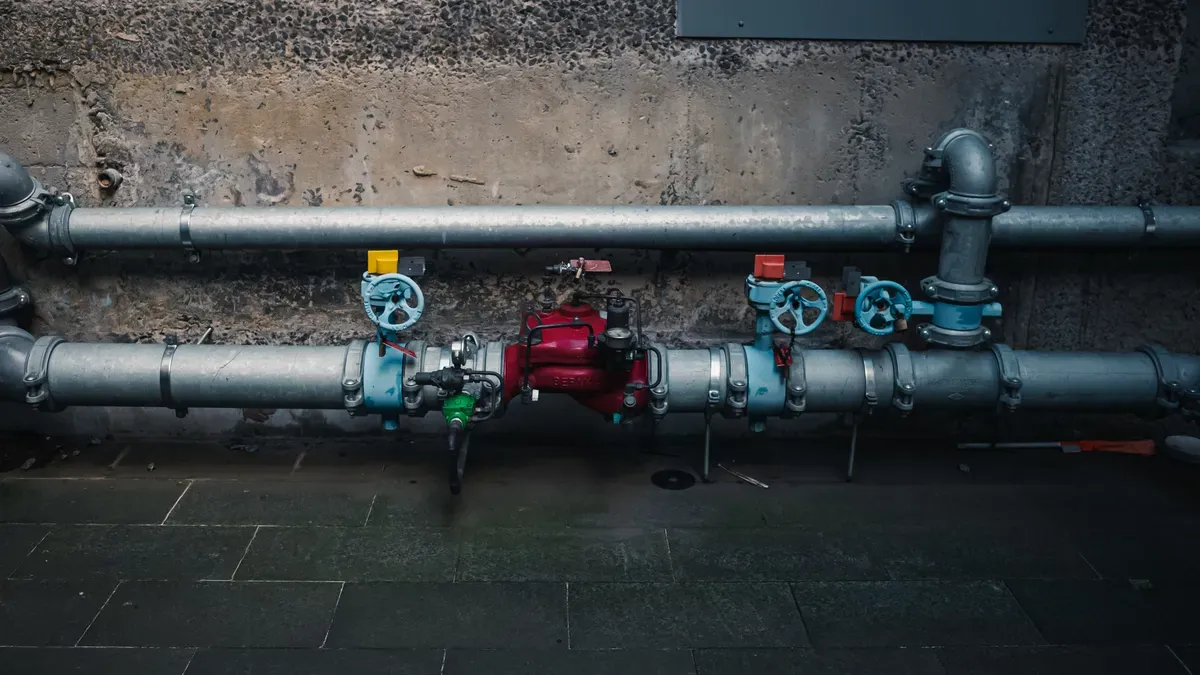
The material you pick directly affects friction and pressure drop inside any compressed air piping system. Aluminum piping loses little pressure because its inside surface stays smooth and fights corrosion. Copper works well in clean, dry places with low friction and good flow. Stainless steel is strong and smooth, but it costs more than aluminum. Plastic materials like HDPE and ABS resist corrosion and offer low friction, but they only work for low-pressure or non-critical jobs. Black iron and galvanized steel cause serious problems. Both materials rust inside over time. Rust buildup raises friction and creates leaks that waste energy. A material comparison shows aluminum keeps high efficiency over time, copper stays durable but costs a lot upfront, and black iron gives low efficiency with major energy waste from leaks.
Efficient airflow means less pressure drop, and that means energy savings over time. Quality materials pay off.
Pipe Diameter, Fittings, and Layout
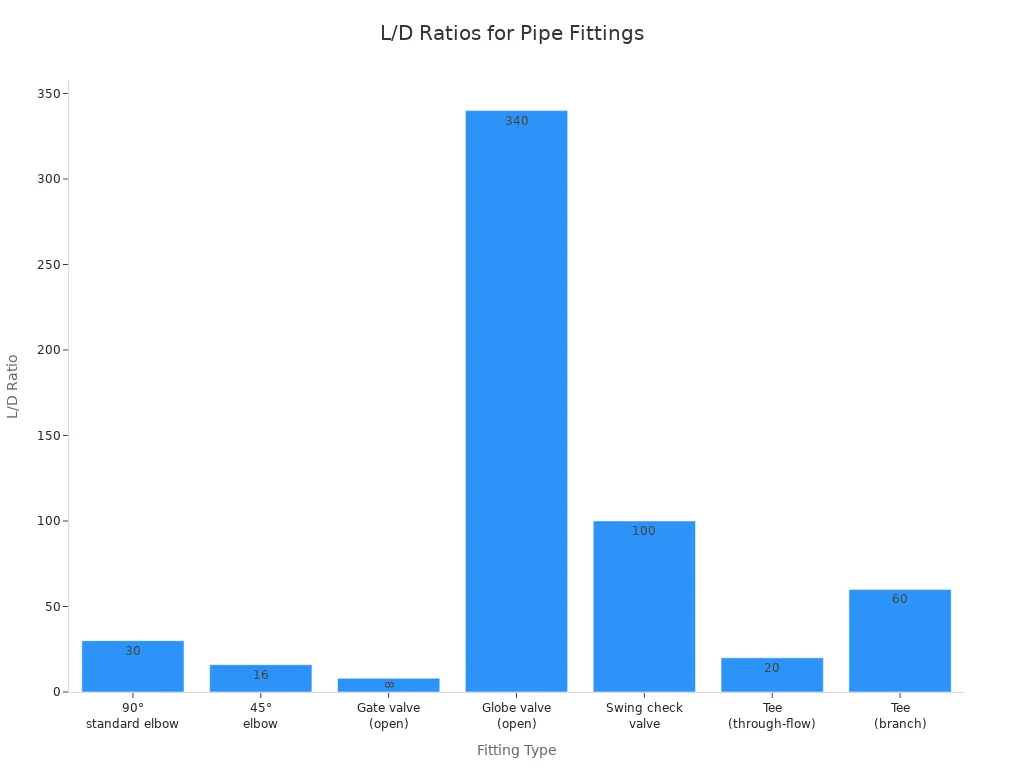
The right pipe diameter, based on airflow demand, keeps pressure drop low. Pipes that are too small create bottlenecks that raise resistance. Pipes that are too big add needless cost without improving flow. A helpful rule of thumb says that every 2 PSI drop in pressure drop cuts energy use by 1.6 to 2 percent. Fittings add hidden resistance. A standard 90-degree elbow has an L/D ratio of 30. For a 2-inch pipe, that equals 5 feet of straight pipe. A globe valve has an L/D ratio of 340, making it the most restrictive common fitting. Cutting down sharp bends and long pipe runs lowers turbulence and pressure losses.
Layout matters just as much as hardware. Closed loop and grid systems give you multiple airflow paths. This setup delivers more even pressure and fewer pressure losses than linear systems. Air flows from two directions in a loop, keeping pressure steady across all drop points.
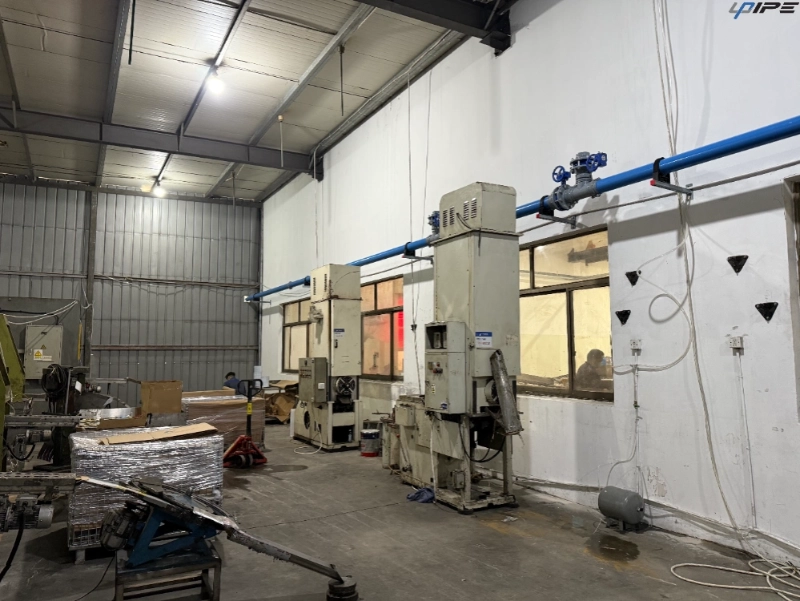
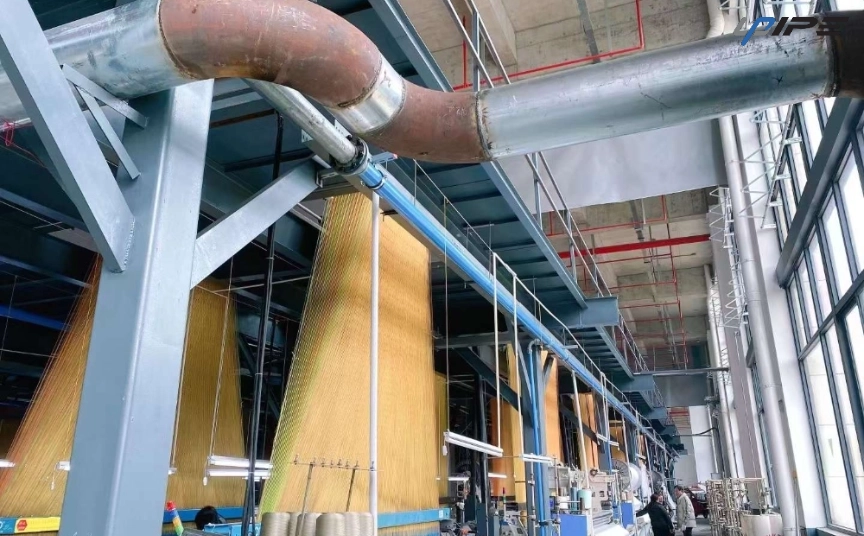
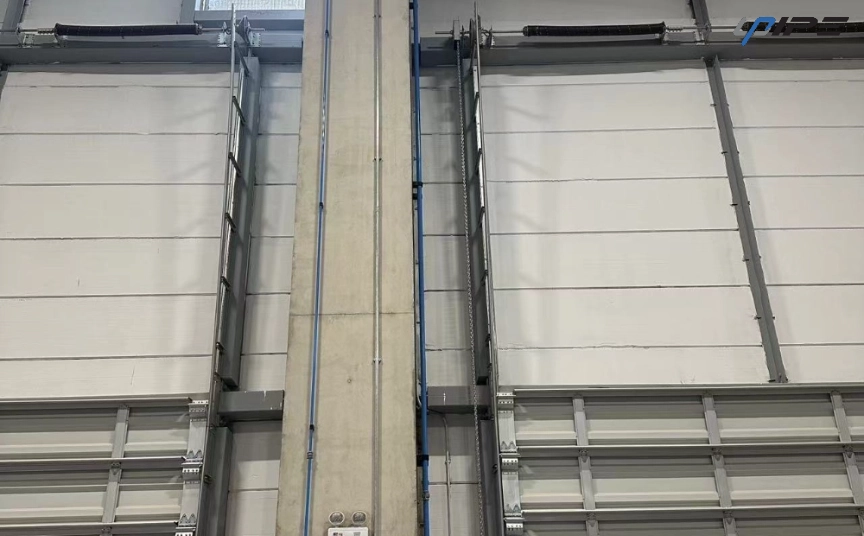
Premium-grade aluminum piping systems, such as the Upipe Aluminum Pipe System, are top performers in any compressed air piping system. The smooth inside walls of aluminum make very little friction, which keeps pressure drop low over long runs. Aluminum also fights corrosion, so the inside surface stays smooth over years of use. This corrosion resistance stops the rust buildup that harms other materials. The modular design of aluminum systems allows for flexible setups and fast installation. Upipe offers a full range of parts to meet different installation needs. The system includes aluminum pipes, connectors, 90-degree elbows, equal and reducing pipe-to-pipe connectors, equal and reducing tees, male and female connectors, and equal, reducing, and female flanges. For efficient air distribution, Upipe provides 90-degree quick drops, 180-degree quick drops, and quick drops with female threads, along with end caps to seal pipe ends. The system also includes a choice of valves, such as double side plug ball valves, single side plug female ball valves, male-female ball valves, double side female ball valves, handle butterfly valves, turbine butterfly valves, and high-temperature turbine butterfly valves. A flowmeter is available for monitoring airflow. Stainless steel piping offers similar smoothness and durability. However, stainless steel costs much more than aluminum. The material cost for stainless steel 304 reaches $11,170, while Unipipe Aluminum costs $6,470. Labor costs for stainless steel total $12,000, compared to $6,000 for aluminum. The total installed cost for stainless steel is $23,170, which is about 46% more than aluminum at $12,470.
Copper, Plastic, and Black Iron Piping
Copper piping gives you a smooth inside and good flow characteristics. However, copper is expensive and easy to steal on job sites. The material cost for copper sweat reaches $8,550, with labor costs of $12,000, bringing the total installed cost to $20,550. That is about 39% more than aluminum. Plastic piping is cheap and resists corrosion. However, plastic has a limited pressure and temperature range, which limits its use in industrial compressed air systems. Black iron piping causes the most problems for pressure drop. Black iron has a rough inside surface that creates high friction. The material also corrodes over time. Tuberculation refers to the build-up of rust nodules on the inside of the pipe. While you cannot see this from the outside, a clear drop in pressure or flow from a specific fixture can show that the pipe is getting clogged with corrosion byproducts. Consider a common scenario: tenants in an older section of a building begin to complain about low pressure and discolored air. A maintenance check reveals that the black iron pipes near the connections are heavily clogged with rust. Black iron Schedule 40 has a material cost of $4,050 and labor costs of $12,000, for a total installed cost of $16,050. Despite the lower upfront cost, black iron needs leak repair every 3 to 6 months. Corroded sections often need replacement within 5 to 10 years. For a medium-sized facility, these activities cost $1,500 to $3,000 annually. Aluminum systems almost eliminate these costs. Energy represents 70 to 80% of the lifetime expense of operating a compressed air system. Aluminum's smooth inside walls minimize pressure drops versus corroding black iron. For a 50hp compressor, 15% energy savings translates to $3,000 to $5,000 annually. Air leaks typically waste 20 to 30% of compressed air in traditional systems. Threaded steel connections alone leak 8 to 10% of total compressed air before corrosion develops. Typical energy savings with aluminum reach 10 to 25% annually.
Direct Comparison
Pressure Drop Performance Table
The table below shows how each material does on the factors that matter most. Aluminum leads in pressure drop performance, cost savings, and ease of installation. Stainless steel matches aluminum in smoothness but costs much more. Copper gives good flow but comes with a high price and theft risk. Plastic works only for light-duty jobs. Black iron falls behind in every category because of corrosion and roughness.
Material
Pressure Drop
Cost
Durability
Installation Ease
Aluminum
Very low
Moderate ($12,470 installed)
High, corrosion-resistant
Easy, modular
Stainless Steel
Very low
High ($23,170 installed)
Very high
Moderate, heavier
Copper
Low
High ($20,550 installed)
High, theft-prone
Moderate, soldering
Plastic
Low to moderate
Low
Limited pressure/temperature range
Easy
Black Iron
High, worsens over time
Low upfront ($16,050 installed)
Poor, corrodes internally
Difficult, threaded
Aluminum systems save 10 to 25% in energy each year compared to black iron. Threaded steel connections alone leak 8 to 10% of total compressed air before corrosion starts. Black iron needs leak repair every 3 to 6 months and section replacement within 5 to 10 years, costing $1,500 to $3,000 each year for a medium facility. Aluminum almost removes these costs.
Best Use Cases for Each Material
Aluminum fits most industrial compressed air systems. Its smooth inside, corrosion resistance, and modular design keep pressure drop low across long runs and many drop points. Facilities that run multiple shifts or use air-powered tools on a large scale gain the most from aluminum. The Upipe Aluminum Pipe System offers a full component range, including pipes, connectors, elbows, tees, flanges, quick drops, end caps, valves, and flowmeters, so operators can build or expand any layout without custom fabrication.
Stainless steel suits high-purity or corrosive environments. Food processing, pharmaceutical production, and chemical plants often require stainless steel because it resists contamination and harsh chemicals. The higher cost makes sense when cleanliness or chemical resistance is non-negotiable.
Copper works well for small systems with modest airflow demands. Small workshops or single-line setups benefit from copper's smooth interior and reliable performance. However, the high material cost and theft risk limit copper to smaller installations where total pipe length stays short.
Plastic piping serves low-pressure hobby use or temporary setups. Home workshops and light-duty applications can use plastic when pressure and temperature stay within the material's rated limits. Plastic cannot handle the demands of most industrial compressed air systems.
Black iron remains only in legacy systems. Facilities with existing black iron piping should plan for replacement rather than expansion. The rough interior and ongoing corrosion make black iron a poor choice for any new installation.
Tips to Minimize Pressure Drop
Design and Installation Best Practices
A good design begins with a loop layout. A closed ring lets air reach each drop point from two directions. This keeps pressure steady and lowers losses throughout the system. Designers should also make pipes wider than the smallest size allowed. Bigger pipes slow the air down and cut friction. Every elbow, tee, and valve adds resistance, so using fewer fittings helps. A globe valve has an L/D ratio of 340, which makes it the most restrictive common fitting. Premium-grade aluminum piping, like the Upipe Aluminum Pipe System, has smooth insides and modular fittings that keep resistance low.
Sizing pipes correctly during installation makes sure the compressed air piping system meets airflow demand without losing too much pressure. Atlas Copco suggests that fixed compressed air networks be sized so pressure drop in the piping stays under 0.1 bar (about 1.5 PSI) from the compressor to the point of use. This number should be your design target. Installers must tighten connections and use fittings that do not leak. A good system should lose less than 10% of pressure between the air receiver tank and the point of use. Pressure drop between the receiver tank and the end-use should not go above about 3 PSI.
Maintenance and System Optimization
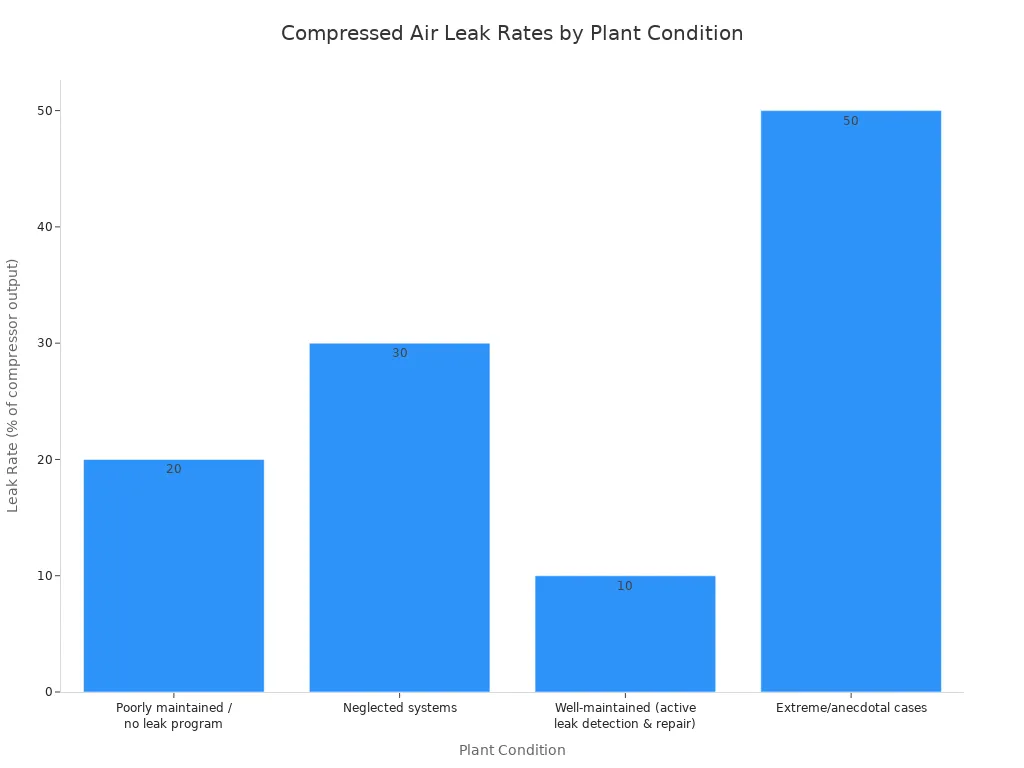
Leaks waste compressed air directly and drive up energy costs. According to the DOE, leaks can waste up to 30% of compressor output. Plants without a formal leak control program see leak loads above 30%. A 10% leak load is seen as acceptable, while 30% is a problem and needs quick action. Well-maintained systems with active leak detection and repair keep leak rates below 10%.
Operators should take good care of air filtering and drying equipment. Clean filters and dryers lower resistance and protect tools downstream. Ultrasonic leak detection surveys help find hidden leaks. High-demand or high-leak settings need quarterly surveys. Stable systems with strong maintenance controls need semiannual surveys. Lower-risk settings need annual surveys. Facility size, leak history, and system criticality decide the right frequency. A flowmeter gives real-time airflow data and helps operators spot pressure drop problems early.
Aluminum modular piping systems, like the Upipe Aluminum Pipe System, are the best choice for reducing pressure drop. Smooth inside walls cut down friction a lot. Corrosion resistance keeps this smoothness for many years. Modular parts allow flexible layouts and quick installation without custom work.
Proper pipe sizing, loop layout, and regular maintenance are just as important no matter what material you pick. A good system needs all three elements to work well.
Facility managers should check their current compressed air piping system for signs of too much pressure drop. Switching to aluminum or improving an existing layout can lower energy costs and boost tool performance.
FAQ
Which piping material minimizes pressure drop best?
Aluminum modular pipes, like the Upipe system, give the lowest pressure drop in most factories. The smooth inside cuts friction, and it resists rust so it stays smooth. Stainless steel works the same but costs a lot more. Black iron is the worst because rust builds up inside.
How much pressure drop is acceptable in a compressed air system?
Atlas Copco says to keep pressure drop in the pipes below 0.1 bar (about 1.5 PSI) from the compressor to the tool. The drop from the air tank to the tool should stay under about 3 PSI. A good system loses less than 10% of pressure total.
Does pipe diameter really affect pressure drop?
Yes. Pipes that are too small make air move faster, which raises friction and pressure drop. Wider pipes slow air down and lower resistance. Designers should pick pipes bigger than the minimum needed for the airflow. Cutting pressure drop by 2 PSI saves 1.6 to 2 percent of energy.
Why does a loop layout reduce pressure drop?
A closed loop lets air reach each drop from two sides. This two‑way flow keeps pressure steady everywhere and cuts losses at far points. Straight‑line layouts push air one way, so the last drop often has the lowest pressure.
How often should a facility check for air leaks?
How often leaks happen depends on the system. High‑demand or leaky systems need a check every three months. Stable systems with good maintenance need a check every six months. Low‑risk systems need a check once a year. Well‑kept systems keep leaks below 10%, but bad ones can waste up to 30% of compressor output.
This website uses cookies to provide you with a safer and more personal experience. By accepting, you agree to the Cookie Policy and the use of cookies for advertising and analytics purposes.