Home > News > Blog > Which Compressed Air Pipeline Provider Offers Technical Engineering Support
# Blog
Which Compressed Air Pipeline Provider Offers Technical Engineering Support
2026-09-21
Share:
Parker Transair, Upipe, and Northwest Pump offer strong technical engineering support for compressed air pipeline projects, including design, CAD, and 24/7 troubleshooting.
Upipe, Parker Transair, and local experts like Air Services Company give strong technical engineering support. Many providers only sell pipe and fittings. They offer little help with design, CAD, or fixing problems. Facility managers need more than products. They need support through the whole project. Engineering help stops costly mistakes during layout and installation. Fast response times and training programs also cut downtime. Key things to check include 24/7 support, on-site engineering, custom design, CAD/BIM help, and training. These things set a vendor apart from a true partner. Complex projects need professional engineering guidance. This support makes the system work as well as possible. Checking providers on these points helps engineers pick a Compressed Air Pipeline Provider that gives complete solutions.
Key Takeaways
Technical engineering support gives you help with design, CAD files, on-site advice, and training.
Technical engineering support includes a few different services. These services help facility managers and engineers from the planning stage all the way through system operation. Pre-sale design help lets a team pick the right pipe diameter, layout, and parts for a given flow rate and pressure. CAD and BIM layout services give digital models of the piping system that fit into building plans. This fit lowers installation errors and saves time. BOM generation makes a full list of all the parts needed. That list makes buying easier and stops costly delays when materials show up.
Design and CAD Assistance
Design support begins before a project breaks ground. A provider should offer flow calculations to make sure the pipe size fits the system demand. Upipe gives technical support for flow calculation as part of its service package. The provider also helps with lead time planning and global shipping coordination. A clear warranty policy gives the buyer more protection. Good design calculations stop undersized lines that cause pressure drops and wasted energy.
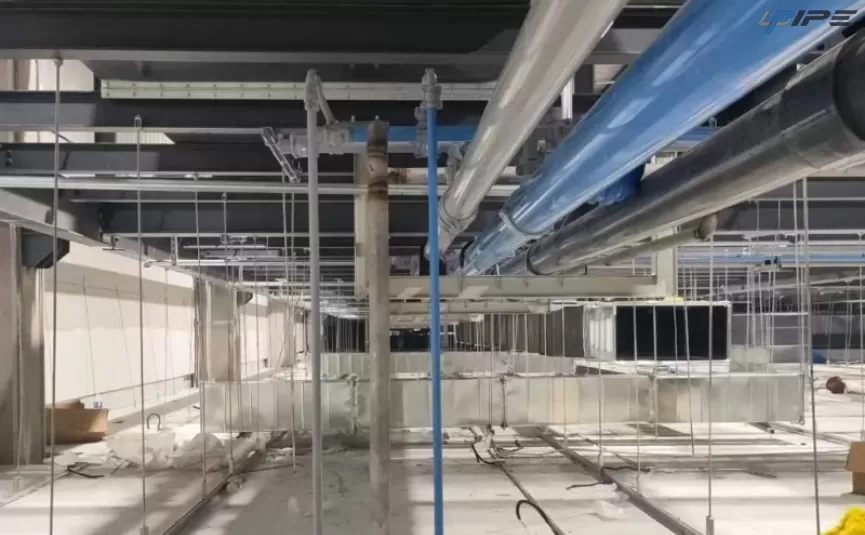
During the design phase, some providers give detailed digital models. Parker Transair gives BIM CAD files in REVIT format for its compressed air piping products. Engineers get these files through a special CAD page on the provider's website. The files link to the BIM&CO platform where the REVIT-format models are hosted. This service lets a facility team place every fitting and pipe run inside the building model before any material shows up on site. The result is fewer field changes and a faster, more accurate installation. Facility teams value this level of detail because it catches conflicts with other building systems early.
On-Site Engineering and Installation Guidance
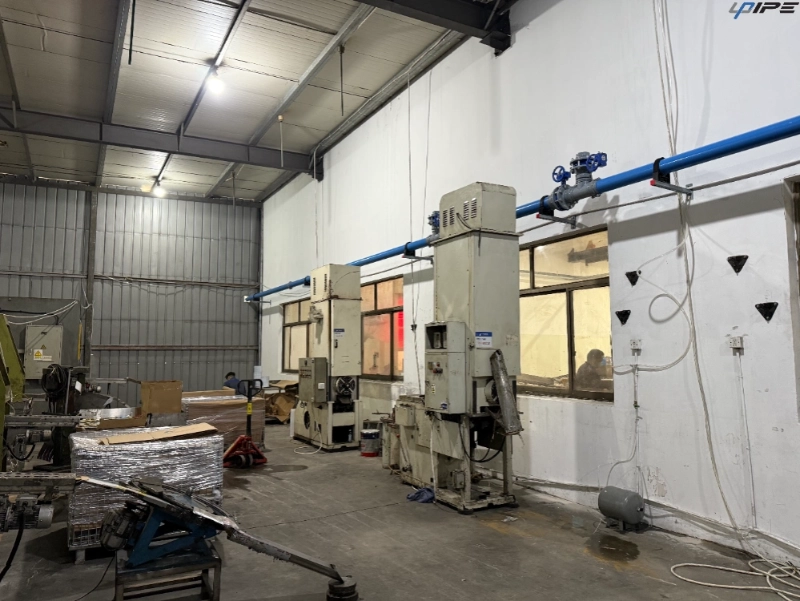
Installation guidance matters just as much as upfront design. On-site engineering support means a provider sends a representative to check the layout, answer questions, and confirm joint assembly. Troubleshooting help during startup catches issues like leaks or pressure drops before production starts. Training programs teach maintenance crews how to inspect fittings, replace seals, and do periodic checks without calling for outside help. A trained crew can handle minor issues right away instead of waiting for an outside technician.
These services cut downtime over the life of the system. A provider that offers both design help and on-site guidance becomes a true partner instead of a simple vendor. When judging any Compressed Air Pipeline Provider, engineers should ask for examples of past on-site support and training materials. The right provider saves money and stops problems long after the first purchase.
Which Compressed Air Pipeline Providers Offer Strong Support?
Several providers stand out for technical engineering support. They range from global manufacturers with their own engineering teams to regional specialists who give hands-on local service. Each type brings different strengths to a project.
Global Manufacturers with Engineering Teams
Large manufacturers often provide the deepest technical resources. Parker Transair offers a BIM service that gives engineers REVIT-format CAD files for compressed air piping products. Authorized distributors like MFP Automation Engineering keep trained product experts and in-house engineers on staff. These teams help with pipe sizing, layout design, and cost-efficient solutions. They accept dimensional drawings, blueprints, PDFs, rough sketches, or take-off lists to prepare detailed quotes. This level of design support helps facility managers plan accurate installations before any material arrives on site.
Unipipe offers UnipipeHP systems rated to 1,015 PSI for high-pressure applications. The table below shows key specifications for UnipipeHP systems.
Specification
Detail
Maximum Operating Pressure
1,015 PSI
Pressure Range
232 PSI to 1,015 PSI
Pipe Sizes
13 standard sizes, 3/4" to 10" diameter
Operating Temperature Range
-4°F to 212°F
Manufacturer Warranty
20-year
Support
Certified distributor network, system design and engineering support, installation certification, technical training programs
Upipe also provides strong product breadth and technical support. Upipe gives a dedicated calculation formula tool for flow calculation. The company addresses lead time reliability through global logistics experience. It maintains branches in the USA, Russia, India, Thailand, and Vietnam to navigate local customs rules. Upipe explains Incoterms such as FOB, CIF, and DDP so buyers understand cost and risk transfer. The company supports remote-site delivery through VCI packaging and desiccants to protect aluminum piping during sea freight. Upipe manages inventory with annual production capacity of 11,000 tons and stock for urgent orders.
For cross-border installations, Upipe advises buyers to request references from past overseas projects, contact those customers about warranty experiences, and clarify how claims are handled when the nearest branch is in another country. A reliable supplier should document this warranty process clearly before the contract is signed.
Regional Specialists and Distributors
Regional specialists offer advantages that global brands cannot match. Their proximity enables faster emergency response and reduces operational downtime. They maintain local inventory of common parts because they serve nearby facilities. Independent providers give unbiased recommendations and are not tied to a preferred manufacturer's equipment. Their business depends on local reputation, so accountability stays high.
Air Services Company is an authorized Gardner Denver distributor with factory-trained technicians. The company provides support for all makes and models of air compressors and auxiliary equipment 24 hours a day. Rasmussen Air & Gas Energy operates as an engineer, specialty contractor, and supplier in Omaha, NE. The company focuses on compressed air systems and offers on-site consultation.
These examples show that the best Compressed Air Pipeline Provider depends on project needs. Global manufacturers suit large, complex installations. Regional specialists excel at local, responsive service. Engineers should evaluate both types before making a final decision.
How Do Providers Compare on Support Services?
Response Times and 24/7 Troubleshooting
Air Services Company sets a high standard with 24-hour support. Factory-trained technicians can respond at any time, day or night. This availability cuts downtime for facilities that run all the time. A Compressed Air Pipeline Provider with limited hours leaves facilities at risk during nights and weekends.
Warranty coverage also differs between providers. Standard coverage for exported piping systems includes a component warranty against manufacturing defects. This warranty covers all piping components installed by the engineering team. An installation warranty often comes with the component warranty. Export-specific warranty terms may not show up in the first documents. Buyers should ask for written confirmation of coverage for international orders. For exported systems, buyers can expect a 10-year warranty on compressors and a 1-year warranty on accessories. Coverage includes manufacturing defects but leaves out labor and consumables. Following the required maintenance schedules keeps warranty terms active. These provisions protect buyers against early component failure.
Design-phase support differs among providers. Parker Transair sets a benchmark with BIM CAD files in REVIT format. Engineers can place every fitting inside the building model before any material arrives. Upipe provides flow calculation support through a dedicated formula tool. The company also offers warranty coverage that protects against manufacturing defects for piping components. This mix of design and product-level help gives facility teams confidence throughout the project.
Training, Documentation, and Maintenance
Training programs separate strong providers from basic ones. Many manufacturers provide specialized training for customer maintenance personnel. Training can take place at dedicated facilities or directly at the customer's site. Hands-on practice combined with classroom instruction helps maintenance staff handle complex system challenges without calling for outside help each time.
Documentation plays a vital role in long-term performance. Providers emphasize proper record keeping as essential to successful predictive maintenance programs. Performance data tracked over time enables accurate predictions. Good records help management justify additional maintenance budget. Companies using predictive maintenance benefit from accurate documentation that supports budget requests, reduces break-fix events, increases productivity, and minimizes equipment degradation.
On-site training and thorough documentation together give maintenance teams the tools they need. A provider that offers both design support and post-installation education becomes a long-term partner rather than a single-transaction vendor. Engineers should ask about training schedules and documentation formats when evaluating providers.
How to Evaluate a Compressed Air Pipeline Provider
Questions to Ask During the RFQ Process
A detailed request for quote helps buyers tell good providers from bad ones. Facility managers should ask clear questions before signing a contract. Do you give CAD or BIM layouts for our building model? Who fixes issues on-site when a leak shows up? What are your guaranteed response times for urgent calls? Do you train our maintenance crew? What warranty do you give, and does it cover orders from other countries?
Buyers should also check engineering skills. A good provider gives airflow calculations, pipe sizing advice, pressure drop analysis, and network optimization help. Installation skill matters too. Providers should offer site surveys, installation plans, professional start-up, and system testing. Skilled teams can plan work during shutdowns or off-hours to cut downtime. Check product quality too. Buyers should look at material strength, rust resistance, pressure ratings, and connection tech.
Watch for warning signs when providers cannot answer simple questions. No engineering staff means no design help. No CAD files forces the facility team to make layouts alone. No after-sale support leaves issues unresolved after payment. Unclear warranty terms cause problems later. Any of these signs should move a provider down your list.
Choosing the Right Compressed Air Pipeline Provider
The best pick depends on project size, location, and industry. A small shop needs different help than a large car plant. A food factory needs rust-free airflow to meet cleanliness rules. A drug company needs clean, pure compressed air for packing and production machines. Car makers need steady pressure for robots, paint booths, and tools. Engineering plants want constant airflow with small pressure changes.
Buyers should test providers with a real project example before choosing. Share a true layout problem and see how each provider reacts. Do they ask about needed airflow (FAD), pipe length, operating pressure, and the number of bends, valves, and fittings? Do they think about future growth and allowed pressure drop? Never pick pipe size based only on compressor power. A good system looks at both current needs and future production.
Aluminum pipe systems have benefits for many industries. They stop rust inside, keeping airflow clean and lowering contamination risk. Smooth inner surfaces cut resistance and pressure drop, so the compressor works less. Modular designs go in faster than old steel systems, shortening project times and downtime. Though the first cost is higher, lower upkeep and energy savings may offer a rapid payback.
Testing a provider with a real example shows their engineering skill, response speed, and desire to help long-term. That test counts more than any brochure promise.
Parker Transair is a leader in design support and BIM files, while Upipe excels in flow calculations and warranty coverage. Rasmussen Air & Gas Energy is excellent at local, on-site help. Air Services Company sets the standard for 24/7 troubleshooting with factory-trained technicians. The right Compressed Air Pipeline Provider depends on project size, location, and industry. Global brands fit broad needs. Regional specialists offer faster local response.
Buyers should contact two or three selected providers with a real project example. Test their engineering help before committing. Then ask for a consultation, a CAD layout, or a flow calculation to confirm the fit.
FAQ
Does Parker Transair provide CAD files for compressed air piping?
Yes. Parker Transair gives BIM CAD files in REVIT format for its compressed air piping products. Engineers can get these files from a special CAD page. The files connect to the BIM&CO platform. This service lets facility teams put every fitting and pipe run into the building model before materials show up on site.
What kind of technical help does Upipe offer?
Upipe gives a special calculation formula tool for flow calculation. The company also helps with lead time planning and global shipping coordination. Buyers get warranty coverage for piping components against manufacturing defects. Upipe has branches in several countries to help with local customs rules and delivery logistics.
Which providers offer 24/7 troubleshooting support?
Air Services Company gives 24-hour support with factory-trained technicians. The company is an authorized Gardner Denver distributor. This around-the-clock availability cuts downtime for facilities that run all the time. A provider with limited hours leaves operations at risk during nights and weekends.
What should buyers ask during the RFQ process?
Buyers should ask if a provider offers CAD or BIM layouts. They should ask who handles on-site troubleshooting and what response times the provider promises. Training for maintenance crews matters too. Warranty terms need a clear answer, especially for international orders. Vague answers signal weak support.
Do regional specialists offer better support than global brands?
Neither type wins outright. Global manufacturers like Parker Transair and Upipe suit large, complex installations with deep engineering resources. Regional specialists like Air Services Company and Rasmussen Air & Gas Energy respond faster on local service calls. The best choice depends on project size, location, and industry.
This website uses cookies to provide you with a safer and more personal experience. By accepting, you agree to the Cookie Policy and the use of cookies for advertising and analytics purposes.