Home > News > Blog > How to Select Aluminum Compressed Air Pipe Fittings for Factory Upgrades
# Blog
How to Select Aluminum Compressed Air Pipe Fittings for Factory Upgrades
2026-09-03
Share:
Select aluminum pipe fittings for factory upgrades with confidence. Our guide covers pressure, flow, cost savings, and leak-free installation to future-proof your system.
Imagine your factory floor. Hissing leaks escape from aging joints. Rust particles contaminate your pneumatic tools. Pressure drops stall your entire production line. Is your outdated piping system quietly draining thousands in energy waste and downtime?
The U.S. Department of Energy reports that leaks can waste 20% to 30% of a compressor's output in compressed air systems.
You face a critical upgrade decision. You need a modern, precision-engineered solution. Aluminum piping delivers clean air, leak-free connections, and lightweight durability. This guide walks you through the essential steps to select aluminum pipe fittings that match your system's exact demands. We compare materials, review performance standards, and break down long-term costs. By the end, you will confidently choose aluminum pipe fittings that boost efficiency, cut maintenance, and future-proof your facility.
Before you choose aluminum, you need to know what your factory likely uses now. Galvanized steel, black iron, copper, and stainless steel each have clear weaknesses in a compressed air system. Knowing those flaws helps you see why aluminum has become the top choice for upgrades.
The Corrosion and Leakage Problem
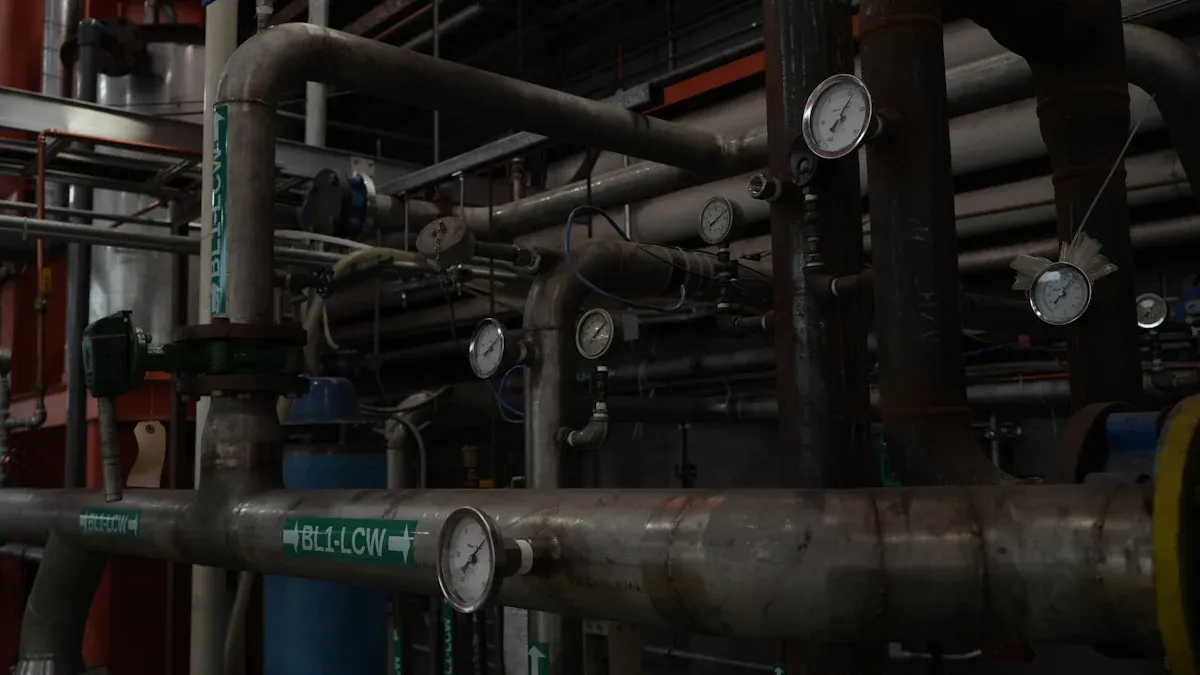
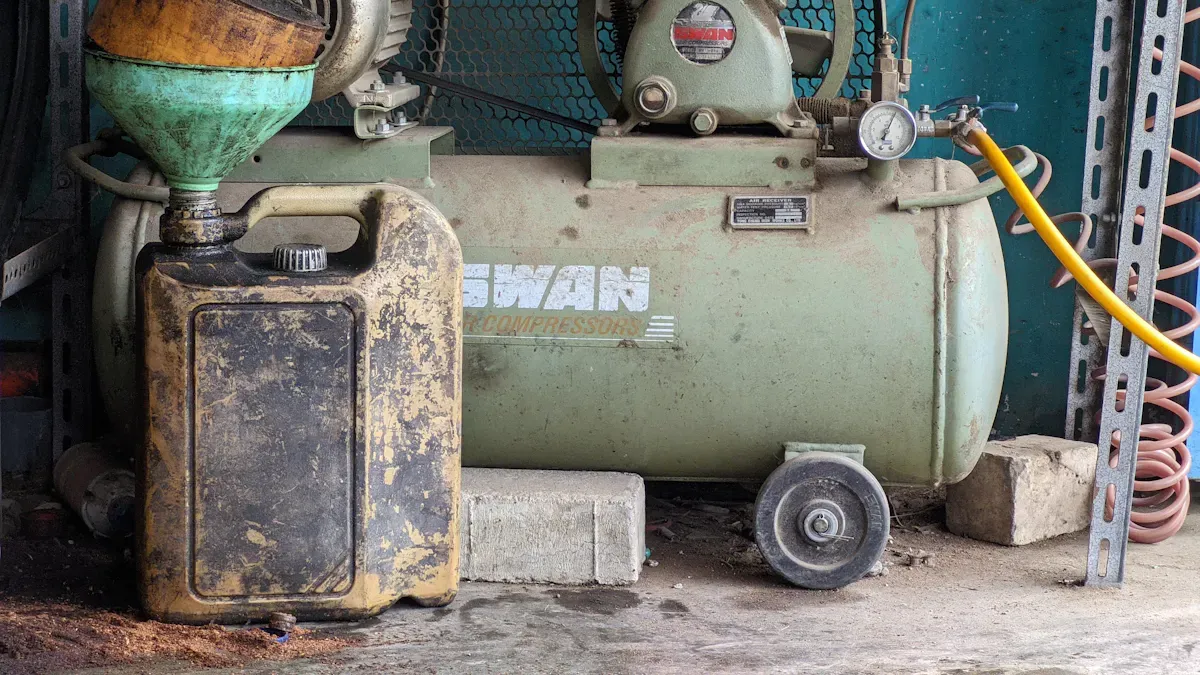
Galvanized steel and black iron share one big flaw: rust inside the pipes. Moisture in compressed air turns into water droplets inside these pipes. Rust builds up on the inner walls. That rust breaks off and flows straight into your pneumatic tools, blocking valves and scratching cylinder walls. You pay for this damage through constant repairs and shorter equipment life.
Corrosion also causes scale to build up inside the pipe. This rough surface creates more friction as air moves through. Your compressor must push harder to keep pressure at the point of use. The result is a clear pressure drop across your whole distribution network. You lose efficiency at every tool station.
Threaded joints make things worse. Traditional steel pipes connect with tapered threads sealed by pipe dope or PTFE tape. These connections loosen over time. Temperature changes, vibration, and heating and cooling cycles all cause joint failure. Each loose joint becomes a leak point. The U.S. Department of Energy says leaks can waste 20% to 30% of a compressor's output. That wasted air means real money leaving your facility every day.
Black iron adds another danger. Unlike galvanized steel, black iron has no protective zinc layer. It rusts even faster in damp areas. Many factories install black iron for compressed air without knowing it, only to find rust contamination within months.
High Installation Costs and Rigidity
Copper and stainless steel fix the rust problem but bring a new issue: costly, labor-heavy installation. Copper needs soldering. Every joint requires a skilled worker with a torch, flux, and careful technique. A bad solder joint creates a weak spot that can fail under pressure.
Stainless steel needs special welding. You cannot hire regular maintenance staff for this job. You need certified pipefitters or welders with stainless steel experience. These workers charge high rates. They also need heavy threading machines and cutting tools on site. The labor cost compared to material cost for stainless steel systems is very high.
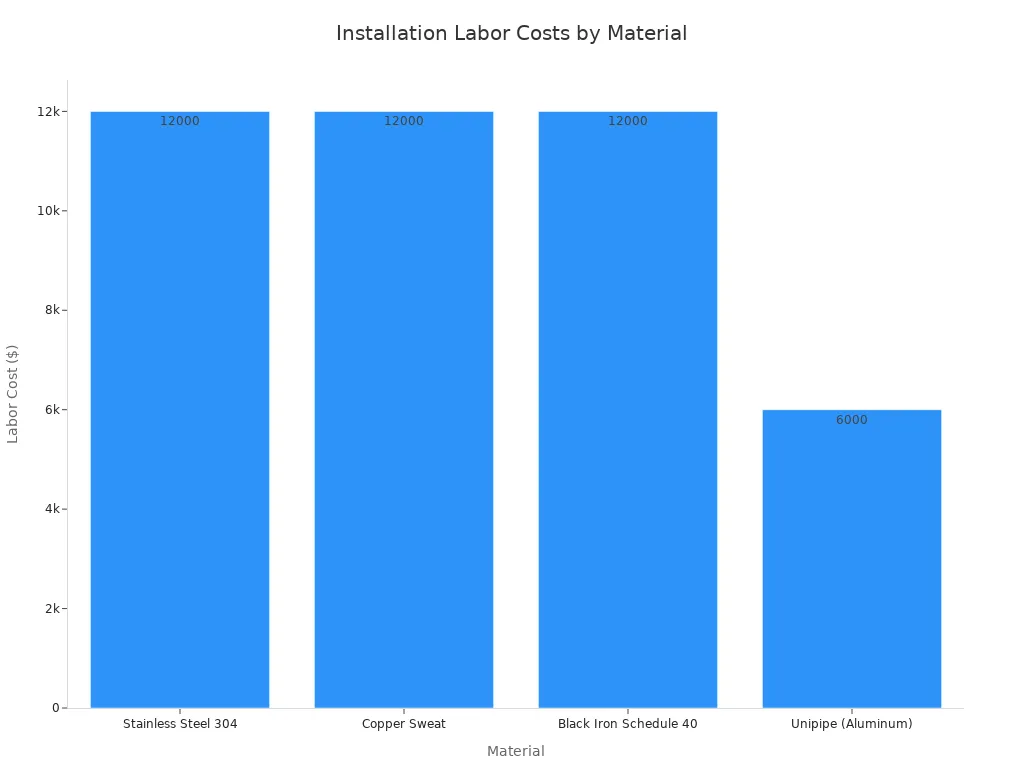
Think about a typical installation project. A stainless steel 304 system might cost $12,000 in labor. An aluminum push-to-connect system for the same layout might cost only $6,000 in labor. That difference comes straight from how each system is installed.
Material
Labor Cost
Stainless Steel 304
$12,000
Unipipe (Aluminum Push-to-Connect)
$6,000
Regular maintenance staff can install aluminum systems with basic hand tools, cutting installation time by up to 50%. Stainless steel needs specialized workers and heavy threading machines, leading to a very high labor-to-material cost ratio.
Rigidity adds to the cost problem. Copper and stainless steel pipes do not bend easily. You must cut and join them exactly as the original design shows. When production lines change, you face costly rework. Cutting out welded parts and adding new joints requires major downtime and contractor fees. Many factories avoid layout changes because the piping cannot adapt without high costs.
Aluminum removes these limits. Its light weight and modular fittings allow quick changes. You gain flexibility that traditional materials simply cannot provide.
Key Benefits of Aluminum Fittings
Clean Air and Corrosion Resistance
Your production quality depends on the air your tools receive. Aluminum piping delivers air that meets ISO 8573-1 clean air standards. This certification matters for industries like food and beverage, pharmaceuticals, and electronics manufacturing. These sectors require Class 1:2:1 air quality. That means no oil, no particles, and no water vapor reaching sensitive equipment. Aluminum's smooth internal surface prevents contaminants from accumulating. Rust never forms inside these pipes, so your pneumatic tools stay clean and reliable.
Corrosion resistance sets aluminum apart from traditional materials. Steel pipes corrode from internal moisture, but aluminum forms a natural oxide layer that protects the metal. This protection works well even in humid factory environments. For coastal facilities with salt-laden air, anodized or painted aluminum provides additional defense. The lifespan difference is dramatic:
Material
Typical Lifespan
Steel (black iron or galvanized)
15–20 years
Aluminum
30–50 years or more
You can expect your aluminum system to serve your factory for decades without replacement. That longevity directly impacts your total cost of ownership.
Lightweight and Leak-Free Design
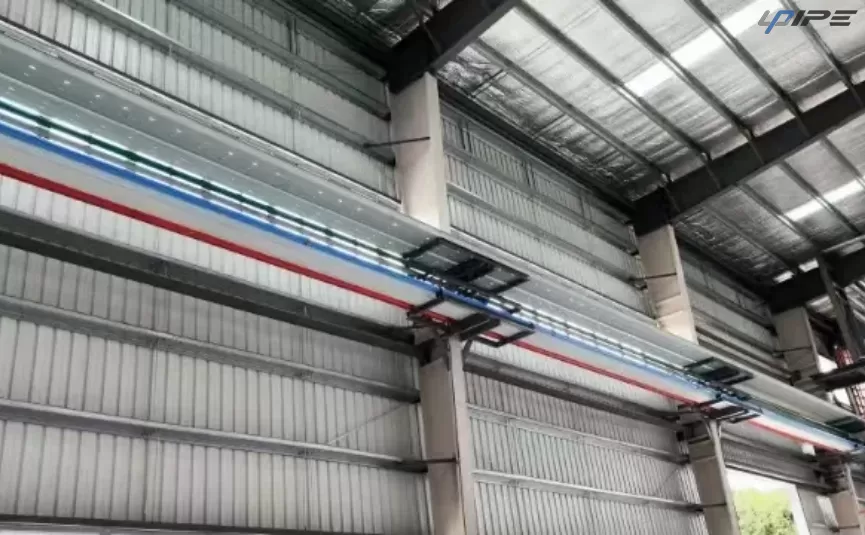
Weight matters during installation. Aluminum piping weighs 75% less than iron pipe of the same diameter. A section that requires two workers to lift in steel becomes a one-person job in aluminum. Your installation crew works faster and faces fewer injury risks. This weight advantage also simplifies overhead mounting and support spacing.
Leak prevention comes from advanced sealing technology. Each aluminum fitting uses a nitrile rubber O-ring and a stainless gripper ring. The O-ring creates an airtight seal. The gripper ring locks the pipe firmly in place. Together, these components withstand vibration and temperature changes without loosening. Your system maintains consistent pressure from the compressor to every tool station.
The push-to-connect design eliminates threaded joints entirely. No pipe dope, no PTFE tape, no torquing. You simply push the pipe into the fitting until it clicks. This connection method reduces installation time by up to 50% compared to traditional systems. When you select aluminum pipe fittings for your upgrade, you choose a system that saves labor costs now and energy costs forever. A leak-free network means your compressor works less, consumes less electricity, and lasts longer.
How to Select Aluminum Pipe Fittings for Your Upgrade
Before you pick any fitting, you must know how much air your system needs. Start by listing every tool and process that uses compressed air. Add their flow rates together. Include extra room for future equipment. This total gives you your required SCFM, or Standard Cubic Feet per Minute.
SCFM measures the mass of dry air moving through your pipes at a set reference point of 68°F and 14.696 psia. It does not show the actual space inside your pipe. You must change SCFM to real compressed volume using your working pressure and line temperature. This change makes sure your pipe size matches real conditions.
Next, find your working pressure in PSI. Most factories run between 100 and 150 PSI. Your compressor's rated pressure and your tools' lowest needs set this number. You also need to know your allowed pressure drop. Industry practice usually allows 0.3 to 0.5 PSI loss per 100 feet of piping. Going past this range starves your end tools of the pressure they need.
Figure out your total equivalent pipe length. Add every straight section plus equivalent lengths for each elbow, tee, and valve. Fittings create friction that acts like extra pipe length. A 90° elbow might add several feet of equivalent length depending on its size. Manufacturer charts list these values for every part.
With these numbers, you can size your pipe correctly. Many makers publish flow capacity charts for aluminum pipes at various pressures. For example, a 25mm (1") aluminum pipe carries about 81 CFM at 150 PSI. A 40mm (1-1/2") pipe carries roughly 291 CFM at the same pressure. A 63mm (2-1/2") pipe handles around 965 CFM. Match your calculated demand against these charts to find the right size.
When you choose aluminum pipe fittings, remember that undersized pipes cause velocity problems. Air moving too fast creates turbulence and pressure loss. Oversized pipes waste material and money. The correct size balances both limits. Use the larger of the two sizes calculated from velocity and pressure drop limits. Then pick the next standard pipe size that meets or beats that need.
Choosing the Right Components and Connections
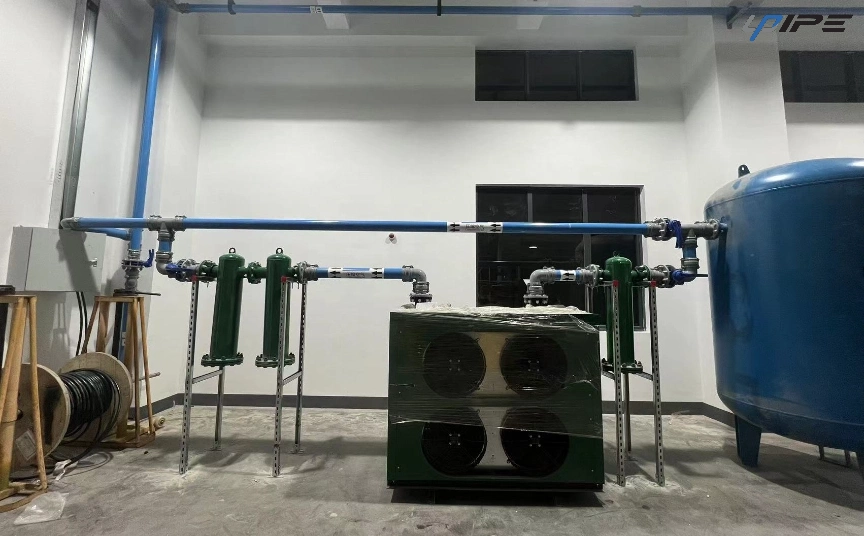
Once you know your pipe size, you need the right parts to build your network. A full aluminum system includes straight pipes, 90° elbows, equal and reducing tees, connectors, flanges, and ball valves. Each part serves a specific job in routing air well across your facility.
Makers offer different series for different uses. The PF Series covers 20–50mm pipes for general compressed air systems. The PM Series handles 63–80mm pipelines for industrial distribution. A Black Series gives extra corrosion resistance for harsh environments. Large Diameter options support heavy-duty, high-flow uses. QuickDrops allow fast air outlet connections in flexible layouts. Each series uses specific aluminum alloys built for strength and durability.
Trusted brands like UPIPE offer a full system with all needed parts for smooth installation. Their range includes male and female connectors, reducing flanges, and every fitting type you need. This complete approach ensures compatibility across your whole network. You avoid the frustration of mismatched parts from different suppliers.
When you choose aluminum pipe fittings, think about future growth. Pick a system that lets you add branches without major rework. Check that replacement parts stay available for decades. A modular aluminum system from a trusted maker protects your investment and keeps your production running smoothly.
Cost and Value Analysis
Reducing Installation and Labor Costs
The first price often guides your choice. You may think aluminum costs more than steel or copper. The truth shocks most factory managers. When you look at full installed costs, aluminum wins by a lot.
Labor is the biggest cost in any piping job. Old-style materials need skilled workers. Stainless steel needs certified welders. Copper needs experts who can solder. Black iron needs workers who know threading. Each expert charges high rates. You also pay for their setup and cleanup time.
Aluminum changes this picture completely. The push-to-connect design removes welding, soldering, and threading. Your regular maintenance crew can install the whole system with simple hand tools. No special training needed. No heavy machines on site. This ease cuts your labor costs in half.
Material
Labor Cost
Stainless Steel 304
$12,000
Unipipe (Aluminum)
$6,000
Material prices also favor aluminum. A normal setup shows copper parts costing more than aluminum parts. When you add labor, the gap grows even bigger. The total installed cost of copper is significantly higher than that of aluminum.
Maximizing ROI with Energy Efficiency
Your savings keep going long after setup day. A leak-free aluminum system cuts energy use a lot. The U.S. Department of Energy says leaks waste 20% to 30% of compressor output in old systems. Aluminum's O-ring seals stop this waste.
Think about a normal 50hp compressor. Stopping leaks can save you a significant amount each year. Medium factories can see substantial savings in combined energy and upkeep. Large industrial setups can save even more yearly.
System Size / Scenario
Annual Energy Savings
Typical aluminum system
Reduced operating costs
50hp compressor
Significant savings
Medium facility
Significant savings
Large installation
Large savings
Corrosion resistance adds another benefit. Steel pipes rust inside and need replacement within 15 to 20 years. Aluminum lasts 30 to 50 years or more. You skip replacement costs and avoid downtime for pipe swaps. When you pick aluminum pipe fittings for your upgrade, you invest in decades of steady service. The total cost of ownership drops sharply compared to old materials. Your early savings on setup combine with ongoing energy efficiency to deliver great return on investment.
Traditional steel and copper systems bring corrosion, leaks, and high labor costs. Aluminum solves these problems with clean air delivery, leak-free connections, and lightweight installation. When you select aluminum pipe fittings, match them to your pressure and flow needs. Choose components that fit your layout and future expansion plans.
Cost Factor
Long-term Benefit for Aluminum Piping
Installation Labor
Reduced labor costs during setup
Energy Efficiency
Energy savings over system lifetime
Maintenance
Minimal maintenance required
Service Life
Longer service life reduces replacement frequency
Aluminum delivers up to 50% cost savings over its lifetime. This choice is not a quick fix. It is a strategic investment. Partner with a trusted manufacturer like UPIPE for a complete system and global support. Your factory upgrade will succeed and stay future-proof.
FAQ
Can my existing maintenance crew install aluminum fittings without special training?
Yes. The push-to-connect design needs no welding, soldering, or threading. Your regular staff can finish the job with basic hand tools. Most crews learn quickly within a few hours. This ease cuts installation time by up to 50% compared to older systems.
Will aluminum fittings work with my existing compressor and equipment?
Aluminum systems hook up directly to your current compressor output. Standard male and female connectors fit most equipment ports. You can also add aluminum piping to existing drops and tools without replacing everything. Check your compressor's outlet size and match it with the right connector.
How long will an aluminum piping system last before replacement?
Aluminum systems usually serve 30 to 50 years or more. The natural oxide layer stops internal corrosion. Steel pipes often need replacement within 15 to 20 years. Your aluminum investment avoids the downtime and cost of frequent pipe swaps.
How do I know if my factory needs a piping upgrade?
Watch your pressure gauges at different points. A drop over 0.5 PSI per 100 feet signals a problem. Listen for hissing sounds near joints. Check tools for rust particles or moisture. If you see any of these signs, your system likely wastes 20% to 30% of compressor output through leaks.
This website uses cookies to provide you with a safer and more personal experience. By accepting, you agree to the Cookie Policy and the use of cookies for advertising and analytics purposes.