Home > News > Blog > What Compressed Air Piping Is Suitable for Electronics Cleanrooms
# Blog
What Compressed Air Piping Is Suitable for Electronics Cleanrooms
2026-10-15
Share:
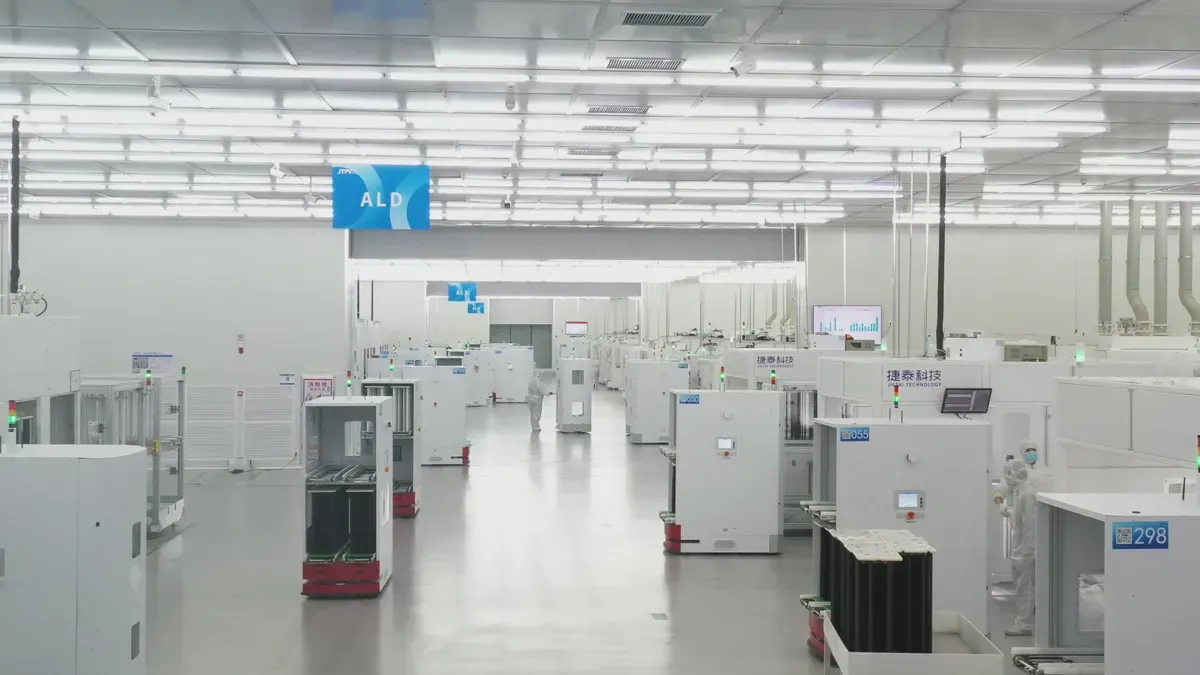
For electronics cleanrooms, choose 316L stainless steel, PVDF, or anodized aluminum compressed air piping to meet ISO 8573-1 Class 1 purity and prevent contamination.
In an electronics cleanroom, you need compressed air piping that meets strict cleanliness rules. Three materials stand out: 316L stainless steel, high-purity polymers such as PVDF, and anodized aluminum. Each option gives off very few particles and releases little gas into the air stream. They also resist rust well and work reliably under tough cleanliness standards. These traits protect sensitive electronic parts from contamination. This article compares piping materials side by side. You will also find practical guidance on material selection and system maintenance. That information helps you build a compressed air network that supports steady production quality.
ISO 8573-1 sorts air purity into three groups of contaminants: particles, water, and oil. Each group has classes that go from cleanest to least clean. For electronics cleanrooms, Class 1 is the usual goal. Class 1 allows solid particles no bigger than 0.1 microns at very low counts. It limits moisture to a pressure dew point of -70°C (-94°F). Oil content, including aerosol and vapor, must stay at or below 0.01 mg/m³.
Dust buildup on electronic parts causes poor soldering quality and surface contamination. Moisture shortens the service life of pneumatic equipment through corrosion. It can also help bacteria grow. Oil adds to these risks when it mixes with water, causing equipment wear and residue buildup. These problems lower product reliability, raise defect rates, and increase maintenance costs. Compressed air is rarely the only cause of yield variation. Still, it often shows up when you look at process drift, defect trends, or repeatability issues in electronics assembly. Clean compressed air supports steady production conditions and higher first-pass yield rates.
Compressed Air Piping Material Comparison
Stainless Steel, Aluminum, and Copper
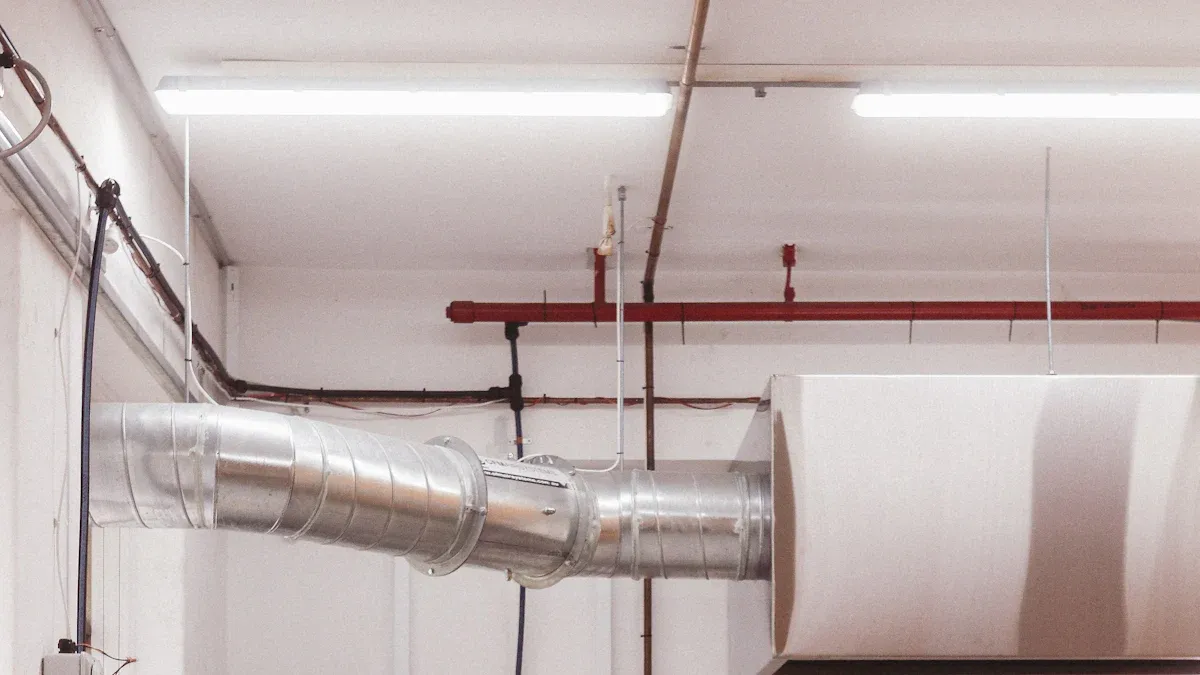
Aluminum and copper are two of the best picks for clean air systems. Both fight rust and keep contaminants out of the air stream. Their smooth insides help air flow in a straight path, which cuts down on particle buildup. Stainless steel also works well since it resists rust and keeps air very pure. The table below compares these three metals on the two traits that matter most in a cleanroom.
Material
Corrosion Resistance
Particle Emission Characteristics
Stainless Steel
Interiors and exteriors show no risk of degradation.
No degradation means no particle shedding. Suitable for high-purity air down to ISO 8573-1 Class 0.
Aluminum
Naturally corrosion-resistant with a tough finish.
Very clean; will not introduce new impurities. Smooth bore minimizes contaminant accumulation.
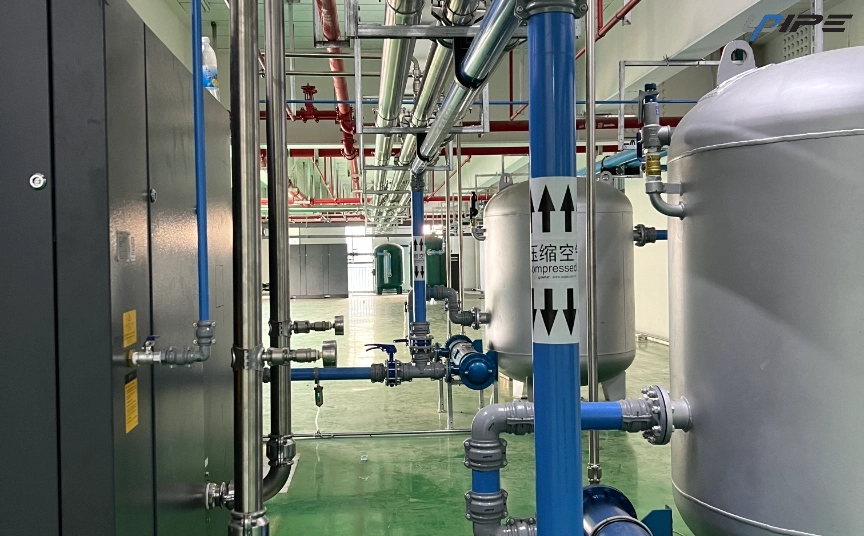
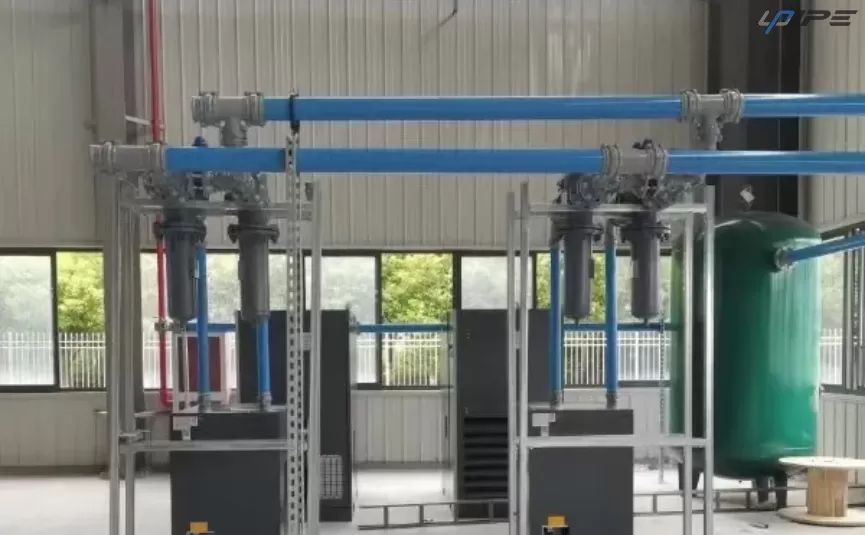
Modern aluminum piping goes even further. Manufacturers coat the surface with an anodized layer and shape the bore for clean, quiet, and energy-saving compressed air. This makes anodized aluminum a good fit for electronics cleanrooms. A mirror-smooth inside bore creates laminar flow and cuts down on turbulence. The friction coefficient is very low, which almost removes pressure drop. You can then lower the compressor set point and save energy directly.
Stainless steel still works for the highest purity classes. It does not break down or rust like black iron or galvanized piping, so rust and particles stay out of the air stream. However, it is heavy, hard to cut, and leaks easily around joints and welds. Black iron may need extra filtration to remove rust and scale particles. PVC must not be used unless buried or encased.
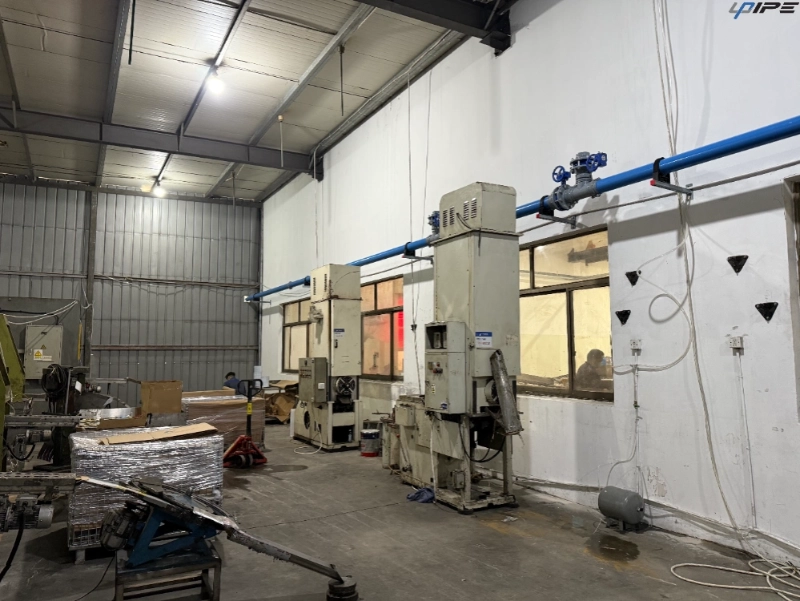
For a practical aluminum option, consider UPPER Aluminum Compressed Air Pipe. This extruded aluminum alloy system works for compressed air, vacuum, and inert gas uses. It comes in nominal diameters from DN20 to DN200 and runs at a working pressure of 16 bar. Standard lengths measure 5.8 meters. You can pick from blue, yellow, or grey colors to organize different air lines. The system includes a full range of compatible fittings such as tees, elbows, and flanges.
Plastics and High-Purity Polymers
PVDF and other high-purity polymers fit uses that need low outgassing and chemical resistance. PVDF gives off relatively low outgassing compared to other polymers. This comes from its high molecular weight and stable chemical structure. However, manufacturing process impurities or plasticizers can hurt outgassing rates. You must therefore pick high-purity grades with strict quality control for vacuum and compressed air uses.
PVDF's molecular structure gives it a high degree of non-reactivity. It stands up to strong acids, bases, and organic solvents up to 80°C. This trait is critical for seals and piping exposed to harsh substances in industrial compressed air systems. PVDF also shows good mechanical strength and toughness. It keeps its shape and integrity under pressure. Its melting point of about 170–180°C and its ability to keep mechanical properties over a wide temperature range make it suitable for vacuum chamber environments where temperature changes. Specific grades such as PVDF Solef 1008 are made for high purity and very low outgassing rates.
Material choice should also think about thermal and pressure traits. These factors ensure safety and performance. You need to match the material's temperature rating and pressure limit to your process conditions. This prevents early failure and keeps air quality.
Best Piping Choices for Cleanrooms
316L Stainless Steel Systems
You should pick 316L stainless steel when your process needs the highest purity classes. This material fights rust from the inside out. It does not break down, so it puts no particles into your air stream. That quality makes it right for ISO 8573-1 Class 0 air, where oil must stay at or below 0.01 mg/m³.
Where does 316L work best in your distribution loop? Put it at critical points: point-of-use drops, valve manifolds, and any section where air touches your product directly. The table below shows the key specs for a typical 316L press-fit system.
A press-fit system installs fast with few tools. You push and press the connection. No welding or threading is needed. The FKM seal is silicone-free and approved for cleanroom use. This design removes the risk of the sealing ring being pressed out or damaged. It also ensures 100% oil-free air delivery.
For the most demanding cleanroom applications, specify electropolished 316L. Electropolishing removes micro-burrs that standard machined stainless steel keeps. It achieves a surface roughness of about 4 µin. This process cuts fine particulate contamination by up to 99.8% compared to standard polished surfaces. Electropolished 316L meets Class 100 requirements without shedding particles under high-velocity airflow.
PVDF and High-Purity Polymers
PVDF and other high-purity polymers fit applications that need low outgassing and chemical resistance. PVDF has naturally low ionic contamination. This property makes it suitable for semiconductor wet-process systems and high-purity chemical handling. Due to its low outgassing, it also shows minimal weight loss under high-vacuum conditions.
Think about the thermal and pressure performance of PVDF before you specify it. The table below sums up the key parameters.
Performance Parameter
PVDF Value/Behavior
Maximum continuous service temperature
Up to 150°C
Pressure ratings (standard)
PN10–PN25 (145–363 psi)
Creep modulus (50 yr, 20°C)
~800–1000 MPa
Long-term pressure design safety factor
2.5–3.0 × short-term burst pressure
Temperature derating
Reduce pressure rating by 20% for continuous operation at 100°C
Fatigue resistance (unaged)
>50,000 pressure cycles at 23°C
PVDF beats polyethylene in thermal cycling. It delivers 3–5 times better cycle-to-failure performance. Its coefficient of thermal expansion is 1.2–1.4 × 10⁻⁴ K⁻¹, compared to 2.0–2.5 × 10⁻⁴ K⁻¹ for PE. For semiconductor and pharmaceutical applications, you need high-purity resin with at least 99.0 wt% VdF content. This minimizes extractables and ionic contamination.
Other high-purity polymers also work well. Fluoropolymers tend to have the lowest outgassing properties. PFA offers low leachables and extractables. PEEK provides high temperature resistance and chemical resistance. PTFE is chemically resistant and suitable for high-purity vacuum applications. Halar (ECTFE) is a strong, stiff fluoropolymer with high impact strength and smooth surfaces.
Material choice must consider thermal and pressure characteristics. Match the material's temperature rating and pressure limit to your process conditions. This ensures safety and performance. For your compressed air piping, verify that the polymer you select can handle your maximum operating temperature and pressure without degrading.
The pipe between your air dryer or dry storage tank and the distribution loop should be at least one size bigger than the loop piping. This helps keep pressure drop low and air quality steady across your whole system. A bigger feed line stops the bottleneck that happens when a smaller pipe can't deliver the full capacity your loop needs.
Leak-free modular connections, smooth inside surfaces, and good support all cut down pressure drop and contamination. Pick fittings with O-rings and grip rings that give tight seals at every joint. These engineered connectors keep your compressed air piping working reliably even in high-demand settings. Support pipes well to stop sagging and stress on joints. Use as few elbows and tees as you can, because each fitting adds pressure drop equal to several more feet of pipe.
Maintenance and Cost Considerations
Routine checks, filter swaps, and monitoring keep your system in line with ISO 8573-1. Run ultrasonic leak detection audits every 6 to 12 months. Watch pressure at key points to spot performance drops. Check for corrosion, cracks, or loose fittings. Clean and replace inline filters on schedule.
Weigh upfront material cost against long-term reliability, energy efficiency, and maintenance savings. Threaded steel connections leak about 8% to 10% of total compressed air even before rust forms. Every 2 psi of extra operating pressure raises compressor energy use by about 1%. Aluminum and stainless steel keep smooth insides, resist contamination, and need very little upkeep over a 15 to 25 year service life.
Electronics cleanrooms need very strict air purity. Particles, moisture, and oil harm sensitive parts and lower yield. Three materials meet these needs well. You get the highest purity from 316L stainless steel. PVDF and other high-purity polymers fight chemicals and release little gas. Anodized aluminum gives clean, energy-saving performance at a lower weight.
Your material choice should balance cleanliness, reliability, and cost. Weigh upfront price against long-term maintenance and energy savings. Then match your Compressed Air Piping to your specific ISO 8573-1 class and process conditions. That step protects your products and keeps your system running efficiently for years.
FAQ
Which piping material gives you the highest air purity?
316L stainless steel gives you the highest purity. It fights rust from the inside out and puts no particles into the air stream. Electropolished 316L goes even further and meets ISO 8573-1 Class 0 rules for oil-free air at key points.
Can you use anodized aluminum in an electronics cleanroom?
Yes. Anodized aluminum fights rust and will not add new impurities. Its smooth bore helps air flow in a straight path and cuts down on contaminant buildup. UPPER Aluminum Compressed Air Pipe covers DN20 to DN200 at 16 bar working pressure, so you can build a full distribution network.
When should you choose PVDF over metal piping?
Choose PVDF when your process needs low outgassing and chemical resistance. It stands up to strong acids, bases, and organic solvents, and it shows very little weight loss under high vacuum. Semiconductor wet-process systems and high-purity chemical handling are common fits.
Why size the feed line larger than the distribution loop?
A feed line at least one size larger than the loop keeps pressure drop low. This holds air quality steady across your whole system. A smaller feed pipe creates a bottleneck and cannot deliver the full capacity your loop needs.
How do you keep your piping compliant with ISO 8573-1?
Run ultrasonic leak detection audits every 6 to 12 months. Watch pressure at key points and check for rust, cracks, or loose fittings. Replace inline filters on schedule. Document dew point and oil content testing so you can prove year-round compliance.
This website uses cookies to provide you with a safer and more personal experience. By accepting, you agree to the Cookie Policy and the use of cookies for advertising and analytics purposes.