Home > News > Blog > Which Compressed Air Piping Suppliers Serve Large Industrial Plants
# Blog
Which Compressed Air Piping Suppliers Serve Large Industrial Plants
2026-10-14
Share:
UPPER, Atlas Copco, Ingersoll Rand, Parker Hannifin, and Kaeser are top compressed air piping suppliers for large industrial plants, offering scalable, high-capacity systems.
Large factories need compressed air systems they can count on. Five compressed air piping suppliers lead this market: UPPER, Atlas Copco, Ingersoll Rand, Parker Hannifin, and Kaeser Compressors. These companies are known for high-capacity piping networks, scalable designs, and strong support for large-scale operations.
The global compressed air piping system market reached USD 3.2 billion in 2024. Analysts expect it to grow to USD 5.30 billion by 2033, a compound annual growth rate of 6.5 percent. Manufacturing facilities hold 51.7 percent of the market share in 2025. This growth shows rising demand for efficient air distribution across factories and process plants.
Each supplier offers different strengths in materials, pressure ratings, and installation methods. The sections below look at their offerings for large industrial facilities.
Key Takeaways
Five leading suppliers work with big factories: UPPER, Atlas Copco, Ingersoll Rand, Parker Hannifin, and Kaeser Compressors.
Aluminum piping systems save energy and money. They stop leaks and go in fast.
Modular designs let factories expand without having to replace the entire piping network.
Pipes that do not leak can save thousands of dollars every year on energy bills.
UPPER is a top name among compressed air piping suppliers. The company focuses on aluminum compressed air piping systems for industrial air distribution. Large plants need networks they can trust to handle high-flow demands without always needing repairs.
Product Features and Benefits
The UPPER Aluminum Compressed Air Pipe is made from high-quality aluminum. The system comes in pipe sizes from ¾" to 10". Three colors—blue, yellow, and grey—help workers tell lines apart across a facility.
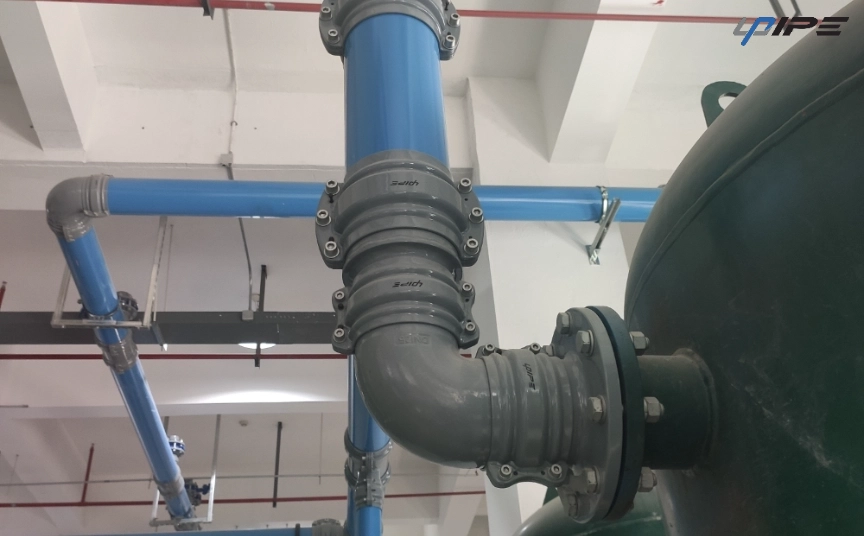
Large industrial plants need piping that supports nonstop operation. UPPER aluminum systems handle high-flow demands with ease. The smooth inside surface greatly reduces pressure drops. Compressed air systems often waste 20 to 30 percent of air through leaks in traditional setups. Aluminum's grip ring system gives a nearly leak-free seal.
Energy savings add up fast for large facilities. A 50-horsepower compressor system can save $3,000 to $5,000 each year with 15 percent energy savings. Installation time drops compared to traditional piping methods. Aluminum systems cost less than black iron for the same space. The payback period is immediate.
Atlas Copco: Complete Piping Solutions
Atlas Copco is one of the top compressed air piping suppliers for heavy industry. The company sells AIRnet piping systems in aluminum and stainless steel. Aluminum pipes come in sizes from ¾ inch to 6 inches. Stainless steel options go from ½ inch to 4 inches. This wide range lets plants match pipe size to airflow needs at each production zone.
Main Products
AIRnet has a modular design. Standard threaded and flanged fittings connect pipes fast. Workers can change, expand, or upgrade the network without replacing the whole system. This flexibility helps large facilities grow in stages.
The system works well with centrifugal compressors. Atlas Copco makes both compressors and piping, so the parts work together as one package. Plants avoid fit problems between the air supply and the distribution network.
Feature
Specification
Aluminum pipe sizes
¾" to 6"
Stainless steel pipe sizes
½" to 4"
Connection types
Threaded and flanged fittings
System design
Modular for easy expansion
Fit for Large Plants
Large automotive production and manufacturing plants depend on AIRnet. The system handles high-capacity demands across big factory floors. Modular construction allows step-by-step growth as production needs change.
Global support makes Atlas Copco a strong choice for large operations. The company offers installation, maintenance, optimization, and data analysis services.
This service model helps plants spot problems before they cause downtime. Preventive maintenance and custom project support keep air systems running at peak efficiency. For large industrial plants, this mix of scalable piping and worldwide service builds a reliable foundation for compressed air distribution.
Ingersoll Rand: High-Demand Piping Systems
Ingersoll Rand is one of the top compressed air piping suppliers for places that need a steady, heavy flow of air. The company makes piping networks that move large amounts of air without losing pressure. Their systems are built for facilities where compressors run all the time and downtime costs money.
Features and Benefits
Ingersoll Rand piping solutions use modular parts that connect fast. The design supports high-flow operations across long distances. Smooth inside walls lower friction and keep pressure drops low. Workers can put in the system without welding or threading, which saves time and labor.
The piping works with large compressors. This compatibility matters for plants that run centrifugal or large rotary screw compressors. The pipe diameter and fitting design handle the output from these powerful machines. Plants avoid bottlenecks between the compressor room and production lines.
Leak resistance stands out as a main benefit. Traditional piping loses air through threaded joints and corroded sections. Ingersoll Rand uses sealed connections that hold pressure over years of service. This feature cuts energy waste and keeps operating costs down.
Applications in Large Facilities
Large manufacturing plants count on Ingersoll Rand piping for assembly lines, robotic cells, and pneumatic tools. Automotive factories use these systems to power hundreds of air tools at once. Food and beverage plants need clean, dry air for packaging and filling equipment. The piping handles these demands without pressure swings.
Process plants in chemical, pharmaceutical, and textile industries also use these networks. These facilities run continuous operations that cannot handle air interruptions. Ingersoll Rand piping supports the steady airflow these processes require. Maintenance teams can isolate sections for service without shutting down the whole plant.
The modular design lets plants expand the network as production grows. Adding a new drop point or extending a line takes very little effort. This scalability makes Ingersoll Rand a practical choice for facilities that plan for future growth.
Parker Hannifin: Customizable Piping Networks
Parker Hannifin is one of the top compressed air piping suppliers for plants that need custom solutions. The company designs piping networks based on each facility's layout, airflow needs, and production goals. Engineers can mix materials and fittings to build a system that meets exact requirements.
Product Range
Parker Hannifin sells piping in aluminum, stainless steel, and copper. Each material works best in different plant conditions. Aluminum is good for general compressed air lines because it resists corrosion and installs quickly. Stainless steel works for clean rooms, food processing, and chemical plants where air quality is important. Copper handles high temperatures and has natural antimicrobial properties.
Material
Best Use Case
Key Trait
Aluminum
General compressed air lines
Lightweight, corrosion-resistant
Stainless steel
Clean rooms, food, chemical plants
High purity, durable
Copper
High-temperature zones
Antimicrobial, heat-resistant
The fitting range includes tees, elbows, reducers, flanges, and couplings. Modular connections let workers put networks together without welding. Plants can add drop points or extend lines when production changes. This flexibility cuts downtime during upgrades.
Support for Large Operations
Parker Hannifin gives engineering support from design through installation. Their teams help plants size pipes, plan routes, and pick materials for each zone. This service is important for large facilities with complex layouts and multiple compressor rooms.
The company also offers ongoing maintenance and troubleshooting. Service technicians can inspect networks, find leaks, and suggest fixes. For large-scale installations, this support keeps air systems running at their best. Plants avoid costly downtime and make their piping networks last longer.
Parker Hannifin's custom approach works for facilities that cannot use one-size-fits-all systems. The mix of materials, fittings, and engineering service gives large plants a network built for their exact needs.
Kaeser Compressors: Piping That Saves Energy
Kaeser Compressors is one of the compressed air piping suppliers known for saving energy. The company makes the SmartPipe™ system out of modular aluminum. This piping lowers installation costs and cuts long-term operating costs. Kaeser builds SmartPipe for facilities of all sizes, from small shops to large industrial plants. Pipe diameters go up to 8 inches.
Features That Save Energy
Kaeser sees piping as part of a complete compressed air system. Pipes that are too small raise pressure drop across the network. SmartPipe lines that are sized right keep that loss low and stop wasted compressor energy. Smooth inside surfaces keep airflow steady and stop contaminants from building up inside the pipe. Tight, leak-resistant connections hold pressure over years of use. These features work together to lower energy use in large plants.
Fit for Large-Scale Plants
SmartPipe serves large-scale industrial systems with pipe sizes up to 8 inches. Strong fittings handle high airflow volumes without losing air or energy. Kaeser's engineering teams check airflow demand, facility layout, future expansion plans, and system controls before installation. The modular design makes both installation and future expansion simple.
SmartPipe installs faster than other common piping and needs no threading, welding, or brazing.
The system connects to existing pipe networks of other types.
Workers can add on to or take apart sections as needs change.
Compression-style valves and fittings serve sizes 2 1/2 inches and below; bolt-on style fittings serve 3 inches and above.
SmartPipe comes with a 10-year warranty and meets ISO 4414/EN983 standards.
Lightweight parts and flexible layout options let plants scale capacity or change production areas without stopping operations. Kaeser helps large industrial plants through maintenance planning and staged expansion, which keeps air systems running at peak performance.
Comparing Compressed Air Piping Suppliers
Key Considerations for Large Plants
Large industrial plants must think about several things when choosing compressed air piping suppliers. The material you pick affects both upfront and long-term costs. Choices include plastic-coated carbon steel, stainless steel, copper tubing, and aluminum. Each material works best in different plant settings and budgets. Header piping size must match system capacity. Header piping that is too small is a common and costly design mistake. Air velocity, pressure friction loss, and future expansion needs all matter for proper sizing.
Energy expenses make up a large share of total compressor-related costs. Air leakage can waste 20 to 30 percent of compressed air production. A quarter-inch leak alone can cost $2,500 to $8,000 in energy each year. These numbers show why piping design directly affects operating budgets. Plants should also plan for surge tanks, proper controls, and maintenance schedules. Ignoring these elements leads to higher costs over time.
Supplier Strengths and Weaknesses
Each supplier brings different advantages to large-scale operations. UPPER stands out for aluminum piping that is lightweight, corrosion-resistant, and modular. Aluminum weighs about one-third as much as steel. Installation time drops compared with threaded steel. The table below compares key attributes across the five suppliers.
Supplier
Materials
Scalability
Support
Cost Profile
UPPER
Aluminum
Excellent modular design
Fittings and accessories
Moderate material, lowest labor
Atlas Copco
Aluminum, stainless steel
Modular, staged growth
Global service network
Premium
Ingersoll Rand
Modular piping
High-flow capacity
Large plant focus
Premium
Parker Hannifin
Aluminum, stainless, copper
Custom networks
Engineering support
Varies by material
Kaeser
Aluminum
SmartPipe for large systems
Maintenance planning
Energy-efficient
Compressor compatibility matters for every selection. Atlas Copco integrates its AIRnet system with centrifugal compressors. Pressure ratings, installation ease, and leak resistance also set these compressed air piping suppliers apart. UPPER aluminum systems deliver near-zero leak rates through clamp seals. This feature reduces the 20 to 30 percent average air loss found in traditional threaded steel networks.
UPPER, Atlas Copco, Ingersoll Rand, Parker Hannifin, and Kaeser Compressors all work well for big industrial plants. Each compressed air piping supplier has its own strengths. UPPER sells lightweight aluminum systems. Atlas Copco gives service around the world. Ingersoll Rand handles high-flow needs. Parker Hannifin makes custom networks. Kaeser focuses on saving energy.
Plants should choose a supplier based on what they need. Scalability matters because factories change over time. Modular designs and lightweight materials make upgrades easy. Material compatibility and support services also affect long-term performance.
Readers should look at their facility's airflow needs, layout, and growth plans. Talking with suppliers helps ensure the best performance and efficiency. A system built for the future saves time and money as the factory grows.
FAQ
Which material works best for large compressed air networks?
Aluminum piping works well for most large plants. It fights rust, weighs about one-third as much as steel, and goes in fast without welding. Stainless steel is good for clean rooms and chemical plants. Copper handles areas with high heat. Plants should pick the right material for each production area.
How do modular piping systems help factories grow?
Modular designs let plants add drop points or make lines longer without swapping out the whole network. Workers can change or upgrade sections when production changes. This flexibility cuts downtime during expansions. UPPER, Atlas Copco, Ingersoll Rand, Parker Hannifin, and Kaeser all sell modular systems for growth in stages.
What causes pressure drops in compressed air piping?
Pipes that are too small, rough inside walls, and leaky joints cause pressure drops. Smooth aluminum surfaces and tight clamp connections lower these losses. Getting the header size right also matters for large facilities that need a lot of airflow.
How much can leak-free piping save on energy costs?
Air leaks waste 20 to 30 percent of compressed air in old threaded steel networks. A quarter-inch leak by itself costs $2,500 to $8,000 in energy every year. Aluminum systems with clamp seals have almost no leaks. A 50-horsepower compressor can save $3,000 to $5,000 each year with 15 percent energy savings.
Do these suppliers offer support after installation?
Yes. Atlas Copco gives global service. Parker Hannifin offers engineering help and problem-solving. Kaeser helps with maintenance planning and growth in stages. UPPER provides fittings and accessories that work with its systems. Ingersoll Rand focuses on what large plants need. Ongoing support keeps air systems running at their best.
This website uses cookies to provide you with a safer and more personal experience. By accepting, you agree to the Cookie Policy and the use of cookies for advertising and analytics purposes.