Home > News > Blog > What Makes Stainless Steel Compressed Air Piping Suitable for Hygienic Production
# Blog
What Makes Stainless Steel Compressed Air Piping Suitable for Hygienic Production
2026-10-28
Share:
Stainless steel compressed air piping suits hygienic production because its non-porous, corrosion-resistant interior resists microbes and meets FDA, 3-A, and ISO 8573-1 standards.
These properties matter in food, beverage, pharmaceutical, and healthcare plants. This article explains six of them: cleanliness, corrosion resistance, ease of cleaning, regulatory compliance, contamination prevention, and lifecycle value. Each property supports air quality and product safety in a different way. Together they show why stainless steel compressed air piping remains a dependable choice for hygienic compressed air systems.
Key Takeaways
Stainless steel piping has a smooth inside with no tiny holes, which keeps germs from hiding and growing.
The chromium in stainless steel forms a self-healing oxide layer that fights rust and corrosion caused by moisture and chemicals.
Smooth walls and few dead legs make cleaning and sanitizing faster and easier to check.
Stainless steel meets strict hygiene rules like FDA and 3-A, which helps plants pass audits with less rework.
Stainless steel stops rust, scale, and particles from flaking off. This cuts maintenance costs and prevents downtime.
Surface porosity matters in hygienic air systems because pores create hiding places. A porous wall holds tiny pits and crevices. Microbes and particles settle into these pockets. Routine airflow then carries them downstream toward products and packaging.
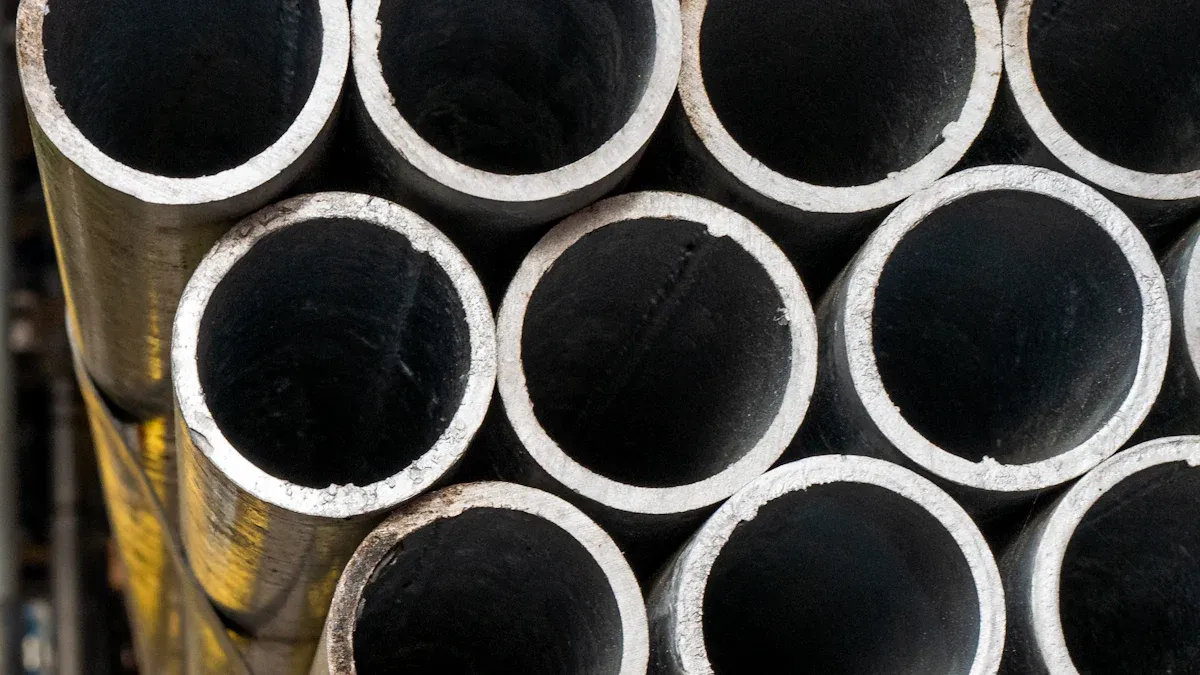
Stainless steel compressed air piping gives you a smooth, non-porous interior. The wall leaves few spots for deposits to grab onto. Particles move through instead of getting stuck in the surface. This helps keep air quality steady across long production runs.
Grade 304 stainless steel keeps its internal surfaces clean over time. The alloy stays inert to common corrosion mechanisms. Its passive oxide layer renews itself when the surface is exposed. This self-repairing action keeps the inside smooth and limits surface breakdown. Clean internal surfaces then support hygienic air quality at every drop point.
Microbial Buildup Prevention
Microbial buildup starts with a foothold. A rough or pitted wall gives bacteria a place to attach and multiply. Smooth interiors take that foothold away. They deny microbes the shelter they need to form colonies.
Stainless steel piping also resists the conditions that feed microbial growth. Condensate cannot pit the wall the way it attacks black iron. The surface stays intact under normal operating cycles. Regular cleaning then removes any film before it becomes a problem.
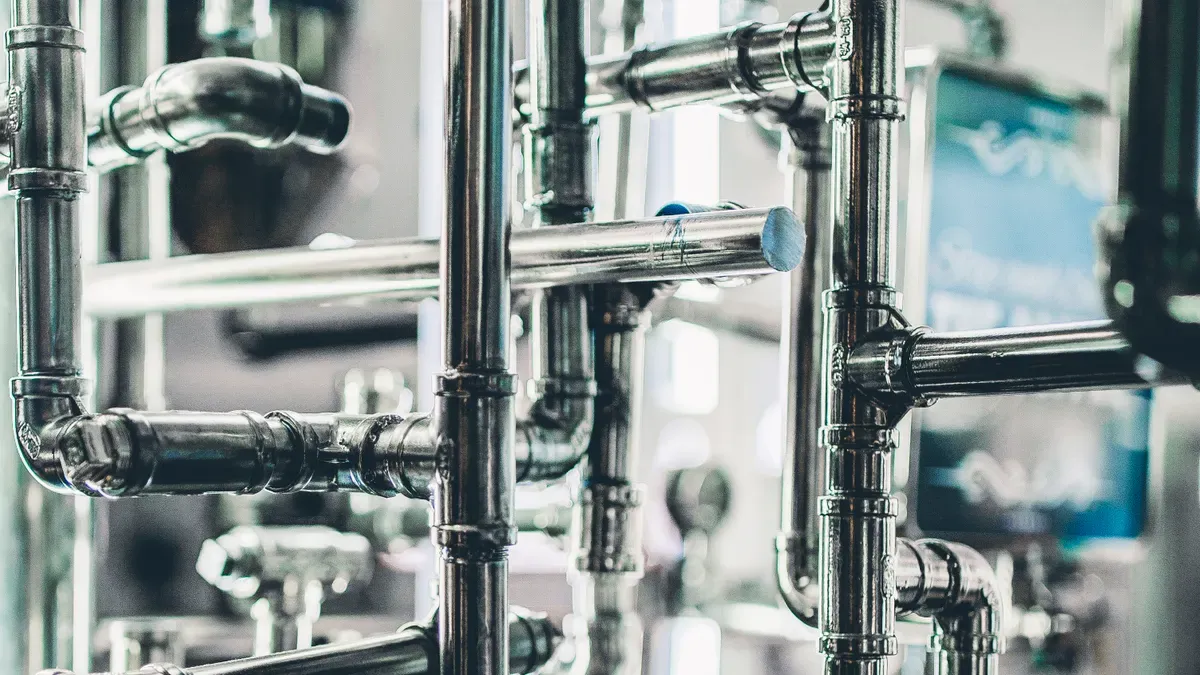
Design details back up this protection. Welded or mechanically sealed joints limit dead legs where air stagnates. Stagnant pockets collect moisture and nurture growth. Tight, flush connections keep the air path continuous. Together, the non-porous wall and clean joint design give hygienic plants a piping interior that stays cleanable and resists microbial colonization throughout its service life.
Corrosion Resistance of Stainless Steel Compressed Air Piping
Moisture and Condensate Resistance
Compressed air systems make moisture. Condensate forms as the air cools while moving through the pipes. This moisture attacks normal piping from the inside out. Stainless steel compressed air piping fights this attack because of its alloy chemistry.
Chromium content above 10% turns ordinary steel into stainless steel. The chromium reacts with oxygen in the air and forms a chromium-rich, invisible oxide layer that sticks to the surface. This passive layer gives the steel its stainless quality and protects it from rust and moisture. The layer heals itself. If it gets scratched or worn, chromium reacts with oxygen in the air to rebuild the shield right away. The fitting stays corrosion-resistant all the way through its cross-section, and no surface coating is needed.
Black iron has no protective coating. In oxygenated water, its corrosion rate can pass 15.0 μm/year, causing fast internal pitting and tuberculation. Rust nodules block flow within months and can eat through the fitting wall. Galvanized pipe depends on zinc that gives itself up over time. The zinc layer wears away, and undercoat corrosion starts at joints and cut ends. Stainless steel avoids both of these failure modes.
Plants that use oil-free compressors should specify stainless steel piping. Oil-free compressors have stainless steel rotors with special surface treatments made to prevent corrosion and keep tight clearances without oil lubrication. Matching the distribution piping to that purity standard stops downstream contamination. Sloped lines, drop legs with drains, and zero dead legs also protect air purity.
Chemical and Washdown Durability
Hygienic plants clean hard. Washdown sprays, sanitizers, acids, and alkaline detergents all touch the piping outside and inside. Stainless steel handles these conditions far better than coated alternatives.
Grade selection matters. Grade 304 does well in neutral or mildly corrosive conditions. Grade 316 adds molybdenum, which improves resistance to acids and chlorides. Grade 316 is more reliable where acidic ingredients or harsh cleaning occur, and this applies to fittings and flanges too. Duplex grades offer higher strength plus better corrosion resistance for more aggressive environments.
Key cleaning variables to check include chemical concentration, cleaning frequency, temperature during cleaning, and duration of chemical exposure. Stainless steel stands up to many chemicals, but not all of them. End users should supply the list of chemicals and their concentrations, since a 20% concentration may be fine for a given material while 30% will cause erosion. Chemical-compatibility data is published on datasheets.
Stainless steel also stands up to high pressure and temperature. Grade-dependent service temperatures reach up to 870°C. Sealed enclosures rated to IP69K resist close-range, high-pressure, high-temperature spraydowns. This lets equipment survive repeated washdowns in meat, dairy, and beverage lines.
Aluminum pipe systems such as the Upipe Aluminum Pipe System fit well in many general industrial settings. They offer clean internal surfaces and reliable performance. Stainless steel is positioned for corrosive or purity-critical hygienic environments. Both are valid choices, each matched to its application.
Easy Cleaning and Sanitization
Smooth Walls and Minimal Dead Legs
Hygienic plants need piping they can clean quickly and check. Stainless steel compressed air piping helps with this routine. The smooth inside lets cleaning agents touch the whole wall. No pores trap residue, and no rough spots hold a film in place. Wiping, flushing, or fogging reaches the entire surface. Operators spend less time scrubbing and more time producing.
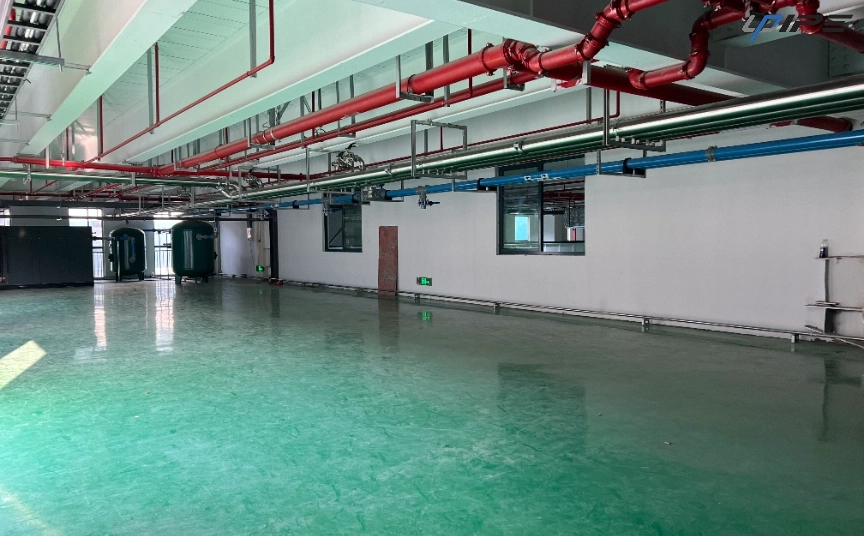
Dead legs cause the real cleaning problem. A dead leg is a branch that air does not sweep through. Moisture and particles collect there, and cleaning fluids may never reach the end. Stainless steel systems use welded or mechanically sealed joints to keep the air path continuous. Sloped lines and drop legs with drains move condensate out instead of letting it pool. Zero dead legs keep every part of the inside reachable. Auditors can then trace a clean path from the compressor to each drop point.
CIP and Steam Compatibility
Clean-in-place (CIP) systems push detergent and rinse water through the piping without taking it apart. Stainless steel handles this cycle well. The alloy resists the acids and alkaline detergents that CIP solutions carry. Grade 316 adds molybdenum for extra resistance to chlorides and acidic cleaners. CIP routines often run daily or between product changeovers, so the piping must survive constant chemical exposure. The surface stays smooth after repeated cycles, so cleaning performance does not fade over time.
Steam sanitization also works well with stainless steel. The piping withstands high temperature and pressure without warping or breaking down. Grade-dependent service temperatures reach up to 870°C, which covers steam sanitization routines with room to spare. Sealed enclosures rated to IP69K resist close-range, high-pressure, high-temperature spraydowns. Steam reaches small crevices that manual wiping misses. The piping keeps its strength through repeated steam cycles. Plants can sanitize the outside and inside in one routine. This compatibility lets hygienic facilities use one cleaning protocol for air piping and process equipment alike.
Hygienic production follows written rules, and stainless steel piping helps plants meet them. Food-grade piping in food, beverage, and dairy plants must meet FDA, 3-A Sanitary, and EHEDG hygiene standards to stop contamination. Stainless steel grade 316L with orbital-welded, crevice-free joints meets HACCP, FDA, and EU food safety regulations. These rules cover the piping material, the joint design, and how cleanable every surface is.
Compressed air that touches food directly needs special attention. This includes bottling, packaging, and conveying. The air must meet ISO 8573-1 Class 0, which limits oil to 0.01 mg/m³ or less, keeps particles ultra-low, and holds dew point at −70 °C or below. Plants reach this class through multi-stage filtration, desiccant dryers, and stainless steel piping that avoids corrosion particles. Pharmaceutical uses such as WFI, purified water, clean room air, tablet coating, and capsule filling require ASME BPE-compliant piping. Dead leg elimination, with branches kept to three times the diameter or less, follows 3-A standards to stop stagnant product and support cleaning.
Audit and Validation Support
Auditors ask for proof, not promises. Stainless steel piping gives plants documents they can show. Material certificates trace the alloy grade. Weld logs record joint quality. Cleaning records show each sanitization cycle. These documents support HACCP plans and EU food safety compliance.
Validation also depends on design choices that inspectors can check. Crevice-free joints and short dead legs leave no hidden zones for bacteria. Inspectors can trace a clean path from the compressor to each drop point. The piping keeps its surface through repeated cleaning and steam cycles, so validation results stay steady over time. Plants then pass audits with less rework and fewer findings.
Contamination Prevention in Stainless Steel Compressed Air Piping
No Rust, Scale, or Particle Shedding
Contamination in a compressed air line seldom comes from outside. It grows inside the pipe. Black iron drops rust flakes as condensate eats the wall. Galvanized pipe lets go of zinc particles once the coating wears thin. Both materials send a steady stream of debris toward filters, tools, and product contact points. Stainless steel compressed air piping takes away that source. The chromium-rich oxide layer stays stuck to the metal, so the wall does not flake or pit in normal service. Air leaves the header as clean as it came in.
Scale works the same way. Mineral deposits form where moisture sits and dries again and again. These deposits crack and break free, and the pieces travel downstream as grit. A non-porous stainless interior gives moisture no place to pool and nothing to grip. Sloped lines and drop legs with drains move condensate out before it can leave deposits behind.
Particle shedding also matters at the connection points. Threaded joints on coated pipe show bare metal at every cut end. That exposed edge turns into a corrosion site. Welded or mechanically sealed stainless joints keep the alloy unbroken through the fitting. Plants going after ISO 8573-1 Class 0 air, with oil held to 0.01 mg/m³ or less and dew point at −70 °C or below, count on this continuity. Filtration can only remove what the piping does not create.
Lower Lifecycle Maintenance Costs
Contamination prevention pays back over the life of the system. Rust and scale make plants replace filters more often, clean drop legs more frequently, and check fittings for wall loss. Black iron can corrode at rates above 15.0 μm/year in oxygenated water, so pitting moves fast and repairs come sooner than expected. Stainless steel resists that decline. The passive layer rebuilds itself after scratches, so the wall thickness and the internal surface stay steady across years of service.
Maintenance labor shifts too. Crews spend less time chasing leaks at corroded joints and more time on planned work. Cleaning cycles stay predictable because the surface does not roughen. Validation records stay valid because the piping does not break down between audits. Each of these savings adds up quietly, and the total cost of ownership falls well below the purchase price difference.
Downtime carries the biggest hidden cost. A corroded header fails without warning, and production stops while crews cut and replace sections. Stainless steel gives maintenance teams a known service life and a steady baseline for inspection planning. Plants that run continuous shifts value that predictability. The piping becomes an asset with a documented condition rather than a liability waiting to interrupt the line.
Stainless steel compressed air piping suits hygienic production through five linked strengths. Its non-porous surface denies microbes a foothold. Chromium-rich corrosion resistance keeps the wall intact against moisture and washdown chemicals. Smooth interiors and minimal dead legs make cleaning and sanitization fast and verifiable. The material meets FDA, 3-A, EHEDG, and ISO 8573-1 Class 0 requirements, so audits go smoother. No rust, scale, or particle shedding means the pipe stops creating contamination.
These properties reinforce one another. Clean walls reduce filter changes, steady surfaces keep validation records valid, and predictable service life cuts unplanned downtime. A UAE dairy and juice producer proved the payoff. Welded stainless steel replaced leaky threaded pipes, cutting air loss by 22% and saving about AED 85,000 per year in energy costs.
Which stainless steel grade suits hygienic compressed air piping?
Grade 304 works well in neutral and mildly corrosive conditions. Grade 316 adds molybdenum, which helps it resist acids and chlorides. Plants that use acidic ingredients or harsh cleaning chemicals often pick 316 or 316L. Duplex grades give higher strength and better corrosion resistance for tough environments.
Does stainless steel piping work with oil-free compressors?
Yes. Oil-free compressors use stainless steel rotors with special surface treatments to prevent corrosion. Matching the distribution piping to that purity standard stops contamination downstream. Sloped lines, drop legs with drains, and zero dead legs also protect air quality.
How does stainless steel piping help a plant pass an audit?
The material gives plants documents they can show. Material certificates trace the alloy grade, weld logs record joint quality, and cleaning records cover each sanitization cycle. Crevice-free joints and short dead legs leave no hidden zones, so inspectors can trace a clean path from compressor to drop point.
Can stainless steel piping handle daily washdown and CIP routines?
Yes. The alloy resists the acids and alkaline detergents that CIP solutions carry. Sealed enclosures rated to IP69K resist close-range, high-pressure, high-temperature spraydowns. Grade-dependent service temperatures reach up to 870°C, which covers steam sanitization with room to spare.
What air quality class can stainless steel piping support?
Stainless steel piping supports ISO 8573-1 Class 0 air, which limits oil to 0.01 mg/m³ or less and holds dew point at −70 °C or below. Multi-stage filtration and desiccant dryers complete the setup. The piping avoids the corrosion particles that black iron and galvanized lines release.
This website uses cookies to provide you with a safer and more personal experience. By accepting, you agree to the Cookie Policy and the use of cookies for advertising and analytics purposes.