Home > News > Blog > How to Design a Clean and Hygienic Compressed Air Pipe System
# Blog
How to Design a Clean and Hygienic Compressed Air Pipe System
2026-09-09
Share:
Design a clean and hygienic compressed air pipe system with corrosion-resistant materials, proper layout, and integrated treatment to prevent contamination and meet ISO 8573-1 purity standards.
Dirty compressed air can damage your product and your good name. In food and drink plants, oil mists and wetness can ruin whole batches. Drug makers and hospitals follow even tighter rules, where one tiny germ can fail an inspection or hurt a patient.
You cannot solve this by attaching a filter to the end of a line. A clean and hygienic compressed air supply depends on the whole system, from the pipe material to the layout to the drain points. Every part must work together to keep the air clean and hygienic.
This guide gives you a step-by-step plan. You will learn how to design a piping system that actively stops contamination and meets strict hygiene standards, keeping your compressed air clean and hygienic from source to point of use.
Design a closed-loop ring main with the right slope and very few dead legs to stop moisture from building up.
Put in dryers and filters to take out water, oil, and particles from the air stream.
Put drains at low spots and after treatment parts to remove condensate well.
Test air quality often and repair leaks to keep the system clean.
Defining Air Quality Standards
You must decide what air quality you need before you pick any pipe or fitting. Your goals for dryness and cleanliness guide every choice that follows, from the material you use to where you place drains. A system built without these goals will give you uneven air and put your process at risk.
Understanding ISO 8573-1 Classification
ISO 8573-1 gives you a common way to talk about air purity. It measures three kinds of contaminants: solid particles, water, and oil. You write your target as a three-part code, like Class 1:2:1. Lower class numbers mean cleaner air and tighter limits.
The standard groups particle classes by size and amount. Class 1 allows particles up to 0.1 μm, with no more than 20,000 per cubic meter in the 0.1 to 0.5 μm range. Class 2 allows particles up to 1 μm, and Class 3 goes up to 5 μm. For water, Class 1 needs a pressure dew point of −70 °C or lower, while Class 4 allows +3 °C. Oil classes go from Class 0, which means 100% oil-free, to Class 5 at up to 5 mg/m³.
Mapping Requirements to Industry Regulations
Different industries need different purity levels, and those rules shape your design. Food and beverage plants usually need air that will not touch product directly with oil or too much moisture. Pharmaceutical facilities often need very low dew points and almost no oil to protect sterile spaces.
You should check your own regulatory rules before you finalize your layout. A dairy plant and a medical device maker will not share the same target class. Once you know your required class, you can size dryers, pick filters, and choose piping that keeps the air clean and hygienic from the compressor room to the point of use.
The material of your pipe has a direct effect on air purity. You cannot get clean and hygienic compressed air if the pipe itself drops particles or lets microbes grow. Even the best filter and dryer setup is ruined by the wrong material. You must pick a material that stays clean over many years of use.
Preferred Materials: Aluminum and Stainless Steel
Aluminum and stainless steel are the top choices for hygienic compressed air systems. These materials fight corrosion and keep their inside surfaces smooth. They do not rust, flake, or put harmful particles into the air stream.
You should stay away from materials like iron and galvanized steel. Galvanized steel depends on a zinc coating that stays whole for only a few years before it starts to peel. Once the zinc begins flaking, the particles that come off are harder than rust. They cause serious abrasion damage to valve seats, seals, and precision pneumatic components. A shedding galvanized system turns out worse than bare carbon steel. That is why major compressor makers such as Kaeser and Atlas Copco no longer recommend galvanized pipe for compressed air installations. Iron pipes rust easily when moisture in compressed air touches them. Rust particles dirty downstream equipment and spoil products. You waste time and money cleaning filters and replacing damaged parts.
Aluminum pipe systems are a premium solution for these uses. Made from aluminum alloy, they have smooth inner surfaces that ensure good airflow and system integrity. This design gives you a smooth interior that resists contamination from the start.
Avoiding Corrosion and Microbial Growth
Corrosion and microbes are your biggest threats in a compressed air system. Moisture is always present in compressed air, even after drying. The right pipe material stops these contaminants from taking hold.
Aluminum alloy piping forms a hard, dense, tightly bonded aluminum oxide layer that is only a few microns thick. This layer heals itself when scratched. After the oxide layer forms, the reaction stops completely. Even after twenty years of service, the interior stays clean, smooth, and free of buildup, pitting, roughening, or particulate shedding. This natural corrosion resistance keeps the air stream pure. It also removes the downstream contamination problems that come with galvanized steel.
Stainless steel gives you similar corrosion resistance through its chromium content. You get a long service life with very little maintenance. The smooth internal surfaces of both materials also stop microbial growth. Bacteria and mold need rough surfaces to cling to and grow on. Aluminum and stainless steel give you a smooth, non-porous surface that microbes cannot easily settle on. You cut the risk of biological contamination by a large amount.
Proper packaging keeps pipes clean and hygienic during transport and storage, shielding the interior from dust, moisture, and other contaminants before installation. You install a clean pipe that does not bring foreign material into your system.
A good layout keeps your air moving and stops moisture from pooling. The shape of your pipe network matters as much as the material you choose. A poor layout creates wet spots, pressure drops, and places where contamination can grow. You need a design that keeps air flowing and drains water away.
Closed-Loop Ring Main Design
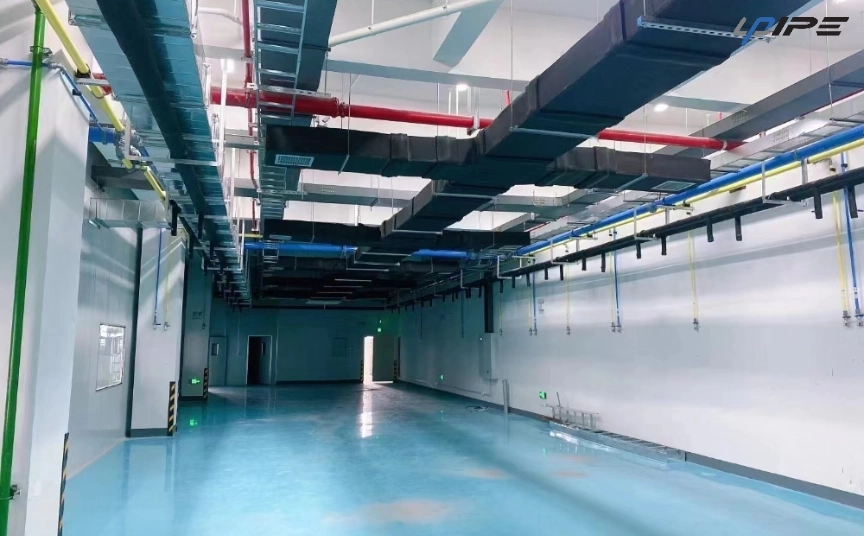
A closed-loop ring main connects your pipes in a complete circle. Air travels around the loop and reaches every drop point from two directions. This design gives you steady pressure at every outlet. When one workstation uses a lot of air, the other side of the loop feeds the system. You avoid the pressure swings that come with a straight-line layout.
The ring main also cuts contamination risk. Air stays in motion around the loop. It does not sit still in one spot and collect moisture. A dead-end branch line lets air stagnate. Stagnant air holds water vapor and gives microbes a place to grow. A closed loop keeps the air moving and reduces this risk.
You must also size your pipes with care. Pipe diameter affects both flow rate and pressure drop. A pipe that is too small creates high velocity. High velocity air carries more water vapor and does not let moisture drop out. A pipe that is too large costs more and wastes space. You should match your pipe size to your peak flow demand and your acceptable pressure drop. This balance keeps your air dry and your system clean and hygienic.
Eliminating Dead Legs and Proper Sloping
Dead legs are branch lines that end without an outlet. They are a major source of contamination in compressed air systems. Air sits in these branches and never moves. Moisture condenses on the walls. Bacteria and mold find a home. You should design your system with as few dead legs as possible. When you must add a branch, keep it short and add a drain at the low point.
Proper sloping is your next defense. You should slope your main lines so that condensate flows toward drain points. A slope of at least 1 inch per 10 feet of pipe gives water a clear path to the drain. You should also place drains at the lowest points of the system. This step removes water before it reaches your tools or your product.
Never let condensate travel downward into your pipes. Water that flows back into the main line will contaminate every drop point downstream.
The system's design includes features that prevent condensate water from flowing downward into the pipes. This protects your downstream equipment from water damage by creating a physical barrier that stops water from traveling back into the main air stream. You get a layout that drains water away from your critical points.
You should also avoid sharp turns and unnecessary fittings. Every bend adds pressure drop and creates a spot where moisture can collect. Smooth, gradual turns keep air moving and reduce the chance of water pooling. A simple, direct layout with proper slope and few dead legs gives you the best results.
Integrating Air Treatment Components
Your pipes and layout prepare the way, but treatment parts do the real work. Dryers and filters take out the wetness, oil, and bits that get past your compressor. You must put them in the right spots to keep your air clean and hygienic at every point of use.
The Role of Dryers and Filters
A dryer removes water vapor from your air stream. The kind you pick depends on your target dew point. A refrigerated dryer gets to a pressure dew point of 38°F (3°C). A heatless desiccant dryer goes much lower, from -40°F to -100°F (-40°C to -73°C). ISO 8573-1 Class 2 water content needs a pressure dew point of −40 °C or lower. Class 3 allows −20 °C, and Class 4 allows +3 °C.
Dryer Type
Achievable Pressure Dew Point
Refrigerated
38°F (3°C)
Heatless Desiccant
-40°F to -100°F (-40°C to -73°C)
Filters take care of the rest. A coalescing filter catches oil and water drops. An activated carbon filter removes oil vapor, smell, and taste. According to Atlas Copco, a filter with activated carbon can cut oil in a compressed air system down to 0.003 mg/m³. This matters in food and drug plants, where tiny bits of dirt can fail an inspection.
For sterile uses, you need even tighter control. A HEPA filter catches at least 99.97% of airborne particles at 0.3 µm. A ULPA filter catches 99.999% at the most penetrating particle size, usually near 0.12 µm. These filters protect aseptic spaces and cleanrooms.
Strategic Placement of Drainage Points
Condensate builds up at the lowest points in your system. You must put drains and separators there to remove it. Place a drain at the bottom of every vertical drop, at the end of each main line, and after every dryer and filter. A separator before your filters catches bulk water and makes filter life longer.
Aluminum pipe systems offer quick drops and accessories that provide reliable drainage points that last under daily use.
Installation and Maintenance Best Practices
A good design is useless without a strong installation. You must build your system with care to keep it clean and hygienic for many years. The right methods save you time now and stop costly problems later.
Ensuring Leak-Free Connections
Modular piping systems with quick-connect fittings let you put pipes together fast. You do not need welding or threading. This speed cuts labor costs and lowers downtime. You also avoid the metal shavings and debris that welding leaves inside your pipes.
Aluminum pipe systems use connectors designed for strength and pressure resistance. The sealing rubber comes from Thailand. It makes a foolproof multi-surface seal that presses tightly against smooth metal surfaces. This barrier stops air loss from heavy machine vibration or alignment errors.
Elastomer lining separates pipe from mounting hardware
Lowers stress points and allows quieter operation
Mechanical buffer reduces cyclic stress loads
Stops fatigue fractures that cause leaks
Dampening of micro-movements at support points
Stops fasteners from loosening during pressure surges
Elastomer barrier stops metal-to-metal contact
Reduces galvanic corrosion
Establishing a Cleaning and Testing Protocol
You need a regular plan for cleaning and testing. SQF standards require air quality testing at each food-contact CCP at least once a year. Your HACCP risk assessment and past results decide the real frequency. CAMTU compressed-air microbial testing fits systems where air touches food or food-contact surfaces. You use it for quarterly or annual audit compliance checks. It also helps you find moisture issues and supports root-cause analysis for environmental positives.
Leak testing should happen after installation and at regular intervals. You can use ultrasonic detectors or soap solution on joints. Fix any leak right away. Small leaks waste energy and drop your pressure. Microbial testing keeps your air safe for sensitive products. You should test at representative points across your system.
You now have a clear framework for a clean and hygienic compressed air system. Three pillars carry the design: the right materials, a smart layout, and well-placed treatment parts. Aluminum or stainless steel pipes resist corrosion. A closed-loop ring main with proper slope and few dead legs keeps air moving. Dryers, filters, and drains remove water, oil, and particles before they reach your product.
Treat this system as a long-term investment. Good design protects product safety and keeps your operation efficient for years.
Review your current setup against these practices. Check your materials, your layout, and your drain points. You will likely find risks worth fixing.
FAQ
Which pipe material works best for hygienic compressed air?
Aluminum and stainless steel work best. Both fight rust and keep their insides smooth. Iron and galvanized steel rust or drop bits over time. Aluminum pipe systems are made from aluminum alloy. They give you clean airflow and a long service life.
How often should you test compressed air quality?
SQF rules say you must test at each food-contact critical control point at least once a year. Your HACCP risk assessment and past results set the real schedule. CAMTU microbial testing works for systems where air touches food or food-contact surfaces.
What causes moisture to collect in compressed air pipes?
Warm air holds water vapor. As air cools inside your pipes, that vapor turns into liquid water. Bad sloping, dead legs, and pipes that are too small make it worse. A closed-loop ring main, good drainage points, and proper drainage design keep water out of your air stream.
Can you install a hygienic compressed air system without welding?
Yes. Modular piping systems with quick-connect fittings let you put pipes together fast. You skip welding, threading, and the metal shavings those methods leave behind. Aluminum pipe systems use sealing rubber from Thailand to stop leaks from vibration or alignment errors.
Why do dead legs create contamination risks?
Dead legs are branch lines that end with no outlet. Air sits still inside them and never moves. Moisture builds up on the walls, and microbes find a place to grow. Keep branches short, add drains at low points, and plan your system with as few dead legs as you can.
This website uses cookies to provide you with a safer and more personal experience. By accepting, you agree to the Cookie Policy and the use of cookies for advertising and analytics purposes.