Home > News > Blog > Aluminum compressed air pipes for high-flow applications
# Blog
Aluminum compressed air pipes for high-flow applications
2026-11-16
Share:
Yes, aluminum compressed air pipes work well for high flow. Their smooth bore reduces friction and pressure drop, but proper sizing and layout are key.
Yes, aluminum compressed air pipes work well for high-flow uses. A smooth bore lowers friction, and low friction keeps pressure drop small even at high flow rates. The right pipe diameter, a well-planned loop layout, and good system design still decide real-world performance.
Material choice deserves equal attention. Steel, stainless steel, and copper each play specific roles, and aluminum gives a balanced profile for many networks. Readers can compare flow capacity, sizing rules, setup options, compliance requirements, and total installed cost with their own operating conditions.
Key Takeaways
Aluminum pipes have a smooth inside. Air flows easily with little friction. This keeps pressure high at the tool.
Choose the right pipe size for your peak air flow. A loop layout keeps pressure even. Keep air speed low to save energy.
Compare total installed cost, not just pipe price. Add fittings, labor, and upkeep. Aluminum often costs less overall.
Check pressure ratings and certifications before you buy. Ask for current papers. This protects you during inspections.
Why aluminum compressed air pipes fit high flow
Smooth bore, low friction
Pressure drop is the loss of air pressure as compressed air moves from the compressor to where it is used. Every pipe causes some drop. In a well-built network, friction is the main cause of that loss. A rough inside wall makes more friction. Air rubs against the wall, and that friction turns pressure energy into heat. The effect grows fast as flow goes up, because friction losses rise faster than flow itself. A smooth bore gives the air less to catch on. Aluminum pipe has a smooth inside surface, so air slides through with little resistance. At high flow rates, this difference matters. A system with low friction keeps more pressure at the tool. The compressor then runs less to hold the same working pressure. That saves energy over the life of the network. Designers can also pick a smaller diameter for a given flow when the bore is smooth, which cuts material cost and weight. A rough pipe forces a larger diameter to get the same result. The gauge near the tool tells the real story, not the gauge at the compressor.
Corrosion resistance and light weight
Aluminum resists corrosion. It does not rust the way iron does. Rust flakes and scale build up on iron walls and make the bore narrower over time. A narrower bore raises friction and pressure drop, and the system loses flow capacity as it gets older. Aluminum keeps its smooth wall, so flow performance stays steady year after year. That steadiness protects the pressure budget for years. Moisture in compressed air is common, and aluminum handles it without the inside scaling that troubles iron pipe. Weight is the second advantage. Aluminum is about three times lighter than iron piping. A lighter pipe is easier to lift, line up, and hang overhead. Installers need fewer lifts and less structural support. That shortens the installation time and reduces labor. Light weight also speeds up repairs and rework. A crew can move sections by hand. A light pipe also needs fewer hangers, and one worker can often place a section alone. Overhead runs put less load on building structures, which makes planning easier in retrofit projects.
Modular design adds a third benefit. Many aluminum compressed air pipes use quick-connect fittings. These fittings push together and lock without welding or threading. Installation goes fast, and the network stays easy to change later. A new drop point or a rerouted line takes minutes instead of a shutdown. The Upipe Aluminum Pipe System shows this approach in practice. It is a modular aluminum system for compressed air, vacuum, and inert gas. Its fittings include elbows, tees, connectors, flanges, quick drops, end caps, valves, and a flowmeter. Each part joins with a secure seal, so the network holds pressure and limits leaks. Leaks waste air and energy, and a tight system protects both. The parts arrive ready to put together. The system suits small workshops and large plants alike, and it grows as demand grows. Together, the smooth bore, the corrosion resistance, the low weight, and the modular fittings explain why aluminum compressed air pipes suit high-flow networks so well.
Comparing aluminum compressed air pipes with other materials
Each material gives the inside of the pipe a different surface. Aluminum and copper both have a smooth inside, so air moves through them with little friction. Steel pipe starts out fairly smooth, but rust and scale make the wall rough over time. Stainless steel keeps a clean inside in corrosive places, and its flow performance stays steady. Flow capacity follows the same pattern. A smooth inside lets more air pass at a given diameter and pressure. A rough or scaled inside forces a larger diameter to carry the same flow. Aluminum compressed air pipes keep their inside smooth for years, so the flow capacity a designer figures on day one still holds on day one thousand. Copper does well here too, which explains its long use in older plants. Steel is still a good choice for heavy industrial abuse, where impact and vibration matter more than a small gain in flow. Stainless steel fits harsh or corrosive places where the pipe itself must survive the air around it. Aluminum fits networks that need balanced performance and fast installation.
Material
Pressure drop
Flow capacity
Durability
Cost profile
Aluminum
Low, stays low over time
High for its diameter
Good corrosion resistance, light weight
Moderate pipe price, low labor cost
Steel
Rises as scale builds
Good when new, drops with age
Very high mechanical strength
Low pipe price, higher labor and maintenance
Stainless steel
Low and stable
High and stable
Excellent in corrosive settings
Highest material cost
Copper
Low and stable
High and stable
Good, suits high temperatures
Volatile material cost, skilled labor needed
Durability and installed cost
Durability means different things in different plants. Steel wins where forklifts, vibration, and rough handling threaten the line. Stainless steel wins where moisture, chemicals, or washdowns attack the outside of the pipe. Copper wins in legacy buildings and high-temperature runs. Aluminum wins where corrosion resistance, light weight, and speed of change all count at once. Installed cost tells a fuller story than pipe price. A buyer must add fittings, hangers, labor hours, leak losses, and maintenance. Aluminum systems offer high leak resistance and fast, tool-light installation compared with traditional steel networks. Quick-connect joints remove welding and threading from the schedule, and that cuts labor and downtime. A steel network may cost less per meter of pipe, yet its installation and upkeep can erase that gap. Copper demands skilled joining work, and stainless steel carries the highest material price. Aluminum compressed air pipes sit in the middle on material cost and often land lowest on total installed cost for fast-moving projects. The right answer depends on the application, not on a single price tag.
Pipe diameter follows from two inputs: the flow demand at peak use and the pressure drop the system can tolerate. A designer adds up the air demand of every tool and machine that may run at once. That total sets the flow the network must carry. The designer then picks a diameter that keeps pressure loss within budget at that flow. A larger bore lowers velocity and friction, yet it costs more and takes more space. A smaller bore saves material and still works when the run is short.
Velocity limits protect the pressure budget. Air moving too fast through a pipe loses pressure to friction at a steep rate. High velocity also carries moisture and debris farther down the line. Designers therefore cap velocity at a level the compressor can support. The exact cap depends on the application and the allowable pressure drop. A practical rule keeps velocity low enough that friction losses stay modest across the longest run. Aluminum compressed air pipes help here, because their smooth bore allows a smaller diameter at the same flow.
Loop layouts and fittings
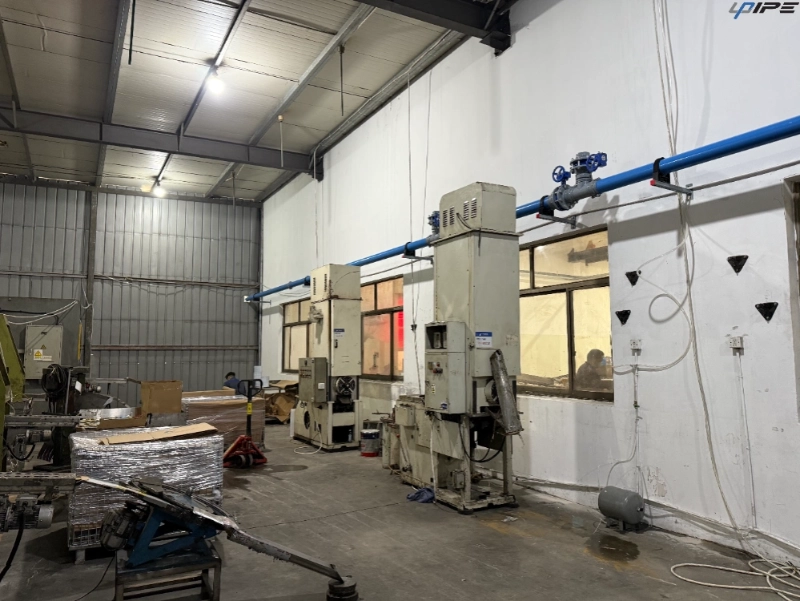
Layout shapes how air reaches each point of use. A dead-end layout sends one main line out and stops. Tools at the far end see lower pressure when demand peaks. A loop, or ring, layout closes the main line back on itself. Air reaches any point from two directions, so pressure stays more even across the network. Quick-drop connections at each point of use then tap the loop with a short branch. A quick drop lifts the outlet above the main line, which keeps condensate out of the tool.
Modular fittings make the layout easy to build and change. The Upipe Aluminum Pipe System offers 90° elbows, equal and reducing tees, pipe-to-pipe connectors, and flanges for the main runs. Quick drops in 90° and 180° styles serve the points of use, and end caps close the line. Ball valves, butterfly valves, and a flowmeter let crews isolate sections and watch airflow. Each part joins with a secure seal, so the network holds pressure and stays simple to expand.
Compliance and cost
Standards and certifications
Buyers should check several papers before a pipe network starts working. The first is the pressure rating. Every pipe and fitting must have a rating that meets or beats the system's top working pressure, with the safety margin the job needs. The second is material certification. Suppliers should give papers that prove the aluminum grade and the alloy quality used in the pipe and fittings. The third is a quality certificate for the making process, which shows the supplier follows a known quality management system.
Certification rules differ by region and by industry. A food plant, a drug line, and a general workshop each face different rules. Buyers should ask the maker for current listings and test reports instead of trusting old catalogs. Listings change, and a certificate that was good last year may have run out. A short written note from the supplier settles the question fast. This step protects the buyer during inspections and insurance reviews.
Total installed cost
Pipe price alone can fool you. A fair comparison adds fittings, hangers, labor hours, installation time, leak losses, and upkeep over the life of the network. A low pipe price can hide high joining costs. Welding and threading take skilled time, and each joint adds a possible leak point. Leaks waste compressed air, and wasted air shows up on the energy bill every month.
Fast-install aluminum systems cut labor and downtime costs. Quick-connect joints take welding and threading off the schedule, and crews can change lines without a long shutdown. Aluminum compressed air pipes also keep their smooth bore, so pressure drop stays low and the compressor runs less over time. The right choice still follows the job. Steel, stainless steel, and copper each fit some conditions better. Buyers should compare total installed cost against their own use pattern, not against a single price tag.
Aluminum compressed air pipes suit high-flow networks well when crews size and install them correctly. They balance low pressure drop, corrosion resistance, and installed cost. Material choice should still follow the application. Steel fits heavy industrial abuse, stainless steel fits harsh or corrosive settings, and copper fits legacy and high-temperature runs.
A short checklist helps buyers evaluate any option:
Calculate peak flow demand and the allowable pressure drop.
Confirm the diameter and velocity limits for the longest run.
Verify pressure ratings and material certifications with the supplier.
Compare total installed cost, not pipe price alone.
FAQ
Do aluminum pipes really work for high-flow compressed air?
Yes. Aluminum pipe has a smooth bore, so air meets little friction as it moves. That low friction keeps pressure drop small at high flow rates. Picking the right diameter and using a loop layout still decide the final result.
How does a plant pick the right pipe diameter?
The designer adds up peak air demand for all tools that may run at once. Then the designer picks a diameter that keeps pressure loss within budget at that flow. Velocity limits protect the pressure budget on the longest run.
Does aluminum handle moisture in compressed air?
Aluminum resists corrosion and does not rust. Iron pipe can scale and narrow its bore over time. Aluminum keeps its smooth wall, so flow performance stays steady. Quick drops that raise the outlet above the main line also help keep condensate out of tools.
How does aluminum compare with steel and copper on cost?
Pipe price alone can fool you. A fair comparison adds fittings, hangers, labor, leak losses, and upkeep. Aluminum systems use quick-connect joints, so crews skip welding and threading. That often lowers total installed cost, even when the pipe price sits in the middle.
What should a buyer check before ordering?
Buyers should confirm the pressure rating of every pipe and fitting. They should ask for material certification for the aluminum grade and a quality certificate for the making process. Certification rules differ by region and industry, so current listings matter more than old catalogs.
This website uses cookies to provide you with a safer and more personal experience. By accepting, you agree to the Cookie Policy and the use of cookies for advertising and analytics purposes.