Home > News > Blog > What to Look for in Aluminum Compressed Air Pipe Suppliers for Energy-Efficient Factory Solutions
# Blog
What to Look for in Aluminum Compressed Air Pipe Suppliers for Energy-Efficient Factory Solutions
2026-11-03
Share:
Choose Aluminum Compressed Air Pipe Suppliers based on energy-efficient design, material quality, sizing support, compliance, total cost, and after-sales service.
The right supplier decides whether your aluminum compressed air system gives you real energy savings or turns into a hidden cost center. A cheaper piping option can look good at first, but high maintenance and energy costs often wipe out those gains, as CFM Air notes. Your supplier shapes that outcome long before installation begins.
Judge Aluminum Compressed Air Pipe Suppliers on six factors: energy-efficient pipe design, material quality, sizing and layout support, compliance, total cost of ownership, and supplier services. Use these factors as a practical checklist. Apply them during every supplier evaluation, and you will compare vendors on real facts rather than sales claims.
Key Takeaways
Pick suppliers who give measured pressure-drop data to show energy savings.
Make sure the pipes are made of high-quality aluminum alloy and have joint designs that do not leak.
Compare the total cost to install the system, not just the starting price, to find the best value.
Pick suppliers that offer strong after-sales support and have spare parts available locally.
Energy-Efficient Pipe Design
Smooth Interior, Low Friction
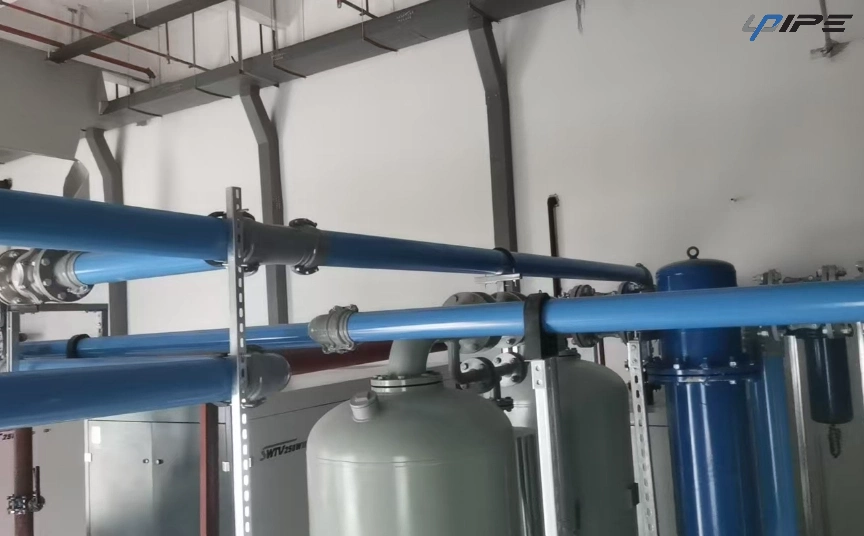
Aluminum air pipes usually have a smooth inside surface. This smoothness cuts friction and pressure drop as air moves through the system. UniPipe Solutions notes that aluminum piping lowers pressure drops better than black iron or steel, which can rust and make rough surfaces inside the pipe. Less pressure drop means your compressor works less to hold the target pressure. Upipe's aluminum air line systems use a smooth inside surface and exact fittings to cut pressure losses, which lowers energy use and carbon emissions.
The payoff shows up on your energy bill. UniPipe Solutions reports usual energy savings of 10-25% each year with aluminum systems. Ask suppliers for pressure-drop data before you buy. A supplier who can show measured pressure loss at your expected flow rate gives you a number you can check. A supplier who only promises "low friction" gives you a slogan.
Leak-Free Joints
Leaks drain compressed air and money. In the average compressed air system, about 30% of compressed air is wasted, much of it through leaks at joints, according to UniPipe Solutions. Leak-free performance in aluminum piping systems cuts that waste and supports meaningful CO2 reductions. Modular aluminum piping assembles with push-together or clamped O-ring joints, which set the modern modular approach that most aluminum systems follow today.
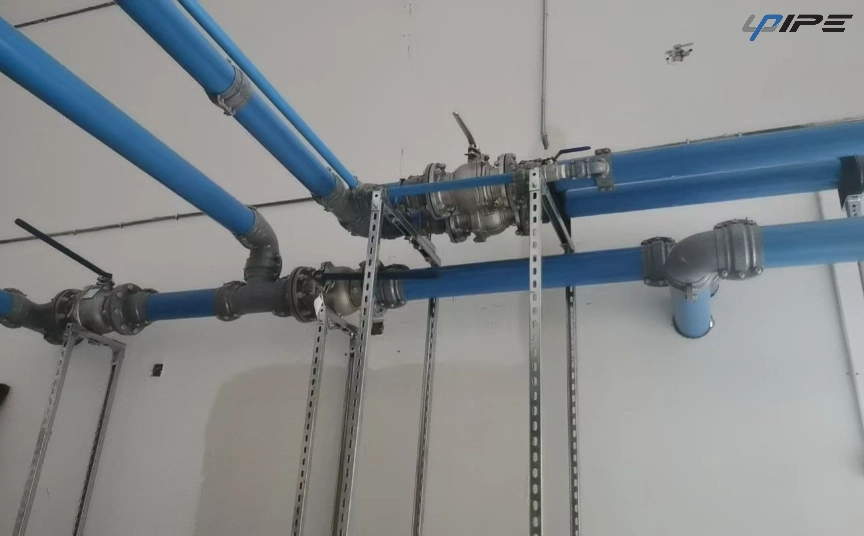
Joint sealing deserves close scrutiny during supplier evaluation. SPC Trade describes modular aluminum piping that puts together with push-together or clamped O-ring joints instead of threaded, welded, or soldered connections. That source reports a commissioning leak rate under 1%, while black iron rarely commissions below 5% even when new. AIRpipe states that its fittings are made fully from metal with nitrile gaskets, which ensure strong seals over time. Ask suppliers for joint sealing specifications and confirm these points:
Push-together or clamped O-ring seals at every joint, not threaded-and-doped connections
Full insertion to the marked depth, since partial insertion past the grip ring is the top cause of pull-out
A torque wrench set to manufacturer spec for clamped fittings, never feel-tightening
Transition fittings with a dielectric isolation barrier between aluminum and any steel mating component
The alloy grade sets the strength and durability of your whole network. High-quality aluminum billets, usually 6061 or 6063 grades, offer great machinability and corrosion resistance, according to Upipe. These high-strength alloys give you a good strength-to-weight ratio and are easy to process. Aluminum has a density only about one-third of steel, so you get less weight without losing durability. The alloy mix boosts hardness and resists internal pressure.
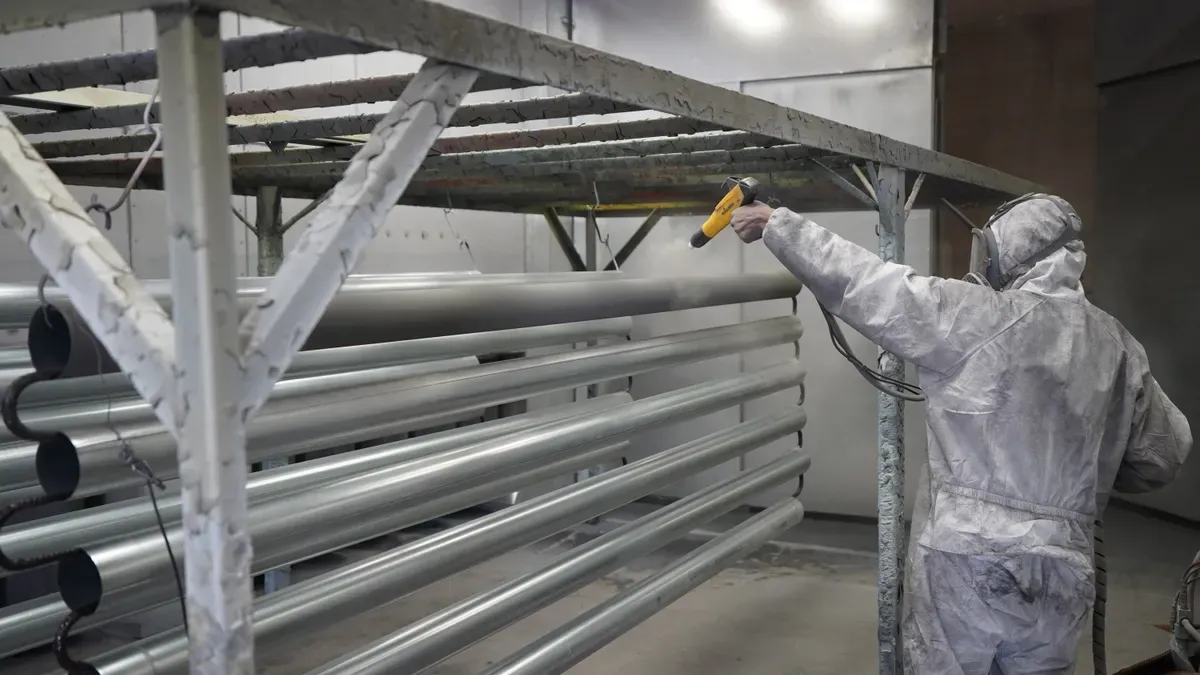
Manufacturers often finish the pipes with anodizing, powder coating, or spraying using protective materials like epoxy resins or polyurethane. These finishes improve resistance to corrosion and wear. Some designs add engineering plastics and stainless steel parts into connection systems for extra temperature and chemical resistance. Standard pipes work at pressures up to 16 bar and temperatures from -20°C to +80°C. Advanced designs handle extremes from -60°C to +180°C. Ask your supplier which grade they use and how they finish it.
Corrosion Resistance
Aluminum compressed air piping resists corrosion and does not shed particles. This makes it ideal for places where contamination is a concern. A natural oxide layer forms inside each pipe, stopping internal rust and protecting air purity in humid conditions, Upipe notes. The corrosion-free aluminum network ensures long-term air purity, a key factor in hygienic and sustainable manufacturing. In food manufacturing, compressed air often touches food surfaces, packaging materials, and sanitation zones. Clean aluminum builds shield downstream tools from harmful dirt buildup.
Check alloy grade and corrosion-resistance claims with supplier documents before you commit. Request these records:
Documentation to provide
Purpose
Material certificate and permanent product marking
Confirm alloy and temper
Markings and certificates matched to the approved submittal
Identify material and quarantine damaged pieces
Cross-section, marking, and material certificate
Distinguish coated versus solid construction
Written material-compatibility review
Confirm compatibility for your water chemistry and temperature
Light aluminum is great for getting the most flow in compressed air systems. Good sizing keeps pressure drop low all through your network. Direct Air says pipe size depends on how much air (CFM) you need and how far the air must travel. Pipes that are too small cause high speed and friction. A specialist can figure out the best diameter to keep pressure loss low.
You can lower pressure drop in a few easy ways:
Make the pipe wider where flow is highest
Use fewer elbows and sharp bends
Build a loop layout instead of a dead-end run
Fix leaks at every joint
A loop-style system cuts pressure drop compared to a straight-run system of the same length, according to UniPipe Solutions. That means you can often use smaller pipes. The stakes are real. When pressure drops a lot, operators raise system pressure to make up for it. For every 2 PSI increase, energy costs go up by about 1%, Direct Air notes.
The Upipe system gives you the parts to build a well-sized network. The range includes 90° elbows, equal and reducing connectors, tees, male and female connectors, flanges, 90° and 180° quick drops, end caps, ball valves, butterfly valves (including a high-temperature version), and a flowmeter to measure air use accurately.
Supplier Design Assistance
Ask if the supplier offers layout and design help before you buy. Topring lists network layout tips, pipe sizing help, product selection support, system growth planning, and fitting into your current setup as common services. For harder projects, suppliers can make basic layout drawings to help you picture the planned install. Compressed air audits with a technical team help find leaks, set the best operating pressure, and improve system efficiency.
Transair offers free system design and estimate services, including layout design and pipe sizing, based on drawings or sketches you provide. Factory-trained reps help design the compressed air system. They improve pipe size, layout design, and air distribution for cost-saving solutions. A dimensional drawing, blueprint, PDF, rough sketch, or take-off list is needed to give you a detailed and competitive quote.
Compliance and Standards
Certifications and Standards
Certifications and industry standards give you outside proof that a piping system meets safety and performance rules. They matter because compressed air networks run under pressure, and a failure at a joint or fitting carries real risk. Topring notes that you should check all certifications for each product, not just the system as a whole. In Canada, some provinces may require a Canadian Registration Number (CRN) for parts of an air system that uses pressure above 15 PSI. Transair confirms that its products are approved by the Technical Standards & Safety Authority (TSSA) and registered under the CRN procedure, which allows installation in Canada.
Blackhawk Equipment notes that an ISO 11011 certified energy audit can prove the money impact of your piping choice. That standard requires that pressure drop from the compressor room to points of use must not exceed 2 psi of friction loss, and air speeds in main headers must not go above 14 feet per second.
Documentation and QA
Documentation turns a certification claim into something you can check. Upipe advises bulk buyers to ask for detailed pressure testing reports and installation manuals to make sure they meet workshop safety standards. Ask for material traceability records, ISO 9001 quality certification, and RoHS compliance where required. Confirm that fittings work with international parts before you commit.
Quality assurance processes deserve the same close look. Ask for test reports that show how the supplier checked pressure ratings and joint sealing. A supplier who gives you these records shows a working QA system. A supplier who cannot produce them leaves you to trust a brochure.
Evaluating Aluminum Compressed Air Pipe Suppliers
Total Cost of Ownership
Do not let the upfront price decide your choice. Total cost of ownership shows the real winner. Think about installation speed, energy savings, and upkeep over the system's life. Aluminum piping fights rust, lowers pressure drop, keeps airflow clean, and installs faster than old galvanized iron piping. Light aluminum also makes changes and growth easy.
The numbers tell a clear story. Aluminum material costs more than black iron per foot, according to UniPipe Solutions. Installation labor drops because you skip threading, welding, and soldering. UniPipe Solutions shares a real example: black iron Schedule 40 came to $16,050 installed, while Unipipe came in at $12,470. That makes aluminum about 22% less than black iron on total installed cost. Energy costs make up 70-80% of a compressed air system's lifetime expense. A 50hp compressor with 15% energy savings could save $3,000-$5,000 each year. Old systems need leak repairs every 3-6 months, and rusted black iron sections often need replacing within 5-10 years. Aluminum systems need almost no upkeep.
Upipe's modular design lets you make quick changes and additions, which cuts downtime and lowers installation costs. Build a supplier scorecard that covers design, material, sizing support, compliance, cost, and service.
After-Sales Support
Strong after-sales support is what sets a reliable Aluminum Compressed Air Pipe Supplier apart from a vendor who vanishes after the sale. Ask what happens when a leak shows up or production needs a new drop point. Transair offers leak detection and system growth through certified technicians, according to UPPER. Prevost provides scheduled maintenance programs. CMC offers service, parts, repairs, leak detection, audits, and 24/7 emergency service. UPPER supports after-sales maintenance through its certified distributor network. Make sure local distributors cover your area and stock spare fittings before you commit. A supplier with regional coverage and spare parts on hand keeps your factory running when problems come up.
When you check aluminum compressed air pipe suppliers, treat it as one connected checklist. Energy-efficient design, material quality, sizing support, compliance, total cost of ownership, and after-sales service all back each other up. A smooth, leak-free network only pays off when the alloy holds up, the sizing fits your flow, and the paperwork proves it.
No single low price or spec sheet locks in long-term efficiency and reliability. Looking at the whole picture does. Turn these criteria into a structured supplier scorecard, score each vendor against it, and compare the results side by side. That habit protects your energy savings for years.
FAQ
How do I check a supplier's energy savings claims?
Ask for measured pressure-drop data at your expected flow rate. Request case studies with before-and-after energy bills. Evidence from the source material shows aluminum systems usually deliver 10-25% annual energy savings. A supplier who cannot document real installations gives you promises, not proof.
What warranty and spare parts coverage should I expect?
Confirm the warranty length in writing and check that local distributors stock spare fittings. Regional coverage keeps your factory running when a leak appears or production needs a new drop point. Ask how fast the supplier ships replacement parts before you sign.
Can the system handle my factory's pressure and temperature needs?
Standard aluminum pipes work at pressures up to 16 bar and temperatures from -20°C to +80°C. Advanced designs handle extremes from -60°C to +180°C. Tell the supplier your operating conditions and confirm the chosen alloy and seals match them.
How do I compare installation timelines across vendors?
Ask each Aluminum Compressed Air Pipe Suppliers candidate for a written installation schedule. Aluminum's push-to-connect joints skip threading, welding, and soldering, so labor drops sharply. Request references from similar-sized projects and confirm crew availability for your start date.
What training does the supplier provide for my maintenance team?
Request hands-on training on joint assembly, insertion depth, and torque specs for clamped fittings. Proper insertion past the grip ring prevents pull-out, the top cause of joint failure. Confirm the supplier offers refresher sessions and written manuals your team can keep on site.
This website uses cookies to provide you with a safer and more personal experience. By accepting, you agree to the Cookie Policy and the use of cookies for advertising and analytics purposes.