The right compressed air pipeline solution provider depends on one match: provider type to project scope. You will learn to tell apart three types—engineering firms, manufacturers and distributors, and contractors or integrators. Each type fits a different kind of work.
Use a criteria-based framework to compare candidates fairly. Score each one on credentials, design deliverables, application fit, compliance, and cost.
Global operations raise the stakes. Multi-site rollouts need cross-border compliance, consistent documentation, and worldwide service. You will see how to check each of these with evidence, not claims.
This is a decision framework, not a product pitch.
Key Takeaways
First, match the provider type to your project scope. Engineering firms are a good fit for design-heavy projects. Manufacturers and distributors are a good fit for standardized systems. Contractors are a good fit for installation-heavy work.
Rate each candidate on five points: qualifications, design deliverables, how well it fits your application, compliance, and cost. This keeps your comparison fair and objective.
Check that the provider really works around the world by asking for proof. Ask for certificates, references from several countries, and the names of service locations. If the claims are vague, treat them as unproven.
Ask for a full design package. It should include pipe sizing, air treatment, pressure drop, and thermal expansion. Good records keep every site on the same page.
Compare the total cost of ownership, not just the upfront price. Include installation labor, energy use, and maintenance. A cheaper system can cost more over time.
Know the Provider Types
The type of provider you pick shapes how much work they can do for you. Three main groups serve the market, and each one fits a different kind of project. Match the group to your scope before you compare single companies. A mismatch here wastes time later, because a firm built for design work rarely does installation well, and the reverse is also true. Each type brings its own strengths to a project.
Engineering Firms
Engineering firms focus on design. They fit projects where system architecture drives the result: new plants, capacity expansions, and networks that must work with existing production equipment. You get load calculations, layout drawings, and specifications before anyone orders a fitting. This model suits you when your team lacks internal piping expertise or when the system must meet a demanding process requirement. Some firms also offer construction administration, which keeps a designer involved through the build. Design-led work has a tradeoff. The firm may specify equipment from several vendors, and a separate party does the installation. Confirm who is responsible for commissioning and for performance after handover. Ask for a sample design package and check whether it covers pipe sizing, air treatment, and pressure drop.
Manufacturers, Distributors, and Contractors
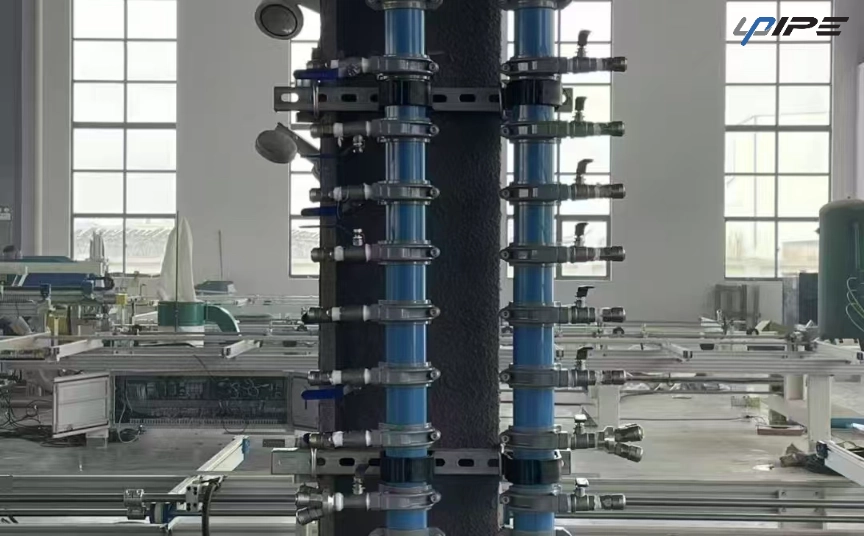
Manufacturers and distributors fit standardized, modular systems. They supply catalog components—pipe, fittings, valves, drop connections—that assemble into a complete network. This model suits repeatable installations, fast timelines, and buyers who want one accountable source for materials and technical support. A manufacturer with a modular aluminum system, for example, can give pipe sizing guidance and a full bill of materials from a single catalog. Distributors add local stock and faster delivery, which matters for phased rollouts. Confirm that spare parts stay available and that technical support answers application questions, not just order questions.
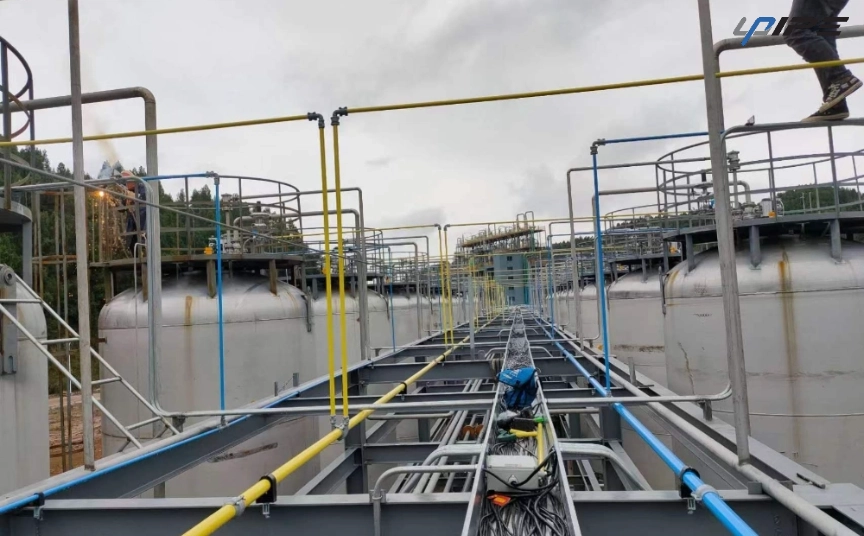
Contractors and integrators fit installation-heavy work. They bring crews, site management, and commissioning labor. Choose this route when the physical build is the hard part: occupied facilities, tight shutdown windows, or complex routing through existing structures. They also handle permits and site safety planning in many regions.
Many compressed air pipeline solution providers combine these roles. A manufacturer may run its own installation crews. An engineering firm may hold distribution agreements. Ask directly which capabilities they keep in-house and which they outsource. A short written questionnaire works well here. In-house design, fabrication, and service usually mean faster answers and clearer accountability. Outsourced steps add handoff points where responsibility can blur. Request an org chart or a written scope statement that names the party responsible for each phase.
Prioritize application requirements over brand name when you make your shortlist. A well-known label tells you little about fit for your pressure, flow, and material needs. Brand reputation reflects marketing reach as much as engineering quality. Write down your operating conditions first: pressure range, flow demand, air quality class, and ambient conditions. Then screen candidates against that list. A lesser-known provider with the right materials and documented design support often beats a famous name that treats your project as a catalog order.
Weigh the three types against your scope, then move to credentials. The next section shows how to verify certifications, references, and global service coverage.
Certifications give you a fair way to filter providers before you talk to anyone. CAGI certification is a strong sign for compressed air equipment. It confirms independent testing against published performance standards. Look for other credentials tied to your region and industry, such as ISO quality management certification. Pressure vessel approvals also matter when vessels are part of the scope. Ask for certificate numbers and check them against the issuing body's public registry. A provider that hesitates to share these details deserves a lower score.
Track record matters as much as paperwork. Ask how long the company has supplied pipeline systems and how many projects it has completed. Also ask whether it has served customers in your sector. A compressed air pipeline solution provider with a deep project history can show patterns in its work, not just a single showcase installation. Request a project list with dates and locations, then spot-check a few entries.
References Across Markets
References reveal how a provider performs outside its home market. Ask for customers in at least two countries and two industries. Cross-border references show whether the company handles different codes, languages, and logistics well. When you call a reference, ask about delivery timelines, documentation quality, and response speed when problems appeared.
Verify the global service network directly. Request the locations of service technicians and the regions they cover. Ask how quickly a technician can reach each of your sites. Also ask whether spare parts ship from regional warehouses. Confirm that after-sales support operates in your time zone and language. A provider with real global reach will answer these questions with names, locations, and service agreements. Vague promises about worldwide coverage do not count as evidence.
Demand a Full Design Package
A complete design package shows whether a provider is serious or just selling parts. Ask for one document that covers pipe sizing, air treatment, pressure considerations, thermal expansion, and engineering best practices. Each part protects a different piece of your system. Pipe sizing sets flow capacity. Air treatment protects your equipment and product. Pressure considerations keep the network steady at peak demand. Thermal expansion planning prevents stress on joints and supports. Engineering best practices tie the whole design together.
Pipe Sizing and Air Treatment
Pipe sizing must match your real demand, not a generic chart. Give the provider your flow profile, pressure range, and future expansion plans. A good provider calculates pressure drop across the full network and sizes each branch for its load. Undersized mains choke peak demand. Oversized pipes waste money and slow installation.
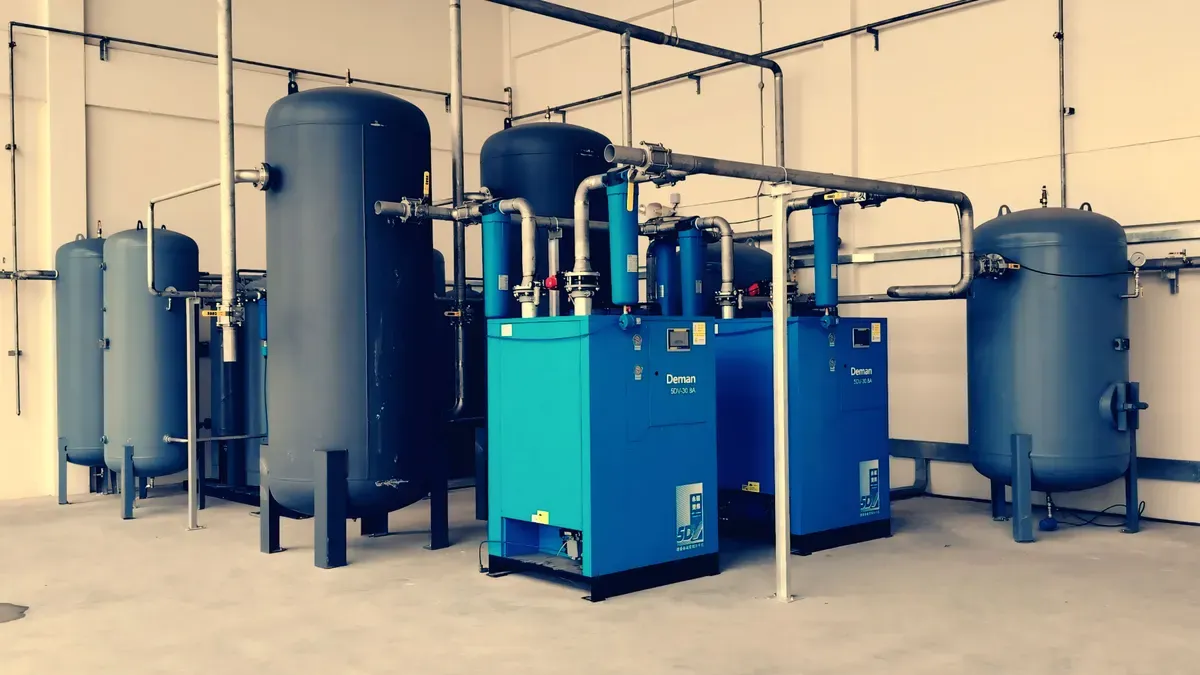
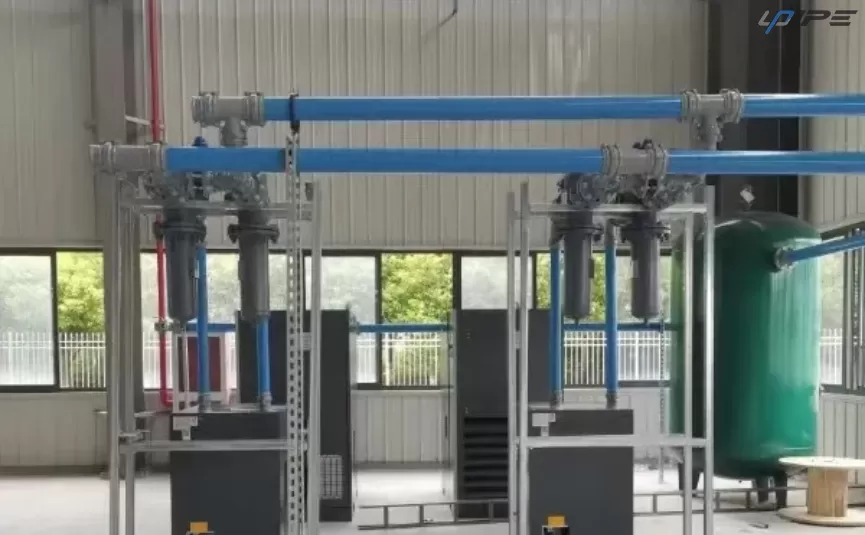
Air treatment belongs in the same package. State your air quality class, then confirm the design covers dryers, filters, and drain points in the right places. A provider who treats treatment as an add-on leaves you to guess. Insist on a design made for your process. Off-the-shelf guesses about demand and air quality rarely fit a real plant.
Thermal Expansion and Documentation
Thermal expansion needs to be handled head-on. Compressed air lines change length as temperature shifts, and the design must show where expansion loops or fixed points go. Ask the provider to write down the calculation basis and the placement of anchors. This detail protects joints and prevents leaks over years of service.
Documentation quality matters most for multi-site rollouts. Demand the same drawings, bills of materials, and installation instructions at every site. Standardized documents let your teams compare installations and train staff once. They also make audits and future expansions easier. Ask for a sample package from a past project and check whether the drawings match the installed system. A provider who documents well in one country usually keeps that habit everywhere.
Match Application Fit and Performance
Materials and Corrosion Resistance
Begin with your operating conditions. Write down the pressure range, the flow demand, and the pipe material you need. Then check each candidate against that list. Material choice affects how long your system lasts more than any other decision. Steel lines rust from the inside out when moisture moves through the network. Rust flakes travel downstream and clog tools, valves, and filters. Aluminum resists corrosion, so the pipe wall stays smooth and clean over years of service. That smooth wall protects air quality and reduces maintenance work. A corrosion-resistant system also keeps its internal diameter, which keeps pressure drop steady across the life of the network.
Leak-Proof Performance and Efficiency
Leaks waste money every hour the compressor runs. A joint that seals well at installation can still open up under vibration or thermal cycling. Ask how the connection design keeps a seal over time. Look for fittings with secure mechanical joints and documented sealing performance. Then ask about pressure drop. A well-designed network keeps pressure drop low, so you can run compressors at a lower setpoint and still meet demand at the point of use. Lower pressure at the compressor turns directly into energy savings. Treat leak-proof performance and low pressure drop as cost criteria, not just technical specs.
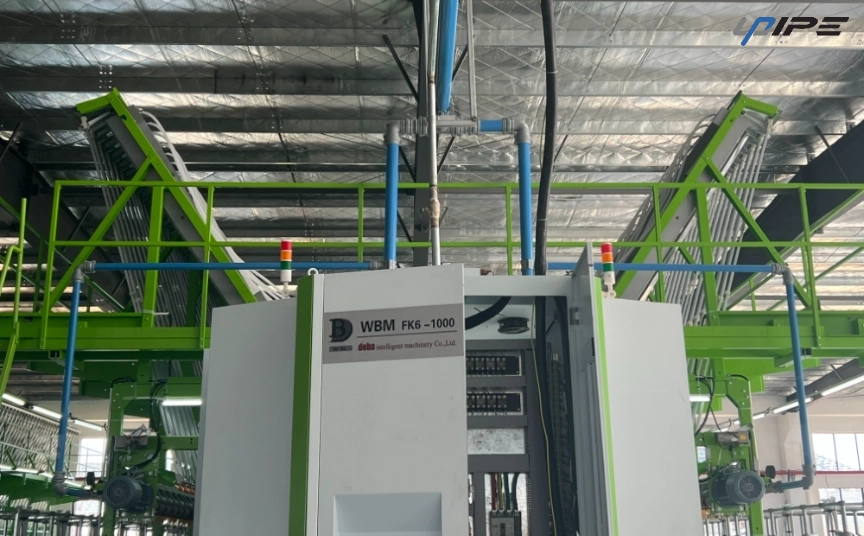
Ease of installation belongs in the same comparison. Lightweight pipe and modular fittings reduce handling time and crew size. Push-to-connect style joints cut assembly hours compared with threaded or welded pipe. Faster installation shortens your project timeline and lowers labor cost. Ask each provider for an installation method statement and a realistic labor estimate for your layout. A modular aluminum system such as Upipe combines lightweight handling, corrosion resistance, and secure fittings, which supports both fast installation and long-term efficiency.
Verify Compliance and Safety
International Standards and Local Codes
Compliance begins with the standards your system has to meet. Ask each provider which standards its parts are rated against. For compressed air quality, ISO 8573-1 sets purity classes for particles, water, and oil. Your design package should state the class you need and show how the system meets it. For piping design, ASME B31.3 sets accepted practice for process piping, and many providers use it for pressure ratings and material specs. Ask for the pressure rating of every part at your operating temperature, not just at normal room conditions.
Local codes add a second layer. Building codes, fire rules, and electrical rules differ by country and sometimes by region within a country. A provider with global customers should show you how it handles this variation. Ask for examples of projects where local permits or inspections applied. Confirm who prepares the paperwork for local authorities. A provider that only cites international standards and skips local requirements leaves you to close the gap.
Safety and Installation Practices
Safety practices protect your people during the build and your system afterward. Ask how the provider pressure-tests a new network before handover. A written test procedure, with recorded results, proves the system holds pressure safely. Confirm the provider shuts off and locks out energy sources during tie-ins to live systems. Ask for its method statement for working in occupied facilities.
Installer skill matters as much as procedure. Ask whether the provider trains and certifies its installation crews on its own system. Untrained crews cause leaks, misaligned supports, and failed inspections. Request the training records or certification path for installers. Then confirm the handover package: as-built drawings, test records, and operating instructions. These documents support safe operation for the life of the system and give your maintenance team a reliable reference.
The upfront price only tells you part of the story. Instead, compare the total cost of ownership. Add installation labor, energy use over the system's life, and maintenance work to the purchase price. A cheaper pipe that takes longer to assemble can cost more once you pay the crew. A system with higher pressure drop makes compressors work harder, and that energy bill repeats every month. Ask each candidate for a cost breakdown across these categories. Then compare the totals side by side.
Long guarantees show how much confidence a provider has in its product. A 10-year coverage pledge signals that the maker expects the system to last for years of service. Read the guarantee terms closely. Check what it covers, what voids it, and who honors it in your country. A strong warranty from a compressed air pipeline solution provider should apply across your sites, not just at the point of sale.
Service Coverage and Guarantees
Confirm the support you will get before, during, and after installation. Ask whether the provider offers site surveys to measure your space and existing equipment. Request installation planning help, including routing drawings and a phased schedule for occupied facilities. Professional commissioning and system testing should come standard, with recorded results at handover. Check spare parts availability and delivery times for each region you operate in. Global service coverage only counts when you can name the technicians and their locations.
Put these commitments in writing. A service agreement should list response times, parts stock locations, and the party responsible for each support task. Ask for the escalation path when a problem crosses borders. Then test the provider with one question: who answers a service call at your most remote site, and how fast? The answer separates real global support from a sales claim. The best provider protects your system's performance and safety for its entire life.
First, figure out which type of provider matches your project scope. Then score each candidate on the five criteria: credentials, design deliverables, application fit, compliance, and cost. This order keeps your comparison fair and objective.
Global capability shows up in documents, references, and named service locations. Treat claims without evidence as unproven. Bring the questions from this guide to your next provider conversation, and ask for written answers.
The best compressed air pipeline solution provider protects performance and safety for the life of your system. Choose the partner who can prove that commitment today and keep it for years.
FAQ
How do I compare quotes from different provider types fairly?
Make each quote use the same items before you compare totals. Ask every candidate for the same scope: design package, bill of materials, installation labor, commissioning, and service terms. An engineering firm may leave out installation, and a contractor may leave out design. Score each line against your five criteria, then compare the adjusted totals.
What should I ask about delivery and lead times?
Ask for lead times for the pipe, fittings, and valves separately, plus the shipping route to each site. Ask where the provider keeps spare parts in stock. For phased rollouts, confirm that later phases will not wait on backordered parts. Get these promises in writing with dates.
How do I confirm global service coverage is real?
Ask for technician locations, regional parts warehouses, and response times for each site. Request the escalation path for cross-border issues. Then ask one direct question: who answers a service call at your most remote plant, and how fast? Named people and written agreements count as proof. General claims do not.
Can one provider handle both design and installation?
Many providers combine roles, so ask which capabilities they keep in-house. A single source can speed up answers and make accountability clearer. Confirm the responsible party for each phase in a written scope statement. If steps are outsourced, identify who owns commissioning and performance after handover.
What is the fastest way to build a shortlist?
Write down your operating conditions first: pressure range, flow demand, air quality class, and ambient conditions. Screen candidates against that list, then verify CAGI certification, references in two countries, and a sample design package. Three to five qualified candidates is enough for a fair comparison.
This website uses cookies to provide you with a safer and more personal experience. By accepting, you agree to the Cookie Policy and the use of cookies for advertising and analytics purposes.