Home > News > Blog > Choosing the Aluminum Compressed Air Pipe for Factory Expansion Projects
# Blog
Choosing the Aluminum Compressed Air Pipe for Factory Expansion Projects
2026-08-21
Share:
Select the ideal aluminum compressed air pipe for factory expansions. Calculate CFM, minimize pressure drop, and optimize layouts with modular fittings.
Expanding your factory often brings tough daily challenges to your work floor. You face higher worker pay, costly setup delays, and lasting pressure losses across your air system.
Modular piping now acts as the new building standard for factory compressed air systems. The Upipe Aluminum Pipe System gives a great answer designed for clean air flow, low drag, and easy plant growth.
Factory Expansion Drivers
Operational Challenges | Upipe System Solutions
High installation labor costs | No-thread, no-weld modular assembly
Costly facility downtime | Quick line drops without shutdowns
Severe long-term pressure drops | Smooth internal bore, low friction
This useful guide helps plant bosses pick the right pipe sizes, system plans, and modular parts. You can boost your plant expansion value by using aluminum compressed air systems.
Key Takeaways
Aluminum pipes weigh a third of what steel pipes do, which saves a lot of money on installation work.
OSHA safety rules ban open PVC pipes because weak plastic causes serious explosion hazards.
Easy-to-connect parts can cut your system setup time by as much as sixty percent.
Quick drops let workers add new work areas without turning off the factory equipment.
Evaluating Aluminum Compressed Air Systems vs. Legacy Pipes
Performance Breakdown of Aluminum vs. Steel and Copper
You must choose the best material when expanding your plant piping network. Traditional schedule 40 black iron steel and copper pipes create heavy physical demands during setup. Aluminum alloy piping reduces strain because aluminum weighs about one-third of traditional metal piping. For a 4-inch outer diameter, 0.25-inch wall thickness pipe, aluminum has a unit weight of 3.45 lb/ft (≈5.13 kg/m), while steel of the same dimensions weighs about 10 lb/ft (≈14.9 kg/m), making steel roughly 2.9 times heavier. This ratio matches the density difference: steel (7,850 kg/m³) is about 2.9 times denser than aluminum (2,700 kg/m³). This lighter weight greatly reduces setup work costs.
Aluminum pipes also protect system performance over time. Steel pipes rust easily and create scale buildup. This scale dirty your clean air supply and damages tools. Aluminum features a smooth internal bore. This smooth surface stops rust and lowers drag loss across your system. You can review these main material differences below:
Material Property
Aluminum Alloy
Black Iron Steel
Copper
Relative Weight
Lightweight
Heavy
Medium-Heavy
Internal Rust & Scaling
None
High risk
Low risk
Friction Loss
Minimal
High over time
Low
Air Quality Protection
Excellent
Poor
Good
Operational Hazards of PVC in Compressed Air Networks
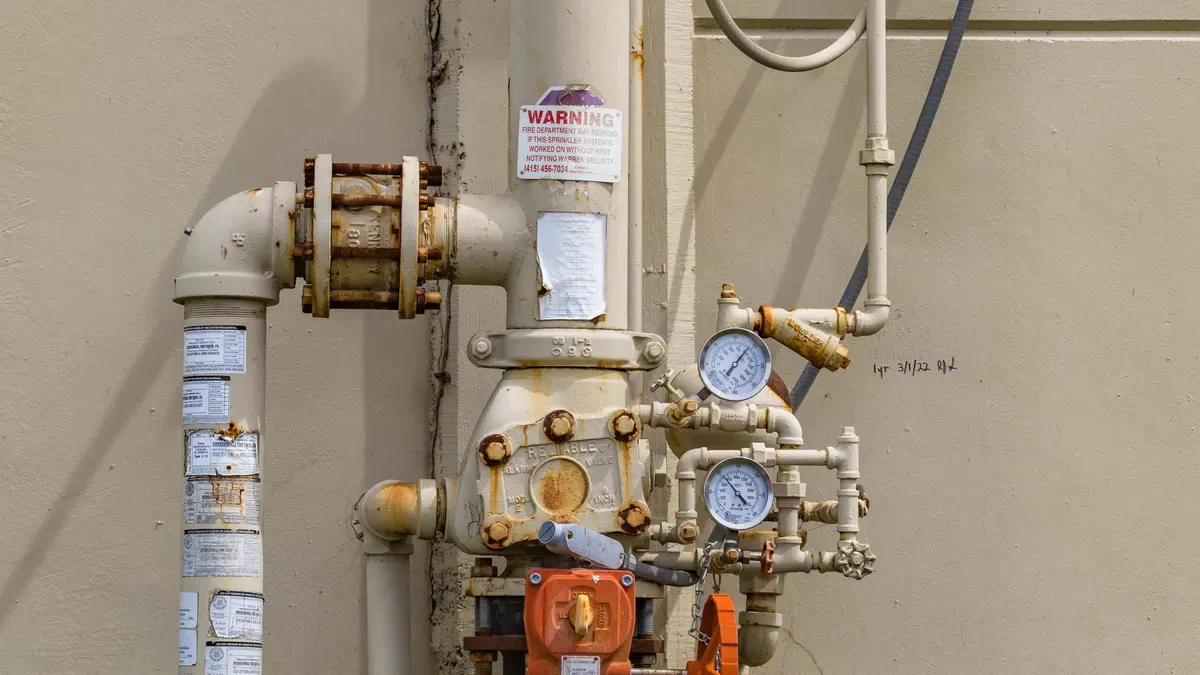
Some plant managers look at PVC piping to lower initial spending. You must avoid plastic pipes in high-pressure setups. Compressed air makes standard PVC pipes weak over time. Weak plastic can burst under pressure, creating dangerous explosion risks for workers.
Using PVC also breaks workplace safety rules. Government standards ban exposed plastic lines due to safety risks.
Choosing aluminum compressed air pipe systems guarantees full rule compliance. You protect your team while building a dependable aluminum compressed air pipe system for your facility.
Technical Sizing Factors for System Expansion
Calculating CFM and Pressure Drop Tolerances
Expanding your facility requires precise air demand calculations. You must find total airflow demand in Cubic Feet per Minute (CFM) before picking new line sizes. Each tool and machine on your factory floor uses a set amount of compressed air during work. You must check how often these tools run at the same time across your shifts.
First, multiply the CFM rating of each air tool by its duty cycle percentage. Next, add all of those individual numbers together. Then, multiply that total by your usage factor to cover changing work demands. Finally, add a safety margin to allow for future tools and unexpected air leaks.
Pressure drop creates another big challenge when expanding your plant. Friction lowers air pressure as compressed air moves through long pipe lines. Large pressure drops starve your equipment, lower machine power, and raise energy bills. You should keep the total pressure loss in your main pipe header under 4% of your starting pressure. Keeping pressure loss within this 4% limit guarantees steady power at every work station.
Sizing Pipe Diameters for Future Plant Capacity
Choosing the right pipe size balances air speed, total pipe length, and total CFM demand. Picking pipes that are too small forces your air compressor to work harder, which creates extra heat and drives up your power bills. Selecting larger pipe sizes lets your plant grow easily without replacing main lines later.
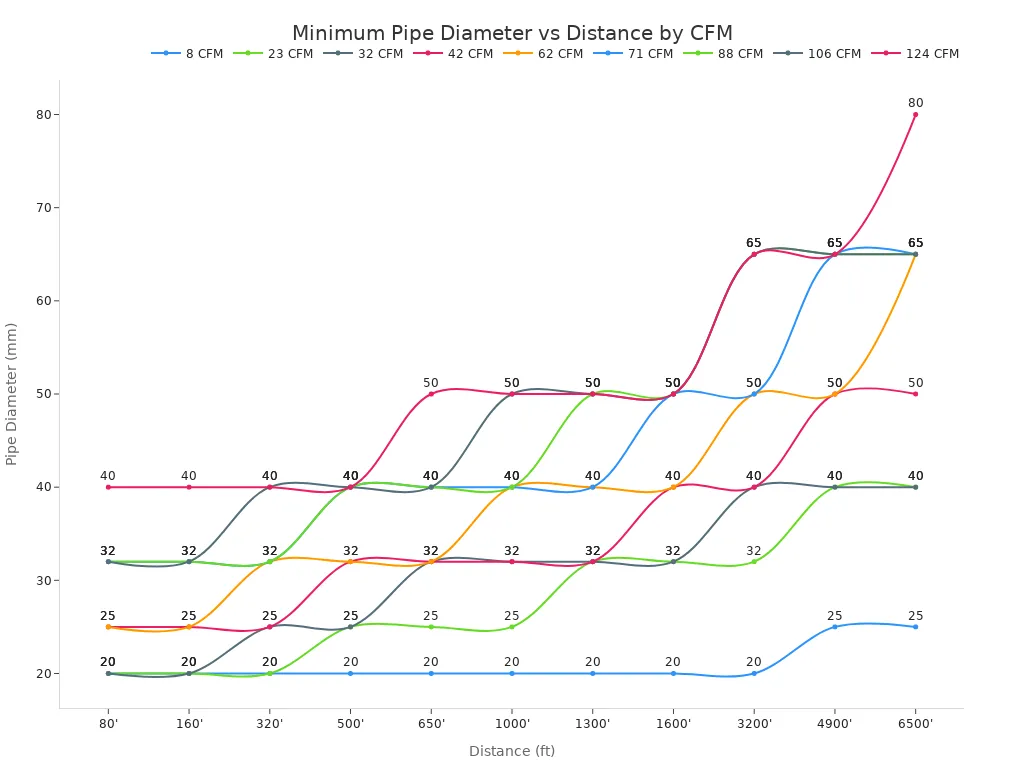
The standard sizing table below lists the smallest inner pipe diameters in millimeters (mm) for aluminum systems running at 100 PSI with a 4% pressure loss limit:
CFM
80'
160'
320'
500'
650'
1000'
1300'
1600'
3200'
4900'
6500'
8
20
20
20
20
20
20
20
20
20
25
25
23
20
20
20
25
25
25
32
32
32
40
40
32
20
20
25
25
32
32
32
32
40
40
40
42
25
25
25
32
32
32
32
40
40
50
50
62
25
25
32
32
32
40
40
40
50
50
65
71
32
32
32
40
40
40
40
50
50
65
65
88
32
32
32
40
40
40
50
50
65
65
65
106
32
32
40
40
40
50
50
50
65
65
65
124
40
40
40
40
50
50
50
50
65
65
80
You can see these pipe size choices for different distances and air flow rates in the chart below:
For example, if your new work space needs 62 CFM across a 500-foot line, you should pick a pipe with an inner diameter of at least 32 mm. Raising air flow to 124 CFM over that same 500-foot distance needs a 40 mm pipe size to keep your system working well. Planning for future growth today prevents costly pipe changes tomorrow.
Expanding your compressed air system requires maximum assembly speed and tight reliability. The Upipe Aluminum Pipe System uses an advanced modular design. You connect pipes directly without cutting threads or welding joints. This no-thread and no-weld design eliminates expensive assembly labor during facility upgrades. Lightweight components allow your team to handle components without heavy machinery. You complete installation tasks safely using basic tools. Traditional threaded steel pipe setups create high labor costs and long downtime. Modern aluminum compressed air lines eliminate those issues completely.
Adopting a modular aluminum system yields distinct labor savings across every project phase:
Installation time decreases by 40–60% compared to traditional threaded steel piping.
Labor costs drop significantly, requiring around $6,000 for aluminum versus $12,000 for black iron.
Setup requires no hot work permits, special plumbing skills, or certified welders.
The Upipe system offers a full line of matching modular fittings. You can choose 90° elbows for tight corners and direction changes. Equal tees and reducing tees route air across complex facility layouts. Male and female connectors join original equipment directly to your main network. Diverse flange options and solid end caps complete your piping loop. Secure seals prevent leaks at every joint. These leak-free connections maintain constant pressure and cut system power costs over time.
Optimizing Layouts with Quick Drops and Valves
Factory expansions demand fluid flexibility on the production floor. The Upipe system provides innovative 90° and 180° quick drops for adding new workstations. Technicians clamp quick drops onto existing main lines without cutting whole pipes. You create drop points while keeping the primary header pressurized. This capability prevents costly factory shutdowns during plant growth.
Full port design allows minimal flow restriction; no pressure drop
Disc remains in flow path, causing turbulence and pressure drop
Pressure Drop
Negligible
Significant due to disc obstruction
Suitability for Compressed Air
Suitable for high-pressure applications; minimal pressure drop
Not recommended for compressible fluids like air; sealing issues at high pressure
You should install ball valves along main headers to prevent artificial pressure drops. High-temperature butterfly variants assist with targeted isolation tasks near compressors. Integrated flowmeters complete your control network by giving continuous system monitoring. You track daily CFM consumption and spot hidden leaks quickly. These modular components protect your long-term investment as your factory expands.
Installation Practices for Aluminum Compressed Air Pipe
Pre-Assembly to Prevent Facility Downtime
You can make your factory expansion easier by building modular pipe parts on the ground before lifting them up. Modern setups use simple push-fit connections that lock tight fast. This smart building method removes the need for threading, soldering, or dangerous welding. Your team can safely assemble headers and drop lines on the floor first. You cut total setup time by half compared to old steel pipes. Workers complete tasks much faster than with heavy iron lines. Because of this, your plant stays running without losing daily work.
“An installation that used to take us weeks now takes days. Working with black iron pipe took longer, was harder to measure out exactly right and is prone to rust. Now, I’m able to get the same, or more, amount of work done each day with less labor than before.” – Boyette, Plant Engineering
Picking the right modular connectors helps your crew work quickly while building a strong air system for your growing plant.
Fitting Type
Advantages
Disadvantages
Compression
Less expensive, simple tools, repair by re-tightening
Lower pressure rating, susceptible to outdoor elements
You must check every pipe joint for leaks after you finish hanging the lines across your factory floor. Look closely at every quick drop point, valve seal, and main header connection. Test the lines by raising the air pressure slowly to stay safe. Always blow out the smooth inside of the pipes to clear dirt before connecting your tools.
Final testing proves your aluminum compressed air pipe system delivers steady air during your busiest work hours. Watch the pressure gauges at all work areas to make sure the pressure stays high. Modern push-fit joints stay sealed tightly without needing constant repairs. You finish setup fast and start full plant production with complete peace of mind.
Updating your factory layout takes smart design choices to keep your plant working well long-term. Modern pipes give your building easy lightweight lifting, total rust protection, no lost air pressure, and lower overall costs. You stop bad rust problems and big electric bills while keeping all your tools running strong during every work shift.
The Upipe Aluminum Pipe System protects your plant upgrade money through its easy modular setup. You can shift quick drop lines or grow main headers simply whenever your factory floor changes. Check your total air needs right now. Switch your system to new modular aluminum compressed air lines to secure steady daily output and dependable energy savings.
FAQ
Why should you avoid using PVC pipes for compressed air networks?
Air pressure causes normal PVC to get brittle over time. This weak plastic poses major explosion risks to your workers. Safety groups like OSHA ban open plastic pipes for compressed gas use. Picking modular aluminum pipes protects your crew and keeps your plant following all safety laws.
How much weight do you save by choosing aluminum piping over steel?
Aluminum metal pipes weigh about one-third as much as common steel lines. Steel has a density of 7,850 kg/m³, making it nearly 2.9 times heavier than aluminum at 2,700 kg/m³. This lighter material cuts down on hard lifting work and greatly lowers your setup labor costs.
Can you add new workstation lines without shutting down your plant?
Yes, you can easily add them. Special Upipe quick drops let your crew attach new lines right onto current main pipes. Workers build new drop points while your main air system stays under full pressure. This handy design keeps your factory running without losing money from work shutdowns.
What pressure drop limit should you maintain across your air system?
You must keep your total pressure loss below 4% of your starting air pressure. Heavy drag inside old rough pipes starves your tools and increases your power bills. Smooth aluminum pipe insides block rust buildup, keeping your system power strong while saving money over time.
This website uses cookies to provide you with a safer and more personal experience. By accepting, you agree to the Cookie Policy and the use of cookies for advertising and analytics purposes.