Home > News > Blog > How to Choose a Clean Compressed Air Piping Solution for Food Packaging Factories
# Blog
How to Choose a Clean Compressed Air Piping Solution for Food Packaging Factories
2026-11-16
Share:
Choose a clean compressed air piping solution for food packaging by comparing stainless steel, aluminum, and polymer on performance, compliance, and cost.
You can narrow any clean compressed air piping solution down to four criteria: technical performance, application fit, regulatory compliance, and cost. Most food packaging plants choose between three common options — stainless steel, aluminum, and polymer systems. No single material wins on every point. Your required air quality sets the floor. Your plant layout shapes the installation. Your lifecycle budget decides the final trade-off. Weigh all four together, and you will select a clean compressed air piping solution that performs reliably in your packaging environment instead of one that simply looks good on a spec sheet.
Key Takeaways
Judge four things: technical performance, application fit, regulatory compliance, and cost.
Pick piping material that fits your plant's needs: stainless steel for harsh areas, aluminum for general use, and polymer for light-duty branches.
Make sure the pipes and seals meet food-contact rules. They should also support the air quality class you need.
Look at the total cost over time, not just the purchase price, to find the best long-term value.
Ask suppliers for the right size, the papers that show they meet the rules, and a plan for future growth.
Technical Performance of Clean Compressed Air Piping
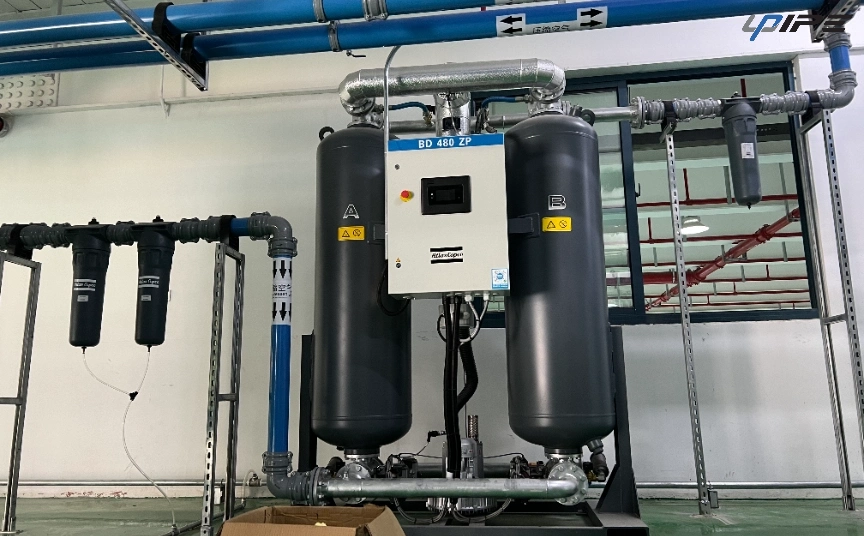
The material of your piping and the quality of its joints affect the air your packaging lines get. Rough inside surfaces release particles over time. Joints that are not sealed well trap moisture and send it back into the airflow. Some materials also keep oil carryover on their walls and pass it downstream in bursts. Keep one limit in mind: piping helps meet your air quality targets, but it cannot replace an oil-free compressor, filtration, and dryers upstream. Think of the pipe as the delivery network, not the treatment stage.
Pipe sizing and airflow design give you the biggest control over pressure drop. Lines that are too small make the compressor work harder, and that wasted energy shows up on every utility bill. Size for peak demand plus a reasonable margin for future packaging lines. Route runs with as few bends as possible. Thermal expansion also belongs in your design review. Metal pipe grows and shrinks with temperature swings, so plan expansion loops or sliding supports before installation begins.
Leakage, Durability, and Service Life
Leaks drain compressed air silently and steadily. Joint design decides how well a system holds pressure over years of vibration and thermal cycling. Corrosion resistance decides how long the inside stays smooth. Expected service life then follows from both. The table below compares the three common options on these points.
Criterion
Stainless Steel
Aluminum
Polymer
Sealing performance
Welded or threaded joints; welded runs seal permanently
Modular fittings with mechanical seals; fast and repeatable
Solvent-cemented or push-fit joints; good seal when installed correctly
Corrosion resistance
Excellent in most plant environments
Good; aluminum resists corrosion and maintains air quality
Good; unaffected by moisture but sensitive to some chemicals and UV
Expected service life
Very long; often outlasts the building
Long; modular parts can be replaced individually
Moderate; suitable for lighter-duty or temporary layouts
General plant air, vacuum, and inert gas distribution
Small branches, pilot lines, budget-sensitive retrofits
Each option earns its place. Stainless steel suits the toughest conditions and the strictest purity demands. Aluminum balances clean airflow, modular flexibility, and long service life across most packaging plant layouts. Polymer works well where loads are light and budgets are tight. Match the material to the duty, and your clean compressed air piping solution will hold its performance for years.
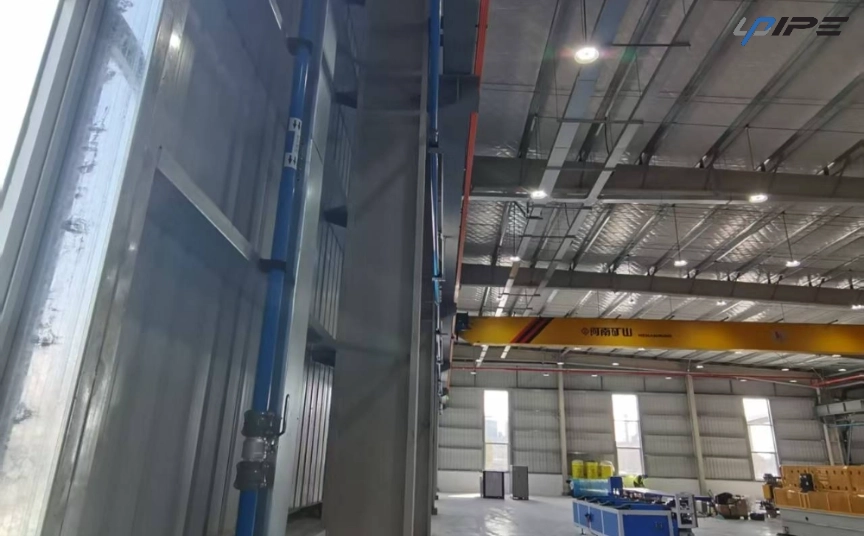
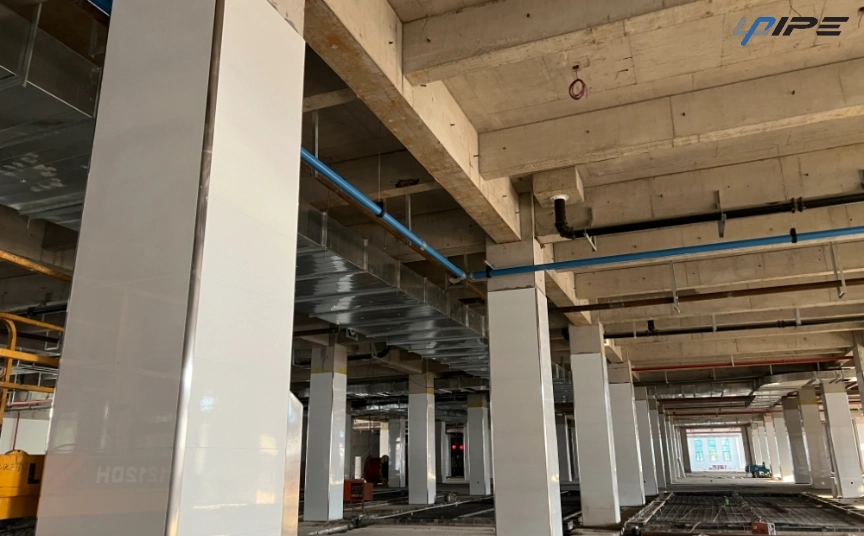
Your plant layout decides how much flexibility the piping must offer. Rigid layouts work well for long, fixed runs with few changes. Modular layouts work well in packaging halls where lines move, grow, or get set up in new ways. Modular systems install fast because fittings join pipe sections without welding or threading. You can add a drop, move a valve, or extend a run without shutting down the whole network.
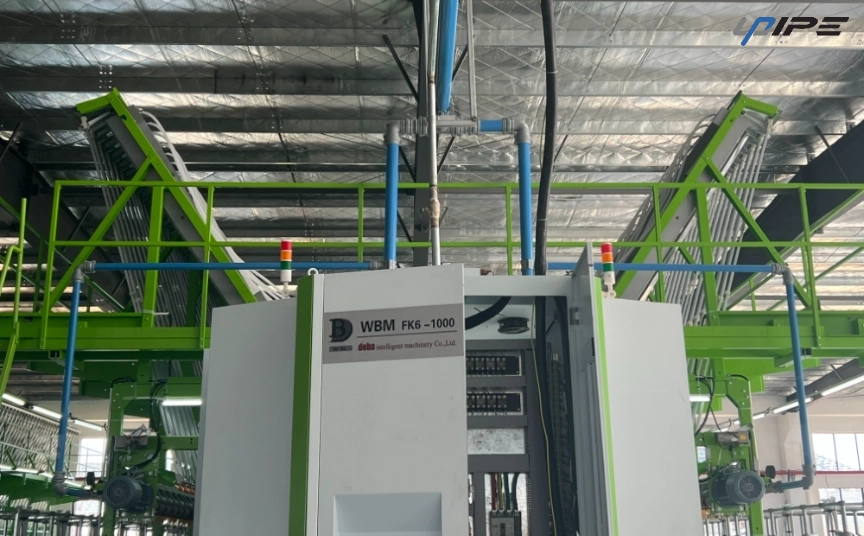
The Upipe Aluminum Pipe System shows how a modular setup works in real life. You build the network from pipe, elbows, tees, and connectors, then add 90° or 180° quick drop connections at each packaging machine. Ball valves and butterfly valves give you control where you use the air, and a flowmeter lets you track air use by line. End caps close unused runs cleanly. Maintenance stays simple because you swap out single parts instead of cutting and re-welding pipe.
Compatibility with Packaging Processes
Different packaging processes put different demands on the pipe. High-speed packaging lines need steady pressure at every drop. Pneumatic conveying needs a larger bore and smooth inside walls. Vacuum and inert gas lines need tight joints and no path for contamination. The table below shows where each material fits best.
Process
Stainless Steel
Aluminum
Polymer
High-speed packaging
Strong fit; handles washdown and harsh zones
Strong fit for general plant air
Fits light-duty branches
Pneumatic conveying
Fits abrasive or high-purity duty
Fits most conveying runs
Limited to short, light runs
Vacuum lines
Good seal integrity
Good with mechanical fittings
Good for small vacuum branches
Inert gas lines
Excellent purity protection
Good; corrosion-resistant walls
Acceptable for low-demand lines
Supplier selection matters as much as material. Ask for correct pipeline sizing against your peak demand, a high-performance airflow design with few bends, and a plan for future growth. A supplier who sizes the network for tomorrow's lines protects your clean compressed air piping solution from early rework.
Regulatory Compliance for Clean Compressed Air Piping Solutions
Food-Contact Standards: FDA, EU, and 3-A
Food packaging plants get checked by retailers, certification groups, and regulators. Your piping material has to pass that review. In the United States, FDA rules control materials that may touch food. In Europe, EU food-contact framework rules set the same kind of bar. The 3-A Sanitary Standards cover dairy and other hygienic processing equipment. They also shape how auditors judge cleanable surfaces and joint design.
Check one point before you order pipe. Compressed air seldom touches food directly, but it often touches packaging film, containers, and product zones. So many plants treat the air system as a food-contact risk and ask for written proof of material compliance. Ask your supplier for material certificates and declarations of conformity. Make sure gaskets and seals meet the same standard as the pipe itself. A compliant pipe with a non-compliant O-ring fails the audit just the same.
ISO 8573-1 Air Quality Classes
ISO 8573-1 defines air quality by three measures: particles, water, and oil. Food-grade compressed air usually needs class 2:2:1 or better. That means particles at level 2 or lower, water at level 2 or lower, and oil at level 1 or lower. Where a plant needs the cleanest air possible, Class 0 applies. Class 0 means the user and supplier set the limit together, and it usually calls for the tightest control available.
Compliance is a system property. Piping, air treatment, and monitoring work as a team, and the weakest part sets your result. A clean pipe cannot fix a wet receiver or a failed filter. A good dryer cannot save a leaking, corroding network. Material choice must support the required class, not work against it.
Each option can support compliance when you specify it correctly. Stainless steel gives inert, smooth walls and welded joints, and it suits the strictest purity zones. Aluminum resists corrosion, keeps its inside surface clean, and pairs with mechanical fittings that seal reliably. Polymer systems work well in lighter-duty branches when the grade fits the application. The table below sums up how each one supports your target class.
Requirement
Stainless Steel
Aluminum
Polymer
Particle shedding
Very low with smooth welds
Low; corrosion-resistant walls
Low in suitable grades
Moisture retention
None on inert surfaces
None; resists corrosion
Low; unaffected by moisture
Oil carryover
Minimal
Minimal with clean internals
Depends on grade and fittings
Documentation
Widely available
Available from quality suppliers
Varies by manufacturer
Whatever material you choose, check the certificates and match the pipe to the class you must prove. That habit turns a clean compressed air piping solution into one you can audit.
Cost Considerations Across the Lifecycle
Initial and Installation Costs
The first cost you see is the material price, but installation labor often changes the total. Stainless steel costs the most of the three options. Welded and threaded joints add skilled labor hours and slow the schedule. Aluminum sits in the middle on material price, and its modular fittings cut installation time because crews join sections without welding. Polymer has the lowest material price, and push-fit or cemented joints install quickly in light-duty layouts.
The table below compares the upfront picture across the three options.
Cost Factor
Stainless Steel
Aluminum
Polymer
Material price
Highest
Moderate
Lowest
Joint method
Welded or threaded
Modular mechanical fittings
Push-fit or cemented
Installation labor
High; needs skilled welders
Moderate; fast assembly
Low; simple assembly
Rework cost
High; cutting and re-welding
Low; swap single parts
Low; replace sections
A welded stainless network makes sense where washdown and purity demands justify the premium. A modular aluminum layout pays back its material cost through faster installation and easier changes. Polymer wins on tight budgets for small branches and pilot lines.
Operating and Lifecycle Costs
Operating cost decides the real winner when upfront prices sit close together. Leaks waste compressed air all day and night, and energy loss follows every leak. Pressure drop forces the compressor to run harder, and that extra power shows up on every utility bill. Maintenance adds labor and parts over the years. Expected service life then spreads the total across more years of service.
Lifecycle cost is the deciding metric. Add the purchase price, installation labor, energy loss from leaks and pressure drop, maintenance, and replacement cost over the expected service life. A cheaper pipe with poor seals can cost more in wasted energy than it saved at purchase. A premium pipe in a light-duty branch may never earn back its price.
Each option offers the best value in a different scenario. Stainless steel wins where harsh conditions would shorten any other material's life. Aluminum delivers strong value across general plant air, vacuum, and inert gas duty. Polymer fits budget-sensitive retrofits and short runs. Run the lifecycle numbers against your own layout, and your clean compressed air piping solution will earn its cost back year after year.
Think of this as a step-by-step process, not just one big comparison. First, confirm the air quality class and the compliance papers your plant has to show. Second, match the layout and process needs — modular runs for packaging halls that change, rigid runs for fixed lines. Third, compare lifecycle cost, not the sticker price.
Stainless steel usually fits washdown zones and high-purity lines. Aluminum works well for general plant air, vacuum, and inert gas distribution. Polymer fits light-duty branches and retrofits with tight budgets.
The right clean compressed air piping solution meets your air-quality and regulatory requirements at the best lifecycle cost for your own layout and processes.
FAQ
Which piping material suits most food packaging plants?
Aluminum works for most general plant air, vacuum, and inert gas runs. Pick stainless steel for washdown zones and high-purity lines. Choose polymer for light-duty branches and retrofits with tight budgets. When you match the material to the job, you get clean airflow at a reasonable lifecycle cost.
How do I confirm my piping meets the required air quality class?
Ask your supplier for material certificates and declarations of conformity. Make sure gaskets and seals meet the same standard as the pipe. Then check the whole system — piping, filtration, dryers, and monitoring — against your target ISO 8573-1 class, since the weakest part sets your result.
Should I choose a modular system or a welded network?
Choose modular fittings when packaging lines move, grow, or change often. Assembly is fast, and you can swap single parts without cutting pipe. Choose welded runs for fixed, long lines in harsh zones. Your layout and the changes you expect decide the answer.
How do I keep leaks and pressure drop under control?
Size lines for peak demand plus a margin for future lines. Route runs with few bends. Specify joints that seal reliably under vibration and thermal cycling. Then check the network often, because silent leaks waste energy every hour the compressor runs.
What should I ask a supplier before ordering?
Ask for correct pipeline sizing against your peak demand, an airflow design with few bends, and a plan for future growth. Request compliance documents for pipe, fittings, and seals. A supplier who sizes for tomorrow's lines protects your investment from early rework.
This website uses cookies to provide you with a safer and more personal experience. By accepting, you agree to the Cookie Policy and the use of cookies for advertising and analytics purposes.