Home > News > Blog > What Buyers Should Look for in a Compressed Air Pipe Manufacturer with Advanced Production Technology
# Blog
What Buyers Should Look for in a Compressed Air Pipe Manufacturer with Advanced Production Technology
2026-11-04
Share:
Evaluate a compressed air pipe manufacturer on production technology, quality assurance, materials, engineering support, total cost, and after-sales service.
Evaluate a compressed air pipe manufacturer on six factors: production technology, quality assurance, materials, engineering support, total cost of ownership, and after-sales service. These criteria reveal whether a supplier can deliver a system that performs reliably over its full service life.
Pipe quality directly shapes compressed air system efficiency and reliability. Corroded internal surfaces, poor connections, and undersized lines increase pressure drop and waste energy, as DirectAir notes. Use the sections below as a practical buyer checklist. Each one gives you specific questions to ask and details to verify before you commit to a compressed air pipe manufacturer.
Key Takeaways
Look for advanced production technology, such as CNC machines and robotic welding. These tools help ensure high quality and efficiency.
Check quality assurance with leak tests, pressure tests, and certifications like ISO 9001 and CE for your specific application.
Pick materials like aluminum. They resist rust, keep the air clean, and are easy to install. This lowers costs over time.
Figure out the total cost of ownership by looking at installation labor, energy savings, and leak repair costs over the life of the system.
Make sure the company offers strong after-sales support. Look for clear warranty terms, local spare parts, and fast technical help. These things keep your equipment reliable for a long time.
Advanced Production Technology in a Compressed Air Pipe Manufacturer
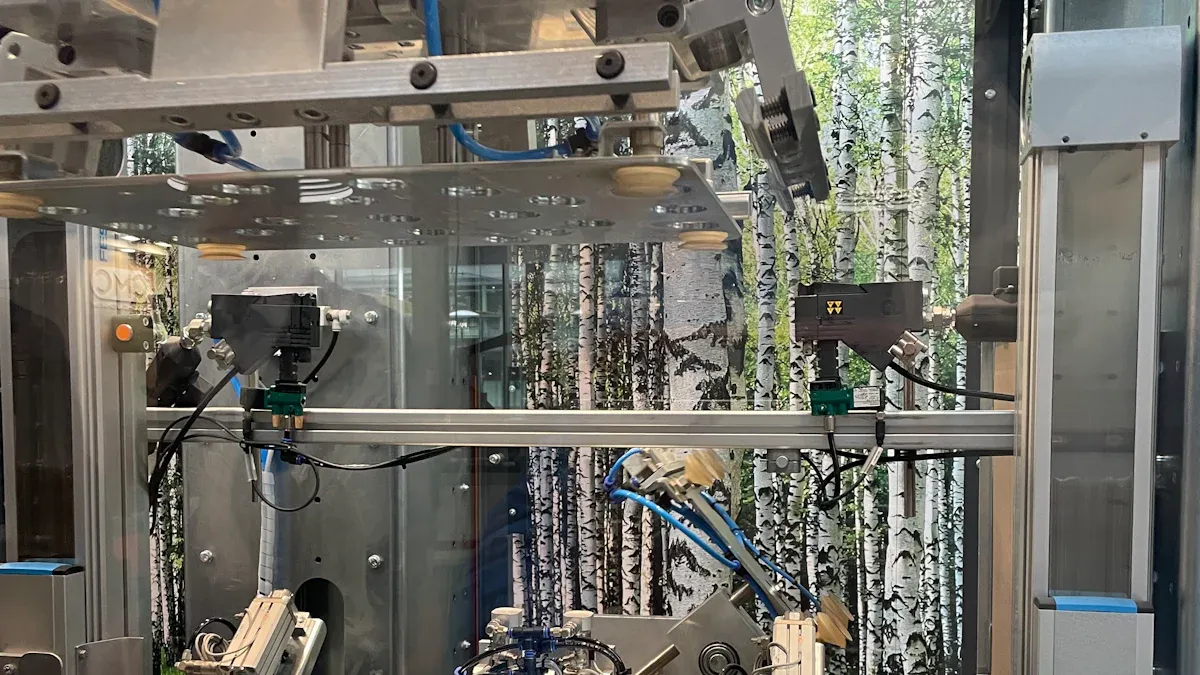
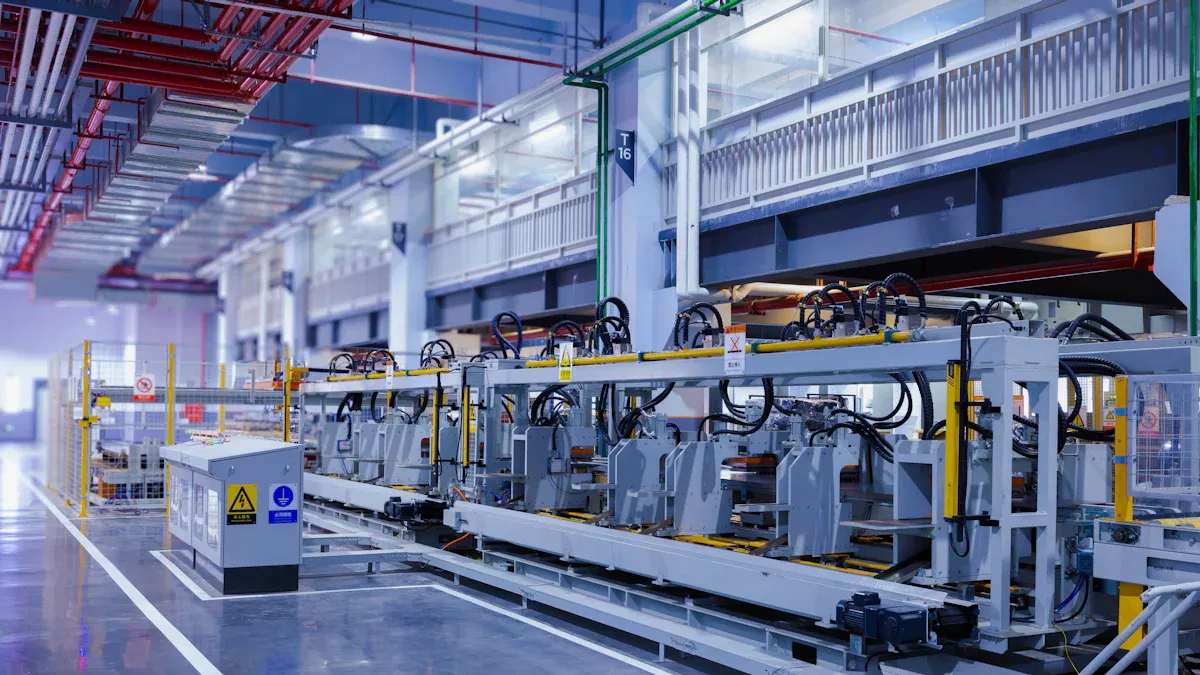
A modern workshop shows what it can do through three clear signs: high-tech machines, strict process control, and careful assembly. You can ask for a plant tour or a video walkthrough and check these signs yourself.
Advanced CNC machines and robotic welding systems give high-volume output with little human work, steady quality, and less waste.
Advanced sensors and IoT integration give real-time monitoring and quality control.
Automated cutting, threading, and fitting systems take the place of manual work.
Modular and prefabricated piping, backed by automation, speeds up setup and supports growth.
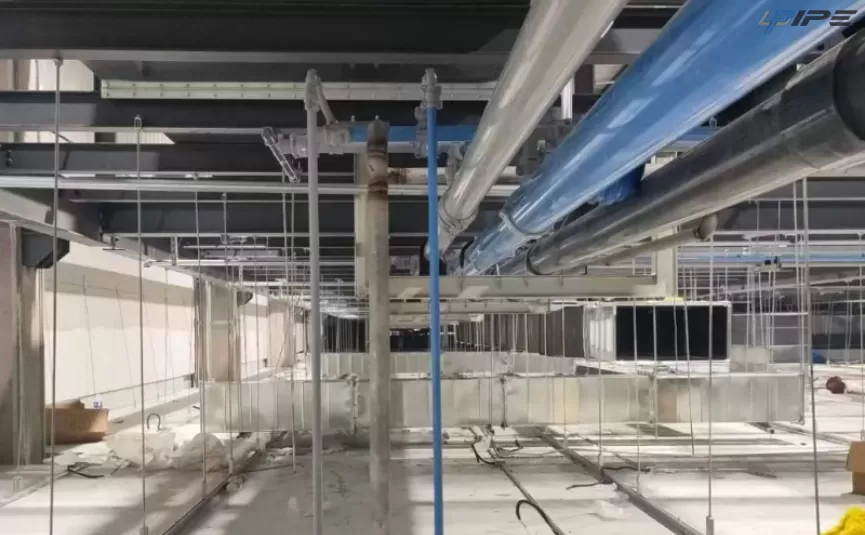
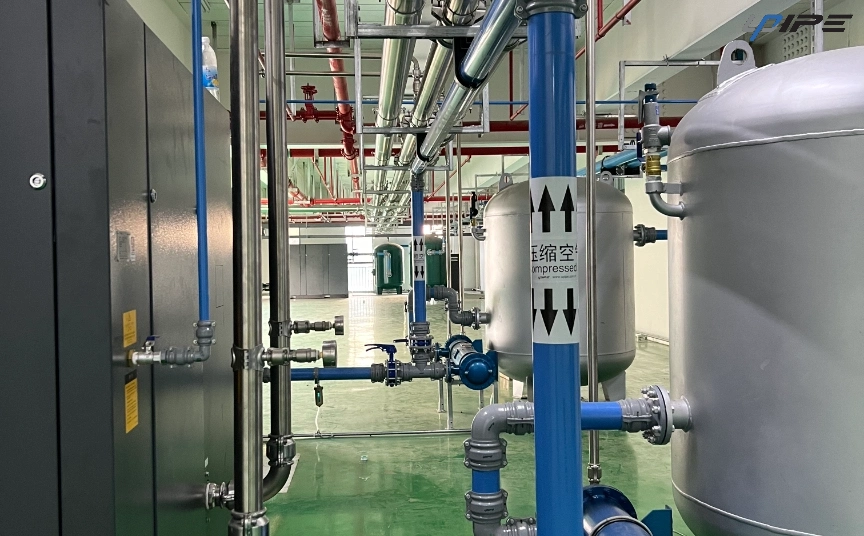
Precision matters as much as automation. Upipe designs every blue aluminum compressed air tube to tight tolerances for industrial-grade performance. The inside surface is mirror-smooth, which cuts turbulence and stops particles from building up. The outside coating protects the pipe from oxidation and physical damage. The modular structure allows quick-connect installation with no welding, threading, or heavy tools. Factories that change layouts often gain the most, because adjustments take hours rather than days.
Modular design also shows production discipline. Compressor Maintenance notes that modular compressed air piping uses reusable pipe sections, fittings, connectors, and drops. These parts can be detached, swapped, and reused. Push-to-connect fittings remove the need for soldering, threading, special tools, or glue. Kaeser's SmartPipe line follows the same idea: lightweight parts, flexible layouts, and no special trades needed. Treat these traits as evaluation criteria when you compare suppliers.
Process Control and Traceability
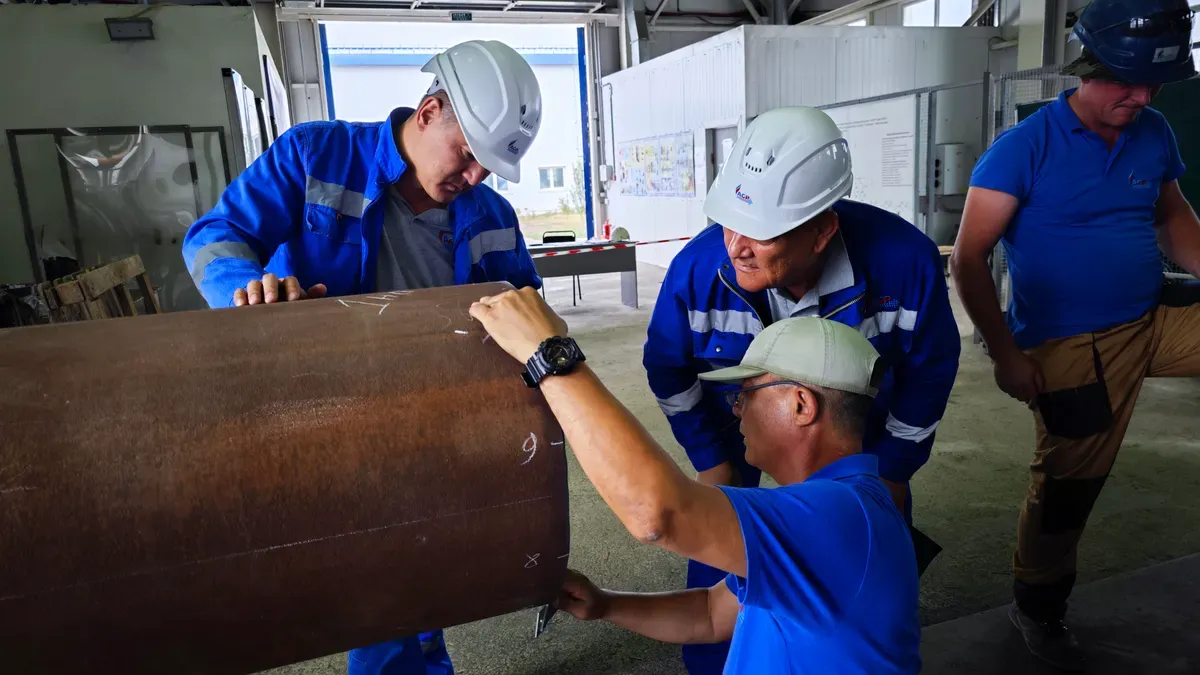
Traceability separates a controlled factory from an uncontrolled one. Ask any compressed air pipe manufacturer to show how it records materials, tests, and certifications for the exact product line you plan to buy.
Documentation should travel with the order. Upipe's export guidance for Southeast Asian and European projects lists the records buyers should request. Material traceability records and pressure test reports confirm what went into the pipe and how it held up under test. ISO 9001 certificates should cover the quoted product line, not just the parent company. CE marking applies to European shipments. Request these documents before you sign, and check that each one matches your application and region.
Quality Assurance from a Compressed Air Pipe Manufacturer
Ask your compressed air pipe manufacturer to prove three things before shipment: connections stay leak-free, seals hold under pressure, and the pipe meets its rated pressure. Request the leak test report for the exact batch you will receive. A pressure test report should show the test medium, the hold time, and the result. Sealing performance needs its own check. Push-to-connect joints must stay tight through vibration and temperature changes, so ask how the supplier tests assembled joints rather than loose parts.
You can also check air quality against ISO 8573. Class One Air describes this as measuring solid particles, water, and oil against purity classes from Class 0 (strictest) to Class 9 (most permissive). Match the class to your application, then make sure the test report states it.
Certifications for Compressed Air Systems
Certifications must match your application and your region. A certificate for general industrial use may not cover vacuum or inert gas service. European projects face stricter demands. The LinkedIn analysis of the Europe compressed air pipe market notes that Western markets such as Germany, the UK, and Benelux demand high-performance, certified piping solutions. It also notes that certification compliance with CE and ISO standards is a source of competitive advantage. Confirm the paperwork covers the product line you buy.
A credible supplier usually holds a portfolio along these lines:
Compliance with the European Pressure Equipment Directive (PED) 2014/68/EU
ASME B31 piping code compliance
ISO 8573:2001 and 2010 Class 0.0.0 conformity
REACH (EC 1907/2006) and RoHS compliance
Fire safety standards such as UL 723 and ASTM E84
Treat this list as a starting point, not a guarantee. Ask for the certificate numbers and check each one against your region and your gas type.
Material Quality and Corrosion Resistance
Comparing Pipe Materials
The material you pick affects air quality, installation work, and upkeep over time. Each option fits a clear role best, so match the material to your facility instead of hunting for one single winner.
Material
Pros
Cons
Black Iron
Strong, durable, and cost-effective, with fittings that are easy to find.
Needs a skilled plumber or welder. Very heavy, so it needs lots of anchoring. Leaks easily at joins and rusts very easily, which can dirty air lines and cause blockages and pressure drop.
Galvanized Steel
Durable, handles high pressures, fairly cheap, and resists rust to some degree.
Can rust from the inside over time, which cuts airflow and may put rust bits into the air. Installation takes a lot of labor and may need regular upkeep.
Copper
Light, resists rust, and handles high pressures.
Costs more than iron, galvanized steel, or aluminum. Skilled labor is pricey. May get damaged by acidic or alkaline substances. Soldered, brazed, or pressed fittings can't be reused.
Aluminum
Light and flexible, easy to install and change. Resists rust very well, so air stays clean and the system lasts. Quick-clamp fittings need no skilled labor or welding.
Pipes and fittings are harder to find than with traditional materials like iron or copper.
Why Aluminum Piping Gains Ground
Market data backs up the shift. Aluminum alloy pipes hold a 38.6% share of the compressed air pipe and fittings market in 2026, and plastic is the fastest-growing segment at 6.1% CAGR through 2035, according to Fact.MR. Aluminum earns that share through several practical advantages:
Aluminum resists rust, so moisture can't rust the inside and dirty your air supply. Champions Mechanical notes that aluminum piping gives optimal airflow, lower energy costs, and better air quality.
Smooth walls cut turbulence and line losses. Fluid Air Dynamics reports that aluminum is three times lighter than iron piping and stays leak-tight even at fittings and joins.
Installation costs drop compared with copper and threaded piping. Unipipe Solutions notes that push-to-connect fittings let maintenance staff put the system together without plumbing or welding skills.
Aluminum is increasingly replacing older black iron systems. The Compressed Air Blog notes that black iron starts to rust as soon as it is installed and gets less efficient over time.
The upfront cost is usually higher than both black and copper pipe systems; however, in many cases, little maintenance or replacement will be needed. Expanding systems is an easy change, parts can be reused, and the systems are usually highly efficient with little to zero corrosion. — FSCurtis
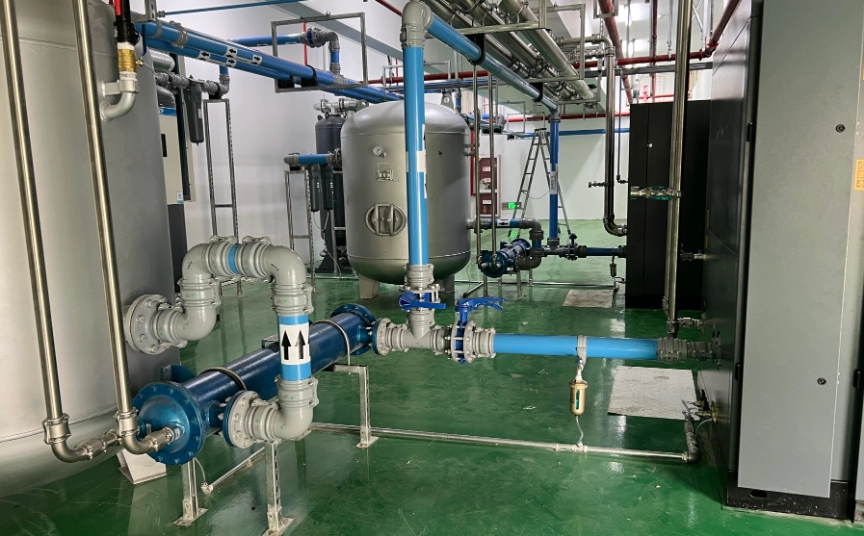
The Upipe Aluminum Pipe System shows what a complete modular solution looks like. The range covers 90° elbows, equal and reducing tees, pipe-to-pipe connectors, male and female connectors, and equal, reducing, and female flanges. Drop connections include 90° quick drops, 180° quick drops, and quick drops with female threads. Flow control comes through double-side plug ball valves, single-side plug female ball valves, male-female ball valves, double-side female ball valves, handle butterfly valves, turbine butterfly valves, and a high-temperature butterfly valve version. A flowmeter tracks air use. End caps close off pipe runs. The same system serves compressed air, vacuum, and inert gas applications, so one part family covers your whole distribution network.
Engineering Support and Customization
Design and Layout Assistance
Good engineering help starts before you order even one pipe. Ask your supplier to help with pipe sizing, air treatment, thermal expansion, and loop layouts. Atlas Copco says it simply: "If you are designing a compressed air system, please get in touch with one of the Atlas Copco sales engineers to help design the best and most optimum compressed air distribution system that lowers your operating costs and improves productivity." Unipipe offers similar help and gives you free tools you can use on your own:
Thermal expansion needs its own review. Topring lists three ways to make up for it, and each one fits a different case:
Compensation Method
Applicable Pipe Diameter
Key Details
Expansion loops (lyres)
20 mm to 160 mm (3/4 to 6 in)
Takes up movement on long straight runs where there is room
Anti-vibration hoses
16 mm to 80 mm (1/2 to 3 in)
Placed at the compressor to cancel out vibration
Expansion fittings
63 mm to 160 mm (2-1/2 to 6 in)
A small option when space limits expansion loops
Topring also notes that a flexible part must go on any straight section longer than 150 m (500 ft). Ask your supplier to confirm these details for your layout.
Custom Configurations and Fit
Modular systems let you build the network around your real equipment. Fluid Air Dynamics lists wall-mounted manifolds in 1, 2, 4, and 5-port setups, branch setups with 3, 5, and 8 drops, and saddle branches that tap right into main lines. These options scale from a small workshop to a large plant. FST notes that you can add hot taps or change a loop over one weekend without threading tools or welding permits. Upipetech suggests a ring main around the workshop edge, vertical drops with drain points, and isolation valves for zoning. Ask your supplier to match these setups to your floor plan.
Cost-Effectiveness and After-Sales Service
Total Cost of Ownership
The price on the tag tells you very little about what a system will cost over ten years. A-L-L Equipment reports that installation labor usually costs five times the material price. Leaky systems also waste 20-30% of compressed air after ten years of use. Energy use goes up 7% for every 1 barg of pressure drop. Think about all these costs together, not just the sticker price.
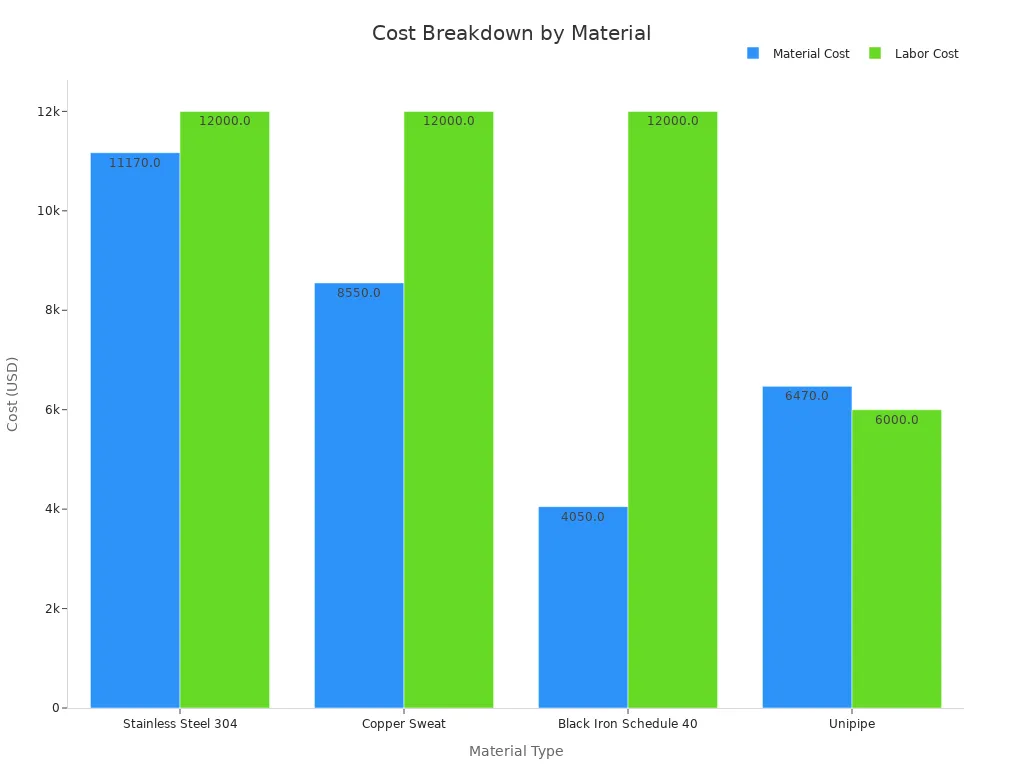
Unipipe Solutions compares installed costs for a medium-sized facility. It finds aluminum is competitive on total spend, not just materials:
Material
Material Cost
Labor Cost
Total
Stainless Steel 304
$11,170
$12,000
$23,170
Copper Sweat
$8,550
$12,000
$20,550
Black Iron Schedule 40
$4,050
$12,000
$16,050
Unipipe
$6,470
$6,000
$12,470
Unipipe Solutions also reports that aluminum installs 40-60% faster than traditional methods. Its total installed cost runs about 22% below black iron, 39% below copper, and 46% below stainless steel. The same source notes that traditional systems need leak repair every 3-6 months. Corroded black iron sections often need replacement within 5-10 years. Unipipe Solutions shows the material and labor split in a stacked bar chart:
Strong after-sales service shows up in three places: warranty terms, spare parts availability, and technical response time. Upipe's supplier comparison lists the services leading brands provide. These include leak detection, system expansion, scheduled maintenance programs, replacement parts, and certified distributor support. CMC goes further with 24/7 emergency service and audits. Ask your supplier which of these it offers locally.
Spare parts matter more than most buyers expect. Upipe's comparison advises you to confirm that local teams stock spare fittings and can reach your facility quickly. The same source notes that a single 1/8-inch leak can cost $1,200 per year in losses, so fast repairs pay for themselves. Request written warranty terms, a parts list with lead times, and a stated response window before you sign.
Use the six criteria above as one scorecard: production technology, quality assurance, materials, engineering support, total cost of ownership, and after-sales service. Advanced machines look impressive, but they can't make up for weak testing, poor material choices, or slow spare-parts support. Score every criterion before you make a shortlist of compressed air pipe manufacturers.
A strong partner keeps your system reliable and efficient for years. Look for documented traceability, leak-free connections, and quick technical help long after installation. That mix protects your air quality, keeps pressure drop low, and controls energy costs. Pick a supplier that treats these six factors as one system, and your investment will keep paying you back.
FAQ
How do you check a manufacturer's production technology claims?
Ask for a plant tour or a recorded walkthrough. Look for CNC machines, robotic welding, and sensor-based monitoring in action. Then request traceability records and pressure test reports for your exact product line. Claims mean little without documents that match the batch you will receive.
Which documents should you request before placing an order?
Request material traceability records, pressure test reports, and leak test results for your batch. Confirm ISO 9001 covers the quoted product line. European shipments need CE marking and PED 2014/68/EU compliance. Check that every certificate matches your application, whether compressed air, vacuum, or inert gas.
Does aluminum piping work for high-pressure or high-temperature jobs?
Aluminum works well for many industrial compressed air, vacuum, and inert gas duties. Confirm the rated pressure and temperature limits for your specific line with the supplier. The Upipe range includes a high-temperature butterfly valve version for hotter zones. Match every component to your operating conditions before you commit.
How do you compare quotes from different manufacturers fairly?
Compare total installed cost, not unit price. Installation labor often costs several times the material price, and aluminum installs 40-60% faster than traditional methods. Add leak repair, maintenance, and energy costs over the system's life. A higher sticker price can still deliver the lowest total spend.
What should you confirm about lead times and installation support?
Ask for a written parts list with lead times and a stated technical response window. Confirm local teams stock spare fittings, since a single small leak can cost $1,200 per year. Check whether the supplier offers layout help, leak detection, and system expansion support after delivery.
This website uses cookies to provide you with a safer and more personal experience. By accepting, you agree to the Cookie Policy and the use of cookies for advertising and analytics purposes.